An Occurrence at Owl Creek Bridge

occurrence.jpg

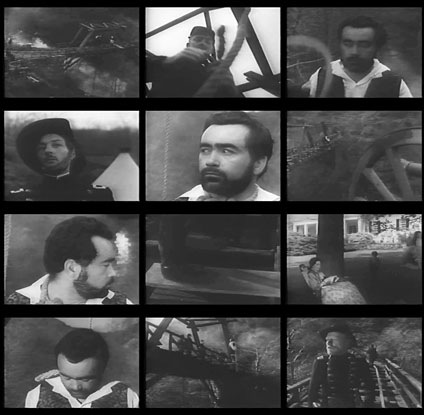
Still with the short films, this is one I’ve known about for years but only recently seen. La Rivière du Hibou was Robert Enrico’s 1962 adaptation of the oft-reprinted Civil War story by Ambrose Bierce, An Occurrence at Owl Creek Bridge. Enrico made three such films from Bierce’s stories, this being the most celebrated; in addition to gaining awards it was also screened as part of The Twilight Zone series which makes me wonder how I’ve managed to miss it for so long. As an adaptation it’s very faithful if you overlook the awkward interjection of a song halfway through.

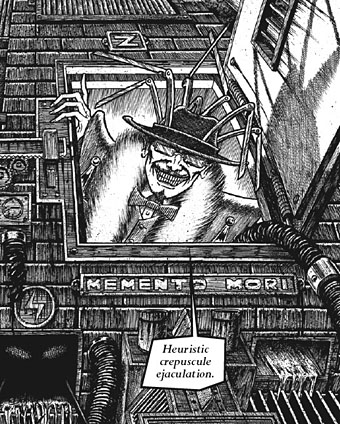
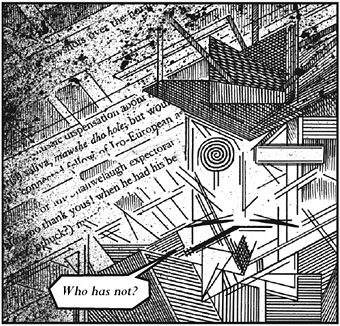
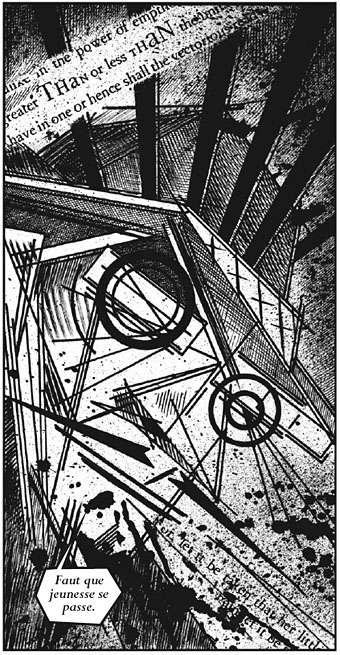
This particular tale I now find overly familiar since I adapted it in comic strip form in 2003 for the Ambrose Bierce number of Graphic Classics. That strip was one of the last comics I produced, a somewhat misguided attempt at using 3D software. My adaptation involved a great deal of guess-work at the military and other details so I watched Enrico’s opening scene with a sense of relief that his version isn’t so different from my own. The shots here are from this grainy copy of the film. There’s a better copy here from the Twilight Zone screening with Spanish subtitles added.
Weekend links 113

leonard.jpg

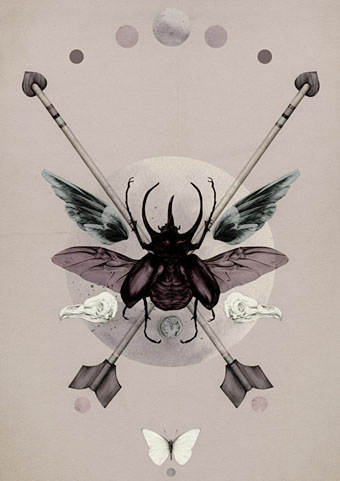
Wunderkammer (2011) by Emma Leonard.

As someone who was eight years old at the time of the Apollo moon landing, I remember calculating that I would be thirty-nine in the magic year 2000 and wondering what the world would be like. Did I expect I would be living in such a world of wonders? Of course. Everyone did. Do I feel cheated now? It seemed unlikely that I’d live to see all the things I was reading about in science fiction, but it never occurred to me that I wouldn’t see any of them.

A quote from Of Flying Cars and the Declining Rate of Profit, an essay by David Graeber. Related: Another World: David Graeber interviewed by Michelle Kuo at Artforum.

Constellation, a series of portraits by Kumi Yamashita: “This body of work consists of three simple materials that, when combined, produce the portraits: a wooden panel painted a solid white, thousands of small galvanized nails, and a single, unbroken, common sewing thread.”

Nicole Rudick at The Paris Review on the history of psychedelic art. Related: The psychedelic art and design of Keiichi Tanaami. Also Manifesting the Mind: Footprints of the Shaman, a two-hour documentary about psychedelic drugs.

• Already mentioned here, The Lost Tapes, a 3-CD collection of previously unreleased recording by the mighty Can, is out on Monday. There’s a preview of ten of the tracks here.

• “I can’t think of anybody who would have a good word to say for centipedes…” Duncan Fallowell (a Can associate for many years) interviewed William Burroughs in 1982.

Herb Lubalin: American Graphic Designer and the Herb Lubalin Study Center’s Flickr sets.

Strange Flowers goes to the movies with everyone’s favourite Bavarian king, Ludwig II.

The Sphinx’s Riddle: The Art of Leonor Fini at the Weinstein Gallery, San Francisco.

• More Teutonica: A Spacemusic Primer by Dave Maier.

Van Dyke Parks: return of a musical maverick.

Forty Posters for Forty Years at Pentagram.

Donovan’s Colours (1968) by Van Dyke Parks | Sailin’ Shoes (1972) by Van Dyke Parks | Clang Of The Yankee Reaper (1975) by Van Dyke Parks.

James Joyce in Reverbstorm

jj1.jpg

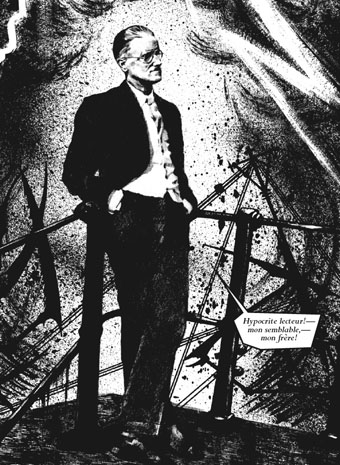
A post for Bloomsday with a handful of the many and varied appearances of James Joyce in the forthcoming Reverbstorm book. Ulysses was published ninety years ago this year. Among the usual commemorations BBC Radio 4 will be dramatising the entire novel throughout the day.

jj2.jpg

But as before the lightning the serried stormclouds, heavy with preponderant excess of moisture, in swollen masses turgidly distended, compass earth and sky in one vast slumber, impending above parched field and drowsy oxen and blighted growth of shrub and verdure till in an instant a flash rives their centres and with the reverberation of the thunder the cloudburst pours its torrent, so and not otherwise was the transformation, violent and instantaneous, upon the utterance of the word.

James Joyce, Ulysses (1922)

jj3.jpg

Prison and place and reverberation
Of thunder of spring over distant mountains
He who was living is now dead
We who were living are now dying
With a little patience

TS Eliot, The Waste Land (1922)

jj4.jpg

Continue reading “James Joyce in Reverbstorm”

Arrow by The Irrepressibles

arrow.jpg

I’ve kept wondering when we’d hear more from The Irrepressibles following the release of their wonderful Mirror Mirror album. Here at last is a new song, Arrow, from a forthcoming album, Nude. Lyrical allusions to Saint Sebastian accompany two naked guys wrestling until…well, go and see. (Thanks to Thom for the tip!)

Directed & choreographed by Jamie McDermott
Camera Person: Kate Perring
Filmed at Studio 7, Alston Works, London.

Previously on { feuilleton }
Los Bikers by Dënver
The Lady Is Dead and The Irrepressibles

Animating Piranesi

dupond.jpg

Piranesi Carceri d’Invenzione (2010).

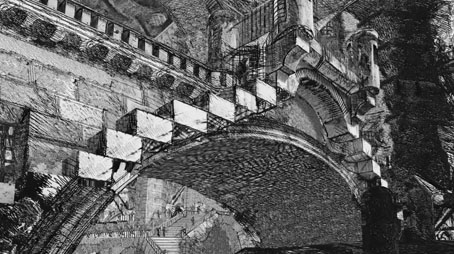
When Peacay at BibliOdyssey linked to this short film by Grégoire Dupond I thought it might be one I hadn’t seen before but it turns out I have, and I mentioned the exhibition it was produced for in 2010. No matter, it’s worth drawing attention to again since Monsieur Dupond makes an impressive job of sending a virtual camera through the vast spaces of Piranesi’s Carceri d’invenzione, joining several of the etchings into a series of contiguous chambers.

yoyoma.jpg

The Sound of the Carceri (1998).

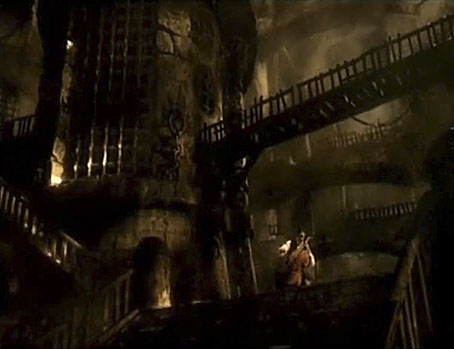
Dupond’s film uses Bach’s Cello Suite #2 as a musical accompaniment. As noted earlier that choice probably came from Yo-Yo Ma’s Inspired by Bach (1998) in which Bach’s six solo cello suites are performed in different settings. Suite #2 was The Sound of the Carceri directed by François Girard which places the cellist inside a CGI rending of one of Piranesi’s Careri etchings. YouTube has a copy here.

Elsewhere on { feuilleton }
The etching and engraving archive

Previously on { feuilleton }
Carceri, thermae and candelabra
La Tour by Schuiten & Peeters
Set in Stone
Piranesi as designer
Vedute di Roma
Aldous Huxley on Piranesi’s Prisons