Design as virus 14: Curse of the Dead

curse.jpg

Curse of the Dead (1966).

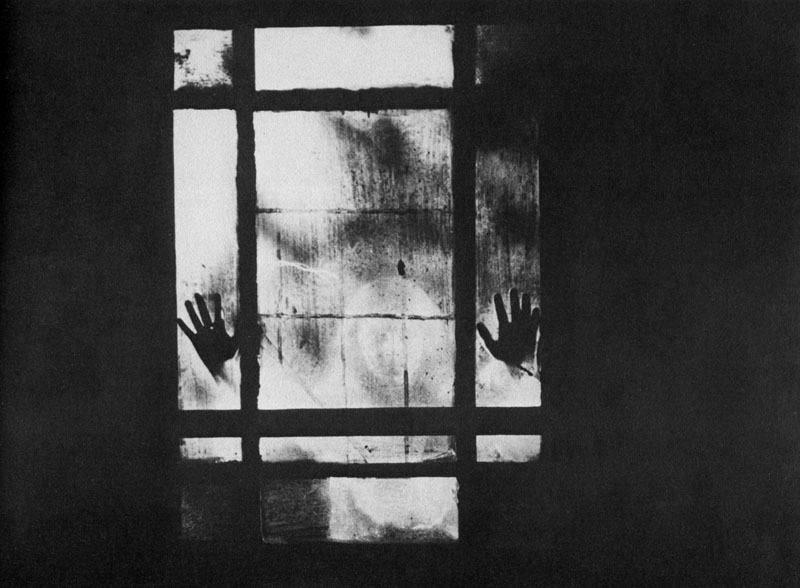
Continuing an occasional series. This photograph, reproduced in Denis Gifford’s A Pictorial History of Horror Movies (1973), intrigued me for years. Gifford’s book is a very good collection of stills from horror films of all kinds, ranging from the earliest days of cinema to the 1970s. The pictures are mostly black-and-white, and are often far more stimulating than the films they would have been promoting. The text generally refers to the films depicted but in the case of this picture there’s only a single credit, Curse of the Dead (1966), a film I’d never heard of. These kinds of mysteries have been banished for good now we have resources like IMDB where you can learn immediately that Curse of the Dead is a Mario Bava film whose original Italian title was Operazione Paura. (It’s also known, with the usual hyperbole, as Kill, Baby…Kill!) “An 18th century European village is haunted by the ghost of a murderous little girl” says the summary. Bava’s films were always visually impressive so it’s really no surprise to find it was one of his.
carnacki.jpg

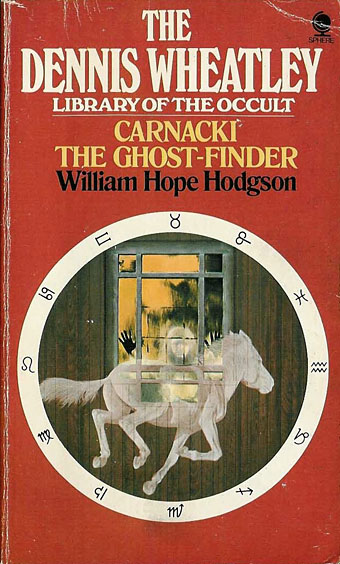
The first repeat usage I know of is this cover from the Dennis Wheatley Library of the Occult series published by Sphere books from 1974–77. Sphere used Wheatley’s name to sell a lot of reprints but the series was substantial and featured a number of titles that would have been appearing in paperback for the first time. Unfortunately the best thing about the covers was the uniform design of the horoscope circle against a coloured background. The quality of the illustrations was very uneven so it’s probably for the best that the artists and photographers went uncredited.
arkham.jpg

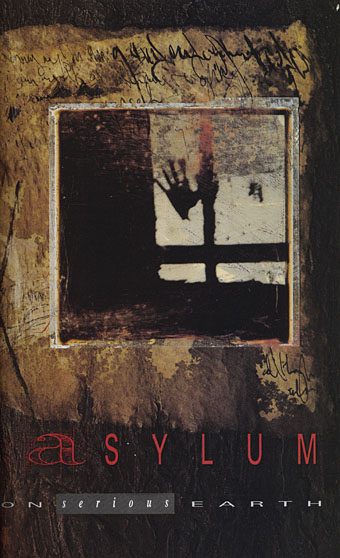
Then there’s one of Dave McKean’s title pages for Arkham Asylum (1989), the heavily symbolic Batman book he created with Grant Morrison. There’s only a portion of the picture but I’d say it’s a good guess he used the Gifford book since at least one of the panels in his earlier Violent Cases was based on another of the Gifford photos.

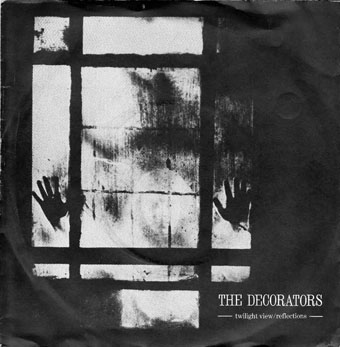
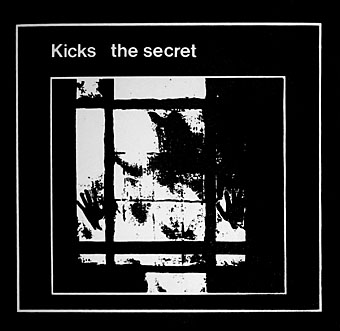
This isn’t all, I’m sure I’ve seen the Gifford picture used on a record sleeve but there’s little way of discovering which one unless somebody recognises the photo. If anyone knows, please leave a comment. And despite all of this I still haven’t seen Bava’s film even though I’m told it had a strong influence on Twin Peaks. This account at The Horror Digest is slightly disappointing when a colour equivalent of the Gifford still lacks the particulated creepiness of the black-and-white version. More surprising is finding yet another film featuring the arms-out-of-the-walls motif. This obviously requires further investigation.

Update: Thanks to Irv in the comments for finding the following singles so quickly. The Decorators sleeve was the one I remembered. (See it larger here.) Kicks were an Australian band. Odd that these were both released in the same year.
decorators.jpg

Twilight View (1980) by The Decorators. Design by Malcolm Garrett.
kicks.jpg

The Secret (1980) by Kicks.

Previously on { feuilleton }
Design as virus 13: Tsunehisa Kimura
Design as virus 12: Barney’s faces
Design as virus 11: Burne Hogarth
Design as virus 10: Victor Moscoso
Design as virus 9: Mondrian fashions
Design as virus 8: Keep Calm and Carry On
Design as virus 7: eyes and triangles
Design as virus 6: Cassandre
Design as virus 5: Gideon Glaser
Design as virus 4: Metamorphoses
Design as virus 3: the sincerest form of flattery
Design as virus 2: album covers
Design as virus 1: Victorian borders
Dalí in New York

dali.jpg

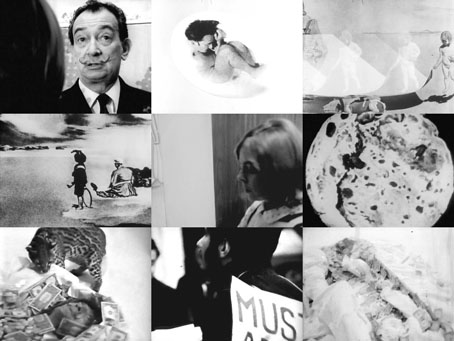
Another Dalínean gem surfaces at Ubuweb. Dalí in New York is a fascinating 50-minute account of the artist’s antics in New York City at the end of 1965. Unlike the reverential documentaries of the 1970s this film isn’t out to flatter its subject: scenes of the usual Dalí happenings are intercut with some combative verbal sparring from the equally remarkable Jane Arden who does her best to try and make sense of the painter’s pronouncements. The director was Arden’s collaborator, Jack Bond, most of whose work was for television although he’s also notable for having directed the Pet Shop Boys’ It Couldn’t Happen Here (1988), a film with some not entirely successful “surrealist” moments of its own.

Previously on { feuilleton }
The Secret Life of Edward James
René Magritte by David Wheatley
Soft Self-Portrait of Salvador Dalí
Mongolian impressions
Hello Dali!
Dirty Dalí
Impressions de la Haute Mongolie revisited

Green Pipes: Poems and Pictures

jpf01.jpg

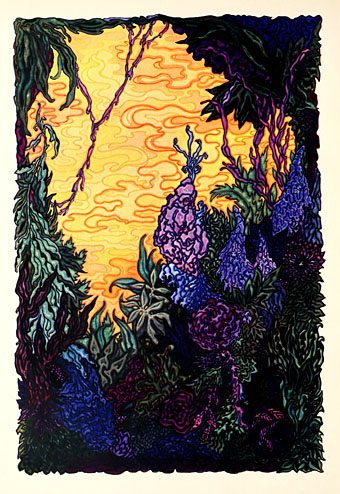
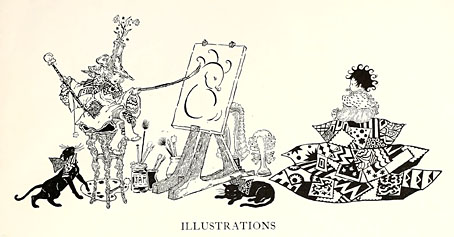
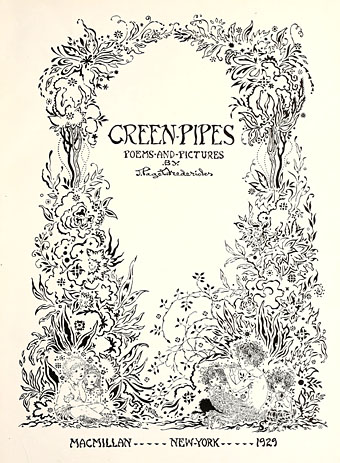
This is a strange book. Green Pipes: Poems and Pictures (1929) was written and illustrated by Joseph Rous Paget-Fredericks (1903–1963), a man better known these days for a substantial collection of memorabilia and archive material related to 20th-century dance. Paget-Fredericks studied with Léon Bakst then went on to create his own costume designs as well as producing some books for children of which this is an example. In style the poems aim at AA Milne’s When We Were Very Young but succumb to tweeness with a superfluity of fairies and pixies. At first glance the illustrations seem just as twee until you notice remarkable details such as costumes and foliage created from a wealth of disconnected lines and squiggles. The drawing of a Smoke Sprite is closer to something by Alastair than EH Shepard, while the Snow Fairy is the vaguest outline in a dress composed of circles, lines and dots. The Green Pipes of the title are the pipes of Pan, and so we get a late eruption of that peculiar flourishing of Pan Mania that extends from the 1890s to the 1930s. A book of children’s poetry isn’t the place you’d expect to encounter flower children kneeling before a piping faun but after the openly Pantheist chapter of The Wind in the Willows anything is possible. Far more out of place among all the fairies is a painting of a pirate brandishing a bloody cutlass. And what are we to make of the lines at the end of Elfin Children?

Then from the windowed heights we stream
By silent starlit mire…

The Starlit Mire (1911) was a book of epigrams by James Bertram & F. Russell illustrated by Austin Osman Spare (with a head of Pan blocked onto the cover). It’s not at all a book for children so the occurrence of that phrase in Paget-Fredericks’ poem is very surprising. Is “starlit mire” a quote that precedes the Bertram & Russell book? Please leave a comment if you know.

Read Green Pipes online here or download it here.

jpf02.jpg

jpf03.jpg

Continue reading “Green Pipes: Poems and Pictures”

O (Omicron)

omicron.jpg

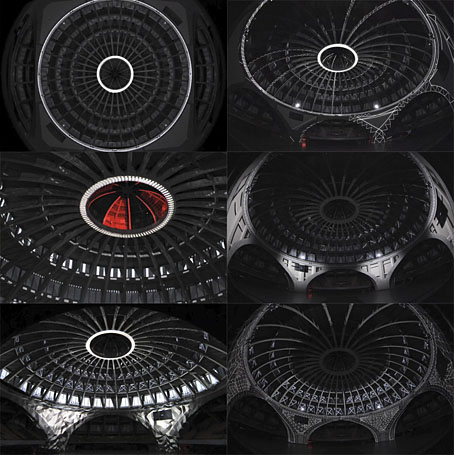
Is projection mapping becoming a lot more common or am I simply noticing it more often? O (Omicron) is a particularly stunning example, a permanent installation by Romain Tardy & Thomas Vaquié at the Hala Stulecia in Wroclaw, Poland. It helps that the building has such a distinctive shape, a concrete dome with a ribbed interior that suits being traced in glowing lines. Another link from Dressing the Air‘s weekly bulletin.

Previously on { feuilleton }
KraftWork
Lumiere at Durham
Tetragram for Enlargement

Weekend links 114

bowie.jpg

David Bowie’s cigaretted fingers and bulging silver crotch point the way to the future. This summer sees the fortieth anniversary of the Ziggy Stardust album’s release. The Melody Maker ad above can be found with a wealth of other Ziggy-related material at the very thorough Ziggy Stardust Companion site. For me the definitive artefact isn’t the album itself but DA Pennebaker’s film of the final concert from the 1973 tour; the songs really come alive and Bowie’s performance is overwhelmingly electric. Related: Cracked Actor, the BBC documentary from 1975 about Bowie’s post-Ziggy life on and off the stage.

• The week in books: Amanda Katz described the remarkable history of a single copy of The War of the Worlds by HG Wells then asked “Will Your Children Inherit Your E-Books?” | Bosnian novelist Aleksandar Hemon in The Browser’s FiveBooks interview put Blood Meridian on his list. | “Call me the greatest American novel”: Christopher Buckley on Moby-Dick. | The Brit Lit Map.

• For another anniversary, the Alan Turing centenary, there’s The Strange Life and Death of Dr Turing (part two here) and Breaking the Code (1996), Derek Jacobi playing the tragic genius in a biographical drama.

Commissioner of Sewers (1991) a William Burroughs documentary by Klaus Maeck in which the author reads some of his work and endures a Q&A session with surprising equanimity.

• Music, flesh and fantasy: When Mati Klarwein’s hyperactive paintings stole the psychedelic show.

• Move Over Casio: Teenage Engineering’s OP-1 Portable Synth Looks Cool, Does Everything.

• A retrospective of art by Madge Gill (1882–1961) at The Nunnery, London.

• “Art is unavoidably work”: Terre Thaemlitz interviewed.

• A trailer for Document: Keiji Haino.

WB Yeats, Magus

Pathétique 1 (1994) by Fushitsusha | Pathétique 2 (1994) by Fushitsusha.