Weekend links 179

tomaselli.jpg

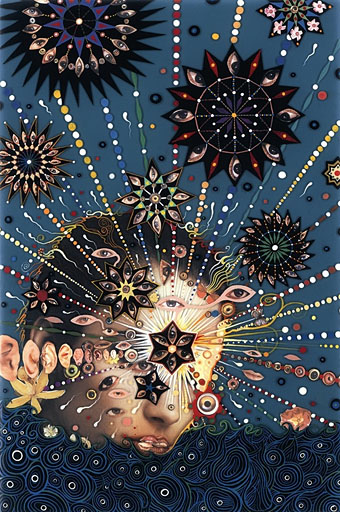
Summer Swell (2007) by Fred Tomaselli. The artist is interviewed at AnOther.

• Mixes of the week for the season of mists and mellow fruitfulness: Forever Autumn Mixtape by The Outer Church, and celebrating what would have been Trish Keenan’s 45th birthday: Trish’s Toys & Techniques Birthday Tape (with cover art by Julian House).

Jirí Kolár: His Life, Work and Cultural Significance to the Czech Republic. Leah Cowan looks into the life and work of this influential Czech artist. Related: Jirí Kolár: poet and collage artist, and collages, rollages and prollages by Jirí Kolár.

• “Name any well-known poet from any age, any country. He or she wrote at least one poem about death, most likely several poems.” Russ Kick introduces his new book, Death Poems.

[M]any pictures in the splendid exhibition at the British Museum show men having sex with men. One of the earliest erotic handscrolls, from the 15th century, shows a Buddhist priest casting longing glances at his young acolyte. Indeed, among some samurai, male love was considered superior to the heterosexual kind. Women were necessary to produce children, but male love was purer, more refined.

The question is why were Japanese – compared not just with Europeans, but other Asians, too – so much more open to depicting sex? One reason might be found in the nature of Japanese religion. The oldest native ritual tradition, Shinto, was, like most ancient cults, a form of nature worship, to do with fertility, mother goddesses, and so forth. This sometimes took the form of worshipping genitals, male as well as female.

Ian Buruma on The joy of art: why Japan embraced sex with a passion. Shunga: Sex and Pleasure in Japanese Art is a forthcoming exhibition at the British Museum.

Harold Offeh on how the cosmic life and music of Sun Ra inspired the artwork decorating the Bethnal Green, Notting Hill Gate and Ladbroke Grove Tube stations in London.

• Fearful symmetry: Roger Penrose’s tiling by Philip Ball. Related: Penrose Tiles Visualizer, and lots more Penrose tiling links at The Geometry Junkyard.

Masculine / Masculine. The Nude Man in Art from 1800 to the Present Day, a new exhibition at the Musée d’Orsay.

• Into the Croation Zone: more derives from Christina Scholz here, here, and here.

Stephen Eskilson on Heteronormative Design Discourse.

Applied Ballardianism

The Zero of the Signified (1980) by Robert Fripp | The League of Gentlemen (Fripp/Lee/Andrews/Toobad, 1981): Minor Man (with Danielle Dax) | Heptaparaparshinokh
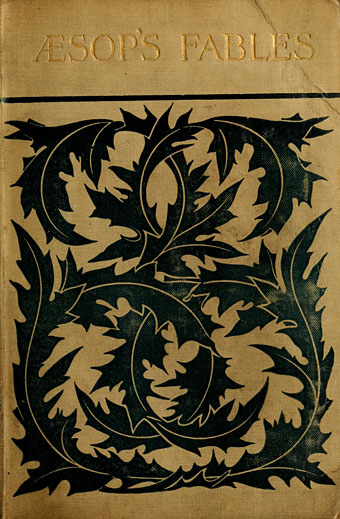
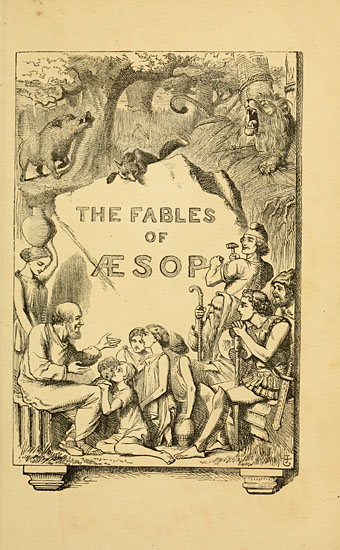
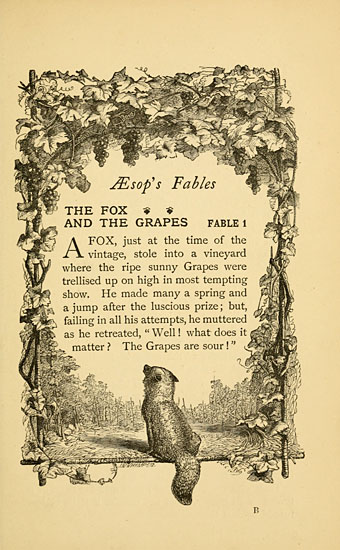
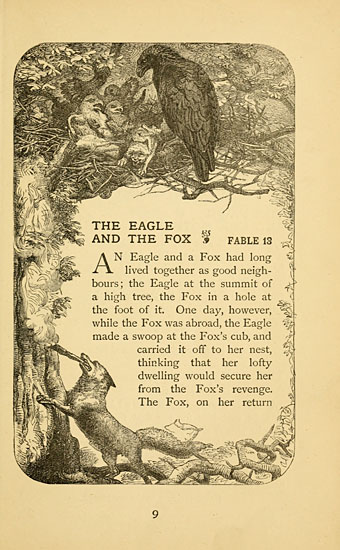
Tenniel’s Fables

tenniel01.jpg

Everyone knows John Tenniel’s illustrations for Lewis Carroll’s Alice books, two volumes which have overshadowed the rest of his career. In addition to being a popular artist at Punch magazine Tenniel illustrated a number of other books including a collection of Aesop’s Fables in 1848. The copy from which these pictures are taken is a later edition from 1898, with text by Thomas James. The drawings lack the indelibly memorable quality of the Alice illustrations but that’s partly a result of the content which for Aesop is always going to lack the invention of Wonderland. Browse the rest of the book here or download it here.

tenniel02.jpg

tenniel03.jpg

tenniel04.jpg

Continue reading “Tenniel’s Fables”

Andrey Avinoff revisited

avinoff1.jpg

(My apologies for the recent downtime. The hosting for this site has been a bit more unstable than usual.)

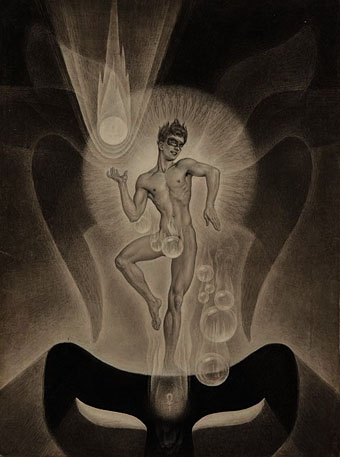
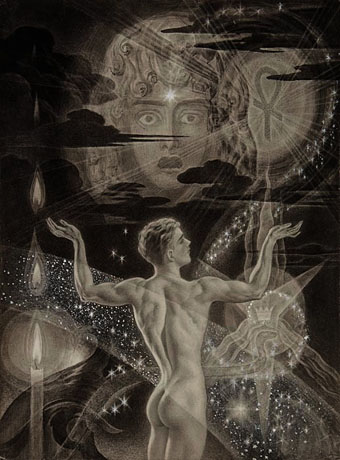
At a time when various Russians are trying to rewrite their nation’s gay history, there’s hardly been a better moment to remind ourselves of some of the people who contributed to that history. When I discovered the art of Andrey Avinoff (1884–1949) in 2007 most of the online examples of his work were in the collection of the Kinsey Institute. Avinoff was a friend of Kinsey’s (the artist escaped the revolution to live in the USA), and the professor no doubt took an interest in the evident homoeroticism of the drawings.

avinoff2.jpg

The homoerotics (mostly male nudes in fantasy scenes) are combined with some remarkable occult designs in Avinoff’s 21 illustrations for The Fall of Atlantis, a book-length poem by George Golokhvastoff published in 1944. The book was a limited edition, and a complete set of the drawings wasn’t forthcoming in 2007 so it’s been great to find Javier at Bajo el Signo de Libra posting the complete set. These are stunning illustrations which really ought to be seen by a wider audience; Avinoff isn’t a name you find very often in either the gay or the occult art world yet his draughtsmanship and imagination demand attention from both.

avinoff3.jpg

Elsewhere on { feuilleton }
The gay artists archive

Elsewhere on { feuilleton }
The art of Andrey Avinoff, 1884–1949

More Art Nouveau

artnouveau01.jpg

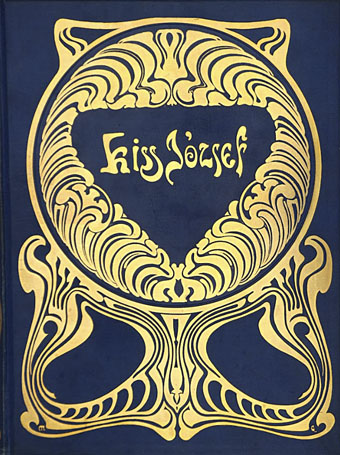
The Poetry of József Kiss (1897), design by Nándor Gottermayer.

There’s always more Art Nouveau. Searching for term at the Google Art Project turns up a surprising number of paintings, drawings and other objects which are nothing of the sort, as well as many things which are, of course. These are a selection of the latter (mostly), and a reminder that it’s worth returning to the site every so often to look for new additions. Nándor Gottermayer’s book cover is a gorgeous design I’ve never seen before.

artnouveau02.jpg

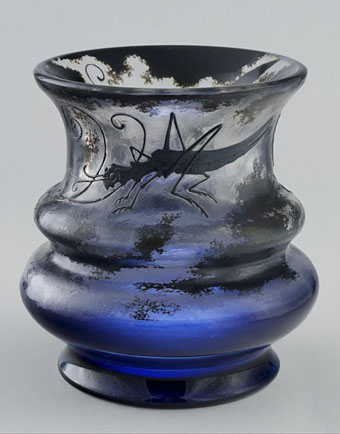
Vase (before 1890) by Émile Gallé.

artnouveau03.jpg

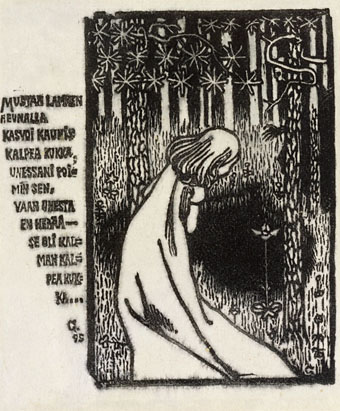
Flower of Death (1895) by Akseli Gallen-Kallela.

artnouveau04.jpg

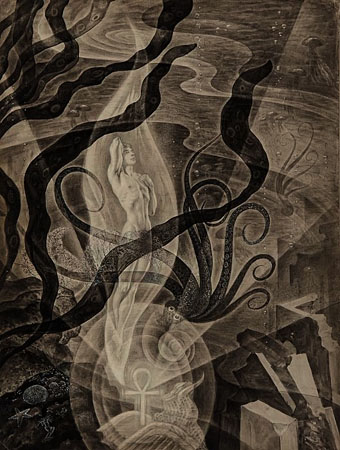
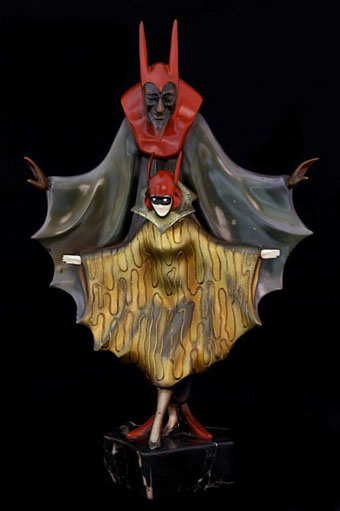
The Offering of Mephistopheles (c.1930) by Roland Paris.

Continue reading “More Art Nouveau”

Ikarie XB 1

ikarie1.jpg

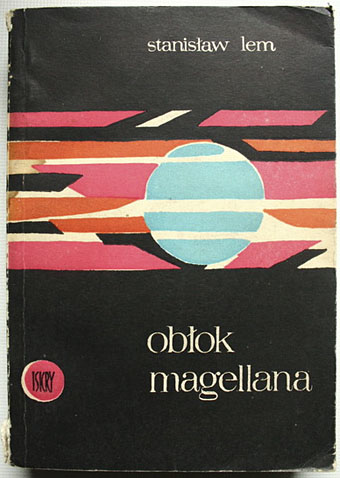
A science fiction novel by Stanisław Lem (The Magellanic Cloud, 1955).

ikarie2.jpg

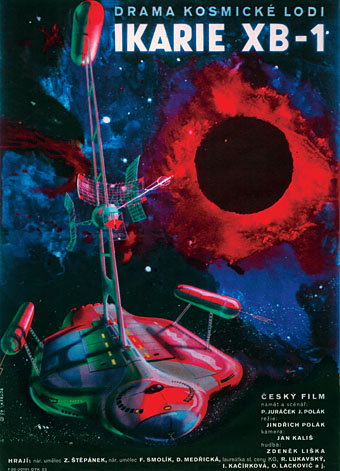
Illustration by Teodor Rotrekl.

A film by Jindřich Polák, adapted from Lem’s novel by Polák and Pavel Jurácek. (1963).

ikarie3.jpg

A Second Run DVD (2013).

With the exceptions of Tarkovsky’s Solaris and Stalker (both in a league of their own), I’ve never been very enthused about Eastern Bloc science-fiction cinema. If I hadn’t been watching some Czech films recently, and listening to the soundtrack music of Zdeněk Liška, I might not have bothered with this one despite its being promoted as a visual influence on 2001: A Space Odyssey. Ikarie XB 1 won the Grand Prize at the Trieste International Science Fiction Film Festival in 1963, a tie with Chris Marker’s La Jetée. (Umberto Eco was one of the judges.) Fifty years on, Marker’s film has hardly dated at all while Ikarie XB 1 seems very much of its time. But Polák’s film still has some things going for it, surprisingly so considering the director was more used to making comedies.

Ikarie XB 1 is a spaceship travelling to Alpha Centauri in the year 2163. The DVD subtitles don’t translate the name Ikarie so unless you already know it means “Icarus” there’s no foreshadowing of any possible threat, at least until the opening shots of a deranged crewman stumbling through empty corridors. Many of the scenes which follow seem over-familiar but only because the scenario of space-crew as interstellar family has become such a standard feature of filmed space opera from Star Trek on. The production design is dated, of course, but the film makes great use of black and white in the lighting patterns, on-screen visuals, clothing designs, etc. It’s easy to see why Kubrick thought it was a cut above other SF films of the period, especially with its widescreen compositions. The DVD booklet (and Kim Newman’s interview on the disc) mention Kubrick’s stylistic borrowings; judge for yourself with these screen-grabs. I was hoping the Liška soundtrack might be more electronic than it is. It’s very much a Liška score—at times you can’t help but imagine a Švankmajer puppet lurking round a corner—but with added reverb and spectral organ chords. The latter assist a sequence where two of the crew members explore an apparently derelict space station.

This page reviews the film in some detail (complete with plot spoilers). For the curious, the entire film is a free download at the Internet Archive.

Previously on { feuilleton }
Fiser and Liska
Two sides of Liska
Liska’s Golem
The Cremator by Juraj Herz