Weekend links 207

barker.jpg

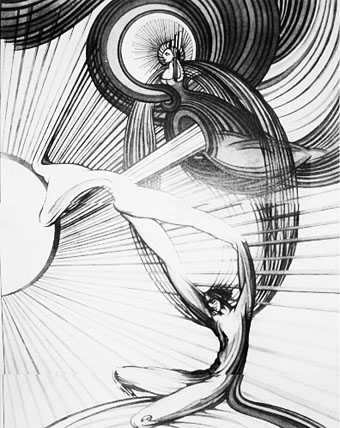
Chthonic Cities by David Chatton Barker. One of a series of Folklore Tapes screenprints available from Bleep.

• The original version of Kenneth Anger’s Lucifer Rising, the one with the Jimmy Page soundtrack that was completed in 1973, has always been described as lost/stolen/buried or otherwise gone forever. So you’d think the news that a print had been discovered recently by Brian Butler would have received greater attention. There’s a screening in Los Angeles this Thursday. When do the rest of us get to see it?

Chris Marker: A Grin Without a Cat, an exhibition and series of Marker-related events at the Whitechapel Gallery, London. Related: The Encounter of M. Chat & Chris Marker as Told By Louise Traon.

• The trailer for The Gospel According to St Derek, a forthcoming documentary about Derek Jarman. Related: Carl Swanson on why Tilda Swinton is not quite of this world.

Maybe there’s just something conservative at the bedrock of American fiction. […] Or maybe it’s just another symptom of the creeping conservatism that’s infected so many aspects of the culture.

Eric Obenauf talks to author Jeff Jackson whose comments about cultural conservatism could equally be applied to the UK.

• Primitive graphics, inventive graphics, budget Surrealism, and some great theme tunes; it’s Trunk TV, Episode 1: Title Sequences.

• Mixes of the week: Secret Thirteen Mix 110 by Black To Comm, and Intro To Drone For Debcon 1, almost 7 hours of music!

Joseph Burnett reviews Ett, an album of electronic music by Klara Lewis.

The Delian Mode (2009), a film about Delia Derbyshire by Kara Blake.

• Extracts from Tokyo Reverse by Simon Bouisson and Ludovic Zuili.

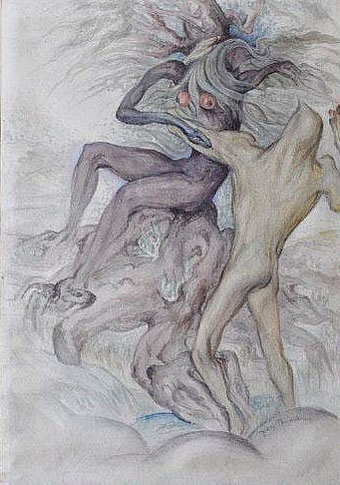
Dan Piepenbring on The Haunting Illustrations of Alfred Kubin.

• At Strange Flowers: Photos of arcades by Germaine Krull.

• Fish, Fiends, and Fantasy: The Gothic Art of Ian Miller.

• At 50 Watts: Richard Teschner and His Puppets.

• Sonic Foam: Ian Penman on Kate Bush and Coil.

Bits and Pieces

Lucifer (1968) by The Salt | Experiment IV (1986) by Kate Bush | Methoxy-N, N-Dimethyl (5-MeO-DMT) (1998) by Coil

Musaeum Hermeticum

alchemy11.jpg

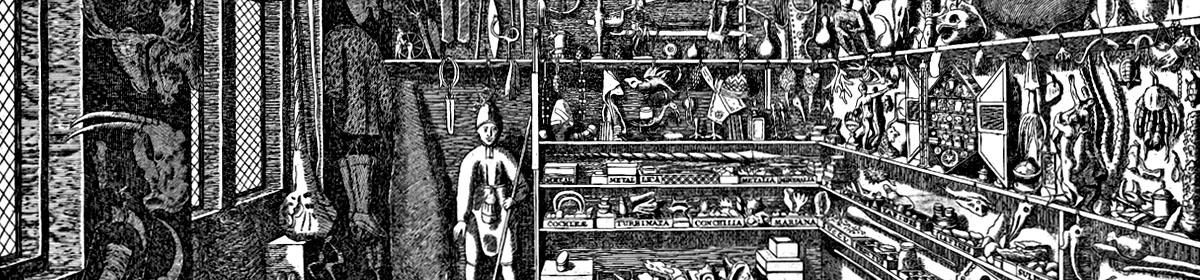
More from the storehouse of wonders that is the Getty Alchemy Collection at the Internet Archive. The illustrations here are from the 1678 edition of the Musaeum Hermeticum, a lengthy collection of alchemical texts with engraved illustrations by Matthäus Merian (1593–1650). Merian’s illustrations are some of the most frequently reprinted of all those you’ll find in alchemical books of this period, and justifiably so, he had a knack for presenting the allegories of the alchemical process in an elegant and detailed manner that’s also gloriously strange. The same quality of strangeness can be found in his other major alchemical work, Atalanta Fugiens (aka Scrutinium Chymicum). Browse Musaeum Hermeticum here or download it here.

alchemy01.jpg

alchemy02.jpg

alchemy03.jpg

alchemy04.jpg

Continue reading “Musaeum Hermeticum”

The Miracle of Bali: Recital of Music

gamelan1.jpg

This is a great half-hour film of a type that the BBC used to produce on a regular basis when the corporation was still pursuing the Reithian mission of informing as well as entertaining. The Miracle of Bali was originally a series of three half-hour films broadcast in 1969: The Midday Sun, Night, and Recital of Music.

gamelan2.jpg

The narrator is David Attenborough who leads us through a range of different music and dance performances from the island. This form of music is very familiar to me—I have several albums of gamelan music from Bali and Java—but I’ve never seen the instruments themselves presented in such detail before. There’s a taste of most of the main styles of Balinese music, beginning with a furious recital from a gamelan orchestra. Three dances follow, then the film ends with a stunning performance of the Kecak, or Monkey Chant. This is a common feature of recordings from Bali but seeing it staged takes the performance—which also includes dance and theatre—to a different level entirely. Watch it here. Via MetaFilter.

Previously on { feuilleton }
The Gamelatron

The recurrent pose 52

flandrin1.jpg

After Young Man Beside the Sea (2008) by Abe Koya.

Further examples of this most recurrent of poses continue to emerge. Abe Koya subjects Flandrin’s jeunne homme to some Japanese tattooing, one of a number of prints that give other famous artworks similar treatment.

flandrin2.jpg

La solitudine dei numeri due (2011) by Giuseppe Veneziano.

Giuseppe Veneziano goes the opposite route by placing a superhero in Flandrin’s seascape. Another of Veneziano’s paintings has Superman in a pieta pose; Krypton’s most famous exile had already appeared in Flandrin’s setting some years ago. (Thanks to Hans for the tip!)

Elsewhere on { feuilleton }
The recurrent pose archive

Kusama’s Self-Obliteration, a film by Jud Yalkut

kusama1.jpg

Yayoi Kusama’s art has often been classed as psychedelic—some of her mirrored rooms were featured in the travelling Summer of Love exhibition in 2005—but this is more a consequence of her activities meshing with the interests of the late 60s than anything else; her preoccupations always seem a lot more personal and obsessive. Jud Yalkut’s short film shows Kusama and various friends cavorting in typical underground-movie fashion in 1967, the main indicator of the artist’s involvement being her sticking polka dots (and leaves) onto everything: trees, people, cats, horses, even a river. Later on there’s more polka-dotting at some kind of body-paint happening inside one of her mirrored rooms. The film itself is pretty psychedelic in the second half, looking like outtakes from Roger Corman’s The Trip. The of-the-moment score was provided by The CIA Change, whoever they were. Watch it here.

kusama2.jpg

Previously on { feuilleton }
Infinite reflections
Yayoi Kusama
The art of Yayoi Kusama