Chocolate devils

chocolat1.jpg

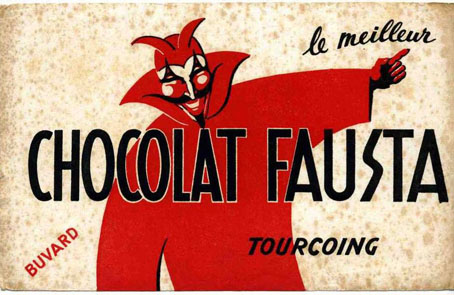
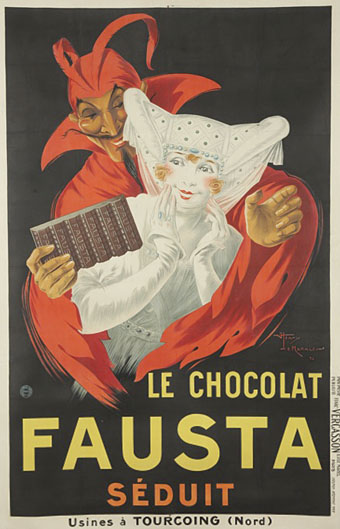
If the Devil has all the best tunes he may as well have the chocolate to go with them. I was hoping there might be more examples of this brand but it seems not. Details about the designs are also scant but Fausta was a product of the Maison Prouvost Motte chocolaterie in Tourcoing, France. This invoice shows they were still using a version of the poster below as a company logo in the 1940s.

chocolat2.jpg

Previously on { feuilleton }
Paul Konewka’s Faust
Magicians

A tabled question

bps1.jpg

Work-related research this week had me wondering who it was that first thought of turning Battersea Power Station into a table. For the past few days I’ve been looking at a lot of the illustration work that George Hardie produced for the Hipgnosis album covers in the 70s and 80s; I’ll explain why in due course but the quest led me to seek out the songbook for Pink Floyd’s Animals album, two pages of which can be seen in the first Hipgnosis book.

Hipgnosis would often extend their album design into promotional areas, producing related posters, stickers, and so on. Pink Floyd’s popularity meant there was demand for songbooks, and the one for Animals is a treat for the use it makes of additional photos from the flying-pig sessions at Battersea Power Station. The idea of using the power station for the cover came from Roger Waters, incidentally; a shame he didn’t apply the same invention to his lyrics. But I digress…

bps2.jpg

From the Animals songbook (1977). By George Hardie?

Between the photos (and, er, the songs) there are several pages of graphics by (I’m guessing) Bush Hollyhead and George Hardie; the former depicts a pig, dog and sheep in various stylised arrangements while Hardie provided a vignette of bacon rashers on a Battersea table. This was 1977 so I’m assuming it’s the earliest example of the power-station-as-table, unless, of course, somebody out there knows better.

bps5.jpg

When the Monster Dies (1990) by Kate Pullinger. Illustration by Willie Ryan.

And sure enough… Thanks to herr doktor bimler for suggesting this one.
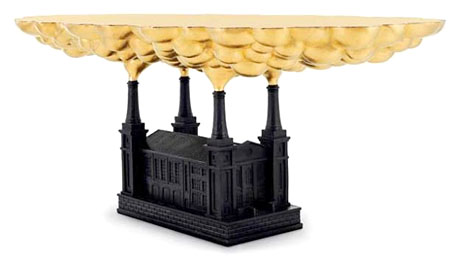
table.jpg

Robber Baron Table (2006) by Studio Job.

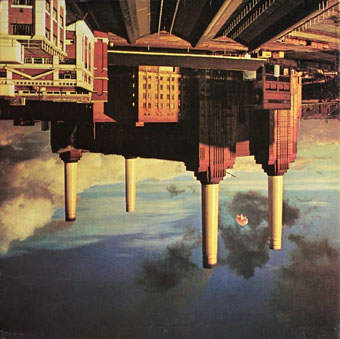
Artist David Mach took up the table idea in the 1990s to produce a series of collages showing an enormous chimney-legged chair sitting beside the power station. There’s no explanation as to why the table should be upside down but then artists often don’t think things through as well as designers. A better idea is the Battersea-like Robber Baron Table (2006) by Studio Job, part of a series of furniture concepts suitable for oligarchs and those who work in the City of London.
bps3.jpg

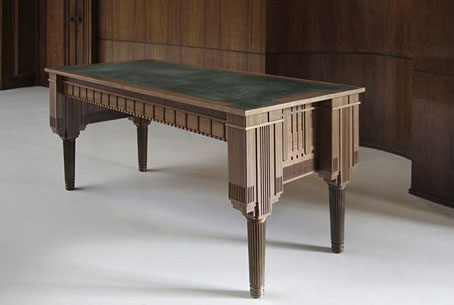
And so to the inevitable, one of a number of stylish tables currently being manufactured by the Battersea Table company.
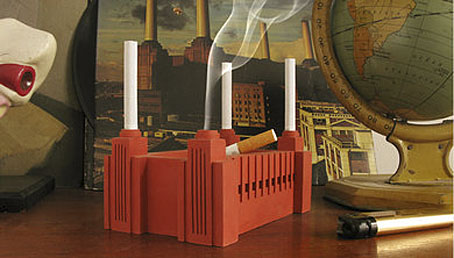
bps4.jpg

Not a table but another clever repurposing of Giles Gilbert Scott’s architecture. Atypyk makes concrete ashtrays for those who still smoke, with the chimneys formed from unsmoked cigarettes. Battersea Power Station when it was in use did much to contribute to London’s polluted air so this seems a fitting by-product. Are there any more examples out there?

Previously on { feuilleton }
Design as virus 16: Prisms
Labels
Storm Thorgerson, 1944–2013
Hipgnosis turkeys
Peter Christopherson, 1955–2010
Storm Thorgerson: Right But Wrong
Battersea Power Station

George Barbier’s Mirages

barbier1.jpg

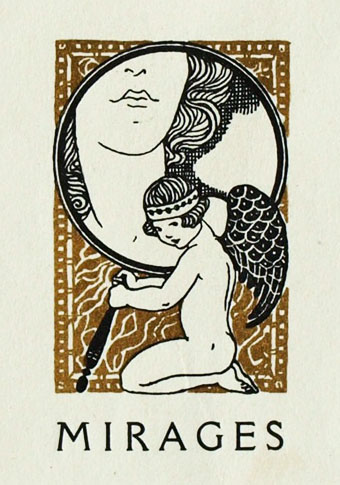
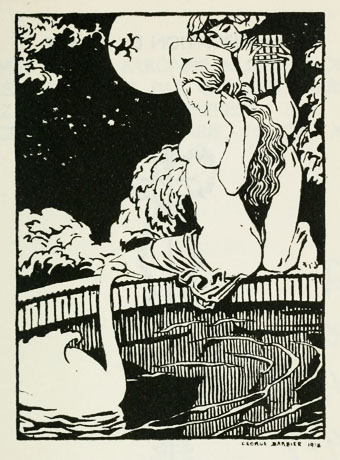
Mirages (1919) is a book of poems by Renée de Brimont with illustrations by George Barbier, an artist whose work has featured here on several occasions. This is a minor addition to the Barbier oeuvre with fewer illustrations than I would have hoped for, a handful of designs that show a different style to his more familiar pochoir prints. Many illustrators vary their styles—even Beardsley did—but Barbier seemed happy maintaining a single drawing style. (Note: The copy of this book at the Internet Archive is missing the cover picture above.)

barbier2.jpg

barbier3.jpg

Continue reading “George Barbier’s Mirages”

Shapeshifters

arvin.jpg

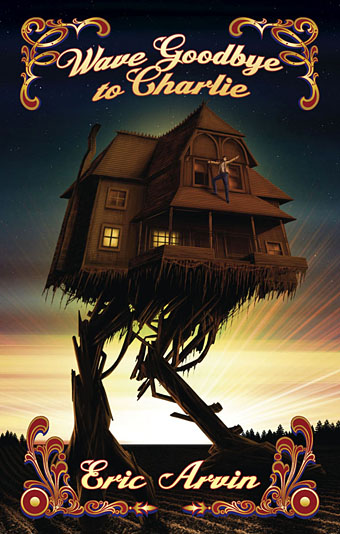
Time for another work update. These are three covers for fantasy novels from LGB imprints due for release in the next week or so. The brief for Eric Arvin’s cover was walking house plus some kind of fairground (or carnival) decoration. I found a nice trove of fairground art at Sheffield University but the picture was working so well I didn’t want to clutter it with extraneous detail. Wave Goodbye to Charlie is published by Wilde City Press.

hale1.jpg

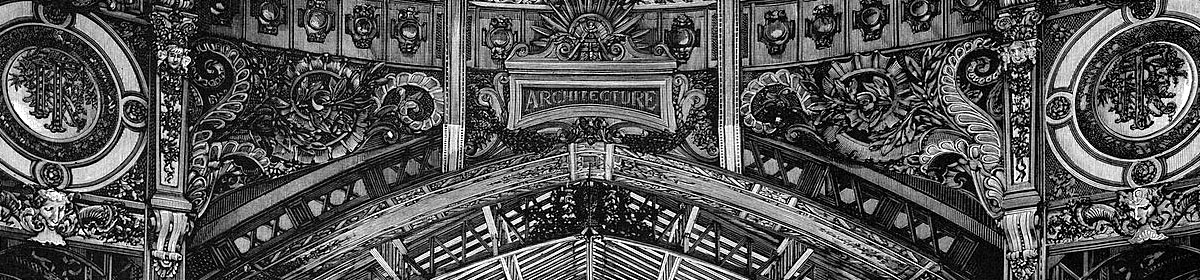
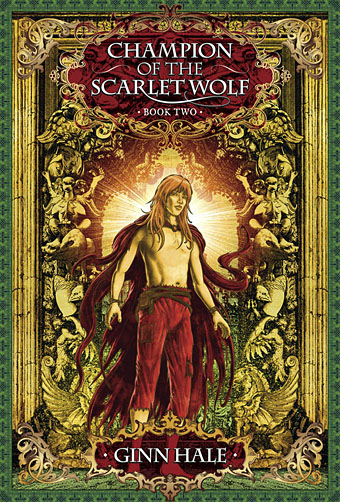
And speaking of extraneous detail… Ginn Hale’s books continue a series featuring swashbuckling, shapeshifting characters, witches and the like. (There’s also a witch in Eric Arvin’s novel but she drives a Buick.) I spent a great deal of time collaging bits of gargoyles and statuary from A. Raguenet’s six-volume Materials and Documents of Architecture and Sculpture (1915) into two elaborate arch designs…then covered them over. This is a bad habit but at least everything ended up in the finished artwork. My other bad habit is spending ages creating something only to place it into the composition and find it doesn’t work at all… Ginn Hale’s novels are published by Blind Eye Books.

hale2.jpg

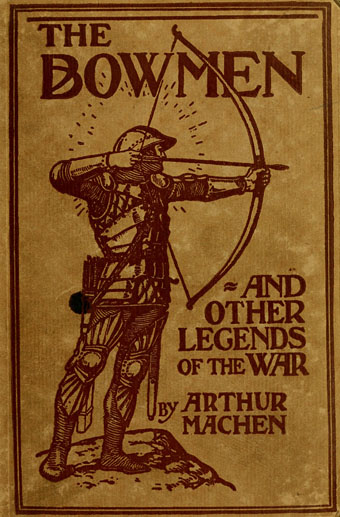
The Bowmen by Arthur Machen

bowmen.jpg

The Bowmen was a short piece of fiction by Arthur Machen published in a London newspaper, The Evening News, on the 29th September, 1914. By Machen’s standards it’s not one of his best pieces, written at a time when he was working at the paper as a journalist. The First World War was in its early days, and the story was conceived as a Kipling-like morale-boost following the retreat of British forces at Mons a few weeks before. The stories for which Machen is remembered today had never provided the success he hoped for so it must have been a surprise when his invention of angelic bowmen appearing during the battle gained him national attention:

On the last Sunday in August, 1914, Machen read in his morning paper of the retreat from Mons.

“I no longer recollect the details, but I have not forgotten the impression that was then made on my mind. I seemed to see a furnace of torment and death and agony and terror seven times heated, and in the midst of the burning was the British army: in the midst of the flame, consumed by it, scattered like ashes and yet triumphant, martyred and for ever glorious.”

That was the way, indeed, in which the English thought about the army at the beginning of the Great War; since then we have come to take a less romantic view of warfare. With this picture in his mind, Machen conceived and wrote a story called The Bowmen, told, as most stories are, as if it were true—that is, he did not begin by saying: “what you are about to read is all my own invention”—in which St. George with an army of English mediaeval bowmen appeared at the critical moment to cover the British retreat. Not, to be sure, a very probable story nor, as Oswald Barron pointed out, was it likely that the Agincourt bowmen, most of whom came from Wales, would use the French expressions Machen evokes from them: and Machen himself felt he had not done justice to his original conception.

“But if I had failed in the art of letters, I had succeeded, unwittingly, in the art of deceit.”

The Bowmen appeared in The Evening News on September 29th, 1914, at a moment when people were looking for a miracle, and many promptly embraced it as an account of one. That such journals as The Occult Review and Light should fasten on it, might have been anticipated; but it was taken up by parish magazines all over the country, and people came forward on every side to say that they had friends and relatives who had seen the “Angels of Mons” with their own eyes. As a result, Machen became, for the first time in his life, a man of nation-wide fame. To thousands of people, the idea, whether true or false, gave consolation or hope, but when Machen protested that his story was entirely the child of his own imagination, the fame threatened to turn to notoriety; he was rebuked for his impudence at claiming originality for the tale. Nevertheless a legend had been born and a shoal of publications appeared to satisfy public demand—On the Side of the Angels (Harold Begbie), Guardian Angels (GP Kerry—a sermon reprinted), Angels, Saints and Bowmen of Mons (IE Taylor, Theosophical Publishing Society).

Aidan Reynolds & William Charlton in Arthur Machen: A Short Account of His Life and Work (John Baker, 1963)

Continue reading “The Bowmen by Arthur Machen”