
Salvador Dalí’s Maze

dali13.jpg

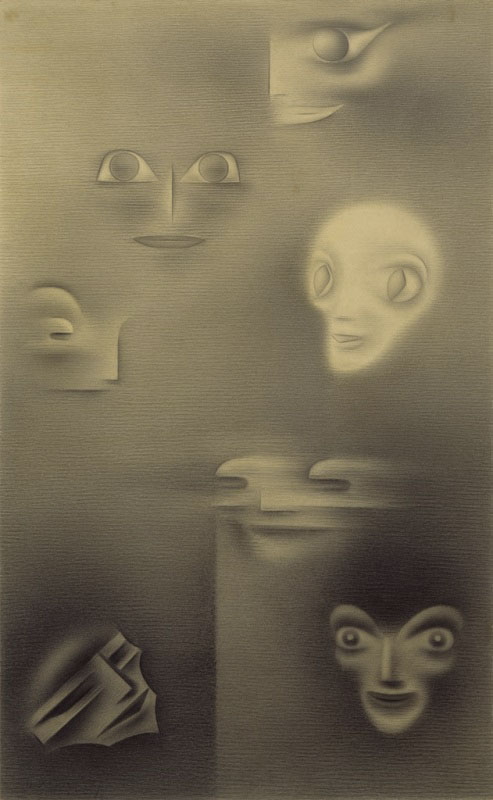
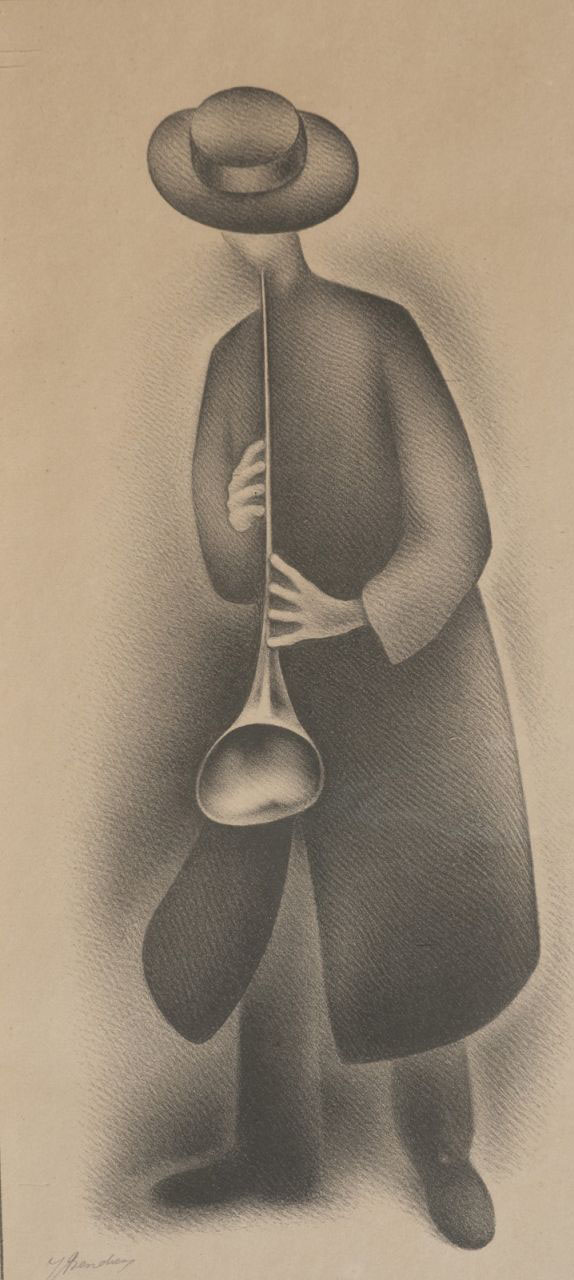
Maurice Yves Sandoz (1892–1958) was a Swiss composer and writer who published a handful of works of fantastic fiction, none of which are especially well-known today. One of these, a novel entitled Le Labyrinthe (1945), will be familiar to most people via the film version directed by William Cameron Menzies in 1953, Menzies’ final effort in a chequered directing career. The Maze is a low-budget horror film that was shot in 3-D, and which works well for the most part, at least until its rather absurd ending. I hadn’t heard about the novel until a recent conversation with the knowledgeable Mr TjZ during which he mentioned that Salvador Dalí had illustrated Sandoz’s novel when it was republished by Doubleday, Doran in 1945. Dalí illustrated a number of novels throughout his career but The Maze is one of the few original works (as opposed to a reprint of a classic), the fruit of Sandoz’s social connections with the art world. 1945 was the year that Dalí’s brand of Surrealism was fully embraced by America—he was working on Hitchcock’s Spellbound at this time—so it’s surprising that Sandoz’s novel isn’t better known. Dalí also provided illustrations for two collections of Sandoz’s short stories: Fantastic Memories (1944) and On the Verge (1950).

dali14.jpg

I haven’t seen a copy of the novel so the illustrations here are no doubt wrongly sequenced. Secondhand copies of the Dalí Sandoz titles aren’t as expensive as you’d imagine so I’m tempted to track down copies. I’m also curious to know how the novel compares to the film. Thanks to TjZ for the tip!

(And having written the above, I notice from my tags for the post that I’d linked to copies of the short story illustrations in a weekend posting several years ago. Among other things, this blog is a useful memory jolt. But The Maze was definitely news.)

dali05.jpg

dali01.jpg

dali02.jpg

Continue reading “Salvador Dalí’s Maze”

Weekend links 448

becher.jpg

Gas Tanks 1965–2009 by Bernd Becher and Hilla Becher.

• At Dangerous Minds: the drawings produced by Moebius for Maxwell House in 1989 are better than the coffee whose sales they were intended to assist.

Jarman Volume 2: 1987–1994, the BFI’s second collection of Derek Jarman films, is now available for pre-order.

• More Gorey: Cara Giaimo on Edward Gorey’s hoards and collections.

That movie [Susan Slade]—and I even have the paperback novelization of it—is a moment. That’s a perfect example. They would never release that image as a still of the movie. Come see a baby catch on fire! To me, I’m kind of rewriting the films as these scenes. That was a real shock to me as a teenager when I saw that. And I thought, Did that just happen? Her baby caught on fire? I remember in Serial Mom I had a big fight with a film executive who said that you can’t have her set her kid’s friend on fire. You can’t do that. And I said, “Why, it’s been in movies forever.” And I’m thinking of Susan Slade, but I’m thinking there’s no point using that in the argument.

John Waters talking to Gina Telaroli about his films but mostly about his works for the art gallery

Georgina Guthrie on how green became cinema’s loneliest colour.

• Tom Crewe reviews Edward Burne-Jones at Tate Britain.

• Mix of the week: FACT Mix 688 by Steve Hauschildt.

• At Strange Flowers: 19 books for 2019.

Jenzeits Cosmic Worlds by Jenzeits.

• Green Onions (1962) by Booker T. & The MGs | Green (1966) by Ken Nordine | Green Fuz (1969) by Randy Alvey And The Green Fuz

The Resurrectionist of Caligo by Wendy Trimboli & Alicia Zaloga

resurrectionist.jpg

My latest cover for Angry Robot Books was unveiled this week on the Barnes & Noble blog. The Resurrectionist of Caligo is an atmospheric Gothic fantasy for which the cover art veers close to the illustration work I was doing recently for Editorial Alma, Frankenstein in particular:

With a murderer on the loose, it’s up to an enlightened bodysnatcher and a rebellious princess to save the city, in this wonderfully inventive Victorian-tinged fantasy noir.

“Man of Science” Roger Weathersby scrapes out a risky living digging up corpses for medical schools. When he’s framed for the murder of one of his cadavers, he’s forced to trust in the superstitions he’s always rejected: his former friend, princess Sibylla, offers to commute Roger’s execution in a blood magic ritual which will bind him to her forever. With little choice, he finds himself indentured to Sibylla and propelled into an investigation. There’s a murderer loose in the city of Caligo, and the duo must navigate science and sorcery, palace intrigue and dank boneyards to catch the butcher before the killings tear their whole country apart.

Some covers present more difficulties than others, this one being an awkward layout in its early stages due to the multiple demands of the brief. Not only was the book title a lengthy one, there were also two author names to accommodate plus a variety of pictorial detail that required placing in a harmonious arrangement. I don’t always begin a design with the title layout but in this case this was the first priority, so the cover is designed around the title rather than the title being applied to the cover at a later stage. All of this caused me some headaches for a few days while I tried to find a type layout that would look pleasing, be readable from a distance and also not interfere too much with the background. None of the struggle is evident in the final work, of course, which is as things should be.

The Resurrectionist of Caligo will be published in September.

Weekend links 447

exercise.jpg

Physical Training for Business Men (1917).

• At Expanding Mind: Erik Davis concludes his discussion with religious scholar Diana Pasulka about anomalous cognition, 2001 monoliths, disclosure, future truths, absurd Christianity, and her book American Cosmic.

• This year the LRB wouldn’t let non-subscribers read Alan Bennett’s 2018 diary but they have a recording of Bennett reading entries here.

• “Glen thought it was very good PR for us to be heavily involved in the druids.” Tom Pinnock talks to the Third Ear Band.

• Rebecca Fasman on the forgotten legacy of gay photographer George Platt Lynes.

• Laura Leavitt on John Cleves Symmes Jr.‘s obsession with a hollow Earth.

• David Parkinson recommends 12 essential Laurel and Hardy films.

• Paul Grimstad on the beautiful mind-bending of Stanisław Lem.

• Mix of the week: Secret Thirteen Mix 277 by Sigillum S.

• The endlessly photogenic Chrysler Building.

Energy Flow by Ryuichi Sakamoto.

195 Gigapixel Shanghai

Solaris: Ocean (1972) by Edward Artemyev | The Sea Named Solaris (1977) by Isao Tomita | Simulacra II (2011) by Ben Frost & Daníel Bjarnason

The art of Nick Hyde, 1943–2018

hyde05.jpg

Estate of Man (1967).

A short tribute to American artist Nick Hyde who I’ve been informed died last month. Hyde’s extraordinary paintings were featured here a few years ago after I found a copy of Visions (1977), an art book devoted to artists of the loosely-affiliated California Visionary school. Most of the paintings in the book are a type of fantastic art (not to be confused with fantasy art) that owes much to the hippy mysticism that later became codified as “New Age”, a vague term which covers a lot of territory. Several of the paintings were featured in the early issues of OMNI magazine but I don’t recall Nick Hyde’s art being among them. Hyde’s early paintings are darker and stranger than those of his Visions contemporaries, and they were ones I inevitably preferred to the rest, hence my earlier post highlighting his work. There isn’t much else I can say about him other than pointing to the official website and posting the following appraisal by Walter Hopps from Visions. All the paintings here are from Visions, and several of them (Abraxas in particular) look like they need to be seen at a much larger size.

hyde06.jpg

Cryptyde (1967).

I am not trying to clean myself of impurities, but to venture into a very real situation. I consider myself a true visionary—it comes to me and I flow with it. My imagery is always a dance.” Nick Hyde, 1976

The powerful nature of Nick Hyde’s art stands in certain important ways vividly apart from that presented here by his visionary colleagues. Rather than scenes of cosmic calm, serene process, or peaceful resolution, Hyde pours forth effulgent compositions of both hallucinatory intensity and tumultuous activity. The myriad visual events and details brought forth in an all-at-once total vision in Hyde’s paintings give rise to a unique tension between what seems the most violent of struggles and the most delicate of dances. In maintaining qualities of such polarity Hyde reveals a mastery of a sinuous, insinuating line structure that both divulges and dissolves images.

hyde03.jpg

Inside Out Breaking Free (1968).

In his extraordinary allegorical painting Estate of Man, human figures are disgorged from a Gothic tracery of lines that suggests the network of nerves of a livid inner eye. Closer inspection reveals the jaws of a hell-mouth that swallows these figures and assimilates them as functioning fibers in a self-conceiving infernal machine. At upper right, however, in a zone of apparent transcendence, Hyde paints a luminist landscape at the moment of sunrise. It is perhaps where one is to find redemption in the Eye of God: or is it merely the burning earth that bears man to offer him to hell?

hyde01.jpg

BethAnn (1969).

Hyde’s painting Abraxas touches on a note of subtle, mordant humor: the mythoid monster and his serpent-headed mate entwined in an infernal lair is, at the same time, a gentleman with his lady, reclining at ease, casually smoking. and telephone in hand. A clock—on the fire-place mantle at the right of the composition—is without hands, and ornamented by two barely perceptible figures. They repeat in reverse the pose of the two polymorphic companions. Abraxas, a god of good and evil, exists in a world abandoned of time, of rhythmic mimesis, of smoldering mockery. —Walter Hopps

hyde02.jpg

Urp (1970).

hyde04.jpg

Abraxas (1971).

Elsewhere on { feuilleton }
The fantastic art archive

Previously on { feuilleton }
Visions and the art of Nick Hyde