Weekend links 566

hokusai.jpg

The Amida Falls in the Far Reaches of the Kisokaido Road. From the series A Tour of Waterfalls in Various Provinces (c. 1832) by Hokusai.

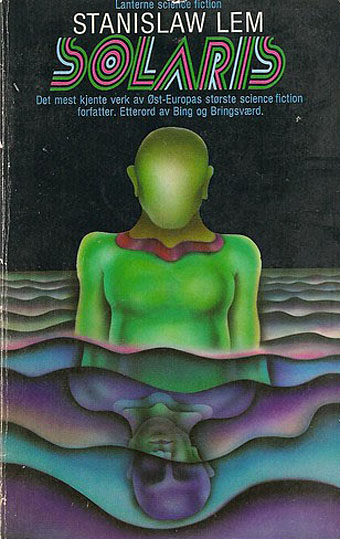
• New music: In Love With A Ghost by Kevin Richard Martin (aka Kevin Martin, The Bug, etc), a preview from his forthcoming alternative score for Andrei Tarkovsky’s Solaris (1972). In other hands I’d probably dismiss a further addition to the trend of creating new scores for films that don’t require them. Tarkovsky’s film certainly doesn’t need any new music, and we’ve already had an album-length homage from Ben Frost & Daníel Bjarnason. But I like Martin’s sombre atmospherics so he gets a pass with this one.

• “[Pauline] Oliveros wrote a piece for the New York Times in 1970 titled And Don’t Call Them Lady Composers, focusing on the difficulties of women being noticed and taken seriously in her field. It’s still online and could have been written yesterday.” Jude Rogers on Sisters With Transistors, a documentary about women in electronic music. Madeleine Siedel interviewed Lisa Rovner, the film’s director. Watch the trailer.

Submissions to the 16th number of Dada journal Maintenant will be open at the beginning of October, 2021, following an announcement of the theme of the new issue in September. All you would-be (or actual) Dadaists out there have the summer to plot your potential contributions.

Our reverence for originals takes an absurdly extreme form in the recent craze for NFTs (non-fungible tokens), where collectors and traders spend huge sums of money on unique ‘ownership’ of a digital artwork that anyone can download for free. Since there’s no such thing as the original of a digital file, the artist can now certify the file as the one and only ‘original copy’, and make a fortune. Time will tell whether this is a transient fad or a new way of establishing the feeling of a relationship to the mind of the digital artist.

But our reverence for originals isn’t universal. Treating the original as special and sacred is a Western attitude. In China and Japan, for example, it’s acceptable to create exact replicas, and these are valued as much as the original—especially because an ancient original might degrade over time, but a new replica will show us how the work looked originally. And, as mentioned, there are studios in China where artists are employed to create fakes. Perhaps our culture teaches us to respond to artworks by inferring the mind behind the art.

“Works of art compel our attention—but can they change us?” asks Ellen Winner

• “What Don basically did here is find a series of one or two bar riffs, or parts, that he liked, have me write them down, and then say, in essence, ‘make something out of this’.” John French (aka Drumbo) recalls the making of Trout Mask Replica.

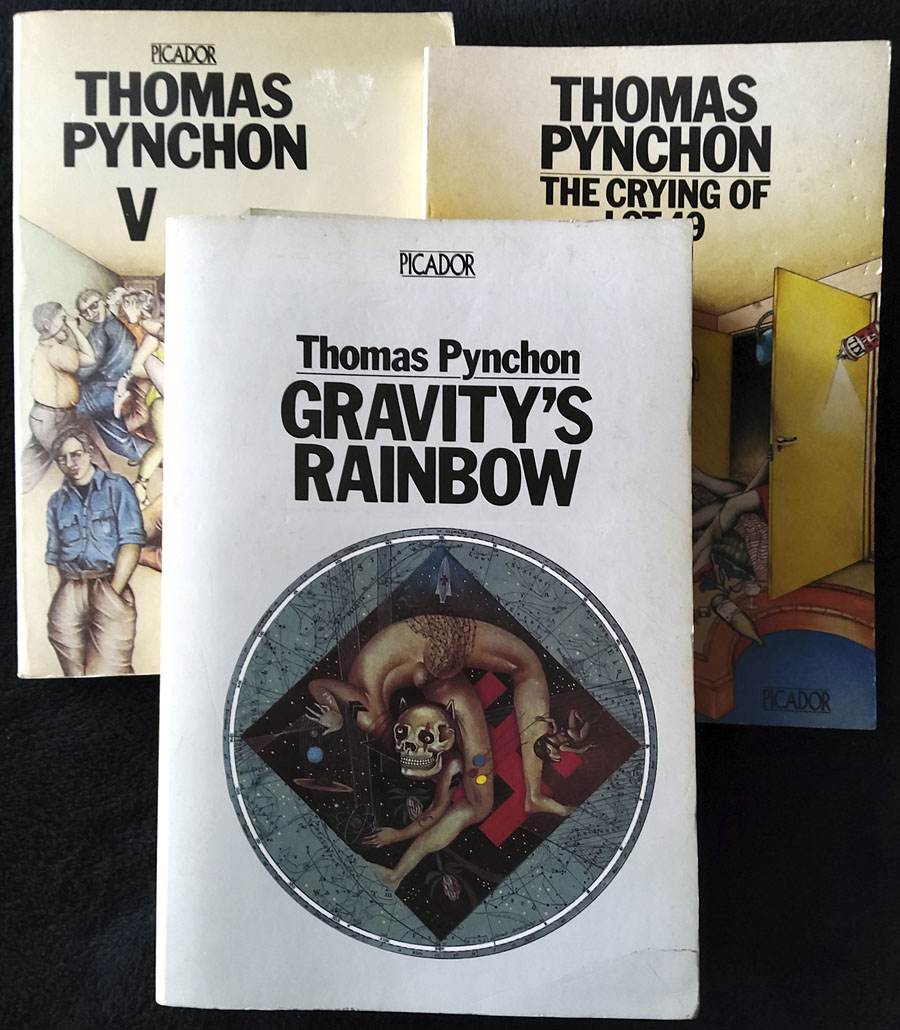
• From 1988 (and relevant this week because I’m reading a Pynchon novel): Thomas Pynchon’s review of Love in the Time of Cholera.

• Andy Thomas on fusion legend Ryo Kawasaki, pioneer of the synth guitar.

• At Dennis Cooper’s: Dimitri Kirsanoff Day.

Gareth Jones’ favourite music.

• RIP Monte Hellman.

The Sea Named “Solaris” (1978) by Tomita | Solaris (2014) by Docetism | Solaris Return (2019) by Jenzeits

Charles W. Bartlett’s prints

bartlett08.jpg

Taj Mahal, Agra (1916).

In which British artist Charles W. Bartlett (1860–1940) applies the later style of ukiyo-e landscapes to his views of India and Hawaii. Bartlett was one of a handful of Western artists to have his work reproduced by a Japanese publisher of woodblock prints, Watanabe Shozaburo, so his mastery of the form may be taken as having been given a literal seal of approval.

bartlett07.jpg

Taj Mahal, Sunset (1920).

Considering the popularity and influence of Japanese prints I’m surprised that more artists haven’t attempted series productions like Hokusai’s Thirty-Six Views of Mount Fuji, rather than simply borrowing the familiar approach to line and colour. To date the only Western example I know of is Henri Rivière’s Hokusai homage, Thirty-Six Views of the Eiffel Tower (1902). Charles Bartlett could have done the same with the Taj Mahal, a subject he returned to often enough, and a building which, like the Eiffel Tower, is recognisable even in silhouette.

bartlett09.jpg

Hawaii, The Surf Rider (1921).

bartlett03.jpg

Taj Mahal (1916).

bartlett04.jpg

Silk Merchants, India (1919).

Continue reading “Charles W. Bartlett’s prints”

Do You Have The Force?

force.jpg

Forget all the Disco Sucks bollocks, this was where the creativity was. Many of the qualities of Disco that were so derided were mirror images of those qualities that were celebrated in Punk: an annihilating insistence on sex as opposed to puritan disgust; a delight in a technology as opposed to a Luddite reliance on the standard Rock group format; acceptance of mass production as opposed to individuality. It was the difference between 1984 and Brave New World: between a totalitarian nightmare or a dystopia accomplished through seduction. […] Disco’s stateless, relentlessly technological focus lent itself to space/alien fantasies which are a very good way for minorities to express and deflect alienation: if you’re weird, it’s because you’re from another world. And this world cannot touch you.

— Jon Savage

Don’t let that title fool you into expecting more blather about Space Nazis or belligerent muppets, these are not the Droids you’re looking for. Do You Have The Force? is catnip for this listener, being a compilation of electronic/dance obscurities that’s also another album compiled by the very authoritative Jon Savage. One of Savage’s curatorial hallmarks is a wandering from the beaten path in search of previously unnoticed trails and connections. This 80-minute collection continues the trend with an eclectic mix of energetic space disco and post-punk futurism, together with an extended ambient interlude by The Sea Of Wires, the British cassette world’s answer to the Berlin School of synthesizer music. I’d only heard a couple of these selections before, and the ones I had heard are all unpredictable choices: tracks by Suicide (Mr Ray) and The Flying Lizards (Steam Away) from each group’s less popular second albums; also Invocation, an obscure piece by Cabaret Voltaire from their post-Rough Trade, pre-Virgin recordings for the Disques du Crépuscule label.

Most of the unknown quantities here are all stimulating enough to warrant further investigation, even Droids (Fabrice Cuitad & Yves Hayat) whose Star Wars-themed dance groove may be excused its attachment to the wretched Lucas mythos by virtue of there having been a lot of similar opportunism at work in the late 1970s. In the notes to his album Savage mentions two chart-topping singles that might have warranted inclusion: I Feel Love by Donna Summer (previously), and the majestic Magic Fly by Space. The latter may be heard on the first Cosmic Machine collection of French electronic music, together with another track by Droids. Both of the Cosmic Machine collections make excellent companions for Do You Have The Force?, as does the four-disc Close To The Noise Floor collection, another exploration of the byways of Britain’s post-punk electronic scene which also includes an instrumental by the enigmatic Sea Of Wires. Savage ends his collection with a Mexican mix of tracks by the great Patrick Cowley, a producer who pointed the way to an electronic future he didn’t live long enough to experience for himself.

Do You Have The Force? is out now on Caroline True Records. Kudos to the label for making a CD available. Some of us still prefer to shoot lasers at spinning silver discs, and will support those who continue to produce them.

Previously on { feuilleton }
Just the ticket: Cabaret Voltaire
Summer of Love
Queer Noises

Sixteen views of Meoto Iwa

futamigaura08.jpg

Dawn at Futamigaura (c. 1832) by Kunisada.

Meoto Iwa, or the Married Couple Rocks, are two rocky stacks in the sea off Futami, Mie, Japan. They are joined by a shimenawa (a heavy rope of rice straw) and are considered sacred by worshippers at the neighboring Futami Okitama Shrine (Futami Okitama Jinja). According to Shinto, the rocks represent the union of the creator of kami, Izanagi and Izanami. The rocks, therefore, celebrate the union in marriage of man and woman. The rope, which weighs 40 kilograms, must be replaced several times a year in a special ceremony. The larger rock, said to be male, has a small torii at its peak.

At dawn during the summer, the sun appears to rise between the two rocks. Mount Fuji is visible in the distance. At low tide, the rocks are not separated by water. (more)

futamigaura14.jpg

A Company of Pilgrims from Yedo Outside a Tea House on the Hills Behind the Beach of Futami Admiring the View (c. 1795) by Katsukawa Shunzan.

futamigaura06.jpg

Women Worshiping the Rising Sun between the Twin Rocks at Ise (c. 1803–04) by Kitagawa Utamaro.

futamigaura03.jpg

Futamigaura (c. 1825) by Shotei Hokuji.

futamigaura12.jpg

View of Futamigaura from Famous Places in Ise (1847–52) by Hiroshige.

Continue reading “Sixteen views of Meoto Iwa”

Weekend links 565

kircher.jpg

The Labyrinth of Crete from Turris Babel (1679) by Athanasius Kircher.

• “My self appointed tutors were, in the order I discovered them, Robbe-Grillet, Borges, Nabokov, and Burgess. All of them associable in one way or another with labyrinths, all practitioners of non-linearity, all happy not to explain, all precursors of Godard’s celebrated and liberating ‘a beginning a middle and an end but not necessarily in that order.’ Burgess, of course, also came from the provincial lower middle class, and gave the address at Benny Hill’s funeral.” Jonathan Meades talking to Owen Hatherley about (what else?) the tastes and opinions which were always to the fore in his long-running series of TV films about architecture, art, food, and culture in general. This time last year I rewatched Meades’ TV oeuvre thanks to downloads from MeadesShrine and YouTube. It’s no surprise to learn that he won’t be making any more of these films now that the increasingly useless BBC has decided that the arts-oriented BBC 4 will be an archive channel only. The days are long past when someone like Meades would be given a new six-part series, or an artist like Leonora Carrington 50 minutes of BBC 1 airtime.

• Food and film: “As with so much else in his life, [Alfred] Hitchcock’s accomplice in this peculiar gastronomic odyssey was Alma Reville, his wife, best friend, longest-serving creative collaborator, and, to quote Hitchcock, ‘as fine a cook as ever performed miracles in a domestic kitchen.'” Edward White on Alma Reville and the status of food in the Hitchcock household.

• Food and books: “The supply of hides for parchment was always dependent on the dietary preferences of the local population… For hundreds of years, the transmission of knowledge had depended on carnivorous appetites and good animal husbandry.” Ross King on the laborious process of bookmaking in the 15th century.

• At Wormwoodiana: Sphinxes & Obelisks, a new collection of essays “on rare books and recondite subjects” by Mark Valentine.

• New music: crystallise, a frozen eye by James Ginzburg, and Multiverse by Gadi Sassoon.

• At Dennis Cooper’s: Spotlight on…Amos Tutuola The Palm-Wine Drinkard (1952).

• At Spoon & Tamago: Step inside the miniature worlds of Tatsuya Tanaka.

• Mixes of the week: 30 years of People Like Us, and Fact Mix 803 by oxhy.

And all that jazz: innovative album covers from the 1950s on.

• In praise of Edward Gorey, style icon.

Labyrinthe (1995) by Zbigniew Preisner | Labyrinth (2010) by Chrome Hoof | The Seventh Labyrinth (2018) by Pye Corner Audio