Deutsche Kunst und Dekoration #6

dkd06-01.jpg

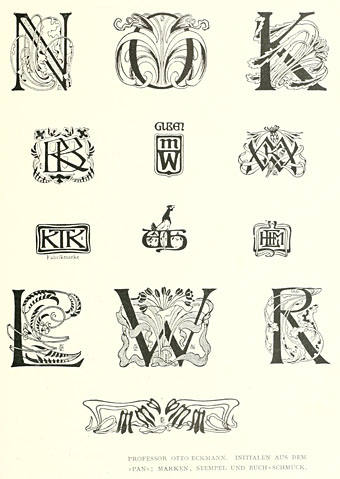
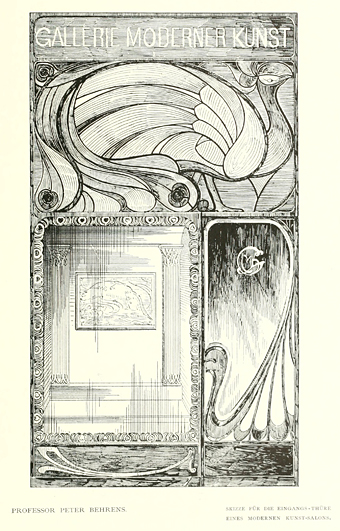
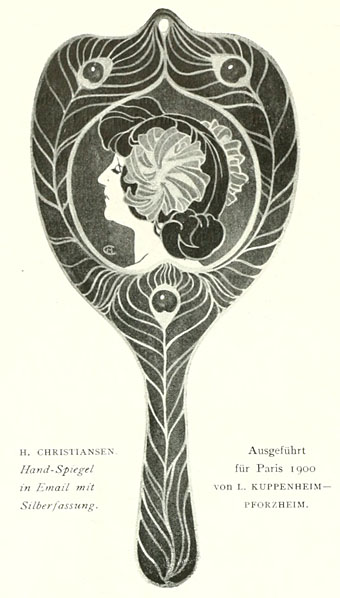
Continuing the delve into back numbers of Deutsche Kunst und Dekoration, the German periodical of art and decoration. Volume 6 covers the period from April to September 1900, and the content is still Art Nouveau all the way, with a dash of Symbolism. Among the contributors in this edition there’s Otto Eckmann and more work from Hans Christiansen, both frequent contributors to Jugend magazine There are further examples of stylish Art Nouveau interiors, and of considerable interest to this Exposition Universelle obsessive, a look at the Paris exposition of 1900 from the German side of things. As before, anyone wishing to see these samples in greater detail is advised to download the entire volume at the Internet Archive. There’ll be more DK&D next week.

dkd06-02.jpg

The ubiquitous peacocks were never far away in 1900.

dkd06-03.jpg

Continue reading “Deutsche Kunst und Dekoration #6”

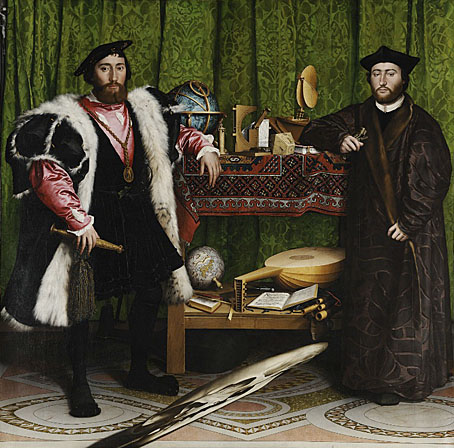
The Ambassadors in detail

holbein1.jpg

Some revelations courtesy of a new venture, the Google Art Project, in which we’re given the opportunity to wander some of the world’s great art galleries and examine a selection of paintings in detail. Holbein’s 1533 masterpiece, The Ambassadors, is the default work for the collection from the National Gallery, London, and it’s a great place to start, being painted in a quite astonishing hyper-realist style. I’ve seen this work in situ and despite its being a large picture it’s difficult to offer it any kind of careful scrutiny. This is partly because the more famous works in that gallery always draw an impatient crowd eager for you to get out of their way, but also because the staff there don’t like people getting too close to the paintings; I was once reprimanded by a staff member for gesticulating too closely to one of the pictures whilst discussing it with a friend.
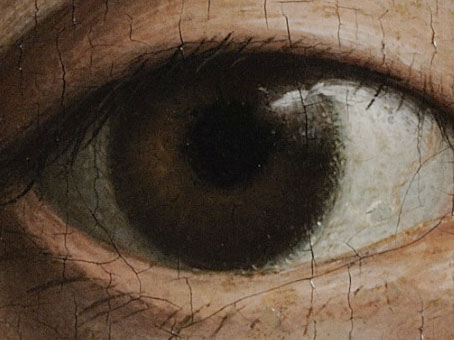
holbein2.jpg

The Ambassadors is celebrated for its anamorphic vanitas skull (gallery visitors usually take turns viewing this from the side of the picture) and its collection of very carefully painted objects and instruments. Thanks to Google we’re now able to examine these to a degree we wouldn’t have been able to do before unless we worked for the gallery. Holbein astonishes even more when you can see how carefully he rendered so many different materials and textures. And this is only one of the works available from one of the galleries…
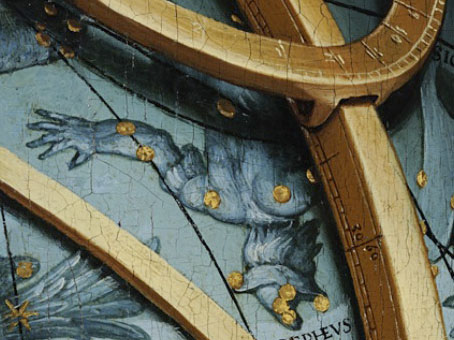
holbein3.jpg

Of the paintings I’ve looked at so far not all allow such ultra-magnified views but then not all paintings require this. Artists such as Titian and Turner don’t benefit from scrutiny with a magnifying glass. An initial gripe would be the lack of any thumbnail view of the paintings on offer but it seems unfair to complain, this is a great development for art lovers. I’m hoping now that the project will evolve the way Google Earth has, with the addition of other galleries and paintings. A few more details follow.

Continue reading “The Ambassadors in detail”
Mossa’s Salomés

mossa5.jpg

Salomé (1901).

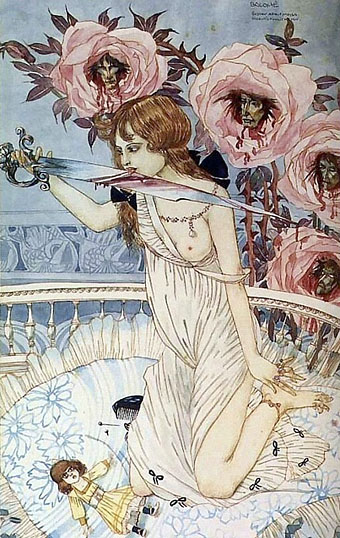
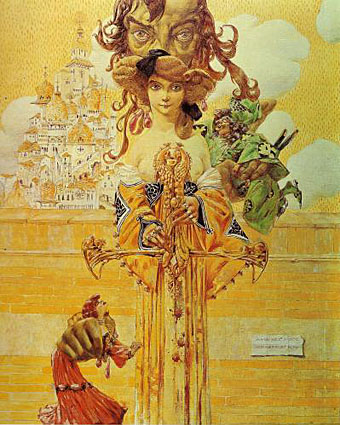
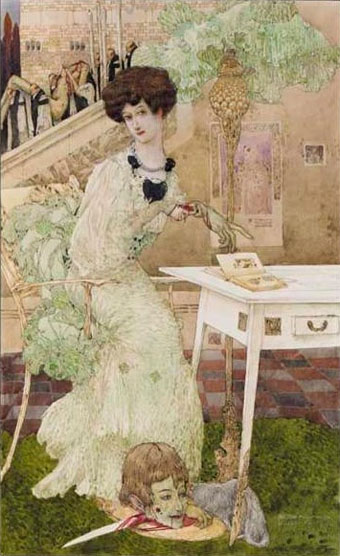
Monsieur Wiley prompted this post by drawing my attention to the picture above. I’d already seen another Salomé by Gustav Adolf Mossa on this page a few days ago but resisted the temptation to mention it. A bit more searching revealed yet another Mossa rendering of the theme which perhaps isn’t so surprising given the artist’s obsession with lethal women. The first exceeds all previous depictions of the Biblical temptress by having her actually licking blood from the executioner’s sword. In the third picture she’s content merely to use a severed hand as a page-turner while John the Baptist’s mutilated body is carted away by servants.

The search for pictures turned up a blog I hadn’t seen before, Women in the Bible (“This is no religious blog!”), which has several Salomé postings. And there’s also Les voiles de Salomé: Labyrinthique errance, virevoltes et volutes.

mossa6.jpg

Encor Salomé (1905).

mossa7.jpg

Salomé (1908).

Elsewhere on { feuilleton }
The Salomé archive

The art of Gustav Adolf Mossa, 1883–1971

mossa1.jpg

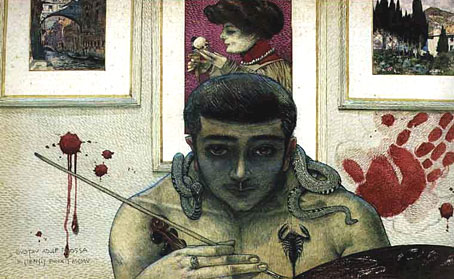
Self-portrait.

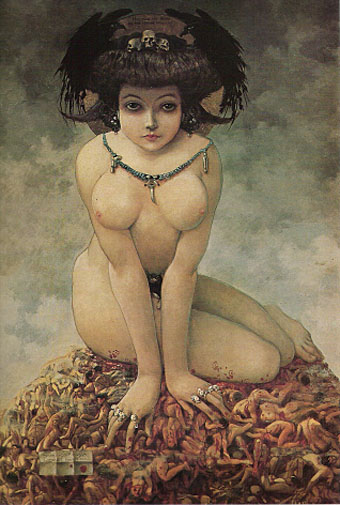
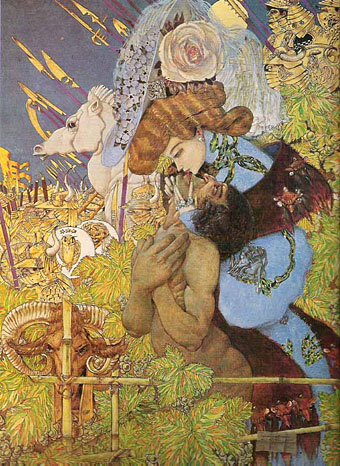
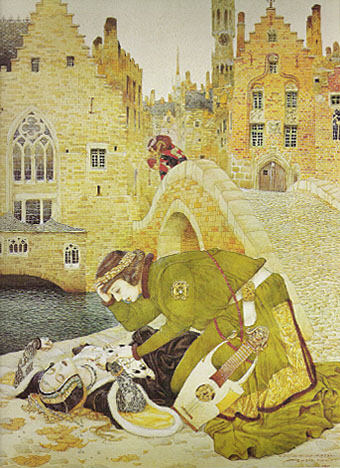
A French artist and another late Symbolist painter whose idiosyncracies point to Surrealism but whose obsession with femmes fatales looks back to the preoccupations of the fin de siècle. If you don’t mind the implicit misogyny there’s a lot more to be seen here and here.

mossa2.jpg

Elle (1906).

mossa3.jpg

Le baiser d’Hélène (1905).

mossa4.jpg

Bruges-la-morte (1911).

Previously on { feuilleton }
Le Sphinx Mystérieux
La belle sans nom
The Feminine Sphinx
Le Monstre
Carlos Schwabe’s Fleurs du Mal
Empusa
Bruges-la-Morte