Joseph Cornell, 1967

cornell1.jpg

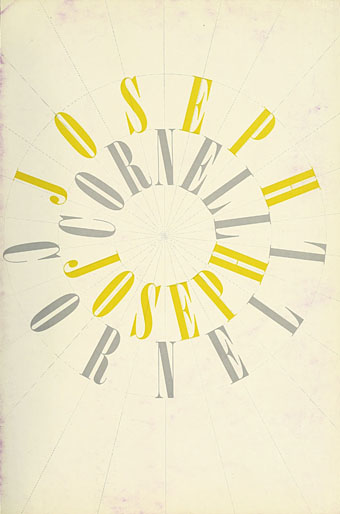
More Surrealism (sort of) from 1967. Joseph Cornell is a catalogue for an exhibition selected and presented by Diane Waldman at the Solomon R. Guggenheim Museum in 1967. The book is one of a number of new and very welcome additions from the Guggenheim Museum to the stock of scanned books at the Internet Archive. Old art books and catalogues often feature black-and-white reproductions but that drawback doesn’t invalidate the usefulness of their textual content. The Museum’s own pages for the archived books may be browsed here.

cornell2.jpg

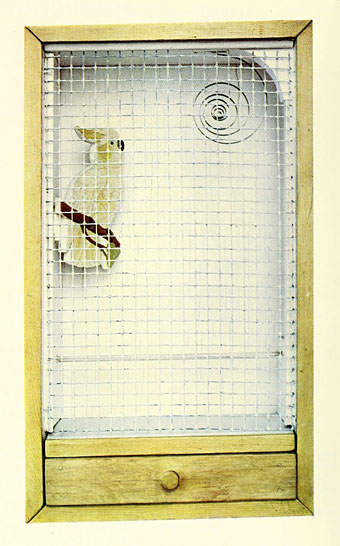
Cockatoo: Keepsake Parakeet (1949–1953).

For more on the Magus of Utopia Parkway I’d suggest the BBC’s documentary film Joseph Cornell: Worlds in a Box (1991) but only if you can find a copy since I’ve not seen it online anywhere. That’s a shame because it’s an excellent introduction to Cornell’s life and work, with the added bonus of commentary from Susan Sontag and Cornell’s film collaborators Stan Brakhage and Rudolph Burckhardt. There’s also a surprise appearance from Tony Curtis who was friends with the artist and who reads from his diaries.

cornell3.jpg

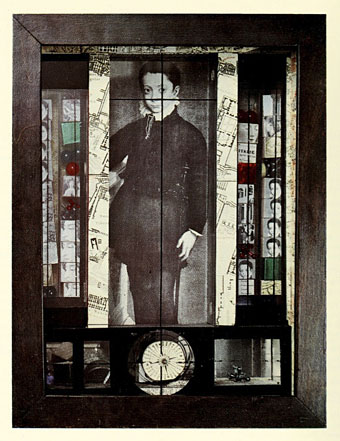
Medici Slot Machine (1942).

Elsewhere, Ubuweb has Cornell’s short films which proceed from the radical re-editing of Rose Hobart (1936) to more lyrical works such as Nymphlight (1957). And I’ve mentioned this before but it’s always worth another look: Americana Fantastica, the edition of Charles Henry Ford’s View magazine edited and illustrated by Cornell in 1943.

cornell4.jpg

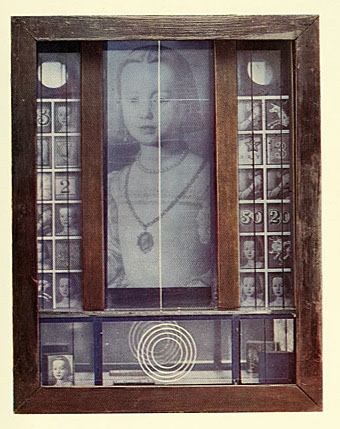
Medici Princess (1952).

Previously on { feuilleton }
Rose Hobart by Joseph Cornell
View: The Modern Magazine

René Magritte by David Wheatley

magritte1.jpg

René Magritte as portrayed by Patrick McDonnell.

René Magritte died in 1967, the year Eric Duvivier’s La femme 100 têtes appeared in French cinemas. Magritte is even less visible cinematically than Max Ernst, IMDB lists a couple of documentaries and nothing else. There are trace elements elsewhere, notably the Magritte and de Chirico influence in Bertolucci’s Borges’ adaptation The Spider’s Stratagem (1970), but the artist’s arresting visual imagination has always found more of a welcome on book covers than cinema screens.

magritte2.jpg

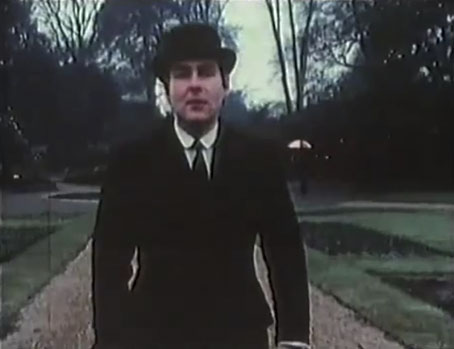
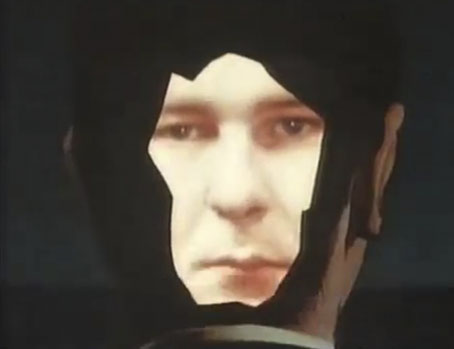
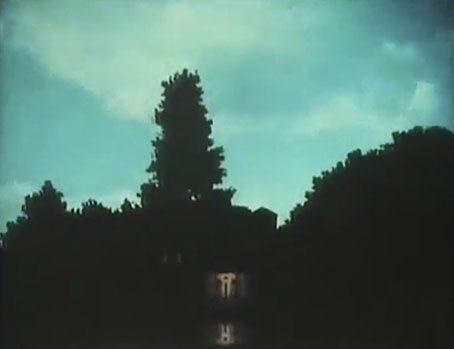
One exception is David Wheatley’s drama documentary René Magritte (1976), yet another work you won’t find listed at IMDB. This was Wheatley’s graduation film which the BBC screened in a 30-minute version (shorn of some apparently clunky dialogue scenes) in 1979, and which secured for Wheatley a place as a regular director for the BBC’s Omnibus and Arena arts programmes. I saw the 1979 broadcast, and caught it again a decade later when one of the channels was having a season of Magritte-related programming, something that’s impossible to imagine in today’s debased television landscape.

For a student film it’s a stunning piece of work, taking a similar approach to Eric Duvivier in bringing to life many of the artist’s more famous pictures: a window shatters to reveal the scene behind it painted on its panes, a mountain hovers ponderously over the sea, a dove made of clouds flies across a stormy sky. Between the artworks there are short biographical scenes. There’s a sole version of the film on YouTube that remains watchable despite being a low-quality recording from video tape that’s also hacked into three parts and subtitled in Danish.

magritte3.jpg

Looking for more information about David Wheatley it was dismaying to find he’d died in 2009, aged 59. Leslie Megahey—a cult TV director of mine—wrote an obituary for the Guardian where he describes some of Wheatley’s other productions including the Arena film Borges and I (1983)—as far as I’m aware the only British TV documentary about Jorge Luis Borges—and Wheatley’s first feature film, an adaptation of Angela Carter’s The Magic Toyshop (1987). I recall enjoying the latter, produced at a time when the success of The Company of Wolves (1984) made it seem there might also be a place in the cinema for Angela Carter’s imagination; we know how that worked out. The Magic Toyshop doesn’t seem to have had a DVD release so good luck to anyone searching for it. As for René Magritte, if anyone runs across a better online copy be sure to leave a comment.

Previously on { feuilleton }
The Public Voice by Lejf Marcussen

Black Lodge 2600: The Twin Peaks Video Game

peaks2.jpg

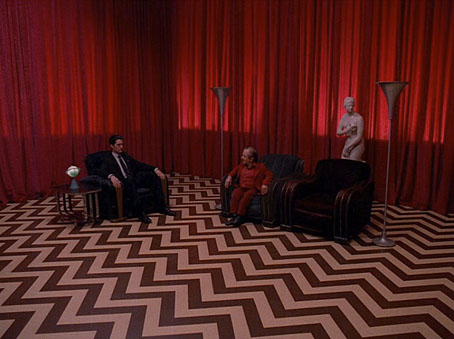
“That gum you like is going to come back in style.” Kyle MacLachlan and Michael J. Anderson in the Black Lodge.

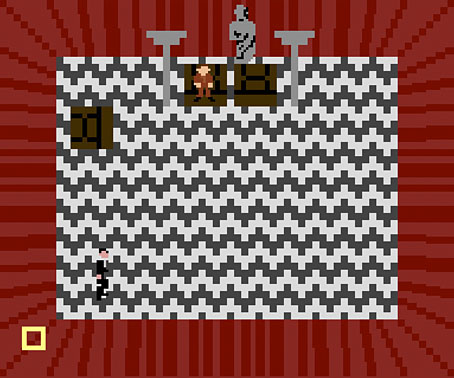
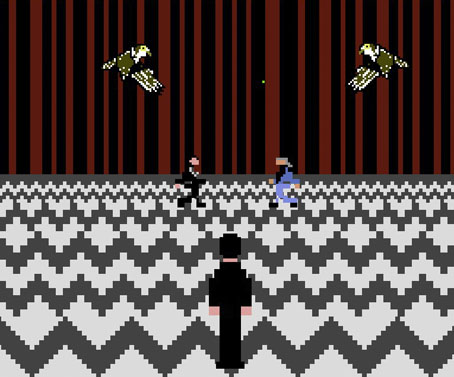
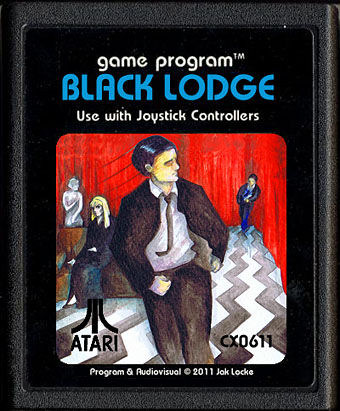
After the chance discovery last week of photo panoramas by Twin Peaks “Giant” Carel Struycken I was doubly-surprised this week when random searching turned up a small Twin Peaks video game. Black Lodge 2600 is a free game for Macs and PCs that emulates the crude graphics and audio of an Atari 2600 cartridge. Jak Locke is the programmer, and his creation appeared last year which is again surprising since I’d have expected to hear about it by now.

blacklodge1.jpg

The accompanying manual describes the challenge facing the player:

A day in the FBI was never like this before! You are Special Agent Dale Cooper and you’ve found yourself trapped inside of the Black Lodge, a surreal and dangerous place between worlds.

Try as you might, you can’t seem to find anything but the same room and hallway no matter which way you turn. Worse yet, your doppelganger is in hot pursuit! You have no choice but to keep running through the room and hallway (or is it more than one?) and above all else, don’t let your doppelganger touch you! Your extensive physical training in the FBI will provide you a seemingly limitless supply of energy to run as long as necessary, but running out of breath is the least of your worries!

You’ll find quickly that you’re not alone in the Black Lodge, though your friends are few and far between. Not only that, the lodge itself seems to be actively trying to trip you up at all times! You’ll be dodging chairs and crazed Lodge residents all while trying to keep your own insanity. How long can this go on?

blacklodge2.jpg

I racked up 800 points before the Bad Dale caught up with me. Those who want to try their hands can download Black Lodge 2600 here.

blacklodge3.jpg

Previously on { feuilleton }
Carel Struycken’s panoramas
Bohren & Der Club Of Gore
Through the darkness of future pasts

Carel Struycken’s panoramas

struycken1.jpg

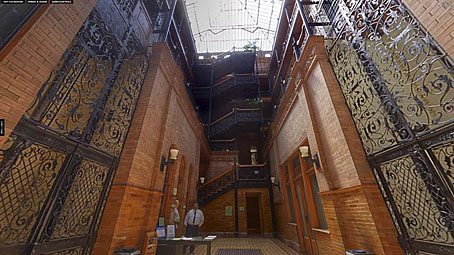
The Bradbury Building by Carel Struycken.

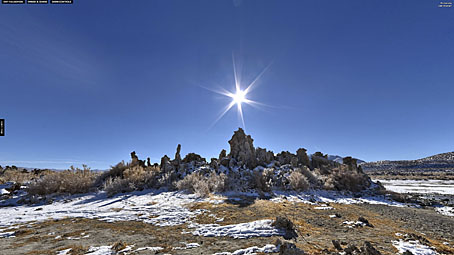
An idle search for a panorama view of the interior of the Bradbury Building in Downtown Los Angeles fetched me up at my favourite panorama site 360Cities and this photo by Carel Struycken. Mr Struycken is better known as an actor whose great height has seen him cast as The Giant in the Twin Peaks TV series, and Lurch in the Addams Family films. 360Cities has a page of his panorama views most of which are taken in and around Los Angeles. The strangely ossified landscape around California’s Monolake is more familiar from this photo by Hipgnosis for Pink Floyd’s Wish You Were Here album.

struycken2.jpg

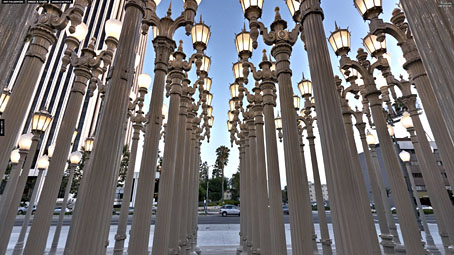
Urban Light by Carel Struycken.

struycken3.jpg

Monolake in Winter by Carel Struycken.

Elsewhere on { feuilleton }
The panoramas archive

Previously on { feuilleton }
Through the darkness of future pasts
The Bradbury Building: Looking Backward from the Future

Richard Williams’ Christmas Carol

williams1.jpg

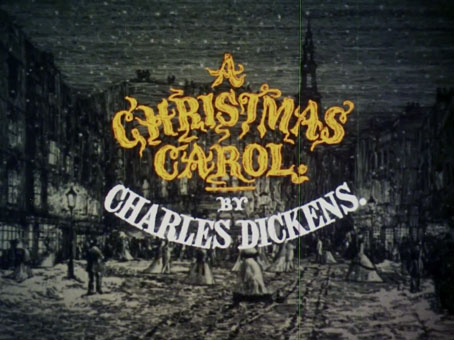
It’s easy to loathe the teeth-grinding sentimentality of Charles Dickens’ seasonal tale, as well as its subtext which isn’t so far removed from Emperor Ming’s instruction to his cowed populace in Flash Gordon: “All creatures shall make merry…under pain of death.” Yet as a ghost story I prefer A Christmas Carol to the sketchier The Signal-Man, and I’ve always enjoyed this memorable 1971 adaptation from the animation studio of the great Richard Williams.
williams2.jpg

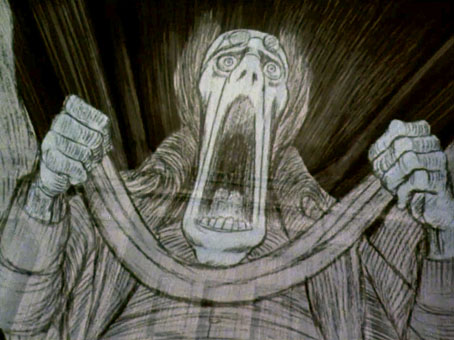
Marley’s ghost.

Williams is best known today for his role as animation director on Who Framed Roger Rabbit? but prior to this he’d distinguished himself as creator of the florid title sequence for What’s New, Pussycat? (1965), and the animated sections—done in the style of 19th-century engravings and political cartoons—for Tony Richardson’s The Charge of the Light Brigade (1968). Williams’ Christmas Carol owes a similar debt to Victorian graphics, not only to the original story illustrations by John Leech, but also to Gustave Doré’s views of Victorian London, scenes which had earlier influenced the production design for David Lean’s adaptation of Oliver Twist. Williams’ film crams Dickens’ story into 25 minutes but nonetheless manages to maintain the tone of the original to a degree which eludes many feature-length travesties, especially those in which the nightmare squalor of Victorian London is reduced to a shot or two of dressed-down extras. Dickens had first-hand experience of the squalor: Kellow Chesney’s The Victorian Underworld (1970) quotes at length from one of the journeys Dickens took (under police escort) through the notorious St Giles rookery, and his ghost story was intended as much as a warning to the complacency of middle-class Victorian readers as a Christmas celebration.
williams3.jpg

The Ghost of Christmas Past.

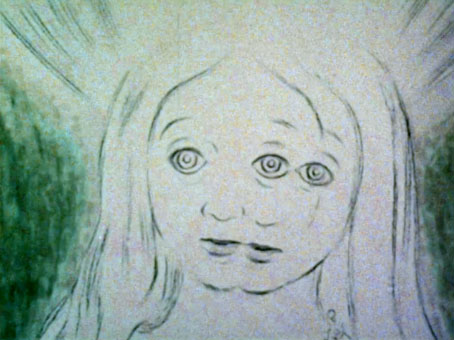
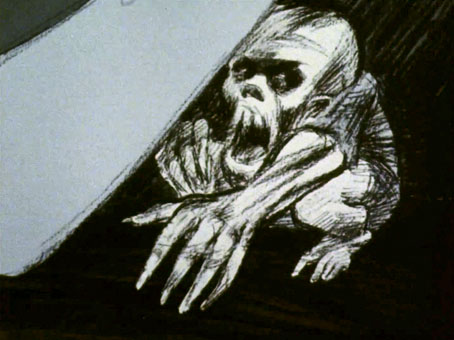
For me the crucial moment in any adaptation comes when the Ghost of Christmas Present shows Scrooge the figures of Ignorance and Want: in most film versions these tend to be a pair of well-fed child actors in rags and make-up; Williams shows us two grim spectres that owe more to Gerald Scarfe than Walt Disney. Williams is also truer to the ghosts themselves: Dickens describes Jacob Marley unfastening his jaw which falls open then remains that way while he proceeds to speak to his former friend; the Ghost of Christmas Past is the androgynous figure from the story with its ambiguous nature also shown by its shimmering indeterminate outline.
williams4.jpg

Ignorance.

Any animated drama relies on its voice actors, and Williams was fortunate to have Alistair Sim (as Scrooge) and Michael Hordern (as Marley) reprising their roles from the 1951 film version, while Michael Redgrave narrates the tale. The film used to be a seasonal fixture of British television, and may still be for all I know (I haven’t owned a TV for years). For the time being it’s on YouTube, of course, with a full-length version here that’s blighted by compression artefacts but is watchable enough. 2012 is the Dickens bicentenary so expect to hear a lot more about the author and his works in the coming year.

Update: The version linked to originally has been deleted. No matter, there’s a much better copy here (for now).

As usual I’ll be away for a few days so the { feuilleton } archive feature will be activated to summon posts from the past below this. Have a good one. And Gruß vom Krampus!

Previously on { feuilleton }
“Who is this who is coming?”