The art of Michael Hutter

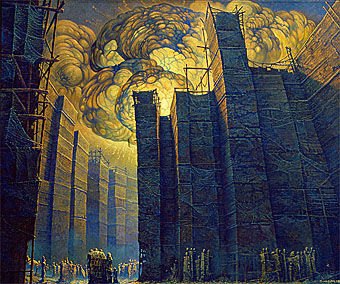
hutter1.jpg

Stadtlandschaft I (City I) (1999).

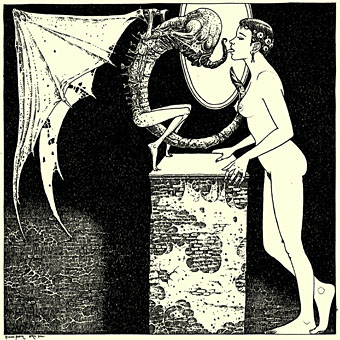
Michael Hutter‘s work is pitched at that enjoyably nebulous zone which lies on the borderlands of fantasy, science fiction and Surrealism, from which hybrid visions emerge that are never too defined in one direction or another. It’s a zone that French and Belgian artists often visit but whose inhabitants from other nations often seem all too few. Hutter’s art encompasses oil paintings and also ink drawings which include some erotic scenes like the example below. His site is well worth a browse, especially the vast and detailed Triptych which recalls similar works by Wayne Barlowe and Hieronymus Bosch. For more inhabitants of the nebulous zone, see the archive link below.

hutter2.jpg

Pterdactyl II.

Elsewhere on { feuilleton }
• The fantastic art archive

Engelbrecht lives to fight another day

engelbrecht1.jpg

The beat Engelbrecht had drawn for the early morning rise was a stretch of jet black water between the Jubilee Gasometer and the Municipal Slaughter House. A dank mist lay over the canal. The vampire bats were out in swarms. The bot-fly waltzed in virid clouds. You could hardly have had a better surrealist fishing day.

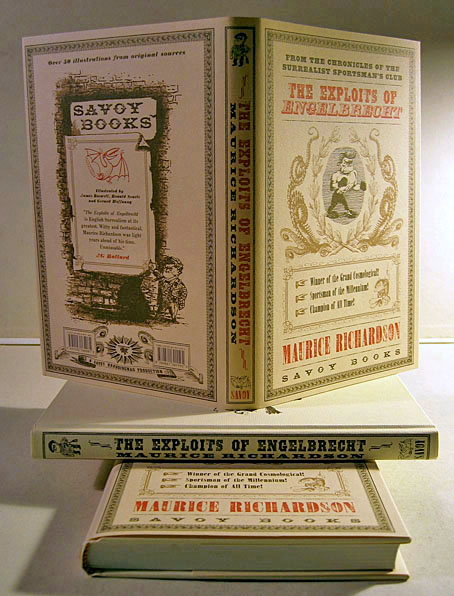
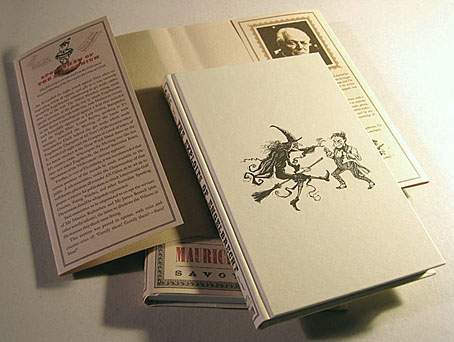
Thus Maurice Richardson in The Exploits of Engelbrecht, newly-printed copies of which I picked up this week from the Savoy Books’ office. This is the reprint of the Savoy edition which was published in 2000 and would have been out two years ago had various problems not intervened. As a result it’s inadvertently become an anniversary edition which is fitting since Engelbrecht was the first title in the line of books from Savoy’s publishing relaunch ten years ago. I’ve mentioned before that I was dissatisfied with my original design so it was a pleasure being able to rework the book slightly in a manner which better suits Richardson’s marvellous stories. The main change is a completely re-designed dust jacket done in three colours printed on textured paper; this has made the book a nice thing to handle as well as look at. A few new illustrations were added courtesy of Savoy artist Kris Guido. Kris is a far better cartoonist than I and his drawing of Engelbrecht facing one of his broomstick-riding foes adorns the front board.
engelbrecht2.jpg

Another cartoonist, Martin Rowson (currently at the Guardian), reviewed the earlier edition for The Independent on Sunday:

Far more obscure, but for my money the best book of the year, is The Exploits of Engelbrecht by Maurice Richardson. Richardson, who died in 1978, was one of the old school of hacks; he later became a stalwart infester of the Colony Rooms and the sordid pubs round Soho that teemed with pissed-up talent in the 1940s and 1950s. The Exploits of Engelbrecht, the dwarf surrealist boxer, and his adventures shooting witches, boxing grandfather clocks, playing football on Mars and games of surrealist golf which last for infinity, originally appeared in Lilliput when it was at its post-war zenith. The stories were illustrated by, among others, Searle and Hoffnung. Ah, God, those were the days.

This edition is lavishly illustrated and comes with endorsements from artist James Cawthorn (who provided some illustrations and an introduction), Michael Moorcock (who provided the afterword), and JG Ballard (who provided a blurb). Since its original publication in 1950 Engelbrecht had been one of Ballard’s favourite books; I wish he could have lived long enough to see this latest edition.

Engelbrecht isn’t on sale yet as I don’t think a price has been decided on but since this is a limited run it’ll be around £25 + p&p. Any queries should be directed to Savoy Books who have a PDF of the first chapter (plus illustrations) available to read. Next up is the enormous Moorcock tome; more about that soon.

Previously on { feuilleton }
• Ronald Searle book covers
• Engelbrecht again
• Mervyn Peake in Lilliput
Repin and Ljuba

repin.jpg

Sadko in the Underwater Kingdom (1876).

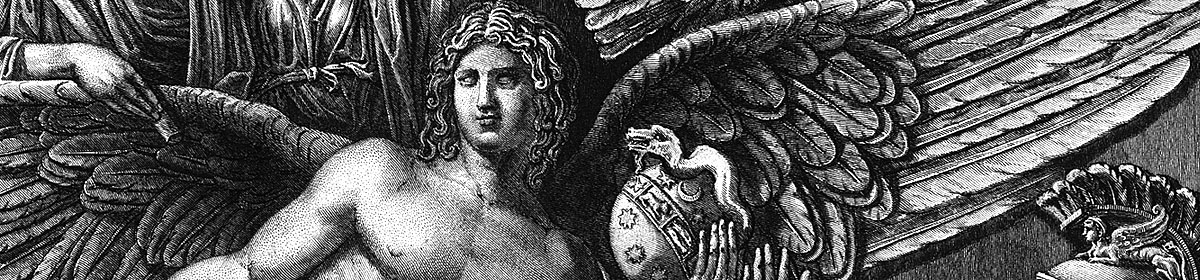
This painting by Russian artist Ilya Yefimovich Repin (1844–1930) is included in one of my Symbolist art books despite its pre-dating the Symbolist period and there being little else in the artist’s career which might suit the label. It’s a curious picture, however, illustrating a medieval folk tale and depicting the moment when the Sadko of the title is forced by the Sea Tsar to choose a wife from a line of aquatic maidens. It was art historian Philippe Jullian who had me returning to Repin, and the reminder gives me an excuse to post something by Serbian Surrealist Ljuba (aka Ljuba Popovic) whose colours, fauna and metamorphic female figures are a match for Repin’s sirens. Last time I looked for Ljuba pictures there were few available, a situation which has now been remedied by blogs such as this one.

ljuba.jpg

Lot and Lotus (1972).

Previously on { feuilleton }
• The art of Ivan Bilibin, 1876–1942
• Magic carpet ride
• Short films by Walerian Borowczyk
• The art of Ljuba Popovic

The art of Aquirax Uno

uno1.jpg

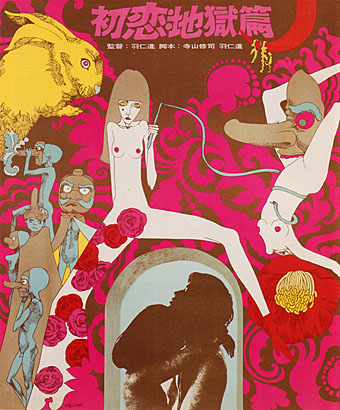
First Love Inferno (1968).

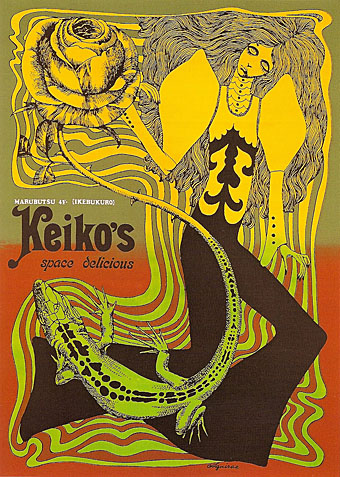
There’s very little web information available for Aquirax Uno, a Japanese artist active in the 1960s and 1970s who really ought to have a dedicated site. Much of his work seems to be poster art for cinema or product advertising, and, as usual on the web, what there is tends to get repeated a great deal. You can see more examples like these at Pink Tentacle, Ganymede Kids and Beautiful/Decay.

uno2.jpg

Keiko’s at Marubutsu Department Store (1967).

Previously on { feuilleton }
• Alice in Acidland
• Salomé posters
• Polish posters: Freedom on the Fence
• Kaleidoscope: the switched-on thriller
• The Robing of The Birds
• Franciszek Starowieyski, 1930–2009
• Dallamano’s Dorian Gray
• Czech film posters
• The poster art of Richard Amsel
• Bollywood posters
• Lussuria, Invidia, Superbia
• The poster art of Bob Peak
• A premonition of Premonition
• Metropolis posters
• Film noir posters

Dorothea Tanning: Early Designs for the Stage

tanning1.jpg

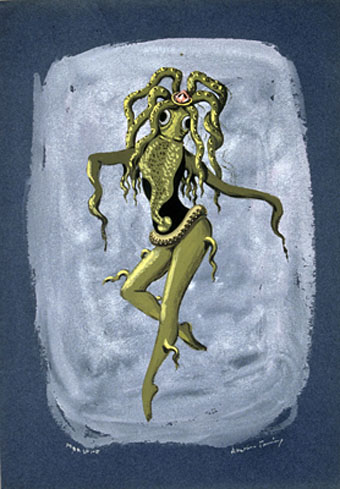
Monstre from The Witch (1950).

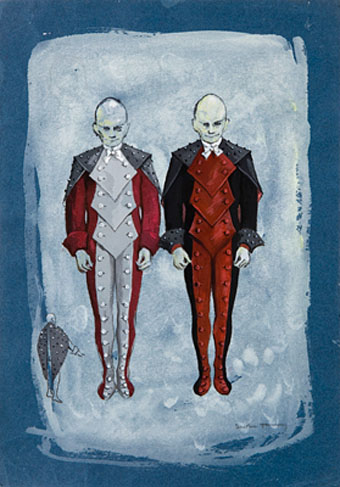
If this squid-headed costume design by Surrealist artist Dorothea Tanning isn’t a unique creation in the history of ballet then I’d like to know what challenges it. These paintings form part of an exhibition of Tanning’s designs for ballet companies which go on display at The Drawing Center, New York from April 23–July 23, 2010. The press release mentions her collaborations as being with George Balanchine but The Witch was choreographed by John Cranko after a score by Maurice Ravel.

Dating from 1945–1953, the designs will be shown together for the first time, and will be accompanied by archival photographs and ephemera related to the staged productions.  This series explores the dynamic intersections of dance, performance, visual art, and costume, while drawing important parallels to Tanning’s early discoveries in both painting and sculpture. (More.)

tanning2.jpg

The Butlers from The Witch (1950).

Via BibliOdyssey.

Previously on { feuilleton }
• Angels of Anarchy: Women Artists and Surrealism
• Surrealist women