Weekend links 777

sevenwonders.jpg

The Seven Wonders of the World (1886). 1: Lighthouse on the Island of Pharos, Alexandria; 2: Statue of the Olympian Jupiter; 3: The Colossus at Rhodes; 4: The Temple of Diana at Ephesus; 5: The Mausoleum of Artemisia; 6: The Pyramids of Egypt; 7: The Walls and Hanging Gardens of Babylon.

• “The space of possible languages is vast, and full of exotic languages that are much weirder and stranger than any we have yet imagined.” Nikhil Mahant on the many possible forms of alien language.

• Among the new titles at Standard Ebooks, the home of free, high-quality, public-domain texts: Steppenwolf by Hermann Hesse (translated by Basil Creighton).

• At Alan Moore World: A new interview with Mr Moore about Long London, magic and the future of humanity.

• New music: The Reverent Sky by Steve Roach; and Contrary Motion by Scanner & Nurse With Wound.

• At Public Domain Review: Tangled Dürer: The Six Knots (ca. before 1521).

• At The Daily Heller: A Typographer’s Mother Goose by Louise Fili.

• At Colossal: Woodblock prints by Utagawa Hiroshige.

• At Dennis Cooper’s: Jud Yalkut’s Day.

• The Strange World of…Steve Aylett.

Seven And Seven Is (1966) by Love | Seven By Seven (1973) by Hawkwind | Seven, Seven, Seven (1995) by Money Mark

Four short films by Lejf Marcussen

marcussen1.jpg

There’s more Surrealism inside this 34-minute collection of films by Lejf Marcussen (1936–2013), a Danish film-maker and animator whose filmography has never been easy to explore on the internet. Marcussen made an impression on a number of Britons in the late 1980s when The Public Voice was shown on TV, one of many such films broadcast during a time when British television channels still dared to screen unusual animations. I’ve written about The Public Voice before so there’s no need to repeat myself, it was a search for a better copy that led me to this compilation of four Marcussen films—The Conductor (1978), Tone Traces (1983), The Public Voice (1988), and Angeli (2002)—all of which differ so much from each other they could easily be taken for the works of four different directors.

marcussen2.jpg

The Conductor is the one closest to traditional animation, being a comic portrait of an orchestral conductor’s wildy exaggerated actions and facial reactions during the performance of a piece of music. It’s music that turns out to be the dominant theme in this collection, and the sole consistent element.

marcussen3.jpg

Where The Conductor is overtly comedic and grotesque, Tone Traces is completely abstract, an illustration of Carl Nielsen’s Symphony No. 5 whose unfolding is depicted by coloured lines on a black background. Marcussen’s approach differs from earlier musical illustrators like Oskar Fischinger in restricting his shapes to lines that follow the instrumentation and composition in great detail.

marcussen4.jpg

This version of The Public Voice is another one taped from a TV broadcast, it’s not necessarily better than any of the others but it does at least keep Marcussen’s remarkable film circulating. The music this time is a chaotic amalgam of pieces by Luciano Berio, Henry Cow and Gustav Mahler.

marcussen5.jpg

Angeli was Marcussen’s final film, another remarkable piece of work although it’s not one I like very much. Watching computerised shapes jump around in a jaunty manner isn’t how I prefer to spend my time, and the score for this one is chaos of a different kind, a collision of digital keyboard pieces with the superior music of Handel, Dvorak and Beethoven. Watch the second and third films in this set if you do nothing else.

Previously on { feuilleton }
A Picture, a film by Lejf Marcussen
The Public Voice by Lejf Marcussen

Mona Lisa, Enigma, Breathing

matsumoto1.jpg

Breathing (1980).

Three short films by Toshio Matsumoto, a director best known for his debut feature Funeral Parade of Roses (1969). Matsumoto made many more short film than he did long ones, four of which were featured here a few years ago. His films of the 1970s are replete with vivid colours, rapid edits, processed visuals and electronic soundtracks. The first two films in the trio follow this form.


Mona Lisa (1973)

matsumoto2.jpg

The world’s most famous painting provides a stage for a succession of effects created with the Scanimate video synthesizer. No credit for the electronic score.


Enigma (1978)

matsumoto3.jpg

More Scanimate effects only this time the results are very abstract, a series of spheres and vortices. Again, no credit for the electronic score.


Breathing (1980)

matsumoto4.jpg

At 25 minutes, the longest and most fascinating of the three films. Breathing also employs video effects but very minimally applied, being a meditation on the “breathing” of the natural world seen in three separate sections that show clouds drifting over mountains, trees moving in the wind and waves breaking against a shore. Each section also features an appearance by dancer Hiroko Horiuchi who strikes a succession of wraithlike poses. Watching this one I was continually distracted by the remarkable soundtrack. “This sounds like the music from Kwaidan,” I thought, and sure enough, the music is credited to Toru Takemitsu, composer of the score for Masaki Kobayashi’s ghost film. Is this original music or did Matsumoto simply lift sections of the soundtrack from the earlier film? I can’t say, but the music combined with the presence of the sinister dancing woman, who might be a cousin of Kobayashi’s lethal Woman of the Snow, is enough to make the whole film seem like an excised episode from the Kwaidan suite.

Previously on { feuilleton }
Phantom, a film by Toshio Matsumoto
White Hole, a film by Toshio Matsumoto
Atman, a film by Toshio Matsumoto
Metastasis, a film by Toshio Matsumoto

Weekend links 720

moreau.jpg

The Poet and the Siren (1893) by Gustave Moreau.

• “Some books become talismans. Because they are strange, wildly different to the common run of literature; because they are scarce, and only a few precious copies are known to exist; because, perhaps, they liberate by transgressing the moral limits of the day; because their authors are lonely, elusive visionaries; because, sometimes, there is an inexplicable glamour about the book, so that its readers seem to be lured into a preternatural reverie. This book possesses all those attributes.” Mark Valentine in an introduction he wrote for a 1997 reprint of The Book of Jade (1901) by David Park Barnitz. The book’s author was an American writer who died at the age of 23 after publishing this single volume, a collection of poetry inspired by his favourite Decadent writers. Praise from HP Lovecraft, Clark Ashton Smith and Thomas Ligotti has since helped maintain the book’s reputation. The Book of Jade turned up recently at Standard Ebooks, the home of free, high-quality, public-domain texts. Also the home of an increasingly eclectic list of publications.

• At n+1: The Dam and the Bomb by Walker Mimms, a fascinating essay about the entangling of Cormac McCarthy’s personal history with his novels which makes a few connections I didn’t expect to see. Also a reminder that I’ve yet to read McCarthy’s last two books. Soon…

• The latest installation from teamLab is Resonating Life which Continues to Stand, an avenue of illuminated eggs on the Hong Kong waterfront.

• At The Wire: Symphony of sirens: an interview with Aura Satz, David Toop, Elaine Mitchener, Evelyn Glennie and Raven Chacon.

• At Unquiet Things: The Art of Darkness presents The Sleeper May Awaken: Stephen Mackey’s Unrestful Realms.

• RIP Marian Zazeela. There’s a page here with a selection of her beautiful calligraphic poster designs.

• At Spoon & Tamago: Tomona Matsukawa’s realistic paintings reconstruct fragments of everyday life.

• At Public Domain Review: Thom Sliwowski on The Defenestrations of Prague (1419–1997).

Trinity (2024), a short film by Thomas Blanchard. There’s a lot more at his YouTube channel.

• At Dennis Cooper’s: Lotte Reiniger’s Day.

Sirens (1984) by Michael Stearns | Sirens (1988) by Daniel Lanois & Brian Eno | Siren Song (2009) by Bat For Lashes

The art of Jordan Belson

belson1.jpg

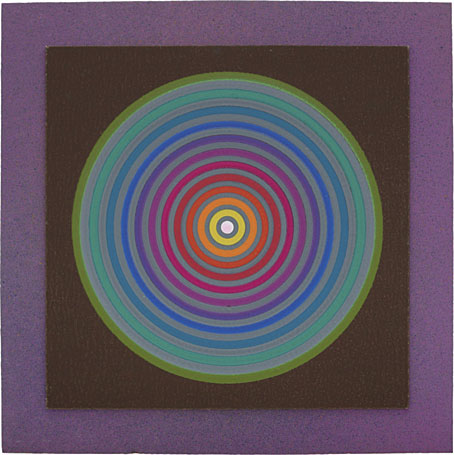
Target (Spectrum) (c.1953).

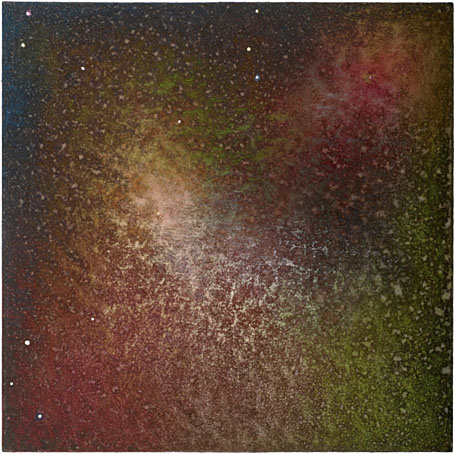
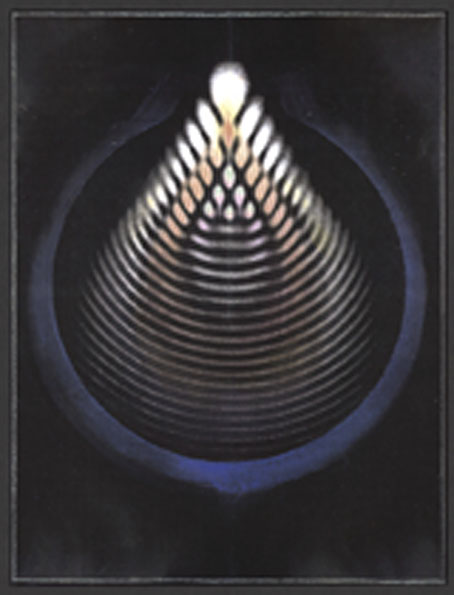
The static art, that is. When you read about Jordan Belson’s abstract films there’s occasionally some mention of his artworks but these haven’t always been easy to see. This situation has changed recently thanks to a dedicated Belson website which includes a gallery section for drawings, pastels, paintings and his collage landscapes. Landscapes aside, most of these are also abstract pieces, which doesn’t come as much of a surprise, and very good they are too. In addition, the site has seven of Belson’s films available for viewing which may not be everything but it’s an improvement on the sole Belson DVD which only features five films. This is all very positive, here’s hoping the site stays around. (Thanks to Stephen for the tip!)

belson2.jpg

Nebula (1965).

belson3.jpg

Thoughtform (2001).

Elsewhere on { feuilleton }
The abstract cinema archive