Beautiful and macabre: two books from Century Guild

posters.jpg

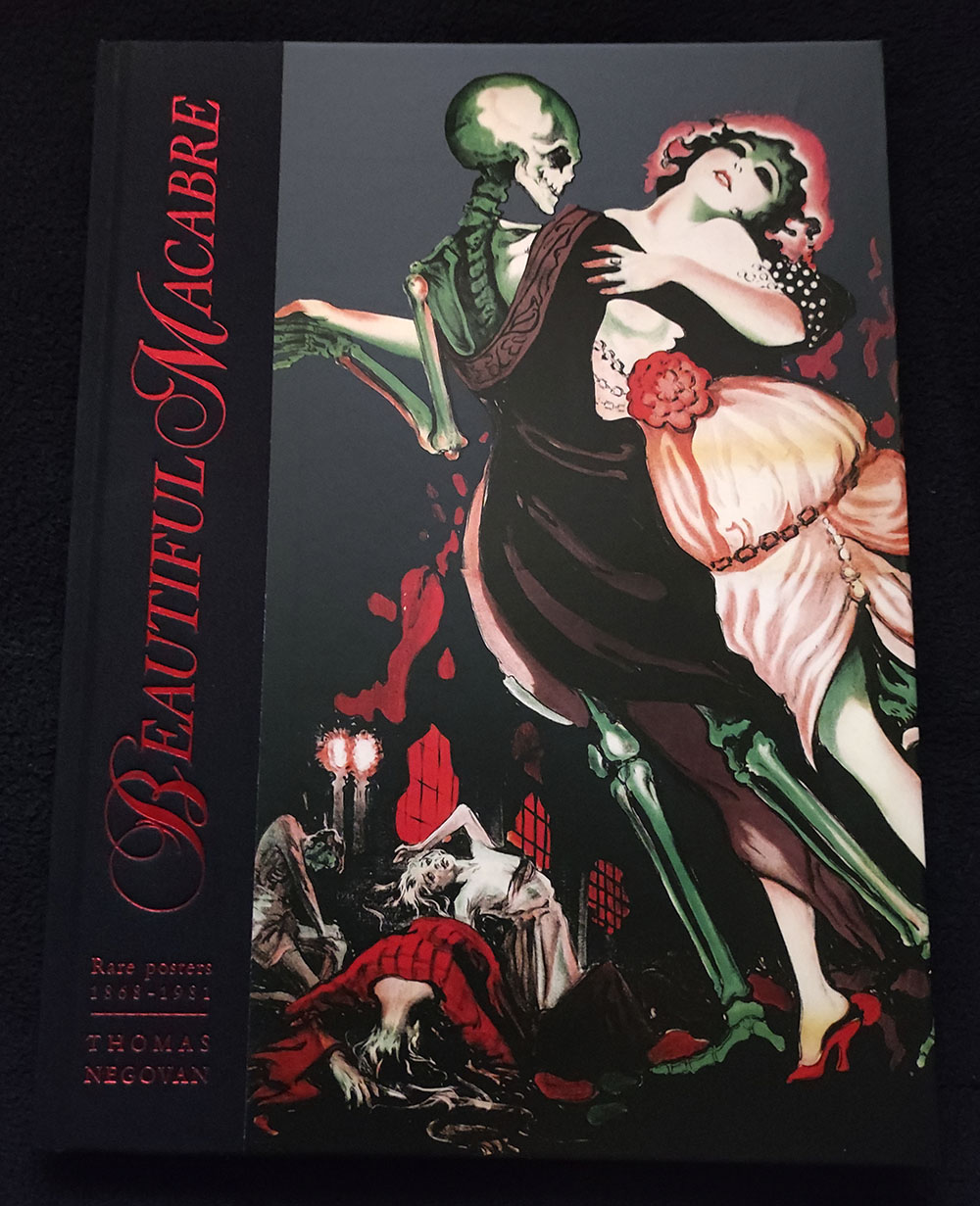
Arriving in the mail last week, a pair of beautifully-produced volumes which Thomas Negovan very generously sent to me. Negovan’s Century Guild publishes the kind of art I’ve been writing about here for the past twenty years: Symbolist painting, Art Nouveau graphics, Decadent illustration and more. There’s some intersection between the publisher’s backlist and earlier titles from Dover Publications, but where Dover have mostly concentrated on mass-produced paperbacks Century Guild deploy the full range of finishings available to a publisher of high-quality art books: foil embossing, faux leather finishes, spot-varnished boards, edges sprayed in metallic ink, and ribbon place-markers. Beautiful Macabre is Negovan’s own selection of rare poster art from 1868 to 1981, rare enough for most of the material to be new to me: theatre posters, Expressionist film posters, exhibition posters, etc, with an emphasis on Decadence through the ages. This is another of those books that show how the morbid preoccupations of the 1890s became codified in the 20th century into generic horror.

seder.jpg

Cover design by Jack Hargreaves.

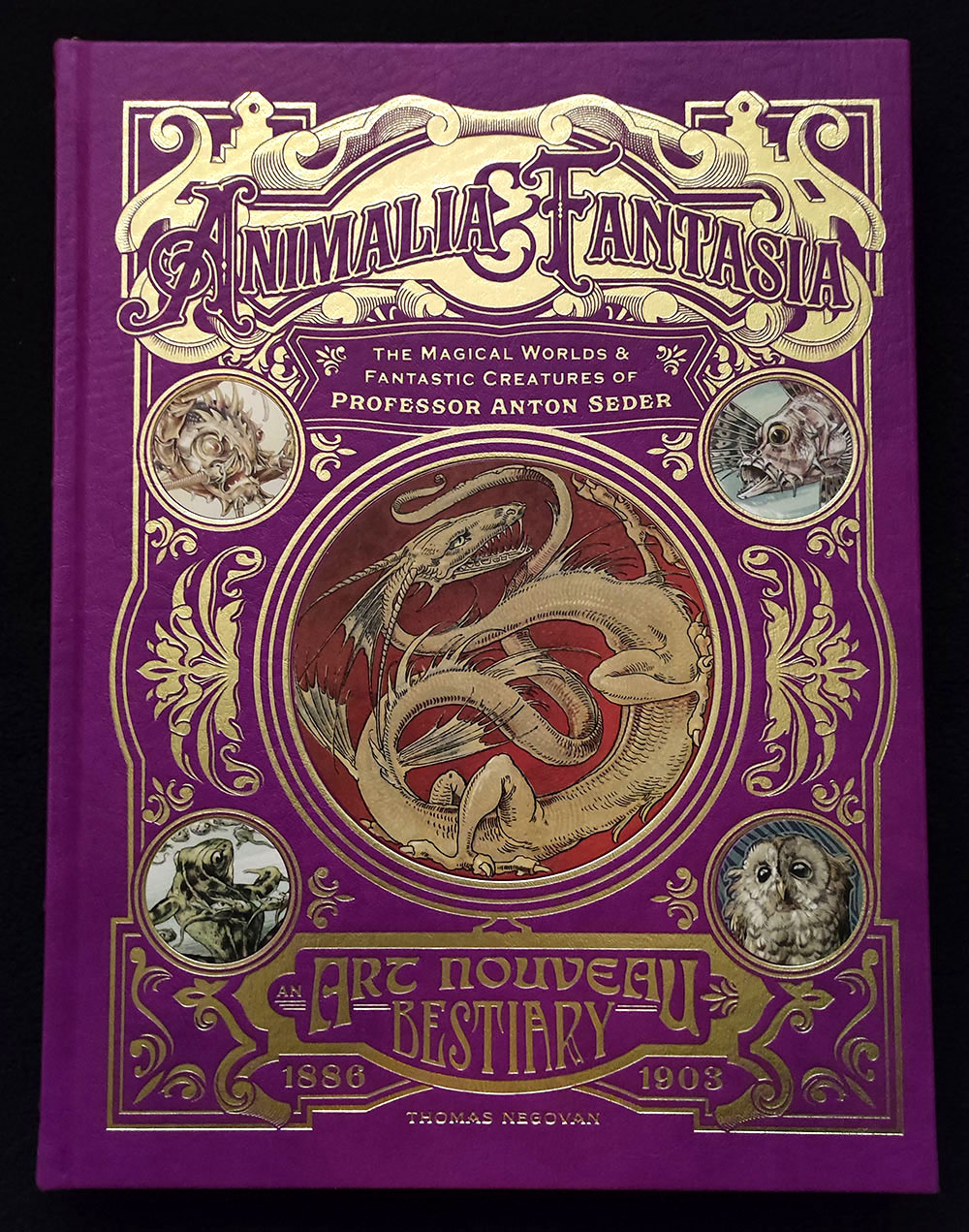
The Anton Seder book is a more singular study, reprinting the intricate plates from Das Thier in der Decorativen Kunst (The Animal in Decorative Art) and Moderne Malereien, a collection of Seder’s interior designs in the Art Nouveau style. Seder’s book of animal designs has its own Dover reprint (which may explain how Murray Tinkelman was able to incorporate some of the creatures into his Lovecraftian cover art) but the Century Guild collection includes much more than this, with biographical notes, and pages that place Seder’s books in the context of previous guides and templates for use by artists and craftspeople. This type of book was a common thing around 1900 (Alphonse Mucha produced three of them), while similar examples abound in previous centuries. The fragmentation of art and craft in the 20th century, and the turn against exuberant decoration, put an end to a form whose spirit survives today in reprints such as this. And it happens to have arrived at a time when its contents will be very useful reference for my current commission. Thanks, Thomas!

Previously on { feuilleton }
Eldritch Art Nouveau: Lovecraft at Ballantine
Moderne Malereien, 1903
Das Thier in der Decorativen Kunst

Weekend links 814

dameron.jpg

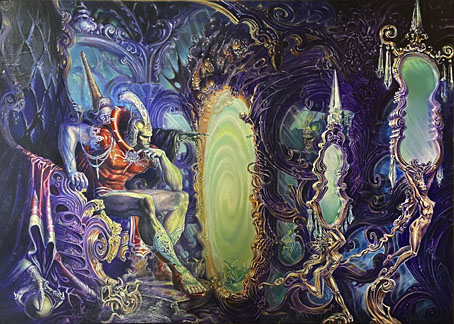
Kull of Atlantis—The Mirrors of Tuzun Thune by Ned Dameron for Kull (1985) by Robert E. Howard. Via.

Jeremy Allen reviews the latest reissue of The New Worlds Fair by Michael Moorcock and The Deep Fix, describing the album as “a fascinating and quixotic document from the time it was made, deserving to be taken seriously in its own right”.

• Among the new titles at Standard Ebooks, the home of free, high-quality, public-domain texts: Short Fiction, a small collection of early stories by Clark Ashton Smith.

• New music: Geometry of Murder: Extra Capsular Extraction Inversions by Earth x Black Noi$e; Live At Nonseq by WNDFRM.

The book is not just loaded with words or tongues. Its also loaded with genres, or more accurately, different modes of literature. And one of the modes I particularly enjoyed this time around is, appropriately, the Weird. In ways long noted on forlorn and unspeakable subreddits, there is a decidedly Lovecraftian dimension to Melville’s Whale, which the Master of Providence did read and enjoy months before writing his game-changing “Call of Cthulhu.” We begin the novel with a sick soul, who may or may not be named after an Old Testament outcast, wandering through a macabre and fetid New England whale-town, following grim portents that lead him on towards a cursed ship doomed to confront a monster who sleeps or at least feeds, and presumably dreams, at the bottom of the sea. And that’s just the first couple of chapters.

Erik Davis on the pleasures of re-reading Moby-Dick, in a piece which makes me want to read the novel again

• At the BFI: Phil Hoad on David Lynch’s efforts to keep making films in an industry resistant to his kind of art.

• Exploration Log 12: Adam Rowe on the best retro science fiction art collections.

• At Public Domain Review: The Nine Birds of Jacques de Fornazeris (1594).

Winners and finalists for the 2025 Ocean Art Contest.

• Mix of the week: A mix for The Wire by Hilary Woods.

The Whale (1977) by Electric Light Orchestra | Don’t Kill The Whale (1978) by Yes | School For Whales (1980) by Marc Barreca

Weekend links 813

bruenchenhein.jpg

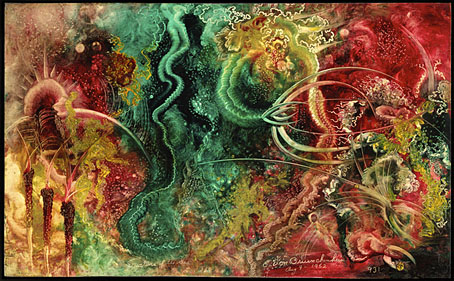
Dwellers of the Sea (1962) by Eugene Von Bruenchenhein.

• Among the new titles at Standard Ebooks, the home of free, high-quality, public-domain texts: Conan Stories by Robert E. Howard.

• At Colossal: “Uncanny personalities appear from nature in Malene Hartmann Rasmussen’s ceramics.”

• New music: Glory Black by Sunn O))); Through Lands Of Ghosts by Foster Neville; Sirenoscape by NIMF.

If we insist that art functions as a tool for promoting a limited set of political principles, what happens when an ideology that doesn’t share our values sweeps into power? Learning to engage with complexity is a necessary skill if we are ever to drag ourselves out of the puerile swamp of the culture wars. But if we continue to reduce art to moralistic soundbites, we will only succeed in stripping it of its capacity to transform us, which would be a huge loss. Art can help us to better understand ourselves, and the world we live in, by expressing those things that words cannot. It exposes us to a vast range of experiences, and asks us to sit with the fundamental ambivalences, moral complexities and conflicting emotions that are a part and parcel of being human.

Rosanna McLaughlin on attempts to make art of the past reflect the moral platitudes of the present

Strange Attractor is having a winter sale with 30% off all its available titles.

• At the BFI: Miriam Balanescu selects 10 great filmmaker biopics.

• Mix of the week: DreamScenes – January 2026 at Ambientblog.

• The Strange World of…Free Jazz & Improvised Music.

Free (1991) by Mazzy Star | The Free Design (1999) by Stereolab | Everything Is Free (2001) by Gillian Welch

Edmund Dulac’s Princesse Badourah

dulac01.jpg

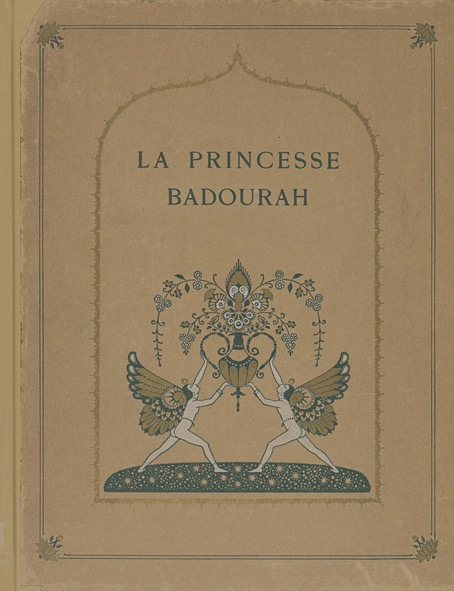
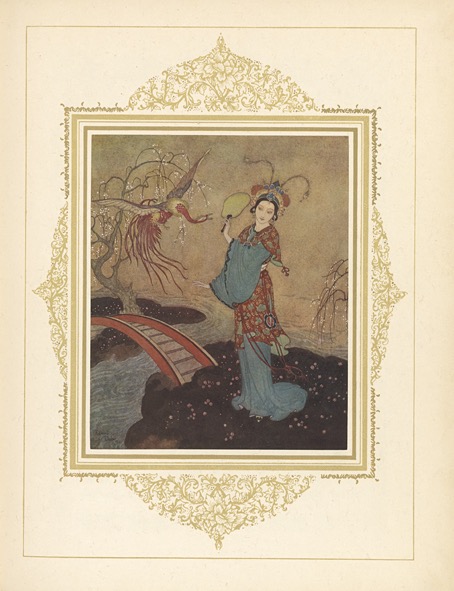
The Chinese princess is usually named Badoura in English editions of The Thousand and One Nights but this volume is a French book which reprints the art that Edmund Dulac created for a retelling of the story by Laurence Housman published in 1913. The English edition was itself a recycled volume, expanded from an earlier Housman/Dulac collection, Stories from the Arabian Nights (1907). The story itself reads like an odd mirroring of some of the versions of Aladdin which end with the triumphant hero marrying a Chinese princess named Badroulbadour. The male character in Princess Badoura is Camaralzaman, the shy son of an Arabian king whose repudiation of women causes his father to throw him into a dungeon. As in Aladdin, a genie helps engineer events to bring the story to a happy resolution.

dulac02.jpg

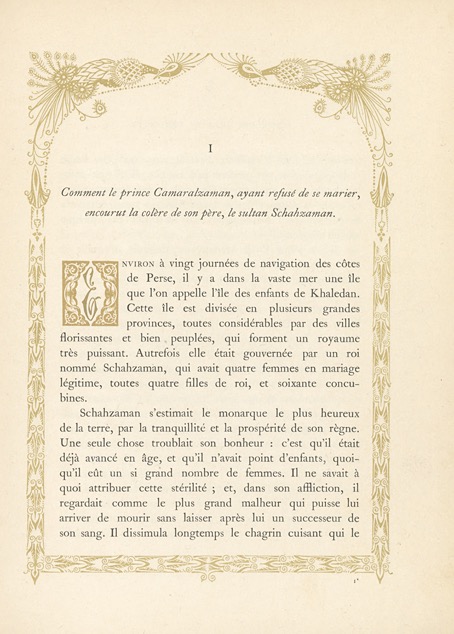
Some of the art may be recycled but the book design is better than the English editions, with gold frames embracing the tipped-in colour plates. The paintings are consequently reduced in size but this doesn’t harm them too much. One thing the book doesn’t contain is any clue to the writer of the text. I’d guess it was a translation of the Housman version but it could equally be a French retelling taken from another edition altogether.

dulac03.jpg

dulac04.jpg

dulac05.jpg

Continue reading “Edmund Dulac’s Princesse Badourah”

Weekend links 810

luminet.jpg

Image of a Spherical Black Hole with Thin Accretion Disk (1979) by Jean-Pierre Luminet. Via.

• “I would be willing to bet that every student of fantastic fiction has at some point in his or her career read a book with the name EF Bleiler printed on its cover.” Brian J. Showers of Swan River Press talked to EF Bleiler in 2005.

• “James Webb Space Telescope confirms 1st ‘runaway’ supermassive black hole rocketing through ‘Cosmic Owl’ galaxies at 2.2 million mph.”

• “You have to be ready to see it”: Abel Ferrara and Catherine Breillat on why Pasolini’s Salò is a gift that keeps giving.

• At Dennis Cooper’s: Kosten Koper presents…Bill Nelson: Acquitted By Mirrors (1982–1987).

• At Skurrilsteer: Ongoing research into the life, work and legacy of Edward James.

• At The Daily Heller: All that jazzy record cover design.

Cygnus X-1 (1977) by Rush | Blackhole Dropout (1979) by Tod Dockstader | The Competition Of Supermassive Black Holes And Galactic Spheroids In The Destruction of Globular Clusters (1999) by Jah Wobble