The art of Joanna Chrobak

chrobak1.jpg

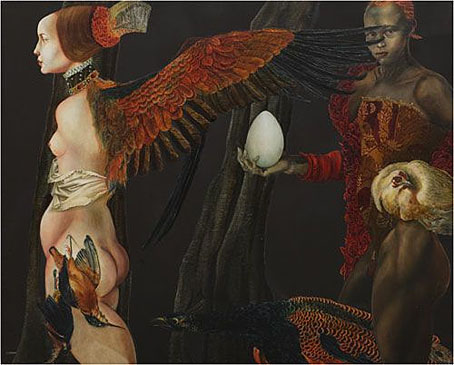
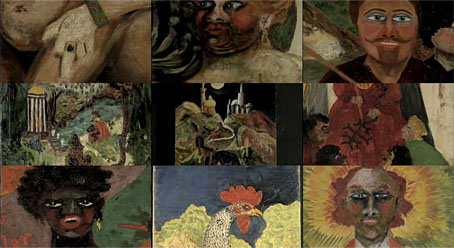
Pageant III (2005–2006).

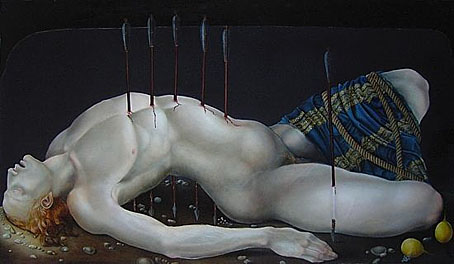
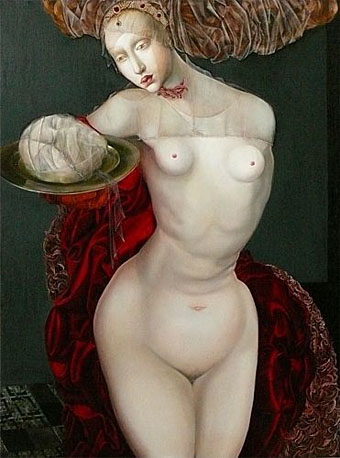
A Polish artist whose paintings have that combination of technical virtuosity and strange imagination I always like to see. She also explores traditional themes such as those below. Her website is in Polish but can be translated easily enough via Google.

chrobak2.jpg

Saint Sebastian (2007–2008).

chrobak3.jpg

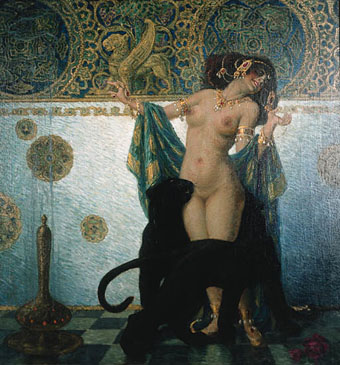
Salomé (2007–2008).

Elsewhere on { feuilleton }
The fantastic art archive
The Salomé archive

Brush of Baphomet by Kenneth Anger

anger2.jpg

Another recent piece of Angeriana, and another short video sketch, Brush of Baphomet (2009) is a kind of addendum to Anger’s The Man We Want to Hang (2002), being a further look at Aleister Crowley’s paintings. The title refers to one of Crowley’s many occult names. As a painter Crowley’s technical ability was almost nil but that never dissuaded him from trying, and I’m sure I’m not alone in finding his work to have a naive malevolence. Anger has had a lifelong interest in Crowley’s paintings, famously journeying in 1955 to the abandoned villa in Cefalù, Sicily, where he cleaned whitewash from the walls to reveal the remains of the murals Crowley had painted there.

anger3.jpg

The music in Brush of Baphomet is a surprising choice, an extract from the second part of Morton Subotnick’s Silver Apples of the Moon (1967). Anger’s musical selections have never been random ones so you have to wonder why this particular score. Was it because the electronics are reminiscent of the Moog drones Mick Jagger supplied for Invocation of My Demon Brother (1969)? Subotnick’s title is borrowed from The Song of Wandering Aengus by WB Yeats, a poet for whom Crowley (also a poet) had little affection. In Crowley’s occult novel Moonchild, Yeats appears as “Gates”, a mediocre painter (yes, well…), who ends up being killed in an act of magical revenge. Crowley must have been mortified a few years later when Yeats was awarded a Nobel Prize.

Previously on { feuilleton }
Anger Sees Red
Kenneth Anger’s Hollywood Babylon
Lucifer Rising posters
Externsteine panoramas
Missoni by Kenneth Anger
Anger in London
Arabesque for Kenneth Anger by Marie Menken
Edmund Teske
Kenneth Anger on DVD again
Mouse Heaven by Kenneth Anger
The Man We Want to Hang by Kenneth Anger
Relighting the Magick Lantern
Kenneth Anger on DVD…finally

The art of Ferenc Helbing, 1870–1958

helbing1.jpg

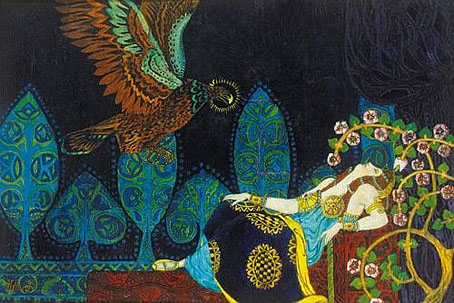
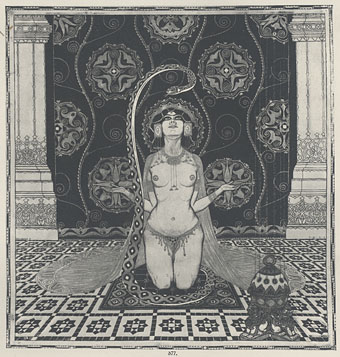
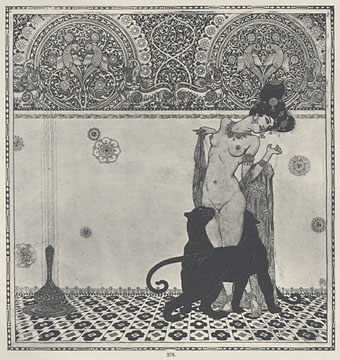
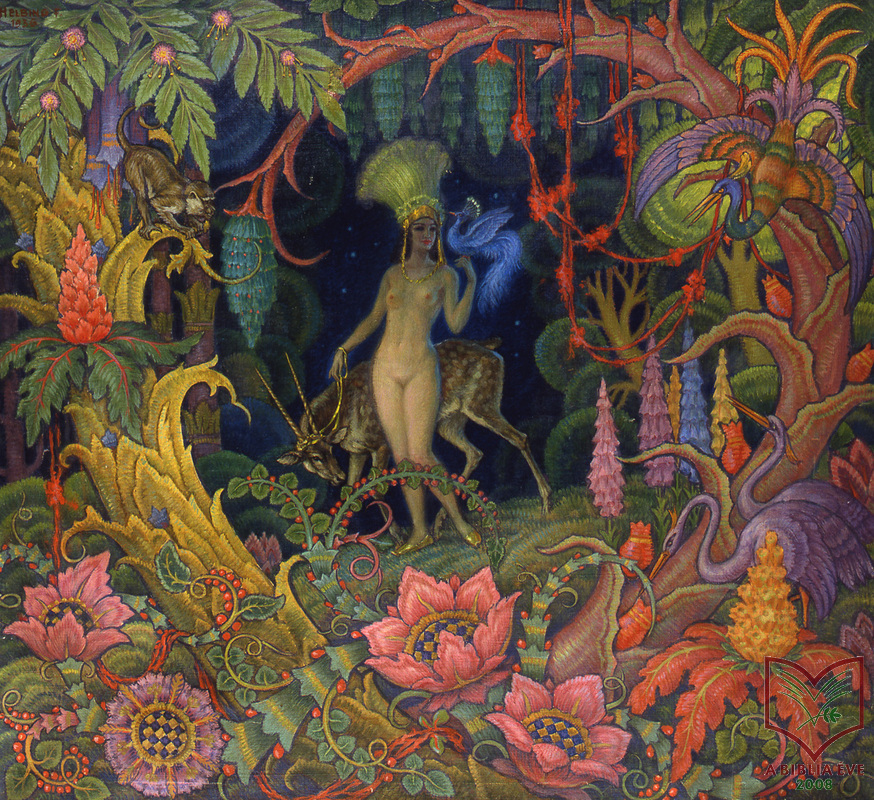
Beautiful Century drew my attention to this Hungarian artist and designer, one of many Eastern Europeans passed over in fin de siècle art books by virtue of working too far from Paris, Munich or Vienna. Helbing’s work would have been most visible to Hungarians in the designs he produced for the nation’s banknotes but on the evidence of these lavish and exotic examples he’s a match for his contemporaries elsewhere in Europe. Of the Seherezade (sic) depictions I prefer the black-and-white version over the painting. There’s more at Flickr.

helbing3.jpg

helbing2.jpg

helbing4.jpg

Seherezade (1918).

helbing5.jpg

Édenkert (1936).

Babel details

babel01.jpg

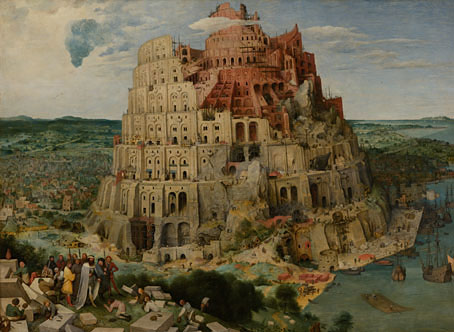
The Tower of Babel (c. 1563) by Pieter Bruegel the Elder. Kunsthistorisches Museum, Vienna.

Seeing as how I have a fetish for Towers of Babel I ought to have examined this one sooner, the copy at the Google Art Project being one which allows you to explore the surface of the picture in greater detail than the artist himself would have seen unless he was using a magnifying glass. I still find the Art Project interface awkward so the grabs here were taken from a massive jpeg at Wikipedia: 30,000 pixels across, or 243 MB, scaling up to around 1.84 GB in Photoshop which means it’ll make older machines grind in complaint.
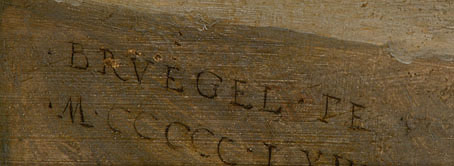
babel02.jpg

The detail is astonishing even by Bruegel’s standards. I’d never realised before how much care is given to the individual actions of every single worker on the tower, however small. Bruegel’s close observation of the working habits of the people around him is here reflected in the myriad figures, all of whom are doing something purposeful. At this resolution you’re able to see that the workers have taken their wives and children up the tower with them—there’s the familiar line of washing hung out to dry—while various beasts of burden haul building materials up the spiral roadway. You could spend a long time exploring the details of the tower before even looking at the background where tiny boats are sailing the sea and the rivers, and more fortunate animals have been left to graze in fields.

Wikipedia has several more of these enormous images. It’s a shame there aren’t many more of Bruegel’s works available at this size, his other crowded paintings deserve equal scrutiny.
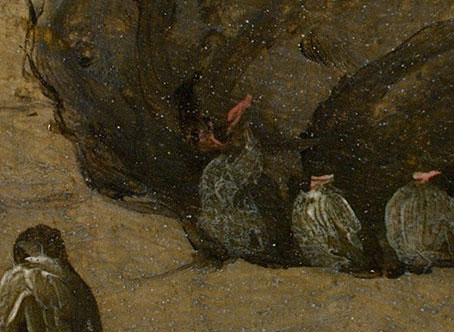
babel03.jpg

One of the builders on his lunch break.
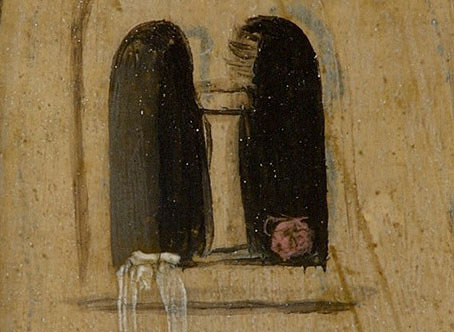
babel04.jpg

A jug on a window sill.

Continue reading “Babel details”
Paul Delvaux: The Sleepwalker of Saint-Idesbald

delvaux.jpg

Saint-Idesbald is a small, unremarkable seaside town on the Belgian coast situated between Ostend and the border with France. I spent a week there on a school camping holiday in the 1970s unaware that it was the home of the great Surrealist painter Paul Delvaux (1897–1994). I suppose you could make the argument that the location of Dalí’s home in Cadaqués was equally unremarkable, but Dalí’s house was well-known, and that area of the Spanish coast is familiar from many of his paintings. The surprise in later discovering that Delvaux lived in Saint-Idesbald, rather than Brussels or Bruges, or even Ostend, is that the town is quite unlike the tram-haunted, cobblestoned, moonlit vistas of his paintings. It’s appropriate that JG Ballard thought highly enough of Delvaux to mention his paintings in some of his stories, and also commission reproductions of two lost canvases; Ballard’s Shepperton was an equally unlikely home for such a vivid imagination.

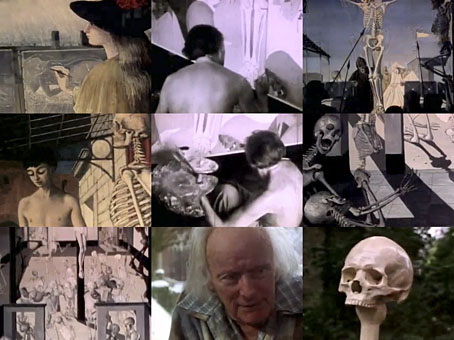
Paul Delvaux: The Sleepwalker of Saint-Idesbald is a film from the Naxos record label that lasts all of three minutes, but which happens to feature the first footage I’ve seen of Paul Delvaux as a working artist. Despite Ballard’s attention, Delvaux has often been passed over as a subject of Surrealist documentaries in favour of the usual trinity of Dalí, Magritte and Max Ernst. There are older documentaries in existence, however, so I’ll continue to hope they may turn up eventually. For anyone who happens to journey near Saint-Idesbald, many of Delvaux’s paintings can be seen in the museum there.

Previously on { feuilleton }
The Public Voice by Lejf Marcussen
Ballard and the painters
Taxandria, or Raoul Servais meets Paul Delvaux