Art on film: Space is the Place

taylor1.jpg

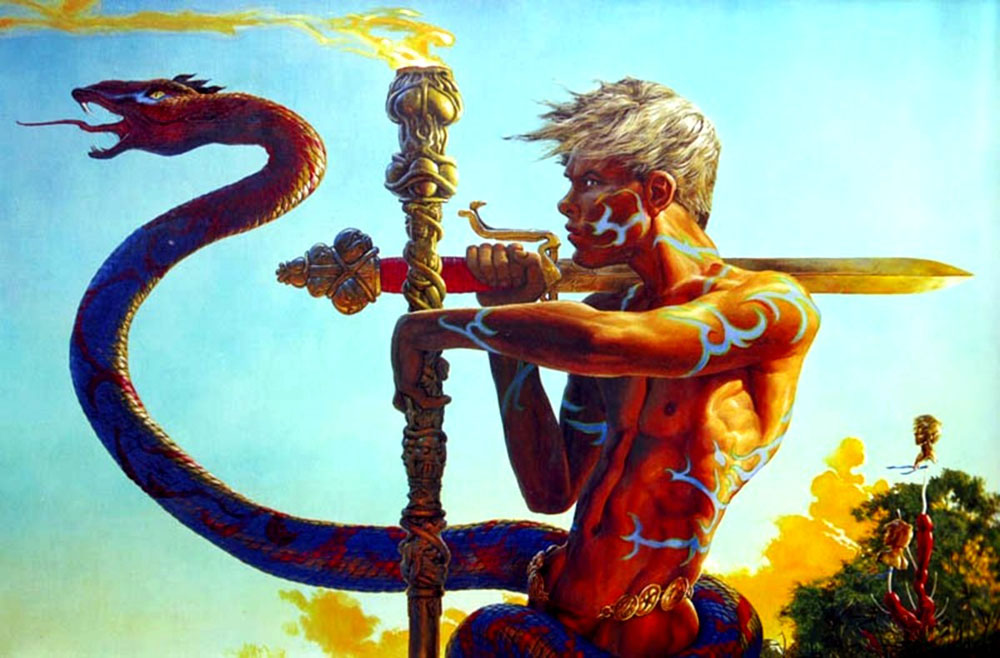
Mescaline Woods (1969) by Gage Taylor.

Continuing an occasional series about artworks in feature films. This is more of a trivial example than the epic study of Providence but it seems worth mentioning when the art and the film in question aren’t so familiar.

taylor2.jpg

Encounter (1971) by Gage Taylor.

Last week my friend Jay Babcock was asking on his Substack newsletter for other examples of the utopian hippy landscape art that flourished in the 1970s. I recommended the paintings of Gage Taylor (1942–2000), an artist who was part of the loose movement known as the Californian Visionaries during that decade; paintings by the group were showcased in the Visions book published by Pomegranate in 1977, and shortly thereafter could be found in the early issues of OMNI magazine. Taylor was a prime exponent of slightly fantastic, idealised landscapes with titles like Mescaline Woods, painted in a style which, for the most part, he managed to prevent from becoming too saccharine. Encounter is a typical example: a quartet of naked hippies wandering through an Arcadian scene bordered by decorative cannabis leaves. The painting is definitely utopian in asking us to accept a clothes-free hike along a trail with no concern for sharp stones or injurious plants and animals.

aliens.jpg

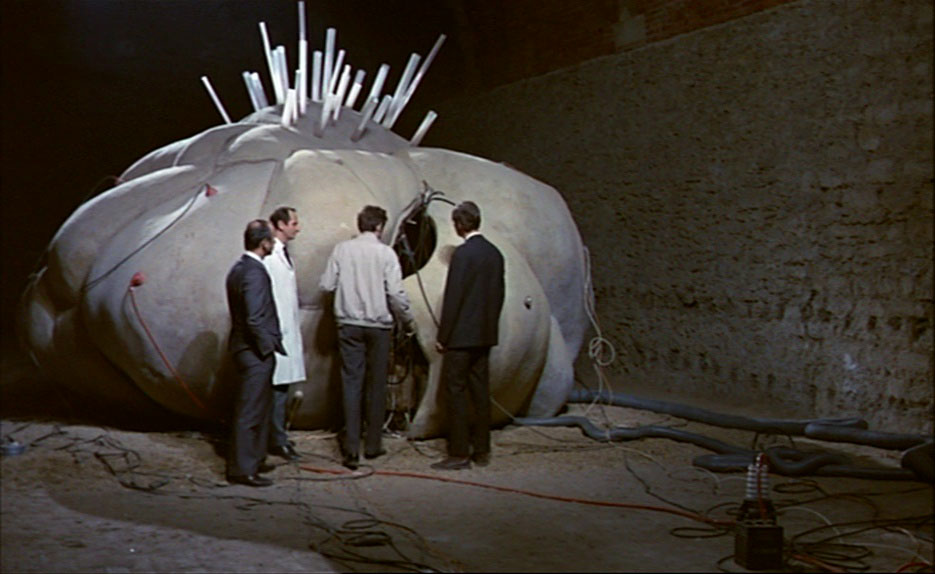
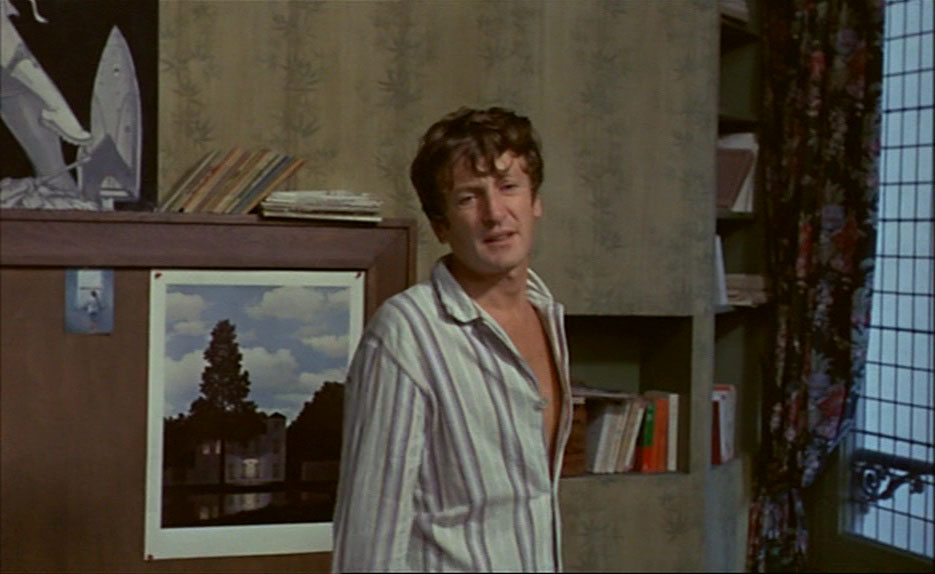
Looking through Visions again, and at this painting in particular, I was struck by the foreground group of floating alien creatures which I belatedly realised are the origin of the aliens from the opening scenes of Space is the Place (1974), the Sun Ra feature film directed by John Coney. And after watching those scenes again, details from Taylor’s paintings (including Mescaline Woods) turn up as brief establishing shots of the planet where Sun Ra has landed his spacecraft, something I’d missed entirely. Taylor is credited as one of the set decorators so I’d guess he made the alien creatures himself. I’d have been happy with more of the cosmic weirdness and less of the Blaxploitation clichés that pad out the later scenes but with films as unlikely as this we have to be thankful they exist at all. At its best Space is the Place approaches the delirium of The Holy Mountain, albeit on a much lower budget; Sun Ra and the villainous Overseer even play a game to decide the fate of the Earth using a unique pack of Tarot cards.

space1.jpg

space2.jpg

space3.jpg

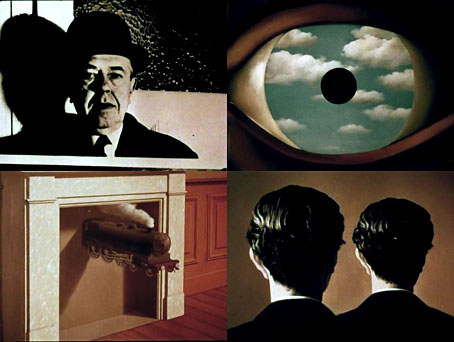
Another more obvious external reference in the opening scenes is the cowled and mirror-faced individual that Sun Ra talks to, a figure taken from Maya Deren’s Meshes of the Afternoon. Deren’s film in 1974 wasn’t the cult item that it is today so this is an opportunistic swipe on the part of the film-makers, but the borrowing allows us to regard Mirror-face as the same character in both films. Watch them together.

Previously on { feuilleton }
Art on film: Providence
Art on film: The Beast
Meshes of the Afternoon by Maya Deren

Weekend links 627

aldridge.jpg

Cover art by Alan Aldridge for The Secret Life of Plants, 1975. Via.

• At Aquarium Drunkard: Alice Coltrane and band in a furious live performance at the Berkeley Community Theatre, 1972. The audio is on YouTube, and was also released on (unofficial) vinyl a couple of years ago, but you can download the whole set at Dimeadozen. (Free membership required.)

• “Black Square is tragic; it’s absurd; it can be bewildering or funny; it’s certainly metaphysical; and now it serves as a precursor for works and projects yet to be imagined.” Andrew Spira on the precursors of Black Square by Kazimir Malevich.

• “The possibility of plant consciousness cuts two ways, depending on whether you see plants as friend or foe, benevolent or threatening.” Elvia Wilk on the secret lives of plants.

• New/old music: Robot Riot by Stereolab. A previously unreleased recording from the mid-90s which will appear on the fifth instalment in the Switched-On compilation series.

• “Dare’s good, but Love And Dancing broke the mould and kicked off the whole modern dance scene.” Ian Wade on 40 years of remix albums.

• Coming soon from Strange Attractor: Arik Roper: Vision of The Hawk.

• At Unquiet Things: Deborah Turbeville’s unseen Versailles.

• “Thinking like a scientist will make you happier”.

• At Dennis Cooper’s: Karel Zeman Day.

Plantasia (1976) by Mort Garson | Musik Of The Trees (1978) by Steve Hillage | The Secret Life Of Plants (1979) by Stevie Wonder

Diamonds

coils.jpg

I’ve finally found time to update the website a little so here are the last two book covers I was working on last year. In the Coils of the Labyrinth by David Annandale is another tale of Lovecraftian horror for Aconyte:

Professor Miranda Ventham is having bad dreams—nothing new in 1920s Arkham—but hers are horrifying glimpses of a dark future. Now seriously ill, she books herself into the new sanatorium, Stroud Home. With luck, the town’s eldritch taint won’t reach her there. And yet the nightmares worsen. Aided by her friend, Agatha Crane, they delve into the background of the sanatorium’s enigmatic director, Donovan Stroud. Plagued by doubts, delusions, and terrifying visions, Christine must unravel the shrouded history of the Strouds before she is trapped in a labyrinthine nightmare. Something sinister lurks at its heart, and it longs to be set free.

otzi.jpg

Otzi’s Odyssey by Neil Perry Gordon is a metaphysical drama which posits a fictional life and afterlife for the neolithic iceman whose body was discovered in the Alps:

Ötzi’s Odyssey – The Troubled Soul of a Neolithic Iceman, opens in the year 1991 with the remarkable sighting of a mummified man, half frozen in glacial ice, whom two hikers stumble upon. Along with this profound archeological discovery, the soul of this five-thousand-year-old iceman is awakened.

?Ötzi the iceman’s adventure takes him to the modern era, where his observant soul tries to comprehend why it remains tethered to the frozen mummy, as well as to make sense of a technologically advanced world. The story then returns to 3300 BCE, to the life and times of clan chief Bhark as he lives with his family in a peaceful village upon stilt homes clinging to the shore of the great Lake Neith, located in the shadows of ominous Similaun Mountain.

Both these covers use an elongated diamond shape in their designs, a repetition that I wasn’t intending. I did this first on Otzi’s Odyssey since the story has four infernal realms that the character’s soul travels through. A diamond shape subsequently became necessary for In the Coils of the Labyrinth when a central panel was required that wouldn’t cover too much of the background imagery while also connecting the upper and lower levels and providing a graphic link with my previous covers in this series. There’s a similar shape on my cover for The Voice of the Fire so I should probably avoid doing this for a while…

Still to be announced from last year is an album cover design that I managed to fit in despite several months of serious overwork. This was my first proper album cover for some time (as opposed to the layout I’m usually doing on albums where the artists provide their own art) but the release seems to have been delayed for some reason. More about that one when/if it appears.

Elsewhere on { feuilleton }
The Lovecraft archive

Previously on { feuilleton }
The Devourer Below
Litany of Dreams
The Last Ritual

Weekend links 626

conformist.jpg

Czech poster for Bernardo Bertolucci’s The Conformist. Art and design by Miroslav Pechánek, 1972.

• “Acknowledgements are not part of the novel; in fact, they break the spell the author has spent 200 or more pages weaving. We should take a book on its merits, knowing as little about the author as possible. As one reader put it to me, ‘the end of a book is time for thinking about the book, not for an acceptance speech’.” John Self on dedications and acknowledgements.

• Mixes of the week: a Power Ambient mix by A Strangely Isolated Place, and a mix for The Wire by Nexcyia.

• At Spoon & Tamago: 3D-scanned stones create vessel for human-made interventions.

Weeks turned into months. Slowly it dawned on me that I was performing the role of Boswell for a man who might be: a) a put-on maestro or arcane troll; b) a fiction writer slash performance artist; or c) a lunatic. But by his own admission King had tagged me with a familiar spirit. Whether or not he was telling the truth was irrelevant at this point. I could feel something squatting on my soul. I needed to see what it was.

Kent Russell on looking for demons in a disenchanted world

• A trailer for Mad God, Phil Tippett’s 30-years-in-the-making animated feature.

• New music: Vesta by Azu Tiwaline, and Right, Right, Right by Nils Frahm.

• At Dennis Cooper’s: Max Hattler Day.

• “Marcel Duchamp was not a thief.”

• RIP Jean-Louis Trintignant.

Demons Of Rage (1972) by Nik Raicevic | Shall Come Forth The Demons (1991?) by Yuri Morozov | Angels Of Darkness, Demons Of Light (2011) by Earth

Metamorphose: MC Escher

escher1.jpg

This is a Dutch documentary with narration in English, made in 1998 for the centenary of MC Escher’s birth. Unlike other films about the artist which examine the famous tessellated patterns and visual paradoxes the approach here is a strictly biographical one. Being a Dutch production, the producers had access to a large quantity of material about Escher’s life: photographs, diaries, sketches and so on, which means we learn a lot about his early years and his subsequent travels in Italy. The film seeks out some of the places that Escher drew in the 1920s, the tiny southern towns whose architecture would turn up decades later in many of his well-known prints. There’s also a visit to the Alhambra in Spain where Escher not only sketched the architecture but also made copies of the tile patterns. Best of all is footage of the artist himself in the 1960s talking about his work, together with extracts from other films that show him pulling prints from his engravings.

escher2.jpg

What we don’t have is any indication as to how an artist who was struggling to make a living for at least half his career suddenly came to find his work featured in TIME magazine in the 1950s. Expert commentary in documentaries can sometimes seem superfluous but this is a film that would have benefited from the contribution of someone like Bruno Ernst whose Magic Mirror of MC Escher is an excellent study of the artist’s working methods and the thinking behind them. The film alludes to the growing popularity of Escher’s prints in the 1960s but there’s no mention of this being fuelled in part by illicit reprinting. While scientists and mathematicians were decorating their offices with bona fide Escher prints, their drug-taking students were doing the same in their dorm rooms with bootleg blacklight posters. Escher wasn’t impressed by the hippies, and showed little interest in the art world; there’s a brief mention of Dadaism in a reading from one of his letters but we’re not told what he thought of the Dadaists, or of the Surrealists who would seem like his natural allies, Magritte especially. (Escher’s Castle in the Air woodcut from 1928 was made 31 years before Magritte’s Castle of the Pyrenees.) Art critics reciprocated by ignoring Escher until his popularity made the avoidance unsustainable, after which the default position was to dismiss him as too “tricky” or coldly cerebral. Escher’s outsider status is almost unique in 20th-century art, and warrants a mention at least. Caveats aside, Metamorphose is still worth seeing, especially if you only know the artist from his later works. Watch it here.

Previously on { feuilleton }
More swans and robots
Suspiria details
MC Escher book covers
Relativity
Escher’s snakes
The Fantastic World of MC Escher
MC Escher album covers
Escher and Schrofer