A Q&A with artist Mel Odom

odom1.jpg

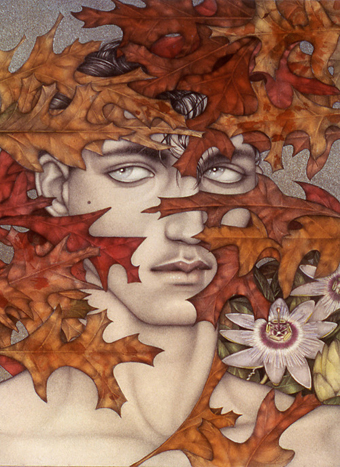
First Eyes (1982).

I’ve emphasised the artist label to distinguish this Mel Odom from the very prolific writer of the same name. The artist received a fleeting mention here in the Gay artists archive but for many years he’s been a highly regarded book and magazine illustrator, with a Gold Medal from the American Society of Illustrators among his accolades. (By coincidence, one of his covers was for an Ellen Datlow horror collection, and I happen to be illustrating a new Ellen Datlow collection of horror stories this week.) More recently Odom has gained a very different audience for his doll designs which are mentioned in passing below. I’m grateful again to John Wisniewski for offering me this piece. Thanks to John and to Mel, more of whose gorgeous art can be seen at his website.

*

John Wisniewski: When did you begin drawing and painting?

Mel Odom: I’ve been drawing since I was about 4 years old and painting since my early teens. I have scribbles in an early picture book of mine that I’m sure were my first attempts at drawing.

JW: Whom are some of your favorite artists?

MO: I like so many different artists. The Pre-Raphelites were a huge influence on me as well as artists like Edward Hopper and Georgia O’Keefe. Aubrey Beardsley has been an early and constant favorite of mine. Representational art moves me more than the abstract for the most part. Disney animation also shaped what I still think of as being beautiful.
odom2.jpg

JW: Have you had any exhibitions? If so, what was the reaction to your work?

MO: I’ve really never had a one-man exhibition. When I was illustrating I was too busy to bother and illustration was not considered gallery worthy. Then when I quit illustrating to create Gene [Marshall] there was simply no time to even consider it. I’ve been in tons of group shows where the reaction has been everything from adoring to dismissive. I’ve been working on a series of oil paintings towards a show.

JW: Your work is easily recognizable to those in the art world, Mel. Did you expect this to happen, when you began?

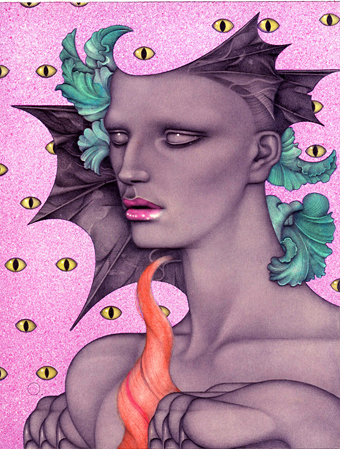
MO: When I started out I knew my drawings didn’t look like anyone else’s, but it wasn’t a conscious ploy for recognition. I devised my style by the process of elimination. I knew what I didn’t want them to look like. I just drew with a vision that made me need to see what the drawing looked like completed. My drawings were always based on a very personal sense of beauty.
odom3.jpg

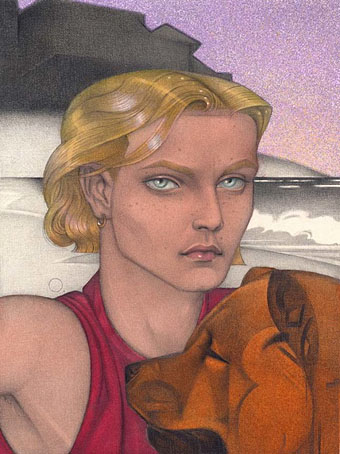
Hello, I Lied (1997).

Continue reading “A Q&A with artist Mel Odom”

John Austen’s Tales of Passed Times

austen01.jpg

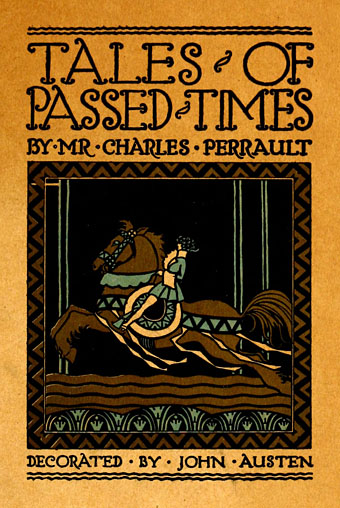
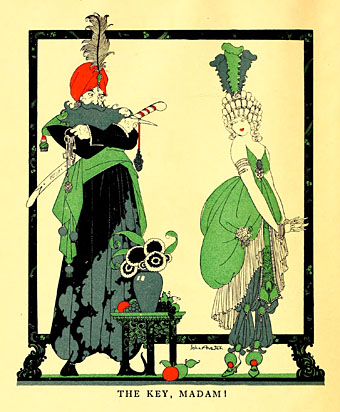
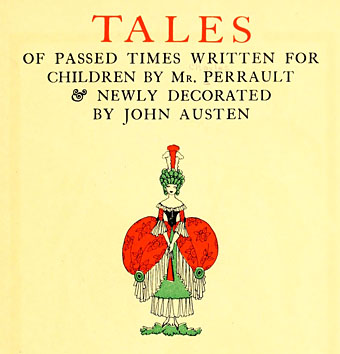
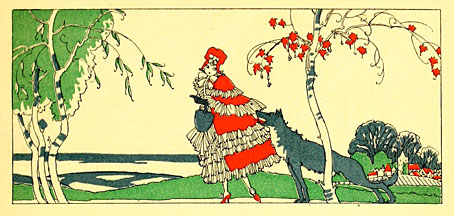
The retellings of old folk tales by Charles Perrault (1628–1703) became the earliest examples of what we now call fairy tales, but Perrault’s versions of Little Red Riding Hood, Puss in Boots, Sleeping Beauty, Cinderella et al have tended to be overshadowed by the more copious works of the Brothers Grimm and their followers. Perrault has attracted illustrators, however, including major figures such as Gustave Doré and Harry Clarke. This edition by John Austen is one of the artist’s earliest books dating from 1922. Perrault collections are often short; this one is only 74 pages but Austen fills the book with many small illustrations and vignettes. It’s a surprise seeing his work in colour when the more familiar drawings are all striking black-and-white. Spot colours help highlight Little Red Riding Hood’s outfit and Bluebeard’s beard. See the rest of the book here or download it here. (Thanks again to Nick for the tip!)

austen02.jpg

austen03.jpg

austen04.jpg

Continue reading “John Austen’s Tales of Passed Times”

Weekend links 244

scarpulla.jpg

MMOB :: Far West (2013) by Alison Scarpulla.

• “…although same-sex love is as old as love itself, the public discourse around it, and the political movement to win rights for it, arose in Germany in the late nineteenth and early twentieth centuries. This message may surprise those who believe that gay identity came of age in London and New York, sometime between the Oscar Wilde trials and the Stonewall riots.” Alex Ross reviewing Robert Beachy’s Gay Berlin: Birthplace of a Modern Identity. Beachy talks about his book here.

• “I was in a room with tube synthesizers, where you had to tune them up to play them. It was unbelievable.” John Carpenter talking to Joseph Stannard about composing with electronics. Carpenter’s album of new music, Lost Themes, may be previewed here.

• From 2010: John Ridpath on Mervyn Peake’s illustrations for Lewis Carroll’s Alice Through the Looking Glass and Alice in Wonderland. Related: “The most twisted version of Alice in Wonderland you’ll ever see.”

I was brought up in a world where art was something owned and insured—usually inherited: but seldom if ever made by anyone one I knew.

I had an early inkling that there was fun to be had over the hill, like the feeling when faced with a sunset that someone’s throwing a mega awesome party just beyond the nearest cloud, and I set off to join the caravan. Let’s just say I was in search of company, headed towards the glow, and I found it.

Tilda Swinton‘s speech at the Rothko Chapel

• “Her art often touches on alchemy and magic; and in her memoir of insanity she writes of misreading an Imperial Chemicals sign as ‘chemistry and alchemy’.” Charlotte Higgins on Leonora Carrington.

Shadows Over Main Street, an anthology of small-town Lovecraftian terror, is out this week from Hazardous Press. 20 stories and poems plus interior illustrations including a contribution of my own.

• “With Fantastic Planet, I felt torn about using it, because it’s…the title of an animated film.” Guitarist Sarah Lipstate, aka Noveller, talks to Ned Raggett about her new album.

Jim Jupp of Belbury Poly and the Ghost Box record label answers 15 questions.

• A DeLorean driving through a Tron cityscape: Retrowave by Florian Renner.

• Powell & Pressburger’s Tales of Hoffmann (1951) has been restored.

Music from Forbidden Planet (1956) by Louis & Bebe Barron | The Four Horsemen (1972) by Aphrodite’s Child | Assault on Precinct 13 (Main Theme) (1976) by John Carpenter

Kay Nielsen’s Grimm Fairy Tales

nielsen02.jpg

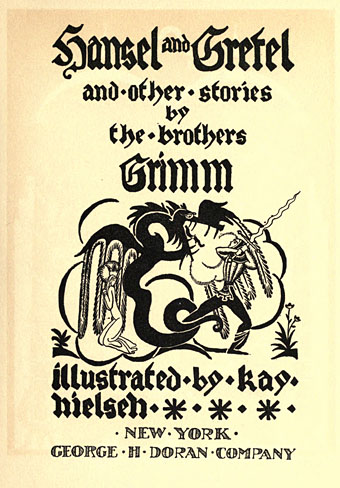
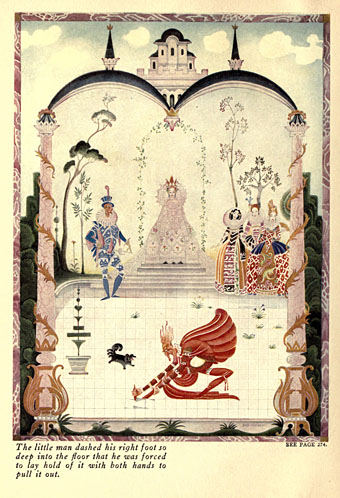
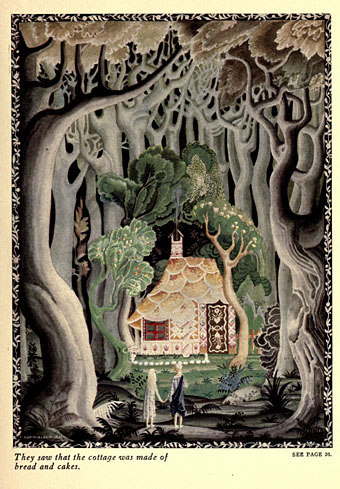
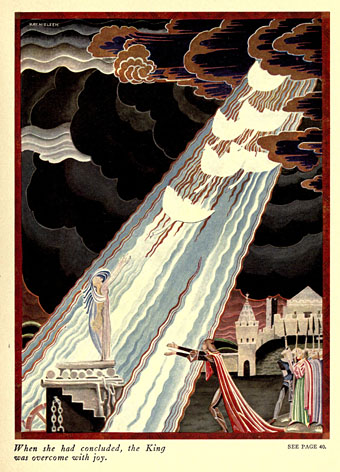
Illustrated editions of the Grimm Brothers’ fairy tales are so numerous it’s easy to overlook the better examples. Kay Nielsen’s edition isn’t only better than most, it’s an outstanding example of his meticulous approach to story illustration. Hansel and Gretel and Other Stories was published in 1925, and the beautiful colour plates really need to be seen at a larger size. You can view the rest of the book here or download it here.

nielsen01.jpg

nielsen03.jpg

nielsen04.jpg

Continue reading “Kay Nielsen’s Grimm Fairy Tales”

The art of Theodor Kittelsen, 1857–1914

kittelsen1.jpg

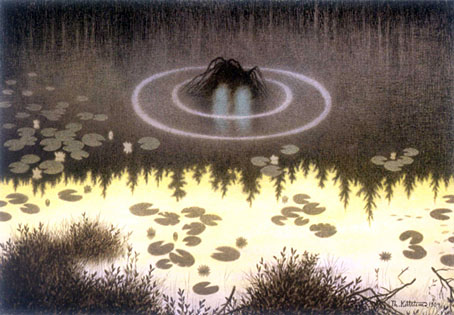
The Water Spirit (1904).

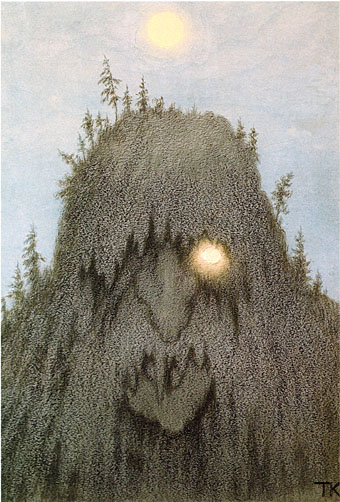
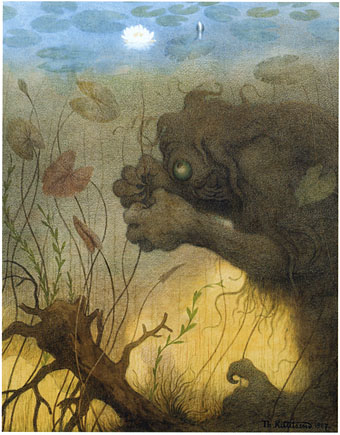
Theodor Kittelsen is, we’re told, one of Norway’s most popular artists and illustrators. This would explain why so much of his work has appeared on the covers of albums by Norwegian metal bands although it also helps that one of the books he illustrated is entitled Svartedauen (The Black Death). The picture below, one of several portraits of trolls and mythological creatures, appeared on the sleeve of Long Island, the most recent album by US band Endless Boogie. Discogs has a list of Kittelsen’s other album cover appearances which also include classical releases. This site has more of the artist’s paintings and illustrations. (Via Wood s Lot).

kittelsen2.jpg

Forest Troll (1906).

kittelsen3.jpg

Fishing Water Spirit (1912).

Continue reading “The art of Theodor Kittelsen, 1857–1914”