Record Store Day

vinyl.jpg

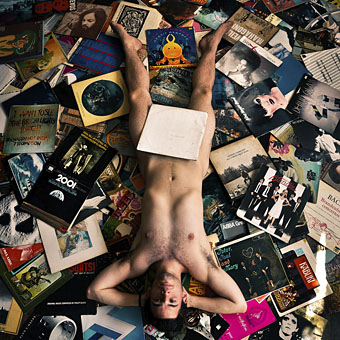
The White Album by Flickr user Fab.C.

April 17th is Record Store Day in the UK and the US, a celebration of the importance of small record shops. In the spirit of this {feuilleton} encourages you to show some love to your local music merchant if you can. There’s a website for the US side of things with details of special releases that bands have produced in support of the day. FACT Mag ran an A–Z of similar releases which will be available in the UK and the Guardian has an article interviewing Johnny Marr, Tracey Thorn, Jon Savage and others about their favourite places past and present. No surprise to see Manchester shops highlighted given the contributors; Johnny Marr plugs Piccadilly Records and Beatin’ Rhythm (the latter a great source for obscure psychedelia, among other things) while Mr Savage also recommends Kingbee out in the wilds of Chorlton, the place where he discovered The Tornados’ Do You Come Here Often, one of the songs on his Queer Noises compilation.
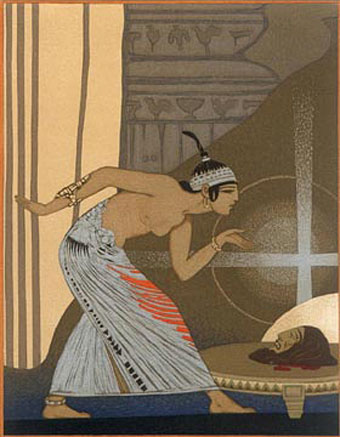
Manuel Orazi’s Salomé

orazi1.jpg

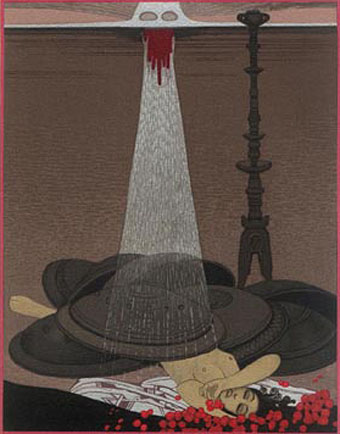
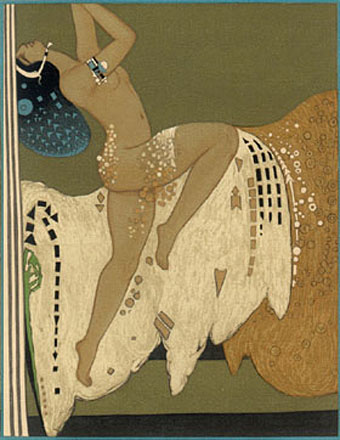
The Biblical bad girl returns in three pictures from an illustrated edition of Oscar Wilde’s play, published as a limited run in 1930. Manuel Orazi (1860–1934) was a French artist whose work has appeared here before, and no doubt will do again very soon since I’ve been finding further examples of his illustrations and designs. These drawings are closer to Gustav Klimt or George Barbier than his earlier illustrations which owed much to the stylisation of Mucha’s Art Nouveau.

orazi2.jpg

orazi3.jpg

Elsewhere on { feuilleton }
The illustrators archive
The Salomé archive

Hector Guimard sketches

guimard1.jpg

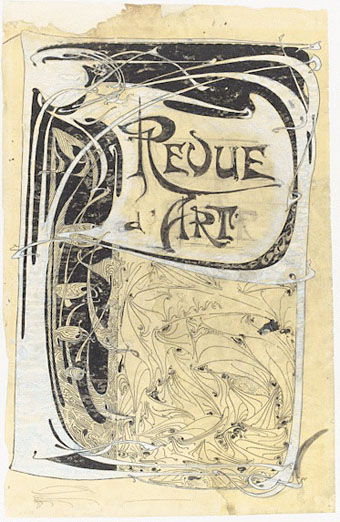
Projet pour la couverture Revue d’art (1899).

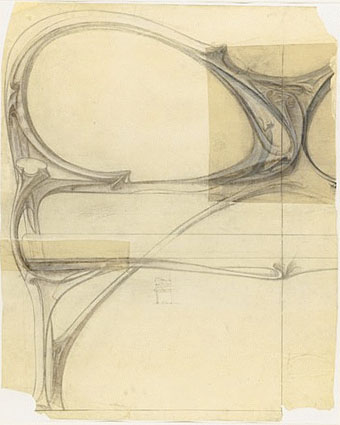
French architect and designer Hector Guimard (1867–1942) is most renowned today for his entrances to the Paris Metro but his work extended from architecture to interior and graphic design, much of it a superior application of the Art Nouveau style. Le cercle Guimard is a site devoted to the designer’s work (French-only for now) while these sketches are from a substantial collection at the Musée d’Orsay, Paris.

guimard2.jpg

Projet de demi-canapé pour Mme Legrand (1900).

Previously on { feuilleton }
Temples for Future Religions by François Garas
Elizabetes Iela 10b, Riga
Atelier Elvira
Louis Bonnier’s exposition dreams
The Maison Lavirotte
The House with Chimaeras

The art of Aquirax Uno

uno1.jpg

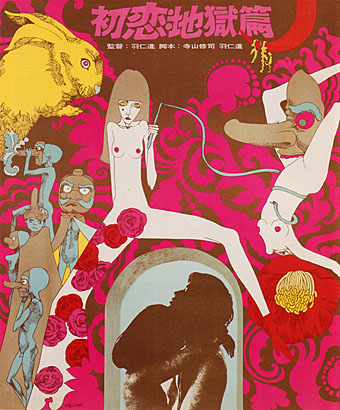
First Love Inferno (1968).

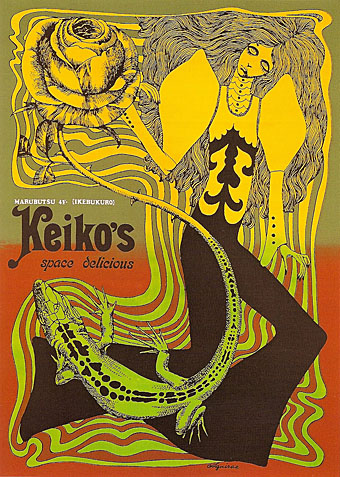
There’s very little web information available for Aquirax Uno, a Japanese artist active in the 1960s and 1970s who really ought to have a dedicated site. Much of his work seems to be poster art for cinema or product advertising, and, as usual on the web, what there is tends to get repeated a great deal. You can see more examples like these at Pink Tentacle, Ganymede Kids and Beautiful/Decay.

uno2.jpg

Keiko’s at Marubutsu Department Store (1967).

Previously on { feuilleton }
Alice in Acidland
Salomé posters
Polish posters: Freedom on the Fence
Kaleidoscope: the switched-on thriller
The Robing of The Birds
Franciszek Starowieyski, 1930–2009
Dallamano’s Dorian Gray
Czech film posters
The poster art of Richard Amsel
Bollywood posters
Lussuria, Invidia, Superbia
The poster art of Bob Peak
A premonition of Premonition
Metropolis posters
Film noir posters

The panoramic towers of Prague

prague1.jpg

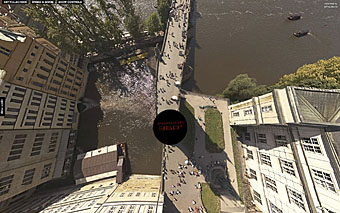
The Tower at Charles Bridge, Old Town.

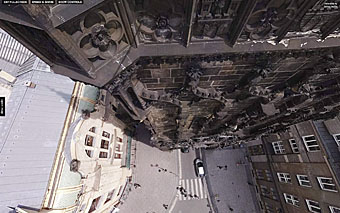
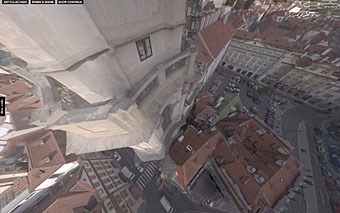
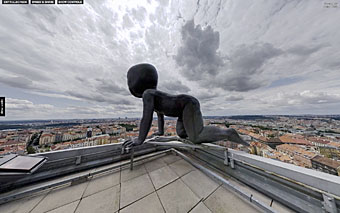
More panoramas of Prague from 360 Cities by Jeffrey Martin, a photographer who’s made a speciality of capturing the city in 360º views. Among his collection are a number of photos taken from Prague’s many towers and steeples including a few where he’s managed to remove the supporting building, as in the view from the Charles Bridge above. This gives the effect of floating in weightless suspension above the city and may well induce alarm in vertigo sufferers. Needless to say, all these are best viewed on the full screen setting.

prague2.jpg

The Powder Tower (Prasna Brana).

prague3.jpg

Mikulas Tower.

prague4.jpg

Prague TV Tower Babies 1; one of David Cerný’s crawling baby sculptures looks over the city. See also the 18 gigapixel view from the tower.

Elsewhere on { feuilleton }
The panoramas archive

Previously on { feuilleton }
Karel Plicka’s views of Prague