Shinichi Maruyama’s water sculptures

maruyama.jpg

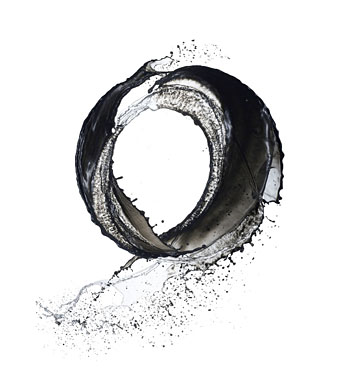
From the Kusho series.

Having attempted a few times to photograph the motion of water in air I’m in awe of Shinichi Maruyama’s high-speed captures which make of the process a very refined and beautiful art. Japanese calligraphy and sumi-e painting are obvious precedents but the artist also refers us to Zen gardens in his Gardens series wherein flares of coloured liquid drift through abstract landscapes. See his website for more.

Mossa’s Salomés

mossa5.jpg

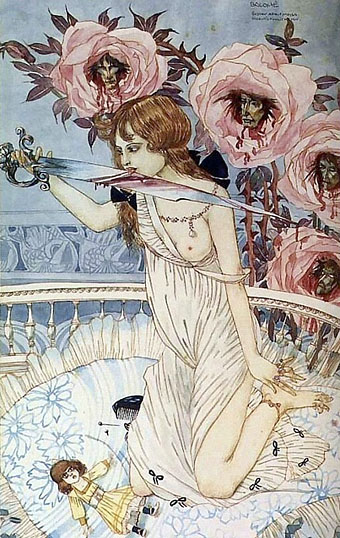
Salomé (1901).

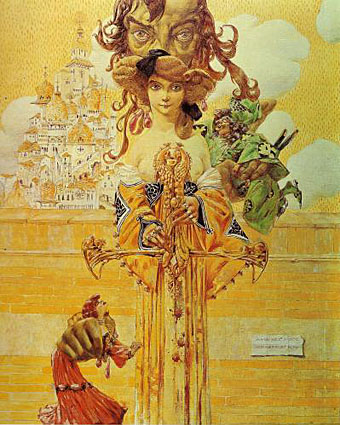
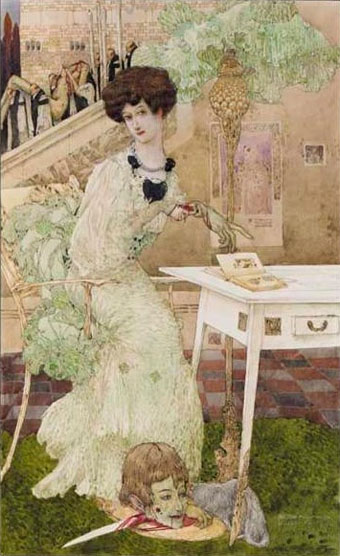
Monsieur Wiley prompted this post by drawing my attention to the picture above. I’d already seen another Salomé by Gustav Adolf Mossa on this page a few days ago but resisted the temptation to mention it. A bit more searching revealed yet another Mossa rendering of the theme which perhaps isn’t so surprising given the artist’s obsession with lethal women. The first exceeds all previous depictions of the Biblical temptress by having her actually licking blood from the executioner’s sword. In the third picture she’s content merely to use a severed hand as a page-turner while John the Baptist’s mutilated body is carted away by servants.

The search for pictures turned up a blog I hadn’t seen before, Women in the Bible (“This is no religious blog!”), which has several Salomé postings. And there’s also Les voiles de Salomé: Labyrinthique errance, virevoltes et volutes.

mossa6.jpg

Encor Salomé (1905).

mossa7.jpg

Salomé (1908).

Elsewhere on { feuilleton }
The Salomé archive

Weekend links 44

bradley.jpg

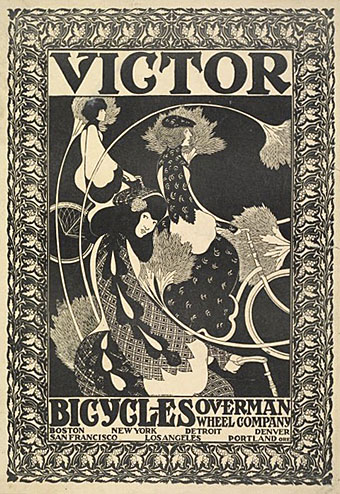
Poster by Will Bradley for Victor Bicycles (c. 1895).

• G. Wayne Clough, chief exective of the Smithsonian Institution, finally admits that he made a hasty decision in removing David Wojnarowicz’s video from the Hide/Seek exhibition of gay art. Related: “Finland’s cultural gifts to the world include Sibelius, the Moomins and an artist that the country has been less eager to celebrate.” The belated homecoming of Tom of Finland.

The Fiend with Twenty Faces: Jonathan Clements examines the legacy of Edogawa Rampo (Hirai Taro), the Japanese master of mystery and imagination.

• RIP Susannah York. The Guardian posted a selection of clips including one from Robert Altman’s Images (1972).

• More mixtapes: Trish Keenan’s Mind Bending Motorway Mix and a selection for Quietus by Chris & Cosey.

• “Ruin photos speak to our desperate desire to have our world re-enchanted.”

tomorrow.jpg

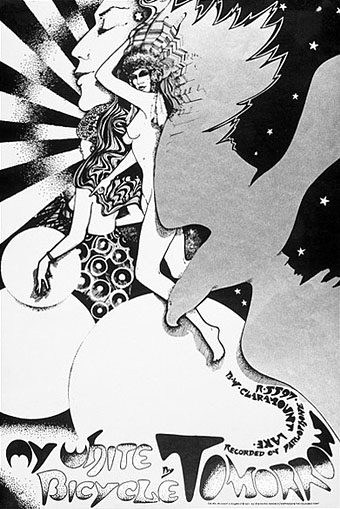
Promo poster by Hapshash and the Coloured Coat for My White Bicycle by Tomorrow (1967).

The Raging Peloton: Iain Sinclair on two wheels good, four wheels bad.

The unknown Jorge Luis Borges: five new anthologies reviewed.

The French house untouched for 100 years (and also here).

Electrotypes on Drugs: old chemists’ labels.

South China Sea Pishkun by Dinh Q. Lê.

Bike (1967) by Pink Floyd | My White Bicycle (1967) by Tomorrow | Trip On An Orange Bicycle (1968) by Orange Bicycle.

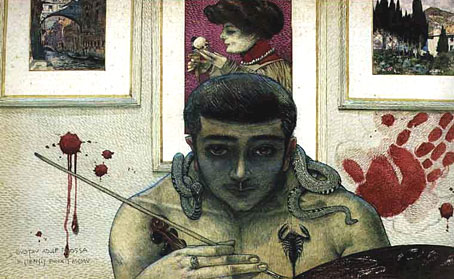
The art of Gustav Adolf Mossa, 1883–1971

mossa1.jpg

Self-portrait.

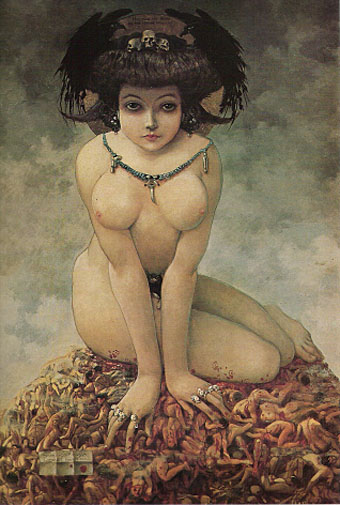
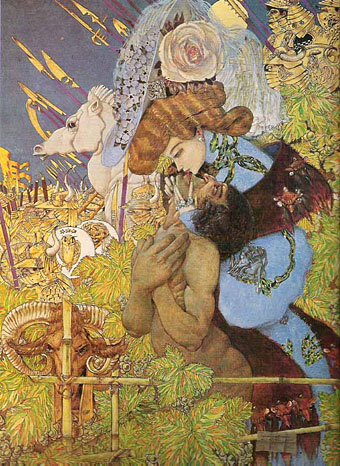
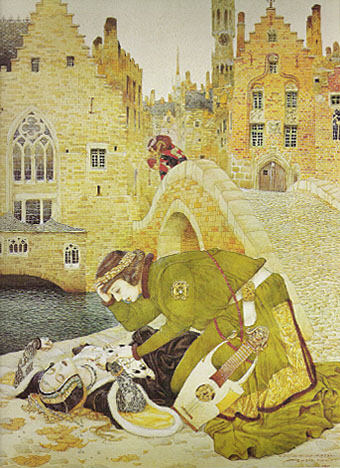
A French artist and another late Symbolist painter whose idiosyncracies point to Surrealism but whose obsession with femmes fatales looks back to the preoccupations of the fin de siècle. If you don’t mind the implicit misogyny there’s a lot more to be seen here and here.

mossa2.jpg

Elle (1906).

mossa3.jpg

Le baiser d’Hélène (1905).

mossa4.jpg

Bruges-la-morte (1911).

Previously on { feuilleton }
Le Sphinx Mystérieux
La belle sans nom
The Feminine Sphinx
Le Monstre
Carlos Schwabe’s Fleurs du Mal
Empusa
Bruges-la-Morte

Historic Design in Printing

historic1.jpg

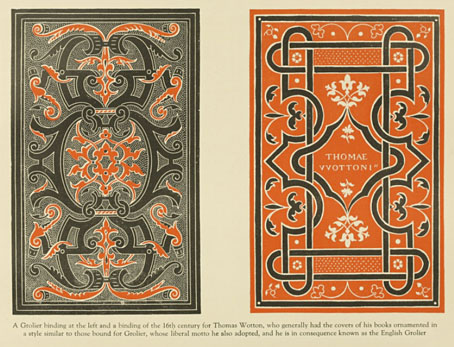
16th century binding designs.

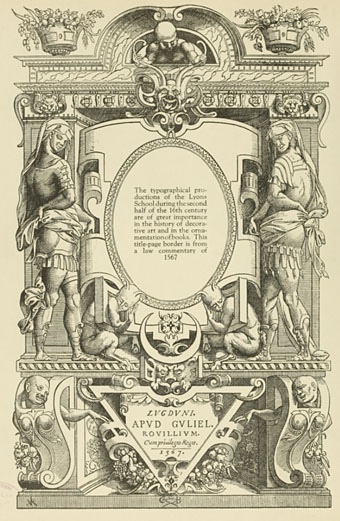
If anyone was wondering why I keep trawling through the scanned books at the Internet Archive, let this volume stand as one of many reasons why. Historic Design in Printing was published in 1923 by the Graphic Arts Company, Boston (USA), and is edited by one Henry Lewis Johnson. The book’s subtitle, “Reproductions of book covers, borders, initials, decorations, printers’ marks and devices comprising reference material for the designer, printer, advertiser and publisher” gives an idea of the content. Many of the motifs are familiar to me from books in Dover Publications’ Pictorial Archive series while a number of the sets of initials I have as bad reproductions in a book by a French publisher. This would suggest that Historic Design in Printing has served as a resource for later collections, and a very fine resource it is too. Download it in a variety of formats here.
historic2.jpg

Title-page border, 1567.

historic3.jpg

historic4.jpg

Initial designed by Georg Heinrich Paritus, 1710.

Previously on { feuilleton }
Combinaisons Ornementales
Charles J Strong’s Book of Designs