Thom Ayres

ayres1.jpg

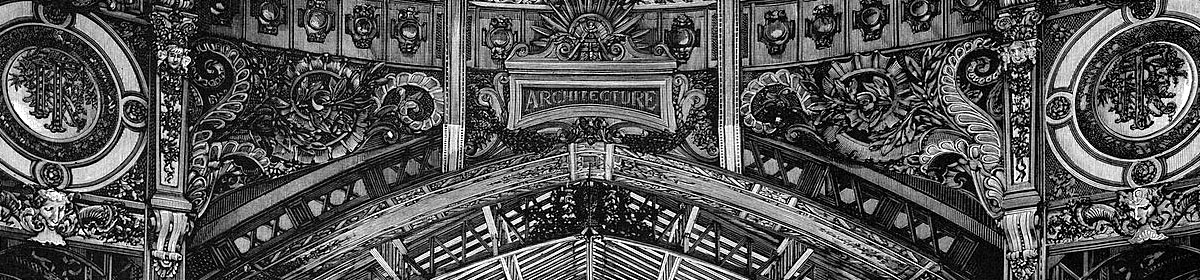
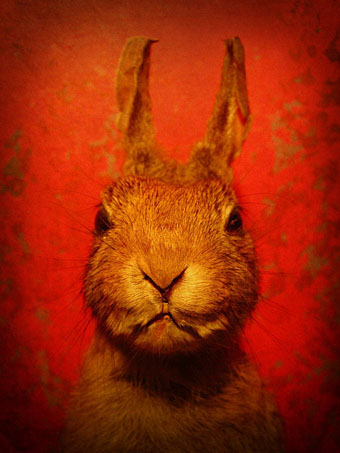
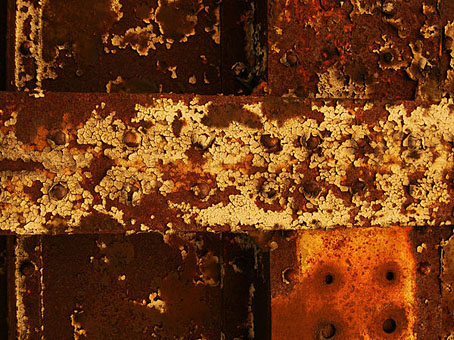
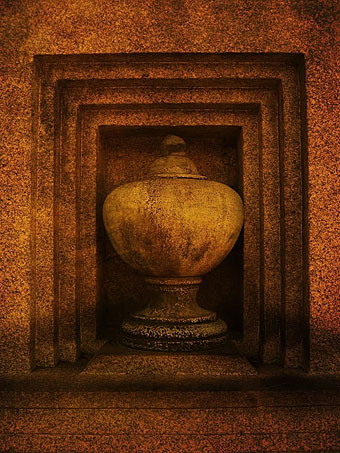
Mr Ayres is a blogger at Form is Void, an occasional commenter on these pages and also a photographer with a keen eye for detail and the occasional outbreak of alarming taxidermy. I especially like the architectural pieces, and I never tire of seeing rusted surfaces and flaking paintwork (one of the best things about growing up in a seaside town). There’s a lot more to be seen here, and at Thom’s Flickr pages.

ayres2.jpg

ayres3.jpg

Continue reading “Thom Ayres”

Bruno Taut’s Glass Pavilion

taut2.jpg

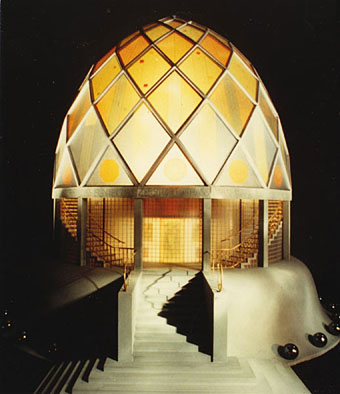
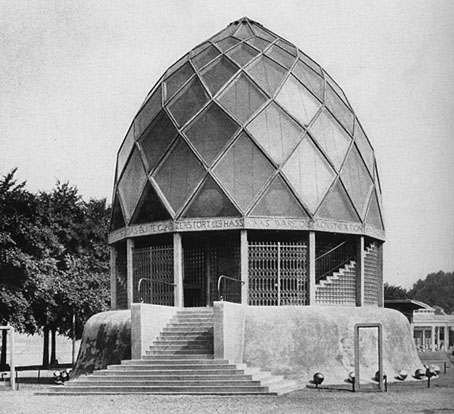
Some speculative architecture that for once isn’t from Paris in 1900. Bruno Taut (1880–1938) gets labelled an Expressionist architect although it’s always a hazardous business connecting people in other disciplines to whatever art movement may be around at the time. The Glass Pavilion was a showcase structure commissioned by the German glass industry for the 1914 Werkbund exhibition in Cologne. The colour photo is a model from this V&A page where we learn that:

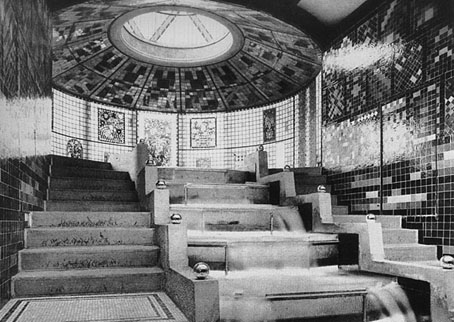
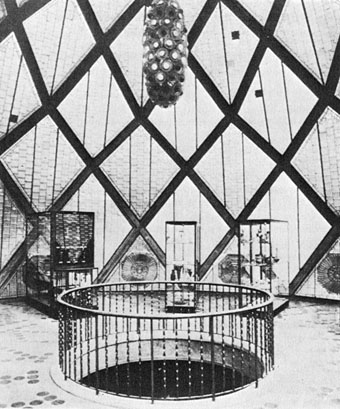
Bruno Taut’s structure demonstrated the various ways glass could be used in a building, but also indicated how the material might be used to orchestrate human emotions and assist in the construction of a spiritual utopia. Taut’s interest in this aspect of glass (explored more intensively during the First World War and later in his book Alpine Architecture and in the Glass Chain letters) had been stimulated by the writer Paul Scheerbart whom he had met in 1912 and who argued for an earthly paradise based on a new architecture of glass and colour. Subsequently, Scheerbart wrote Glasarchitektur (Glass Architecture) in 1914, which he dedicated to Taut, while Taut produced his Glass Pavilion and inscribed aphorisms from Scheerbart on the lintels of the 14 side walls. […] The glazed walls were topped by a dome of reinforced concrete ribs and a double skin of glass: reflecting glass on the outside and coloured prisms inside. In the interior, the colour effects produced by sunlight were enhanced by the reflections of the pool and water cascade on the lower level, visible through a circular opening in the floor. Two flights of glass steps enclosed with glass walls produced the sensation of descending to the lower level ‘as if through sparkling water’. The cascade was made of yellow glass, while the pool was of its complementary colour, violet. A mechanical kaleidoscope overhead projected images, an early version of a light show, intensifying the overall impression on the visitor.

All of which makes one wish there were more colour photos available. There’s another photo of the model here which shows a very different arrangement of light and colour.

taut1.jpg

Le Corbusier apparently disliked Taut’s obsession with vivid colours, accusing him of being colour blind. There’s more about Taut’s philosophy of colour here. Taut wasn’t the only architect at the time interested in glass, his contemporary Hermann Finsterlin designed a “dream in glass” in 1920 that still looks radical today, as do many of Finsterlin’s other designs, all of them a good reminder that biomorphic architecture isn’t exactly new, it’s just become easier to build.

See also: Lebbeus Woods on Taut’s plan to refashion the Alps into a range of crystalline buildings.

taut3.jpg

The cascade.

taut4.jpg

The dome interior.

Six Suites of Engravings

suite1.jpg

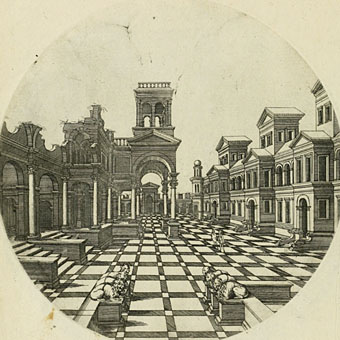
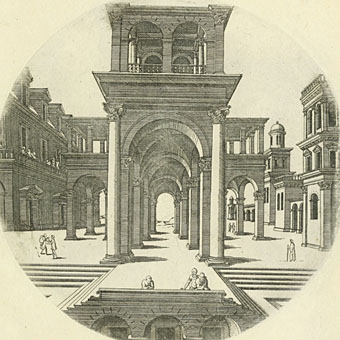
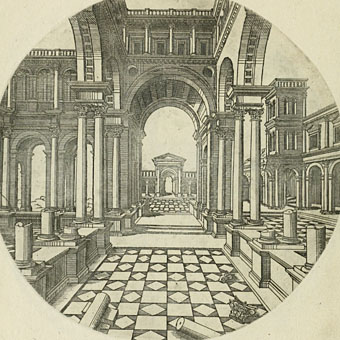
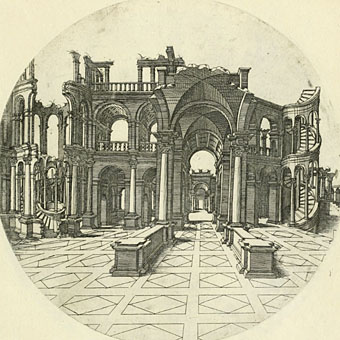
Something discovered following another delve through the collections of etchings and engravings at the Internet Archive where a frustrated search for one subject turns up something else. This 1549 folio of architectural engravings is credited to architect and designer Jacques Androuet du Cerceau (1510–1584), and the plates are based on earlier renderings by Agostino Veneziano and Hieronymus Cock, he of the incredible map of the Americas. Among the details of columns and caryatids there’s a series of the kind of imaginary perspective views I always like to see, lots of sparsely-populated courtyards in various states of ruin. It’s easy to imagine these prospects being transformed into scenarios from Paul Delvaux or Giorgio de Chirico after a suitable change of lighting.

suite2.jpg

suite3.jpg

suite4.jpg

Elsewhere on { feuilleton }
The etching and engraving archive

The Mysteries of Myra

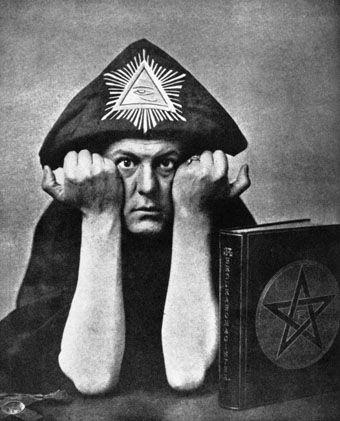
crowley.jpg

Aleister Crowley in 1912.

Back in 1999 I found myself making notes for a short essay on the subtle and often tenuous presence of Aleister Crowley in cinema. Despite Crowley’s reputation in the early years of the 20th century—famously labelled by tabloid hyperbole as “The Wickedest Man in the World”—he doesn’t seem to have ever been filmed. He does have a succession of cinematic avatars, however, in a variety of thrillers and horror films, usually manifesting in the guise of a fictional magus whose exploits will be based on the more lurid public perceptions of the Crowley persona.
myra1.jpg

After some research my short essay bloomed into a longer essay then began developing into a book-length project which I had the good sense to abandon. The idea still interests me but I didn’t have the time or resources to devote to all the detailed research such a project would require if it was going to be done thoroughly. It was also difficult at that time to see the some of the more obscure films, a crucial early example being Rex Ingram’s 1926 adaptation of The Magician, Somerset Maugham’s first novel whose central character, Oliver Haddo, is based on Crowley. The Magician has now been restored and reissued but at that time it was out of circulation entirely.
myra3.jpg

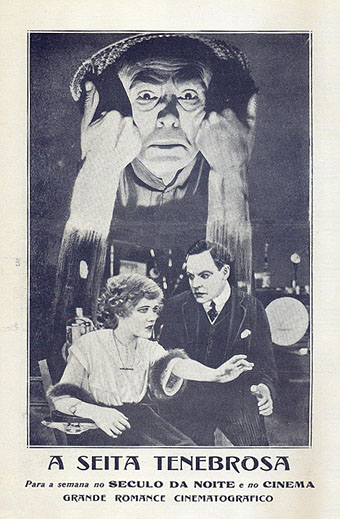
A Portuguese magazine ad.

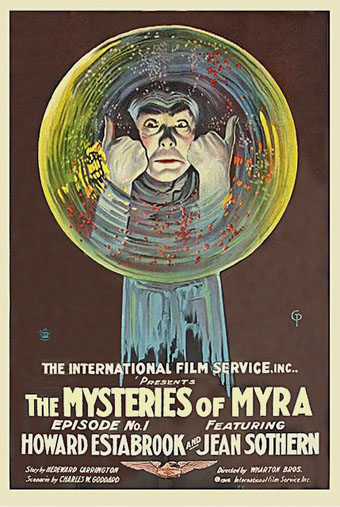
It’s also the case that there always seems to be more to find on this subject, a prime example being The Mysteries of Myra, a lost serial directed by Leopold & Theodore Wharton which has only now come to my attention. If the title seems vaguely familiar it’s because the screenwriter was one Charles W Goddard whose earlier The Perils of Pauline survives as a touchstone for silent melodrama if nothing else. The Mysteries of Myra dates from 1916, and is distinguished by being one of a number of films which received effects advice (and publicity, of course) from Harry Houdini. The Pulp Reader has a précis which includes this toothsome blurb:

BEWARE THE BLACK ORDER! So comes the warning from the spirit of Myra Maynard’s father, who reaches out to her from beyond the grave to warn her of danger from the masters of the occult arts that lurk in the shadows and mark her for murder on her eighteenth birthday. Only the world’s first psychic detective, Dr. Payson Alden, and his friend Haji the Brahman mystic, can save clairvoyant Myra from the terrors of The Grand Master of the Order, who tries to claim not only her fortune but her life by means of suicide-inducing spells, invasion of her chamber by spirit assassins, and even reanimation of the dead by a fire elemental.

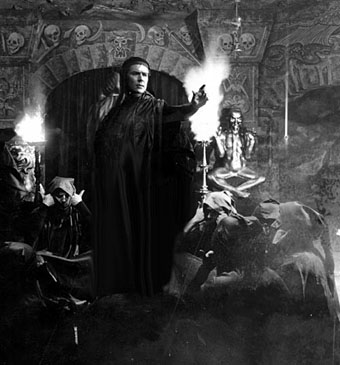
A list of the episode titles reads like a track list for a metal album or a collection of Algernon Blackwood stories: ‘The Dagger of Dreams’, ‘The Poisoned Flower’, ‘The Mystic Mirrors’, ‘The Wheel of Spirit’, ‘The Fumes of Fear’, ‘The Hypnotic Clue’, ‘The Mystery Mind’, ‘The Nether World’, ‘Invisible Destroyer’, ‘Levitation’, ‘The Fire-Elemental’, ‘Elixir of Youth’, ‘Witchcraft’, ‘Suspended Animation’, ‘The Thought Monster’. The Black Order menacing the imperilled Myra (there’s always an imperilled woman in these things) is almost certainly based on Crowley and his acolytes. John Symonds’ biography The Great Beast contains an account of Crowley’s rituals published for appalled American readers in The World Magazine in 1914. That article, and the famous 1912 photo of The Master Therion gesturing in his ceremonial robes, was all the filmmakers would have required to create their villainous cabal.
myra2.jpg

The Black Order at work.

The trouble with this kind of drama is that the description is often a lot more stimulating than the stodgy reality, so it may be for the best if Myra’s exploits have perished. Anyone eager to know more should avail themselves of the photonovel put together by the Serial Squadron using stills (some of which may be viewed here) and a novelisation of the serial story. The book is reviewed at Lovecraft is Missing. Unless anyone knows better, I’d say Aleister Crowley’s curious film career began with Myra’s mysteries.

Previously on { feuilleton }
The Mask of Fu Manchu
Aleister Crowley on vinyl
Weekend links 72

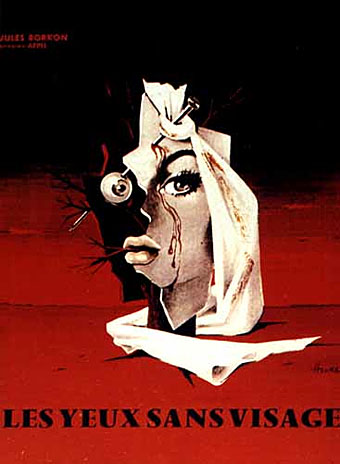
lesyeux.jpg

If Jean Cocteau had made a horror film it might have resembled George Franju’s dreamy and disturbing body-horror masterwork Les Yeux Sans Visage (1960). I’ve not been able to trace the artist for this poster but it’s a good example of the diluted Surrealism which was still prevalent in poster graphics at this time.

If I were asked what’s needed today, I’d say innovation, and greater timbral variety. If you truly want the audience to experience the clammy thrill of the grotesque, the uncanny and the fearful, you have to reach for the unfamilar, the perplexing, even the ugly; there’s an infinite Lovecraftian sound-world out there waiting to be explored. We need new combinations, new textures in film scoring. Horror has a licence to be weird – it’s supposed to mess with our heads. (more)

Stephen Thrower.

Stephen Thrower is an ex-member of Coil, a current member of Cyclobe, was the editor of a great magazine, Eyeball, devoted to horror cinema and what Kim Newman (casting about for a wider, non-generic label) calls “nightmare movies”, and is the author of Nightmare USA and Beyond Terror: The Films of Lucio Fulci. In other words, he’s more than qualified to write about horror film soundtracks. The reason is an event at the South Bank Centre, London, two weeks from now, Sound of Fear: The Musical Universe of Horror, one of the highlights of which will be a performance by John Carpenter’s soundtrack collaborator Alan Howarth. Related: my post about Italian horror soundtracks from 2008.

lovato.jpg

Art by Justin Lovato.

Mind Over Matter: Alan Fletcher’s The Art of Looking Sideways. “The Art of Looking Sideways captures the sensory overload of contemporary visual culture, while also acting as a primer in visual intelligence.” Related: Alan Fletcher profiled at the Design Museum.

• More music and more psychedelia: Past Present Future Space-Time “Wysing Arts Centre explores the legacy of psychedelia in this year’s annual music event”.

The Coilhouse International Silent Auction is GO and ends Sunday night if you want to bid for some rare and special things.

The Garden of Kama and Other Love Lyrics from India (1901), illustrated by John Byam Shaw.

• Chris Marker’s take on the recent London riots: Overnight.

• Bristol’s graffiti artists are redecorating the city’s streets.

• Women and knives: a Dario Argento poster gallery.

Inferno (1993) by Miranda Sex Garden, from their album Suspiria.