The Torchbearer by Václav Švankmajer

svetlonos.jpg

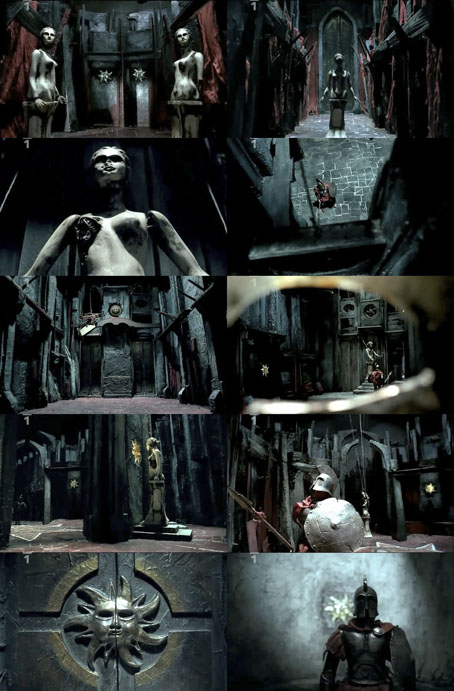
Švankmajer? Yes, Václav is the son of Czech Surrealists Jan Švankmajer and Eva Švankmajerová, and The Torchbearer (2005) is the third of three short films he’s directed. Like the celebrated films of his father this is an animated piece in which a faceless warrior navigates a ruined labyrinth where lethal traps are prepared by a group of living female statues. The style reminded me more of some of the Brothers Quay shorts than the snapping, jerking works of Švankmajer Sr.: the gliding statues are reminiscent of the tailors’ dummies in Street of Crocodiles (1986) while the mechanical traps call to mind Gilgamesh’s murderous table in This Unnameable Little Broom (1985). (And, yes…also the death machine in The Pendulum, the Pit and Hope.)

Václav Švankmajer’s website has a page devoted to the production of the film. Also on his site are several galleries of the paintings and drawings that are the focus of his attention today. Via Form is Void.

The Torchbearer on YouTube: Part 1 | Part 2

Previously on { feuilleton }
Jan Švankmajer: The Complete Short Films

Notor’s Lysistrata

lysistrata1.jpg

Earlier this week, a friend online (hi Wendy) suggested that if American politicians continue to insist on punitively interfering with the female body it might be time for women to deprive the same men of pleasurable access to those bodies. I directed her to the plot of Aristophanes’ Lysistrata, the most celebrated example of withholding sexual favours in order to effect political change. Aristophanes’ play is a comedy but the protest can be quite serious, as a group of Kenyan women demonstrated in 2009.

lysistrata2.jpg

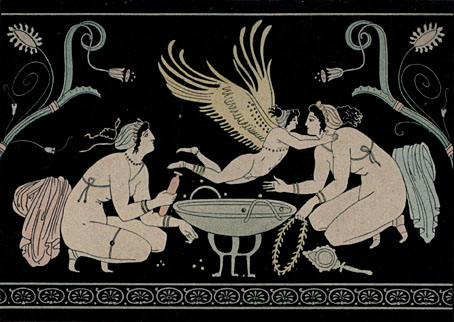
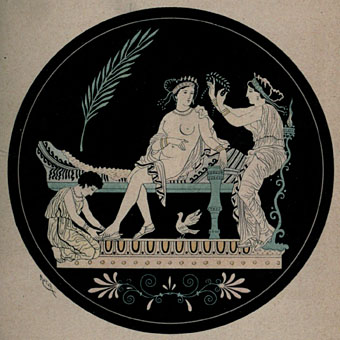
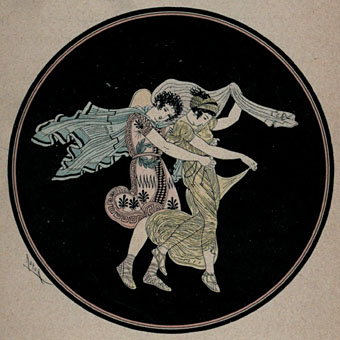
These illustrations are from a French translation by Charles Marie Zévort published in 1898. The illustrator was “Notor”, better known as the Vicomte Gabriel de Roton, who specialised in imitating the decorative style of art from Ancient Greece. The subject matter may be bawdy but you wouldn’t really know it from the illustrations. For drawings that honour the details of the story it’s necessary to look to Aubrey Beardsley.

lysistrata3.jpg

Notor’s Lysistrata can be downloaded at the Internet Archive. There’s a French site about the artist here with examples of his other work.

Continue reading “Notor’s Lysistrata”

The art of Hyeyeol

hyeyeol1.jpg

Butterfly.

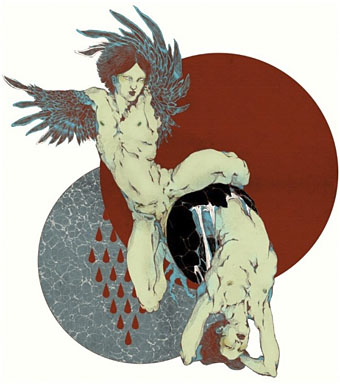
Hyeyeol is the nom de l’art of a South Korean woman whose work was drawn to my attention by regular commenter Wiley (thanks!) and a suggestion that some of the homoerotic imagery is reminiscent of the elusive NoBeast. I agree, and feel there’s also a similarity to Takato Yamamoto in the blend of stylised decoration, bondage boys and Eros/Thanatos pairings. The Hyeyeol website has four gallery sections while more of her work can be seen at deviantART.

hyeyeol2.jpg

No title.

hyeyeol3.jpg

Libido.

Previously on { feuilleton }
The art of Takato Yamamoto
The art of NoBeast

Creel Pone

creel1.jpg

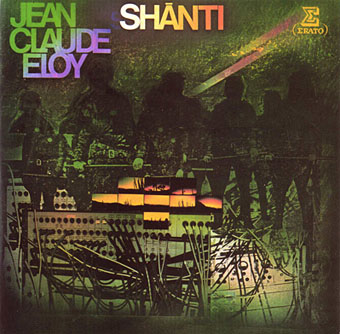
One of the many surprises for me about Enter the Void was finding recordings by electronic composer Jean-Claude Eloy mixed into its droning soundscape, namely extracts from his 1979 album, Shànti. I’d been listening to this a week or so before watching the film after having downloaded a large quantity of obscure electronic releases on the bootleg Creel Pone label.
creel3.jpg

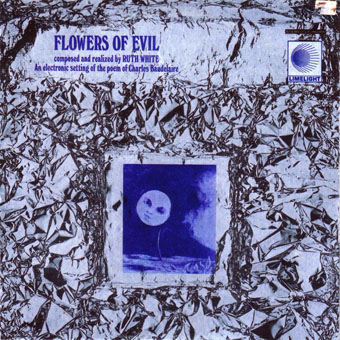
Flowers Of Evil (1969) by Ruth White.

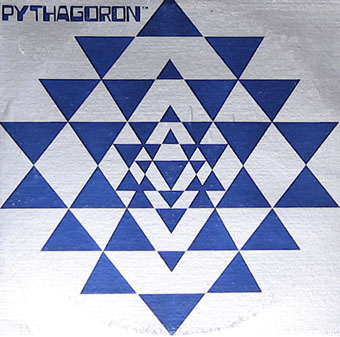
The Creel Pone project by Keith Fullerton Whitman began with the intention of reissuing in a limited form 100 albums of electronic or electro-acoustic music dating from the period 1947 to 1983 (or 1952 to 1984 according to the label seal); The Analogue Age, in other words. Most of the albums were long out of print, and few had ever been available on CD when the project began although some have since had official reissues. The recordings were transferred from vinyl then burned to 50 CD-Rs per album, each release coming in a CD-sized facsimile of the original cover. Simon Reynolds wrote a piece about the label for The Wire in 2010 but I first encountered the releases a couple of years earlier via an acquaintance who was one of the collectors trying to accumulate the entire run. The run finished some time ago so the reissues themselves will soon be as difficult to find as the releases they made available, hence the recourse to mp3, and this cache of almost the entire catalogue. I haven’t listened to everything there yet (iTunes tells me this would take 2.2 days, non-stop)—and I find my patience often runs out with tape-collage electro-acoustic compositions unless I’m in the mood—but some of these albums are so good, the Thomas Köner-like Shànti among them, you have to wonder why they were overlooked for so long. A few of the uploads have tracks missing, and they’re all variable quality, but you won’t find this amount of Creel Pone material anywhere else in a hurry. (There’s also no guarantee they’ll be there for long so don’t complain to me if you’re visiting this post after they’ve all been deleted.)
creel6.jpg

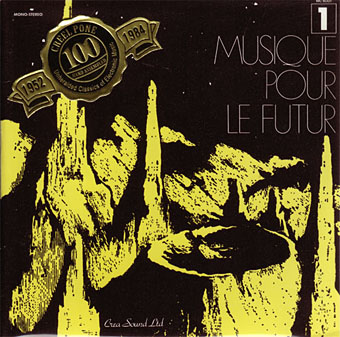
Musique Pour Le Futur (1970) by Nino Nardini.

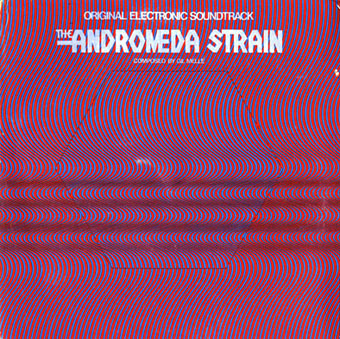
Discogs has an incomplete catalogue listing. Several of Jean-Claude Eloy’s albums are now available on CD. Gil Mellé’s excellent soundtrack for The Andromeda Strain was given a limited CD release two years ago but is out of print again. For some recordings it seems, the struggle to reach an audience is a continual one.
creel4.jpg

The Andromeda Strain: Original Electronic Soundtrack (1971) by Gil Mellé.
creel7.jpg

Pythagoron (1977) by Pythagoron™

creel5.jpg

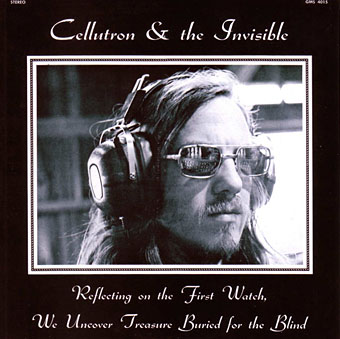
Reflecting On The First Watch, We Uncover Treasure Buried For The Blind (1978) by Cellutron & The Invisible.
creel2.jpg

Shànti (1979) by Jean-Claude Eloy.

Previously on { feuilleton }
Enter the Void
Cristalophonics: searching for the Cocteau sound
The Avant Garde Project

The Devils on DVD

devils01.jpg

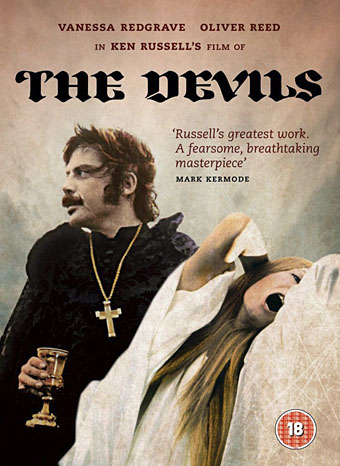
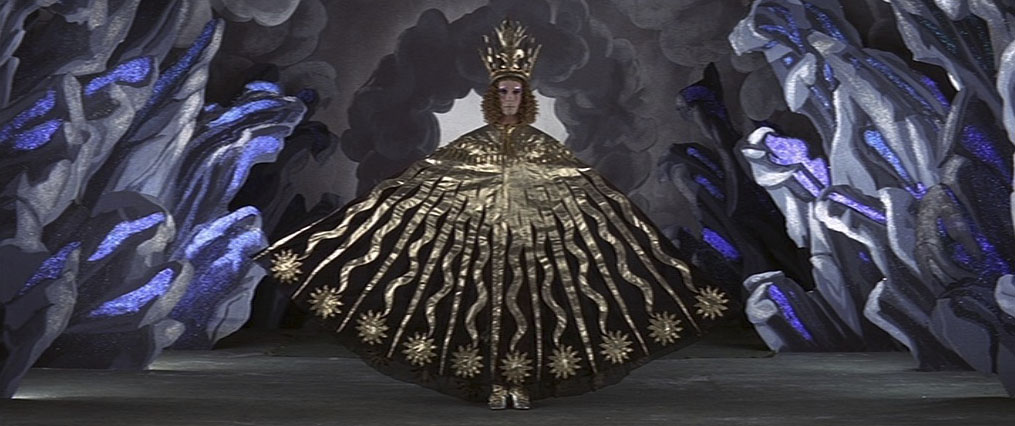
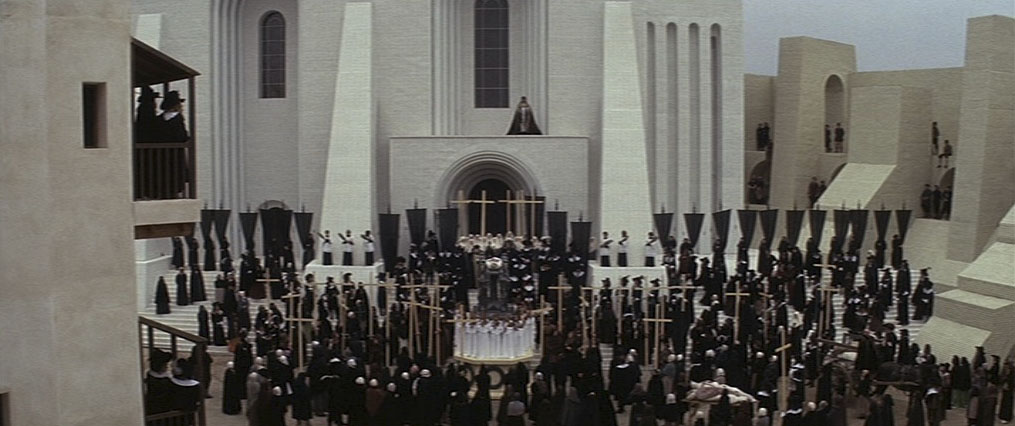
No Blu-ray as yet but this is another excellent BFI release so it looks and sounds fantastic. There’s been some grumbling that the 1971 director’s cut is still being embargoed by Warner Brothers but when the rest of the film looks so pristine I find it difficult to get worked up over a few missing shots of writhing nuns. Among the extras there’s an early Ken Russell short, Amelia and the Angel (1958), and a second disc of supplementary material, including Paul Joyce’s 48-minute documentary about the making of the film, Hell on Earth. Inside the booklet there’s a photo of set designer Derek Jarman looking very young and sweet. A few screen grabs follow to make Russell enthusiasts in Region 1 jealous. (Hi Thom!)

devils02.jpg

devils03.jpg

devils04.jpg

Continue reading “The Devils on DVD”