Maze and labyrinth panoramas

labyrinth1.jpg

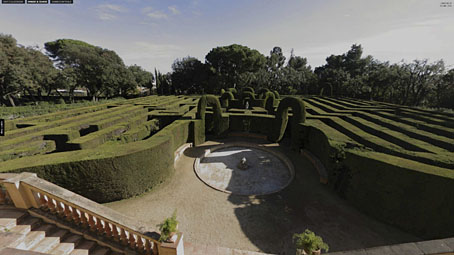
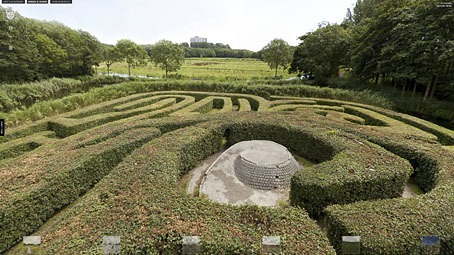
Parc del Laberint d’Horta, Barcelona by Valentin Arfire.

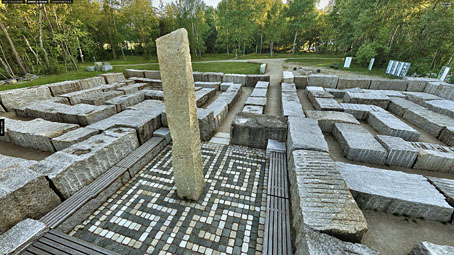
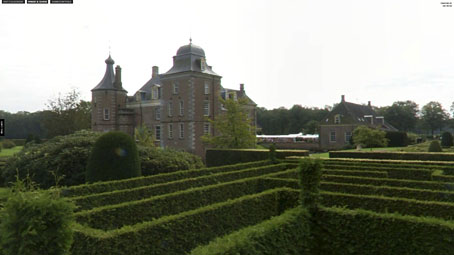
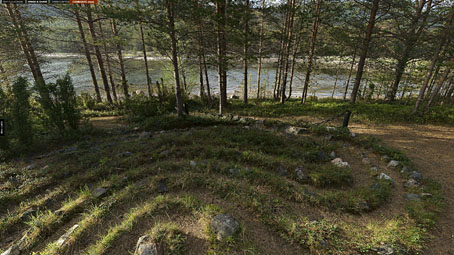
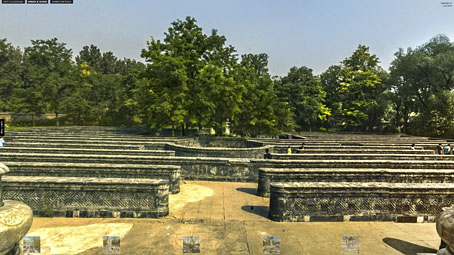
Continuing the maze and labyrinth theme, a selection of panoramas at 360Cities. Panoramic photography helps when viewing these constructions at a distance, especially when the camera is centrally positioned. The selection may be small but it shows how universal the urge is to build these things, with examples from Europe, the heart of Russia (where we learn that labyrinths are called “Babylons”) and China. Some of the pages have links to additional views. There’s a plan of the Parc del Laberint d’Horta hedge maze at Wikipedia.

labyrinth2.jpg

Granite Maze, Kirchenlamitz, Bavaria by Martin Hertel.

labyrinth3.jpg

Centre of the labyrinth (4 of 6), Castle Weldam, Netherlands by Jan Mulder.

labyrinth4.jpg

“Vavilon” (Babylon) labyrinth, Kandalaksha District, Murmansk by Andrei Kuznetcov.

labyrinth5.jpg

Labyrinth at the Uithof, the Hague by Marco den Herder.

labyrinth6.jpg

Beijing Old Summer Palace 4, Labyrinth in Yuanmingyuan by Yunzen Liu.

Elsewhere on { feuilleton }
The panoramas archive

Previously on { feuilleton }
Mazes and labyrinths
Labyrinths
Jeppe Hein’s mirror labyrinth

Early Venetian Printing Illustrated

earlyvenetianpri00onga_01.jpg

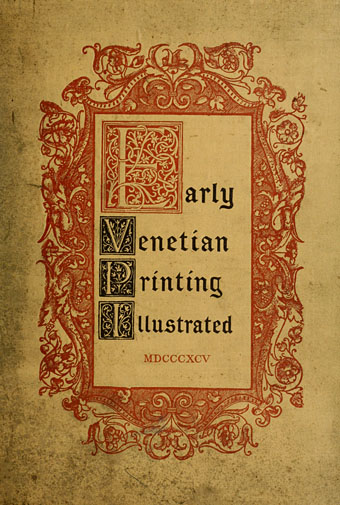
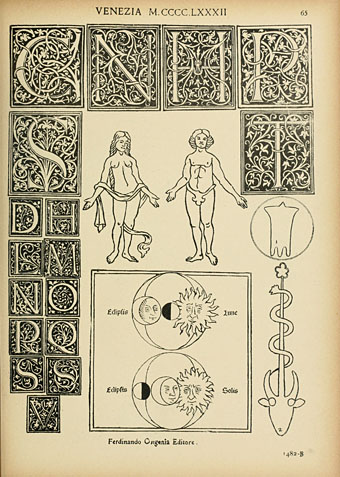
THE HISTORY OF THE ART OF PRINTING, studied in its most valuable examples, shows clearly how the work of the early printers took, from the very commencement, a national and also a personal character. These are recognised by the modern student in the special forms of type which they employed, and in the character of the ornaments and vignettes with which they decorated their editions; which thus formed, as it were, a species of art-work countersigned by the particular conditions of date, place and genius. Every early edition, with its various characteristics of size, type and ornamentation, is thus, not merely a trade specimen, but also an historical and artistic document, agreeing in character with the arts of design, the social customs and the literary tastes in vogue at the period in question. The early German printing, with its rigid and angular types and its Gothic ornaments, is perfectly suited to an age and to a country still mediaeval, and the Italic type of Aldus Manutius is equally suited to the calm and elegant classical character of the art of the Renaissance. Volumes with wide margins, large type and eccentric engravings tell of the pompous magnificence which found favour in the seventeenth century and of which that century has left so many specimens in our libraries.

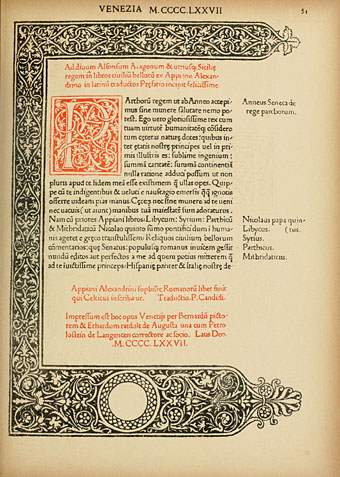
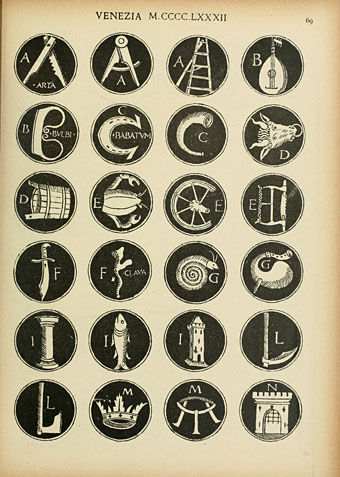
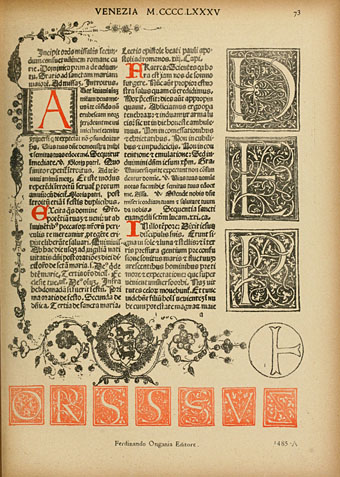
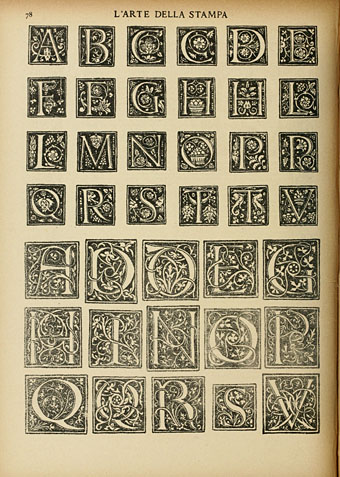
Thus Ferdinando Ongania in Early Venetian Printing Illustrated, a tremendous collection of early print decorations, ornamental capitals, engraved illustrations and printers’ emblems. Ongania’s book was published in 1895, and once again the late 19th century is shown to be a fruitful period for this kind of early graphic history. A frequent frustration when searching through the thousands of scanned volumes at the Internet Archive is to locate plenty of books from a given period only to find that the illustrations or decorative material are sparse. Ongania’s collection dispenses with the text of the original volumes to present over 230 pages of graphics. Browse it here or download it here.

earlyvenetianpri00onga_02.jpg

earlyvenetianpri00onga_03.jpg

earlyvenetianpri00onga_04.jpg

earlyvenetianpri00onga_05.jpg

earlyvenetianpri00onga_06.jpg

Continue reading “Early Venetian Printing Illustrated”

Mazes and labyrinths

maze01.jpg

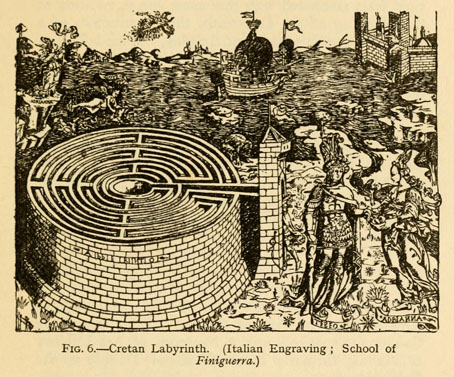
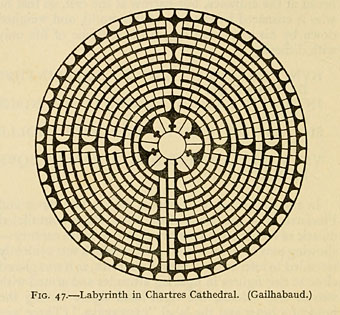
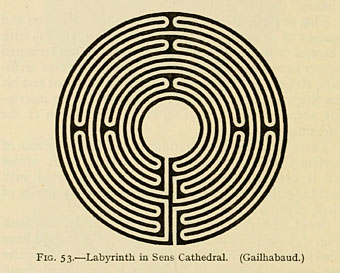
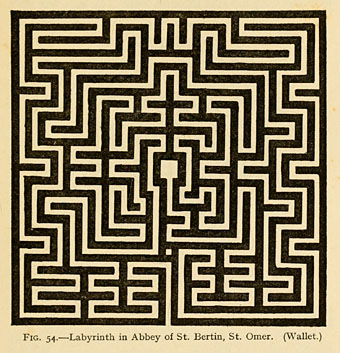
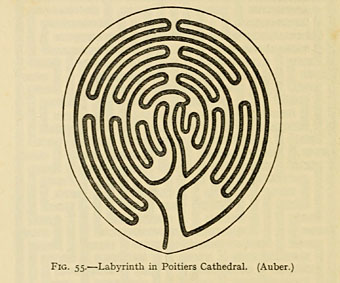
This book, Mazes and Labyrinths: A General Account of their History and Developments (1922) by William Henry Matthews, would have been very useful a couple of years ago when I was working on the cover design for Mike Shevdon’s The Road to Bedlam and required a labyrinth diagram. The one I used, a plan of Julian’s Bower in Alkborough, Lincolnshire, can be found below. I’ve had a lifelong interest in mazes and labyrinths so this book is fascinating beyond any temporary work requirements. Matthews’ study of the form features many diagrams going back to the legendary Cretan labyrinth and the constructions of the Ancient Egyptians. Closer to home there are depictions of the designs which flourished during the great era of landscape gardening in the 18th century, and photographs of some of Britain’s remaining turf mazes. The book may be browsed here or downloaded here.

maze02.jpg

maze03.jpg

maze04.jpg

maze05.jpg

Continue reading “Mazes and labyrinths”

Nigel Kneale’s Nineteen Eighty-Four

1984-1.jpg

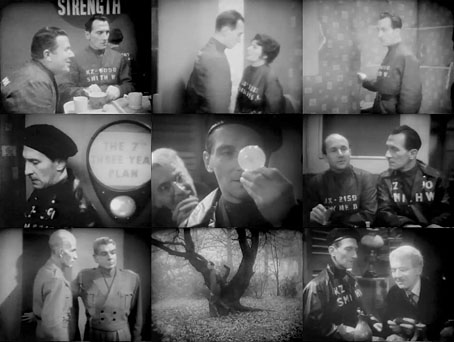
If I’d been more diligent I would have posted this yesterday which happened to be the UK’s first George Orwell Day. The Quatermass Experiment and this adaptation of Nineteen Eighty-Four are the two outstanding dramas from the very early days of British television. Both were written by Nigel Kneale and directed by Rudolph Cartier, an expatriate Austrian who brought to the small screen skills honed at the UFA studios before the war. The Quatermass Experiment was the first major collaboration between the pair after which they adapted Wuthering Heights. Nineteen Eighty-Four followed, a production that was screened twice in November 1954, and which caused considerable controversy at the time on account of its oppressive atmosphere and the scenes of Winston Smith’s torture.
1984-3.jpg

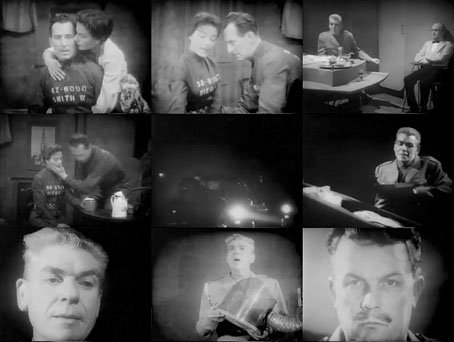
Kneale’s drama, which was performed live in the studio on both occasions, looks primitive compared to everything that’s followed but in many ways I prefer this adaptation to Michael Radford’s glossier feature film. For a start it has a great cast: Peter Cushing plays Winston Smith, Yvonne Mitchell is Julia, Donald Pleasence is Syme, and André Morell (who later played Professor Quatermass in the BBC’s Quatermass and the Pit) is O’Brien. Also among the cast there’s Wilfrid Brambell in two minor roles, one of them a precursor of the crusty old man he’d spend the rest of his life portraying. Neither Cushing nor Pleasence were known as film actors at this time; both would no doubt have been surprised to be told that their subsequent careers would involve a great deal of horror and science fiction.
1984-2.jpg

Cartier and Kneale didn’t have the budget to compete with feature films but for once the claustrophobic nature of a studio production works in the favour of a drama where there’s little intimacy or privacy. With the exception of a few filmed inserts almost everything is close shots. As the story grows more desperate so the shadows close in, until the final scenes are all spotlit faces in darkened rooms. The power of Cushing’s performance still resonates today, and gives an idea of how shocking this must have been to a home audience expecting little more than light entertainment on a Sunday evening. The YouTube copy is the entire 107-minute film, and is worth a watch if only to see Donald Pleasence when he had an almost complete head of hair.

• From 2009: Robert McCrum on The masterpiece that killed George Orwell.

Previously on { feuilleton }
The Stone Tape

Kenneth Anger’s Hollywood Babylon

anger1.jpg

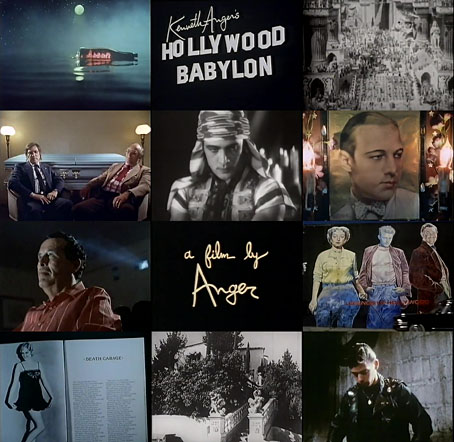
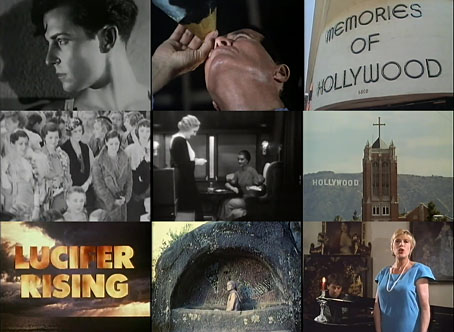
Nigel Finch was a key member of the team of producers and directors working on the BBC’s Arena arts documentaries throughout their golden run during the 1980s and 1990s. The films he directed himself—among them studies of Robert Mapplethorpe’s photography, and a history of the Chelsea Hotel in New York—gave him an opportunity to push some gay content into the TV schedules at a time when Britain’s gay population were seen as enough of a public threat to be legislated against. Some of that proselytising impulse can be found in Kenneth Anger’s Hollywood Babylon (1991), an hour-long documentary which alternates the life and work of the filmmaker with readings and enactments of the lurid episodes recounted in Anger’s scandal anthologies, Hollywood Babylon and Hollywood Babylon II. Finch at one point asks whether Fireworks, the first film in Anger’s Magick Lantern Cycle, should be regarded as a pioneering piece of gay cinema; Anger’s says he’s happy if people take it that way but says little else about its evident homoerotic atmosphere. He remains as resistant to identity politics as he’s always been. (See the unauthorised biography by Bill Landis for details.)

anger2.jpg

Between the readings and interview sections Finch shows Anger being chauffeured around Beverly Hills in a hearse which stops occasionally at some locus of bygone scandal. Most of the Anger anecdotes are familiar ones from subsequent interviews but there is a bonus for Angerphiles with the appearance at the end of Marianne Faithfull who talks a little about their relationship before singing Boulevard Of Broken Dreams. The picture quality of this YouTube copy could be better but it’s watchable enough.

Update: That YouTube link went private so I’ve updated the links to a better copy at the Internet Archive.

Previously on { feuilleton }
Lucifer Rising posters
Externsteine panoramas
Missoni by Kenneth Anger
Anger in London
Arabesque for Kenneth Anger by Marie Menken
Edmund Teske
Kenneth Anger on DVD again
Mouse Heaven by Kenneth Anger
The Man We Want to Hang by Kenneth Anger
Relighting the Magick Lantern
Kenneth Anger on DVD…finally