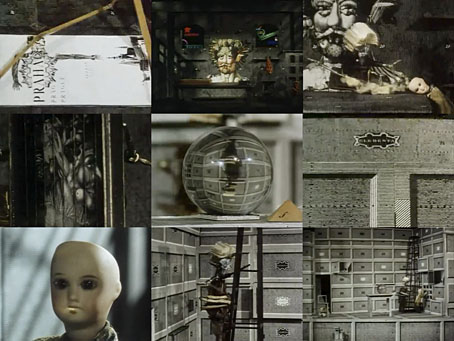
The Cabinet of Jan Švankmajer, a film by the Brothers Quay

quays1.jpg

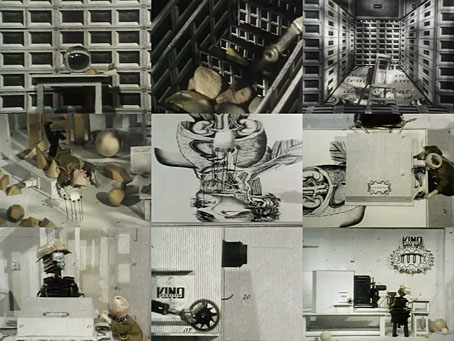
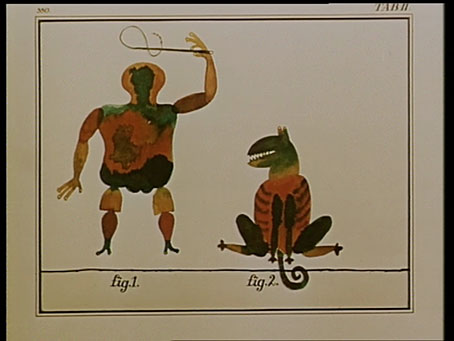
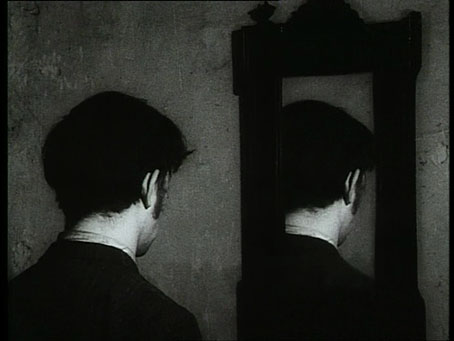
A busy week here (for a change) so this is a bit of a lazy choice but there is a Wunderkammer present. The Quays made this in 1984 for a Švankmajer documentary, and it’s still one of my favourites: Švankmajer as subject, lots of Prague references, and wonderful music (borrowed from Švankmajer’s own films) by Zdeněk Liška. This is also one of the few films you’ll see with animated characters demonstrating some film animation of their own. Watch it here.

quays2.jpg

Elsewhere on { feuilleton }
The Quay Brothers archive

Ikarie XB 1

ikarie1.jpg

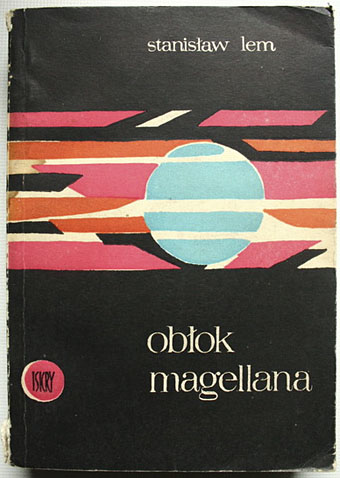
A science fiction novel by Stanisław Lem (The Magellanic Cloud, 1955).

ikarie2.jpg

Illustration by Teodor Rotrekl.

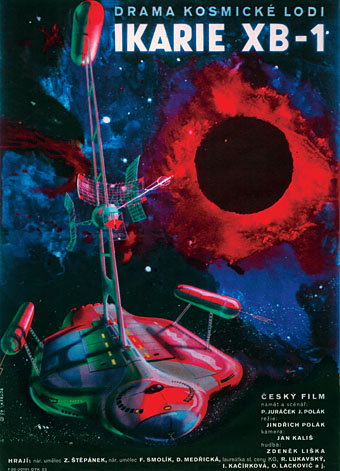
A film by Jindřich Polák, adapted from Lem’s novel by Polák and Pavel Jurácek. (1963).

ikarie3.jpg

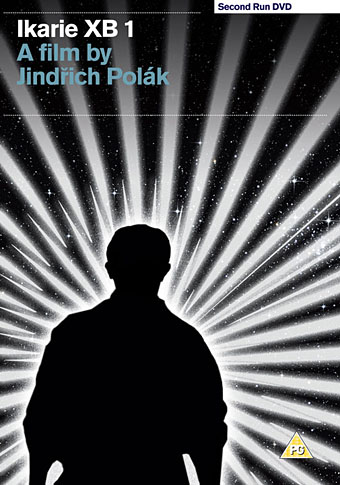
A Second Run DVD (2013).

With the exceptions of Tarkovsky’s Solaris and Stalker (both in a league of their own), I’ve never been very enthused about Eastern Bloc science-fiction cinema. If I hadn’t been watching some Czech films recently, and listening to the soundtrack music of Zdeněk Liška, I might not have bothered with this one despite its being promoted as a visual influence on 2001: A Space Odyssey. Ikarie XB 1 won the Grand Prize at the Trieste International Science Fiction Film Festival in 1963, a tie with Chris Marker’s La Jetée. (Umberto Eco was one of the judges.) Fifty years on, Marker’s film has hardly dated at all while Ikarie XB 1 seems very much of its time. But Polák’s film still has some things going for it, surprisingly so considering the director was more used to making comedies.

Ikarie XB 1 is a spaceship travelling to Alpha Centauri in the year 2163. The DVD subtitles don’t translate the name Ikarie so unless you already know it means “Icarus” there’s no foreshadowing of any possible threat, at least until the opening shots of a deranged crewman stumbling through empty corridors. Many of the scenes which follow seem over-familiar but only because the scenario of space-crew as interstellar family has become such a standard feature of filmed space opera from Star Trek on. The production design is dated, of course, but the film makes great use of black and white in the lighting patterns, on-screen visuals, clothing designs, etc. It’s easy to see why Kubrick thought it was a cut above other SF films of the period, especially with its widescreen compositions. The DVD booklet (and Kim Newman’s interview on the disc) mention Kubrick’s stylistic borrowings; judge for yourself with these screen-grabs. I was hoping the Liška soundtrack might be more electronic than it is. It’s very much a Liška score—at times you can’t help but imagine a Švankmajer puppet lurking round a corner—but with added reverb and spectral organ chords. The latter assist a sequence where two of the crew members explore an apparently derelict space station.

This page reviews the film in some detail (complete with plot spoilers). For the curious, the entire film is a free download at the Internet Archive.

Previously on { feuilleton }
Fiser and Liska
Two sides of Liska
Liska’s Golem
The Cremator by Juraj Herz

Fišer and Liška

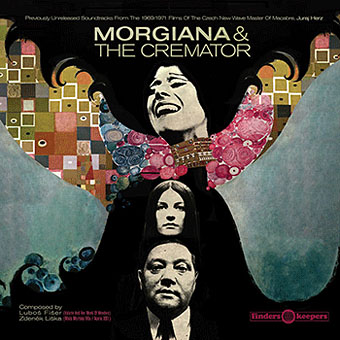
morgiana.jpg

Having enthused recently about Czech soundtrack composer Zdenek Liška, and about Juraj Herz’s The Cremator (1969), I can’t avoid mentioning the release this month of Liška’s soundtrack for Herz’s film which comes twinned on CD with Luboš Fišer’s equally distinctive soundtrack for Herz’s Morgiana (1972). Both films are available on DVD from Second Run. Having only discovered these works in the past month the soundtrack collection arrives at just the right moment, another excellent reissue from the UK’s Finders Keepers label who specialise in resurrecting neglected soundtracks, electronica and other obscure music. (Highlights from the electronic catalogue have included the reissue of Suzanne Ciani’s synth music from the 1970s and 80s.)

With Morgiana and The Cremator sharing a director it makes sense to present the soundtracks as a pair, but the films also share a macabre atmosphere that verges on outright weirdness. Where the character of the Cremator is obsessed with reducing human beings to ash, in Morgiana we have a sister plotting the slow death by poison of her twin in order to gain an inheritance. Fišer’s organ-inflected score is suitably dramatic, even melodramatic for the scenes where the poisoned sister is hallucinating, or we’re seeing everything from the point-of-view of the family cat. Finders Keepers’ albums are designed by Andy Votel who for this release has had the CD booklet printed with the Cremator pages running from the back to the centre so that—in the booklet at least—neither title is favoured.

Anyone curious about the Finders Keepers’ sound world can receive a taste via this mix by Andy Votel for Self-Titled Mag. It’s intended to tie-in with Cassette Store Day (that’s today) but really functions as a good sample of the record label’s obsessions. There’s some Suzanne Ciani in there, as well as a rare piece of Cristal Baschet playing from Lasry-Baschet.

Previously on { feuilleton }
Two sides of Liška
Liška’s Golem
The Cremator by Juraj Herz

Just the ticket: Cabaret Voltaire

cv01.jpg

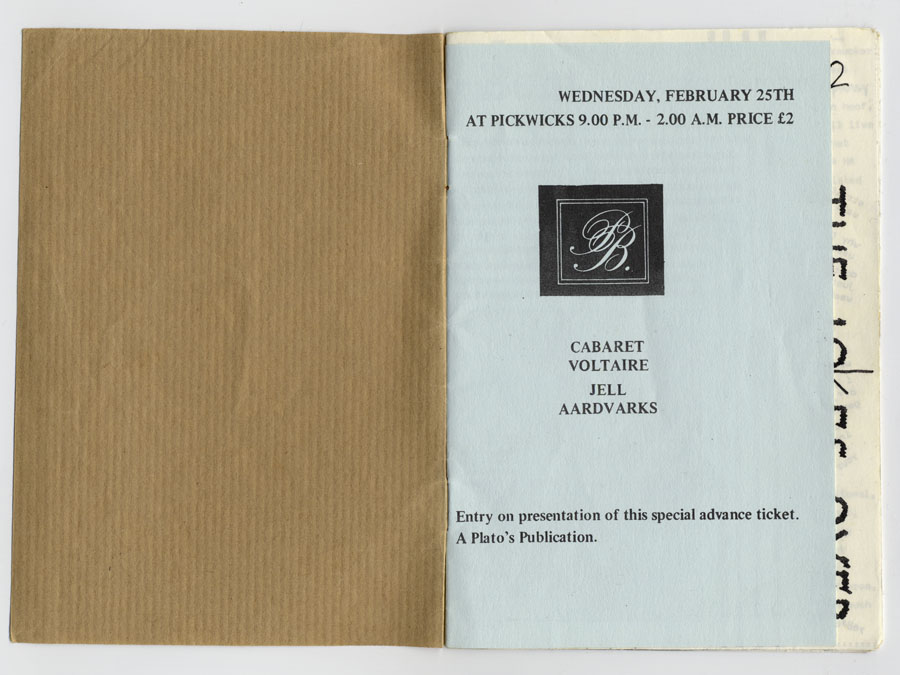
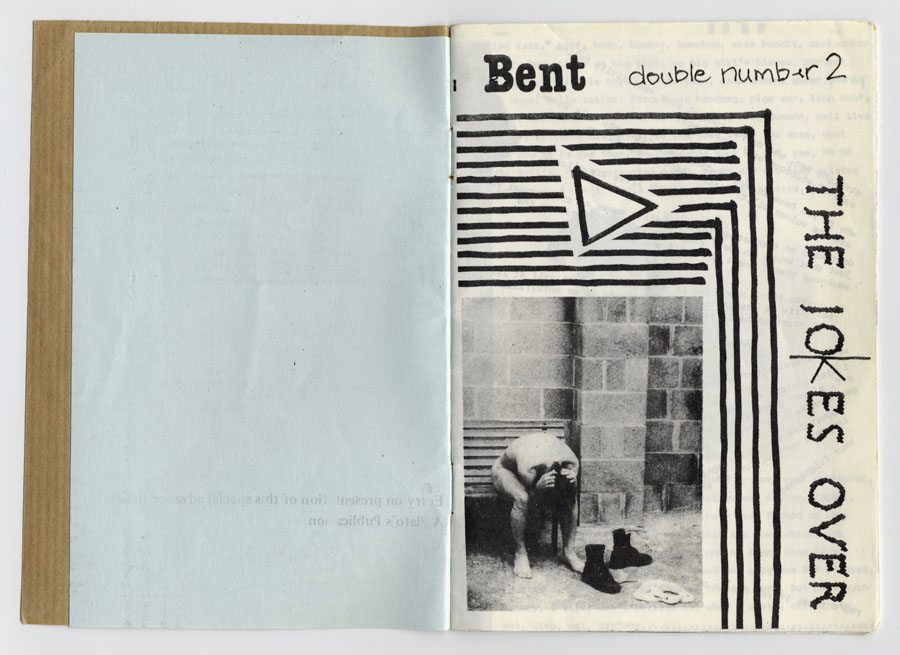
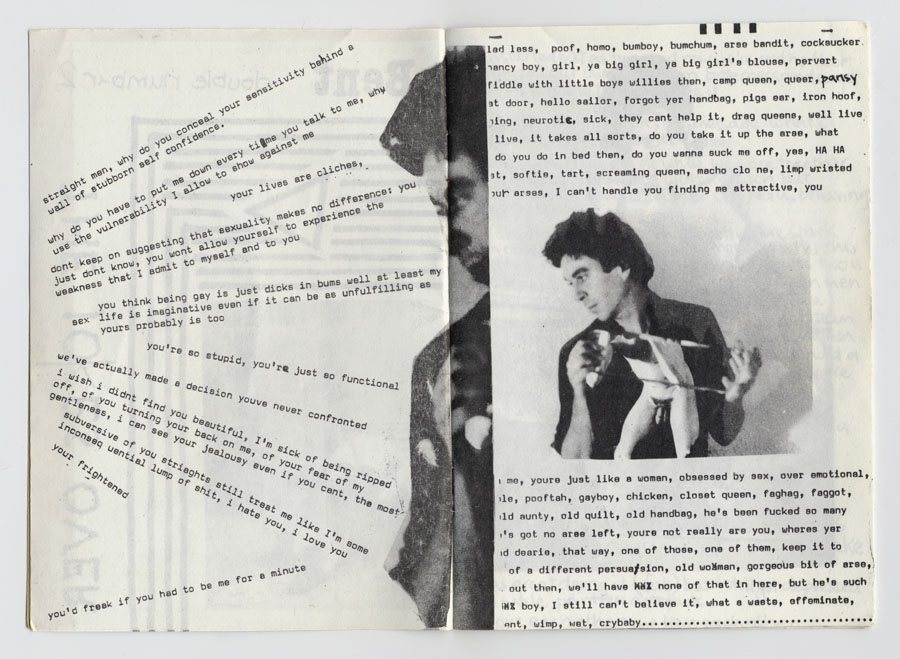
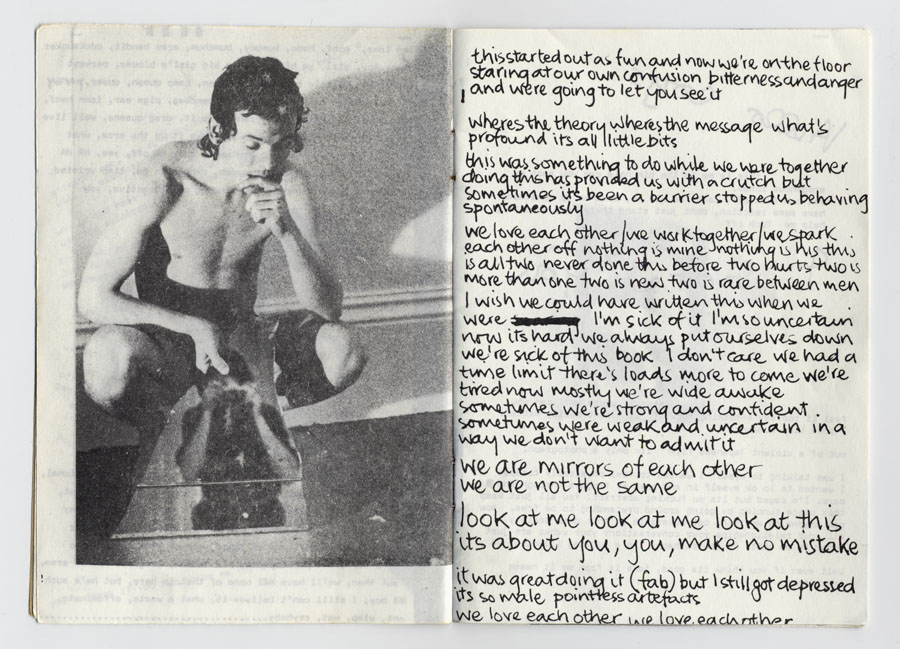
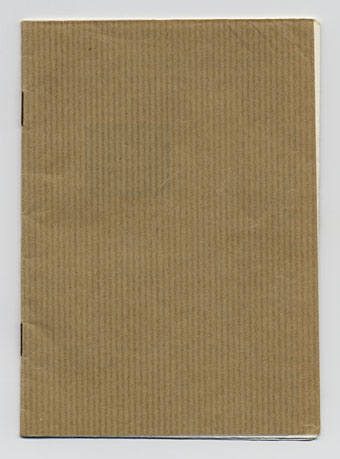
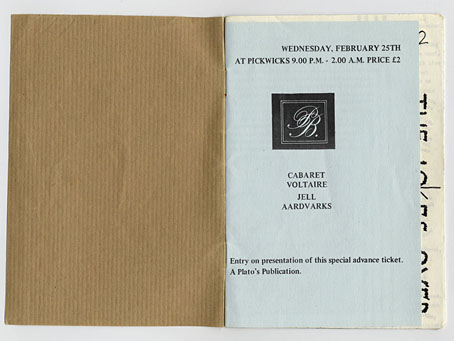
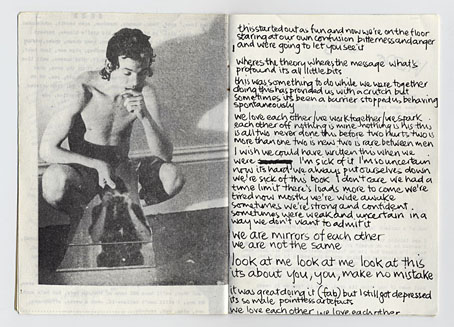
The current issue of The Wire has a great appraisal by Keith Moliné of the musical history of Cabaret Voltaire, a well-timed piece given the recent announcement of forthcoming reissues from Mute Records. Having been a Cabophile from the start I’m rather biased, but the Wire piece has had me listening to the early albums and singles this week (between bouts of Zdenek Liska), and finding the passage of time has made those early recordings seem increasingly strange. Cabaret Voltaire were one of the few groups I liked obsessively enough to collect ephemera from newspapers and magazines. Knowing this, a friend gave me this curious fanzine/ticket from a gig the group played in Liverpool in February, 1981. The venue was Plato’s Ballroom at Pickwicks, and judging by the wording inside—”A Plato’s Publication”—it seems it was the venue’s idea to make the ticket a small (10.5 x 15 cm) booklet.
cv02.jpg

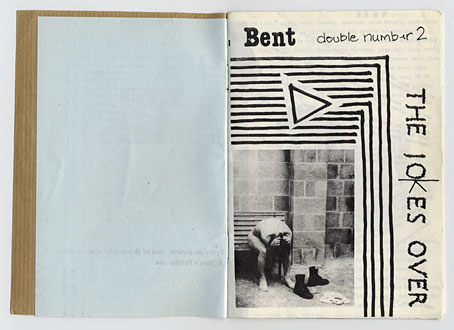
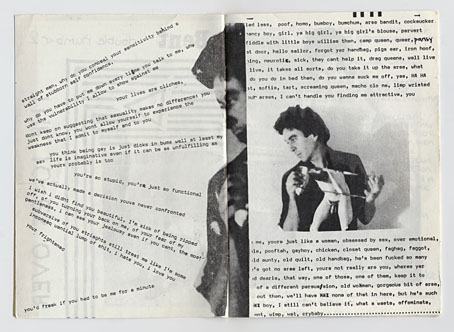
What’s surprising about this is that the fanzine the ticket is bundled with has nothing at all to do with music (or that other perennial of 80s post-punk culture, left-wing politics) but is a glimpse of life as a gay man in Liverpool. I’ve always found this fascinating for the daring it took to foist the thing on a bunch of unwitting Cabs fans, most of whom would have been straight men and not especially sympathetic to the subject matter. In the context of 1981 forcing people to look at grainy shots of naked men with accompanying text (by another man) declaring them to be a turn-on was a transgressive act. The only representations of anything gay in the popular media were a few camp (and therefore safe) comedians; Derek Jarman was still an underground figure, and as late as 1984 a BBC play about gay men was prefaced with a warning about its “contentious” subject.
cv03.jpg

I’ve no idea who was responsible for the fanzine, there are no credits, and it’s possible that the people involved didn’t want to be too easily identified. If the tone of the writing seems rather dramatic then, again, it’s important to see it in context of a country which wasn’t much more amenable to gay people than Russia is today. Saying things in public that most people didn’t want to hear was a challenging act; emotions often ran high.
cv04.jpg

Looking for information about the gig turned up this newspaper ad. (Who were Jell and Aardvarks, I wonder?) By an odd coincidence only the day before I’d found this upload from the same person of a very scarce compilation tape that happens to be from the same year, and which features contributions from Cabaret Voltaire’s Chris Watson and Richard Kirk. The Men With The Deadly Dreams was compiled by Geoff Rushton, aka John Balance of Coil, and was apparently limited to 200 copies. Among the other highlights there’s a track from Eyeless in Gaza, whose early work I like a great deal, and an electronic piece by Throbbing Gristle’s Chris Carter which I think is exclusive to this collection. Two artefacts—fanzine and tape—with brown paper covers that give a snapshot of Britain’s underground culture in 1981.
cv05.jpg

Continue reading “Just the ticket: Cabaret Voltaire”

Two sides of Liška

svankmajer1.jpg

Et Cetera (1966).

A little more on the music of Czech soundtrack composer Zdeněk Liška (1922–1983). Liška seems to stand in relation to Czech cinema as Ennio Morricone does to that of the cinema of Italy, being similarly prolific, highly regarded, and idiosyncratic to a degree that makes his work immediately recognisable. Both men could also draw on their experience outside the film world to fuel their scores: Morricone for many years was a performer with Gruppo di Improvvisazione di Nuova Consonanza, a group of Italian free improvisers, while Liška’s work with electro-acoustic composition and early electronic music explains the frequent eruptions in his lush orchestrations of tape effects, exaggerated echoes and other forms of artificial processing. This kind of cross-pollination doesn’t seem so surprising today but it’s striking and surprising in soundtracks from the 1960s.

Good examples of the opposite poles of Liška can be found in two of Jan Švankmajer’s early shorts. Et Cetera (1966) is one of the director’s most formal exercises, a series of crude drawings (or cut-outs) coming to life to perform a repetitive routine before being interrupted by the words “ET CETERA”. The film plays with the audience by beginning with a title card that states “The End”, and the piece as a whole could easily be screened as an endless loop. Liška’s score is a combination of fairly minimal orchestration with a variety of electro-acoustic effects which are closer to Pierre Henry or İlhan Mimaroğlu than other Eastern European composers.

svankmajer2.jpg

Shade of Magritte: The Flat (1968).

At the opposite end of the scale there’s the score for The Flat (1968), a typical piece of Švankmajer Surrealism with an unfortunate individual locked in a room where everything, from walls to furniture, contradicts his expectations. René Magritte casts a long shadow over this one, with director Juraj Herz making a brief appearance as a bowler-hatted man carrying a chicken. Liška’s score has a driving and reverberent choral rhythm that always makes me think of Krzysztof Komeda’s similar music for Roman Polanski’s Dance of the Vampires (1967). For such a short film it’s a remarkable piece of orchestration. The Brothers Quay are great Liška enthusiasts, and used some of the score from The Flat (and two other Liška pieces) for their 1984 film The Cabinet of Jan Švankmajer, an animated portrait of the director.

Previously on { feuilleton }
Liška’s Golem
The Cremator by Juraj Herz