Recovering Viriconium

viriconium01.jpg

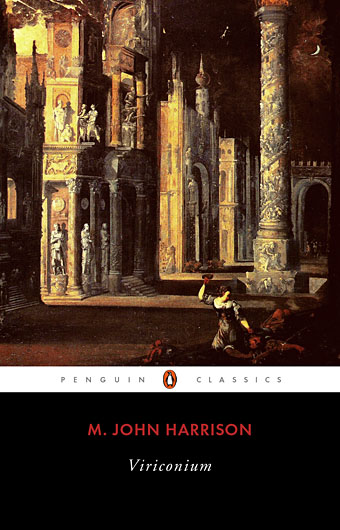
Detail from Assassination in the Night (c. 1600?) by Monsù Desiderio.

Yesterday’s post looked at some of the past cover designs for M. John Harrison’s Viriconium books. This post makes a few suggestions for how they might be presented in the future. Since these are mostly covers that I’d like to see they’re not necessarily ideal for the audience a publisher might be aiming at, cover design is usually a three-way process involving designer, author and publisher. In the end I’ve resisted the temptation to draft a range of original cover proposals—writing these posts has taken long enough—so almost everything here uses pre-existing art. If I was designing covers for all four Viriconium books, however, and the brief was to orient them towards a fantasy readership, the first thing I’d try would be a series of four imaginary Tarot designs. A peculiar pack of Tarot cards is a recurrent feature of the books so I’d create four emblematic cards that featured significant elements and characters from each. The characters wouldn’t be too well defined, they’d be stylised, maybe even silhouettes. Each card would feature a dominant presence: offhand these would be one of the geteit chemosit for The Pastel City, a locust for A Storm of Wings, the Barley Brothers for In Viriconium and a Mari Lwyd horse skull for Viriconium Nights. These presences together with the human characters would loom over a silhouette city at the foot of each card whose outlines would change appearance from book to book, evolving gradually from a fantastic outline of domes and towers to something that resembles a contemporary city. The colours and treatments would show a similar evolution from the bright and bold styles of the Pamela Colman Smith Tarot deck to something more photographic, collaged from elements closer to our world. Maybe.

That’s an idea for the four individual books. All the examples here use the convenience of the omnibus edition so a single image (or pair of images) has to somehow represent the entire series. To save time and effort I’ve taken the liberty of hijacking a couple of Penguin Books layouts. I hope Penguin doesn’t mind, and I should also apologise to Harrison’s UK publishers, Gollancz, for making one of their authors jump ship. The Viriconium omnibus is certainly good enough to be considered a modern classic. Penguin’s recent template for its Modern Classics series happens to be very easy to apply to a wide range of artwork.
viriconium04.jpg

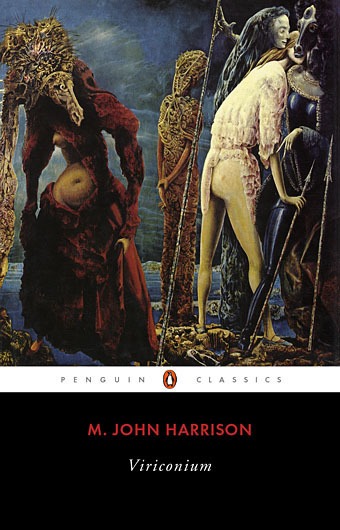
The Anti-Pope (1942) by Max Ernst.

Penguin has a long tradition of using pre-existing art on its covers, especially on those in its Penguin Classics series. You can almost make this into a parlour game: match your favourite novel with the best choice of painting. The tradition was extended to its science fiction titles in the early 1960s when the art of Max Ernst was featured several times along with the work of other Surrealists. Max Ernst is a favourite artist of mine so this is one I can’t resist. Many of Ernst’s decalcomania paintings of the 1940s would suit Viriconium but The Anti-Pope with its horse heads seems especially suitable.

Also on the Penguin sf covers was a picture by the mysterious “Monsù Desiderio” one of whose works can be seen at the top of this post. Desiderio was a 17th-century painter with a vague enough presence—works have been attributed to both François de Nomé and Didier Barra—and a line in gloomy architectural fantasias to make him an ideal Viriconium artist.
Continue reading “Recovering Viriconium”

The art of Jindřich Štyrský, 1899–1942

styrsky1.jpg

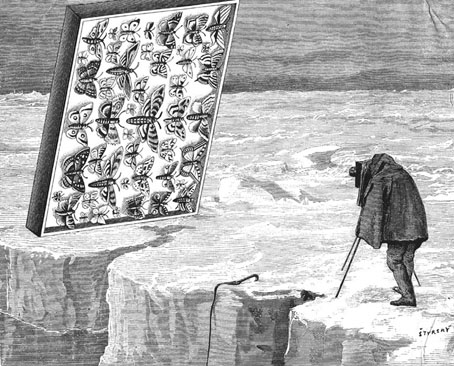
From a late Surrealist to an early one. Jindřich Štyrský is a Czech artist best remembered today for his collages but he was also a painter, a photographer and a publisher of erotic material. He illustrated and published a Czech edition of Lautréamont’s Maldoror, and helped found the Surrealismus review in Prague.

styrsky2.jpg

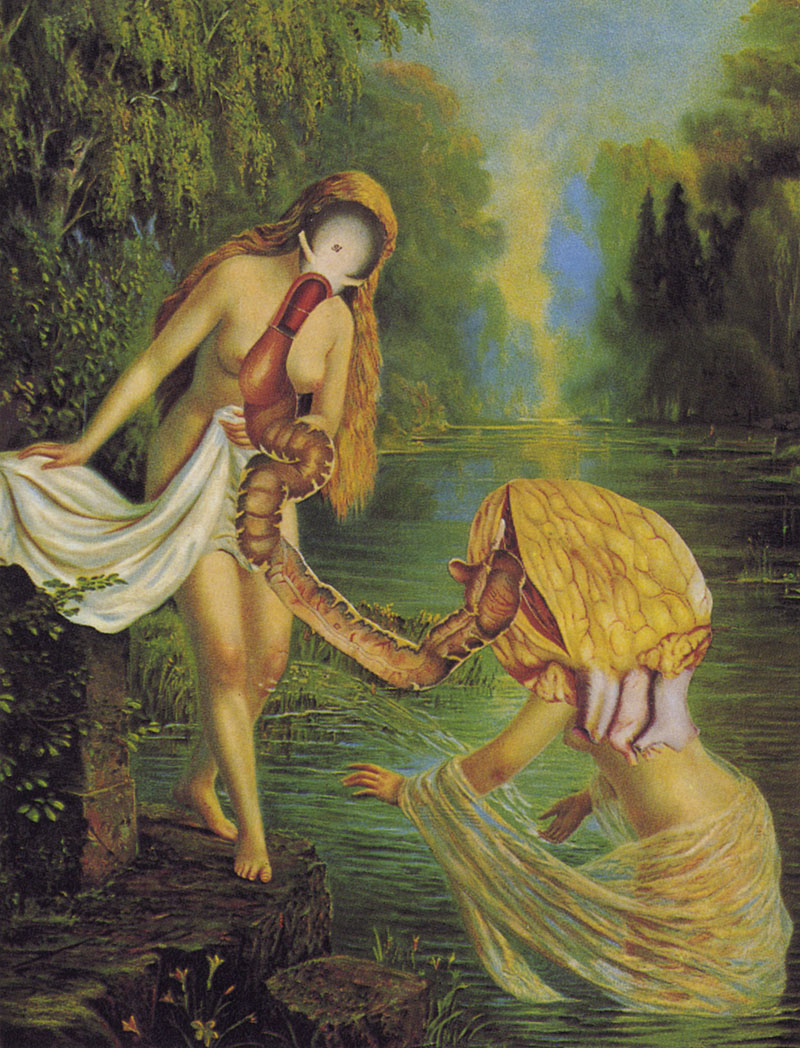
The Bathe (1934).

Regular readers won’t be surprised to hear that I’ve liked Štyrský’s collages for years, many of which subject sentimental Victorian illustration to processes of violent transmutation. Ever since seeing The Bathe I’ve found it impossible to look at one of Renoir’s fleshy nudes without wondering what happened to the exposed viscera. Weimar covered Štyrský’s career in some detail last year so that’s a good place to go for further information. There’s an extract from Štyrský’s dream diary here, and a substantial collection of the collage work and other material at this Flickr set.

styrsky3.jpg

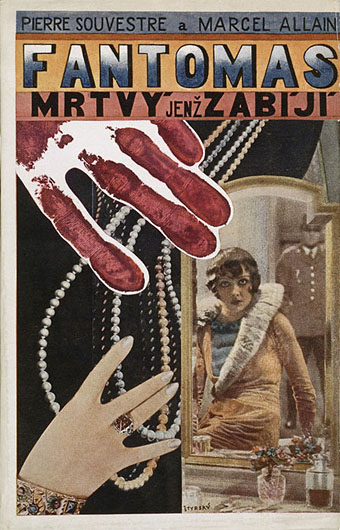
Cover for a Czech edition of Fantômas (1929).

Elsewhere on { feuilleton }
The fantastic art archive

Previously on { feuilleton }
Initiations in the Abyss: A Surrealist Apocalypse
Vultures Await
Wilfried Sätty: Artist of the occult
Illustrating Poe #4: Wilfried Sätty
Metamorphosis Victorianus
Max (The Birdman) Ernst
Gandharva by Beaver & Krause
The art of Stephen Aldrich

Crafting steampunk illustrations

steampunk.jpg

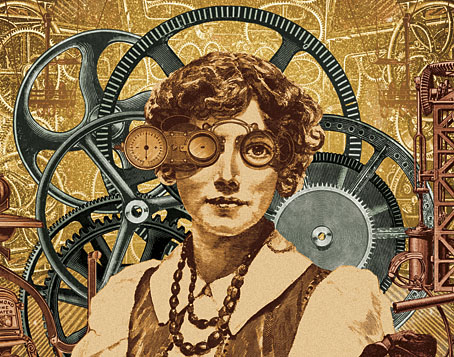
Today’s post is another guest piece at Tor.com where I talk a little about using collage to create steampunk illustrations and designs. The post is part of their Steampunk Week, and I take the opportunity to acknowledge the influence of some artists who have become familiar points of reference here, namely Max Ernst and Wilfried Sätty.

Meanwhile, in light of this news, I should say that I don’t own an iPod, iPad or iPhone but there are four Apple computers of various vintage in this place, all of which have been used to create the art and design work I’ve been producing since the late 1990s. Apple machines and Adobe software literally changed my life by allowing me to get involved in graphic design and create artwork that would have been impossible to produce using pencil, ink and paint. Many thanks, then, to Steve Jobs. And RIP.

Previously on { feuilleton }
Initiations in the Abyss: A Surrealist Apocalypse
SteamPunk Magazine
Morlocks, airships and curious cabinets
The Steampunk Bible
Vultures Await
Steampunk Reloaded
Wilfried Sätty: Artist of the occult
Illustrating Poe #4: Wilfried Sätty
Steampunk overloaded!
More Steampunk and the Crawling Chaos
Steampunk Redux
Steampunk framed
Steampunk Horror Shortcuts

Initiations in the Abyss: A Surrealist Apocalypse

harter1.jpg

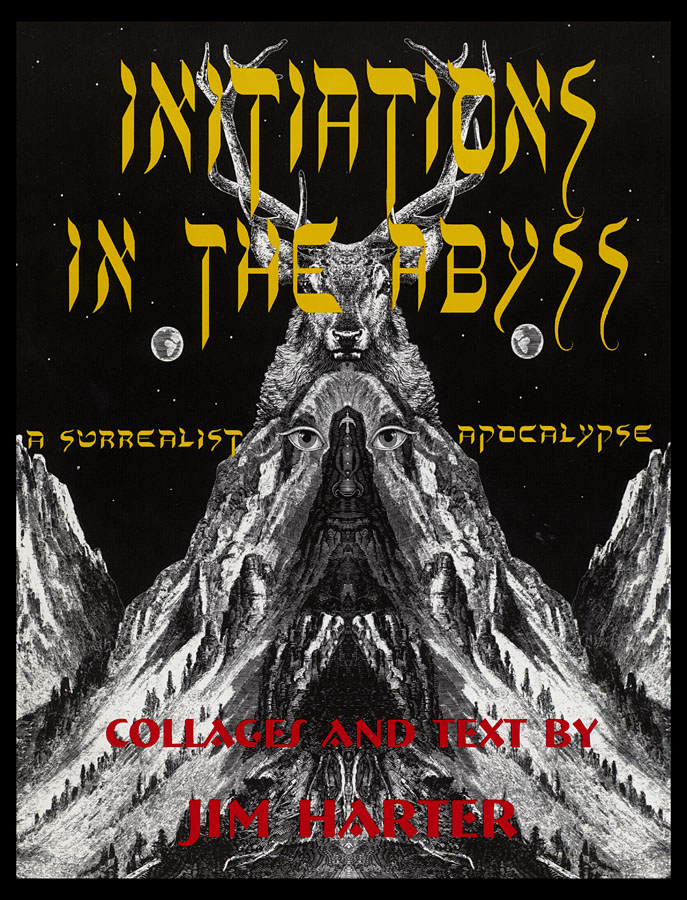
Among the many books inspired or influenced by the events of September 11th, 2001, Jim Harter’s Initiations in the Abyss: A Surrealist Apocalypse is one of the more obscure titles, and one you’re unlikely to hear about elsewhere. Harter is an American artist and archivist best known for his collections of wood engraving illustration published by Dover Publications, Harmony Books, Bonanza Books and others. I mentioned his work recently in a piece about steampunk illustration which will be appearing later this month at Tor.com. Harter’s books are invaluable source material for the style of collage popularised by Max Ernst and Wilfried Sätty. Harter was a friend of Sätty’s, with collages by the pair appearing in Harter’s Picture Archive for Collage and Illustration (1978).

harter5.jpg

The first collection of Harter’s collages, Journeys in the Mythic Sea: An Innerspace Odyssey, appeared in 1985. Initiations in the Abyss is the follow-up featuring work which dates from 1986, some of which was exhibited in 1988 at the Nicholas Roerich museum in New York. The book wasn’t published until 2003, however, and in his introduction Harter acknowledges the influence the events of the past two years had on his conception of the work as a whole. The book is reminiscent of Sätty’s Time Zone (1973), a book with a similar intent in its use of Surrealist collage techniques to make satirical or polemical points as well as to create striking and fantastic images. With both artists it’s the latter works which I find most successful. There’s a limit, for example, to how effectively our world can be represented using pictures which are over a hundred years old, and without the single-minded focus and attack of a John Heartfield the polemic can risk seeming diffuse or glib.

harter3.jpg

Harter’s book is divided into four parts—Mutant Faces of the Form Destroyer, The Holy Abattoir, The Archive of Dreams and Mystery Play—with 72 full-page plates printed on glossy paper. The quality of the printing is so good it makes me wish that Sätty and Ernst could receive the same treatment. In addition there’s a very long introductory essay by Harter which somewhat contradicts his Surrealist intent by explaining at great length some of the philosophy behind pictures whose interpretation he wants left to the reader. Near the end of his piece he says:

It could be said that the purpose of the collages in the present book’s first two sections is to ring an alarm bell. The canaries in the mine are dying and it is time to do something. At the same time, the images of the last two sections are intended as a kind of mystery play. They suggest a movement in another direction: a quest to seek a more universal vision, one where we can perhaps discard our religious fanaticism, ethnocentrism, and myths of apocalypse, and instead create a world of greater unity and harmony, eventually becoming one human family. On another level entirely, this work might be seen as a kind of shamanic soul journey, where all false attachments, beliefs, and illusions are destroyed through an ego death experience before the soil is allowed to proceed to dimensions of healing and revelation. Thus the first two sections might be seen as an encounter with what the Tibetans call the “wrathful deities,” spirits that mirror back one’s own unconscious darkness.

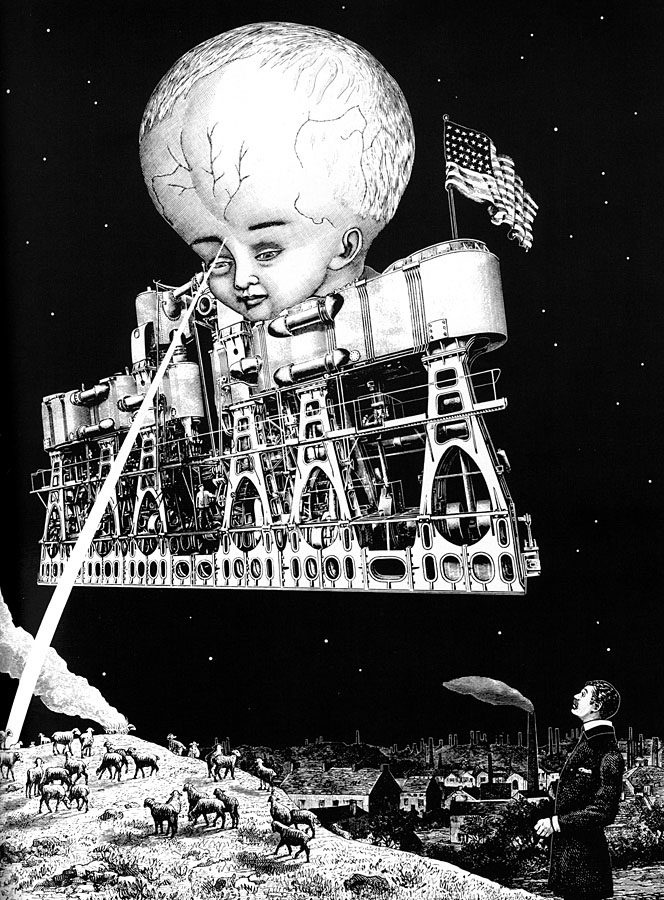
The last two sections of the book feature the best of his dream-like imagery, some of which are a match for Sätty’s superb creations. The examples here are mostly from the end sections. Further examples can be seen on this page where the plates have been coloured by the artist.

Initiations in the Abyss is available to buy direct from the publisher, Wings Press, while some of Harter’s psychedelic poster art can be seen here and here.

Continue reading “Initiations in the Abyss: A Surrealist Apocalypse”

Vultures Await

vultures-await.jpg

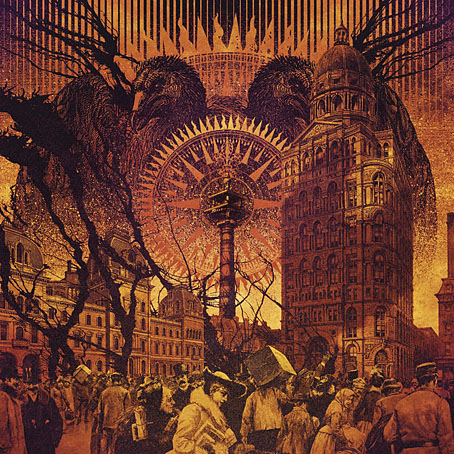
From a Void City to what might be a Vulture City, this is an illustration I produced last September for San Jose psych rock band Vultures Await. I would have mentioned it sooner but the following months were very busy and I was also waiting for the band to make the artwork public. Stylistically, this is another piece of collage Surrealism à la Wilfried Sätty, an illustration approach I’d like to keep developing for a while yet. The forthcoming Thackery T. Lambshead Cabinet of Curiosities will have more Sätty-inspired pieces, although my contributions there tend towards the decorative. There is, however, a connection between this piece and the Cephalopod Bride.

Elsewhere on { feuilleton }
The album covers archive

Previously on { feuilleton }
Wilfried Sätty: Artist of the occult
Nyarlathotep: the Crawling Chaos