Prokofiev’s The Love for Three Oranges

lfto1.jpg

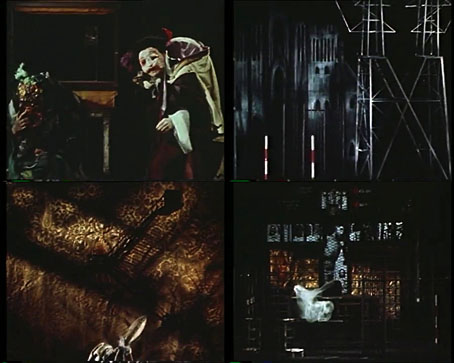
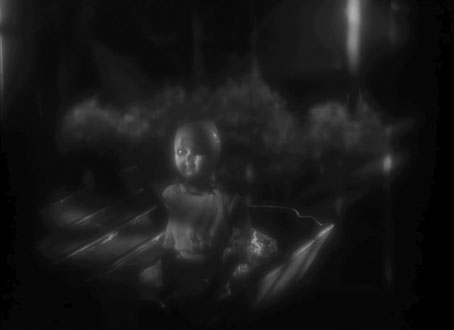
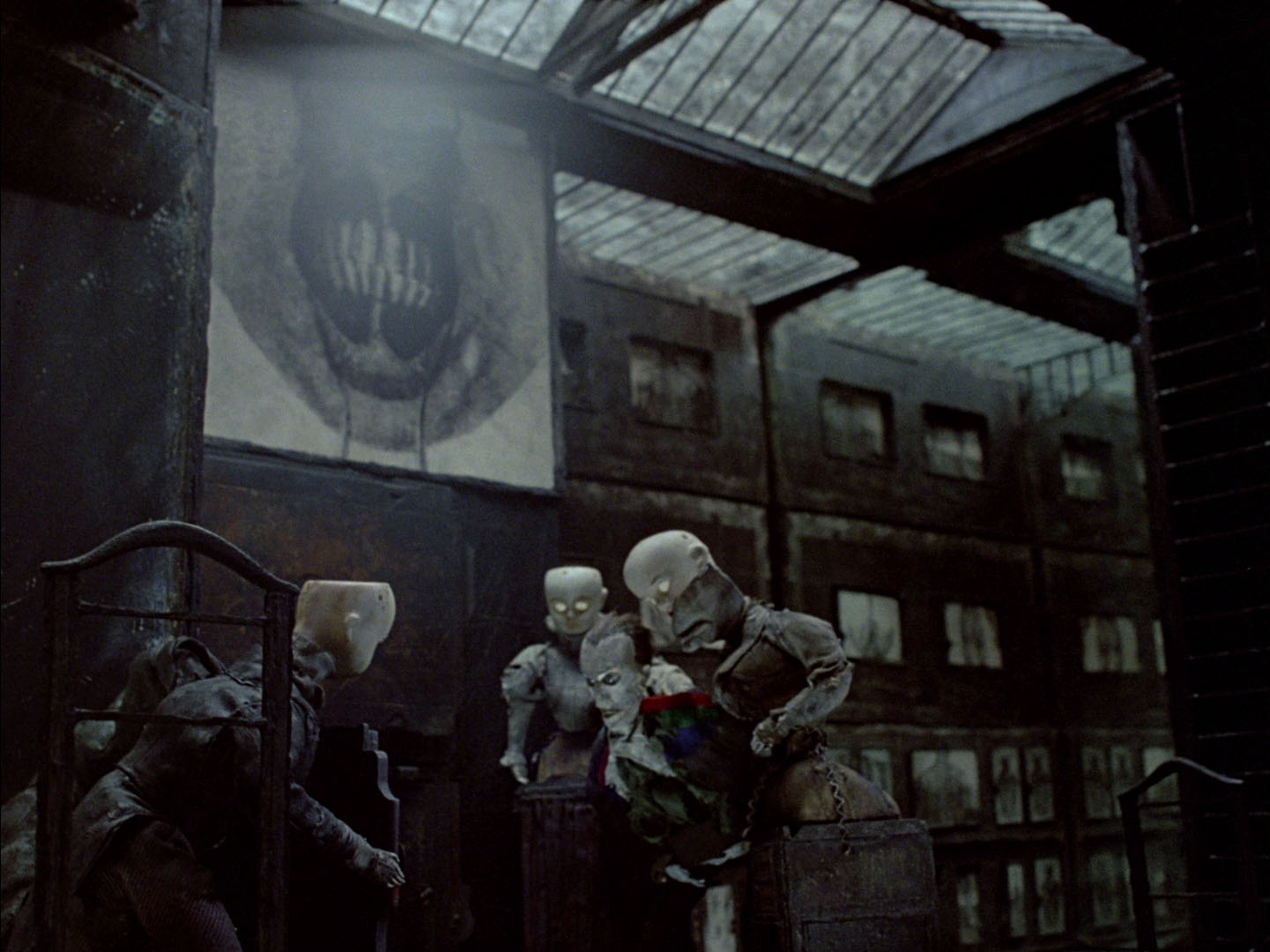
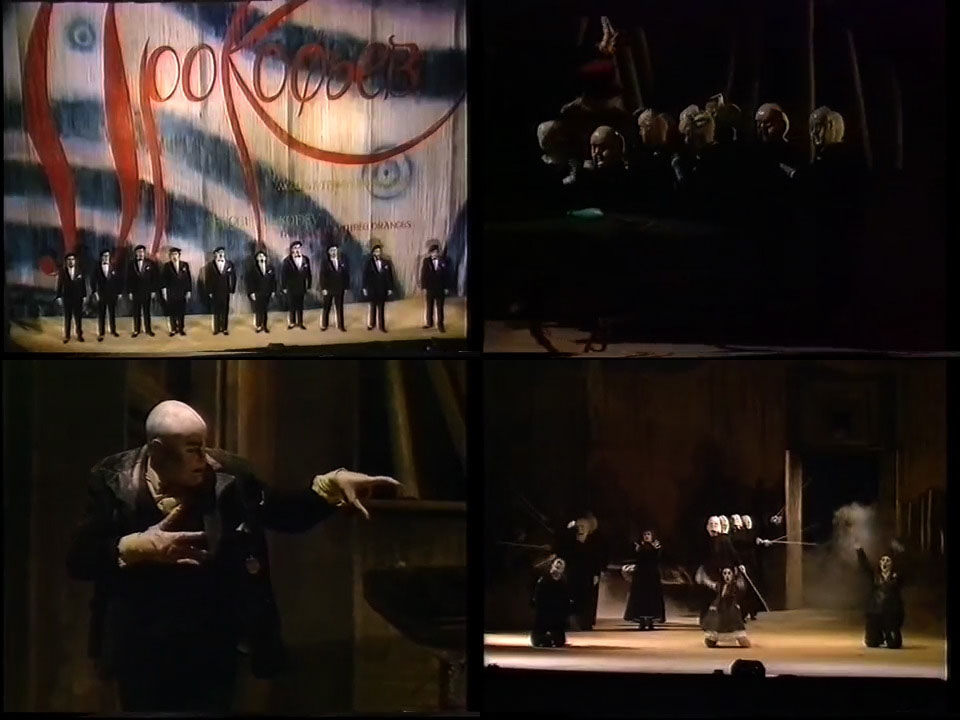
Given the time of year, and last week’s Quays-themed post, this seemed like a good follow-up. Opera North’s production of Prokofiev’s The Love for Three Oranges was broadcast by the BBC during the Christmas holiday of 1989. The opera isn’t quite as saccharine a Christmas entertainment as The Nutcracker Suite but the libretto is still light-hearted fare, being based on a Neopolitan fairy tale in which the son of the King of Clubs is afflicted by melancholy after reading too much tragic poetry. The King stages an entertainment to cheer the Prince but the only thing that makes him laugh is the witch, Fata Morgana, falling over and revealing her underclothes. This humiliation provokes the witch into cursing the Prince to fall in love with three oranges. These he immediately sets off to find, and thereby hangs the tale. Richard Jones directed the production, with the English Northern Philharmonia providing the music. The opera is also sung in English, the translation being by David Lloyd-Jones.
lfto2.jpg

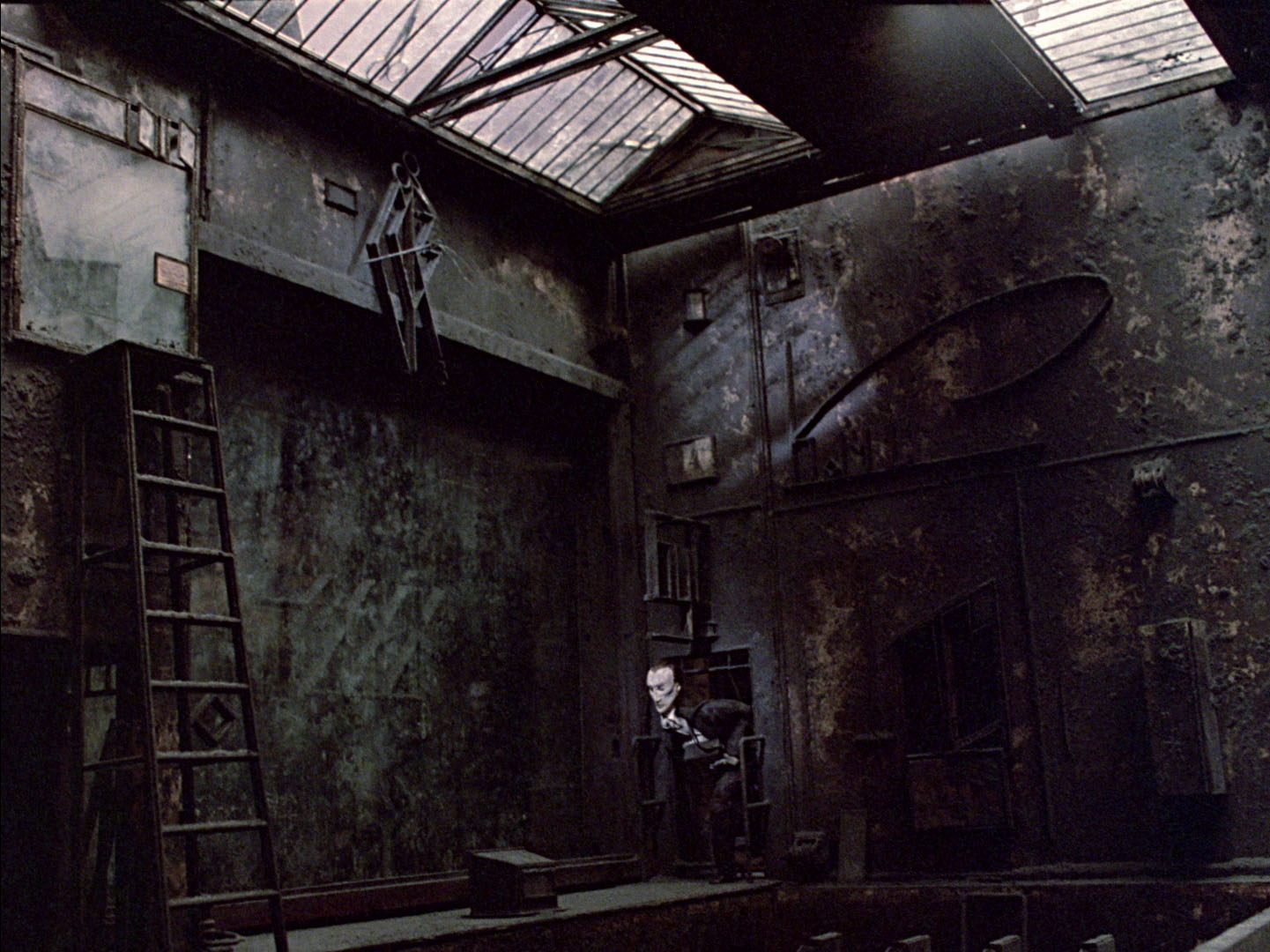
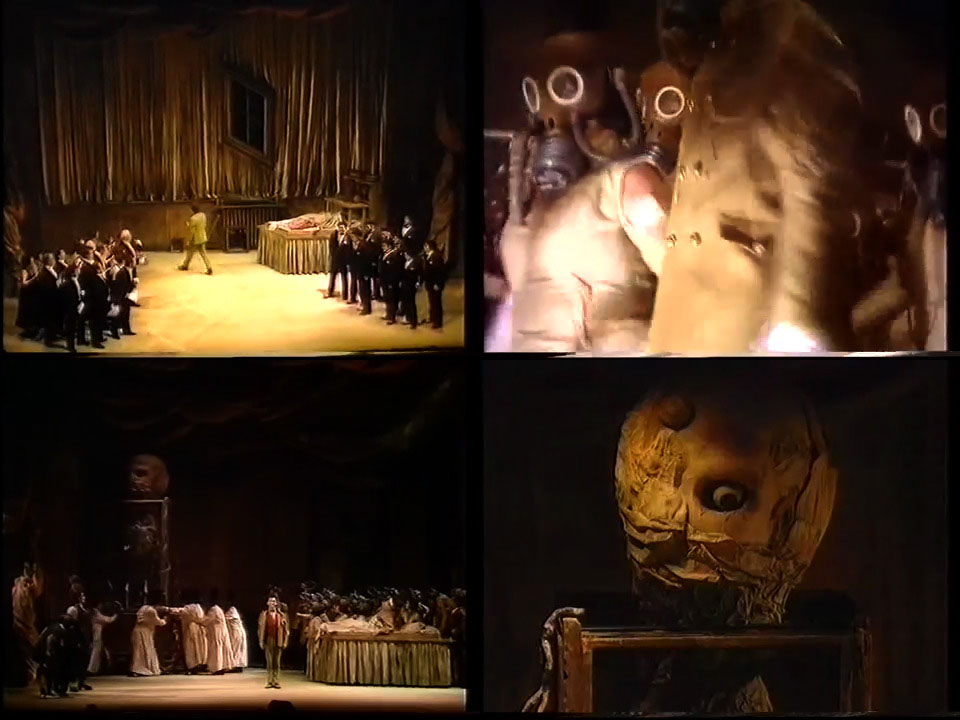
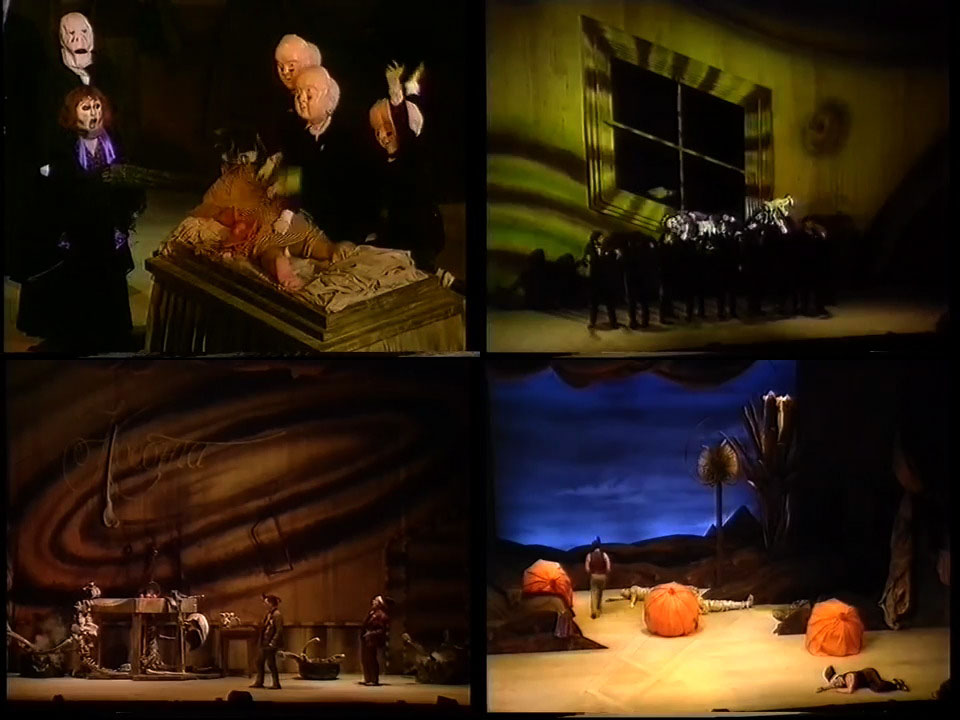
The stage decor for the Opera North production was designed by the Quay Brothers, one of several operas they worked on around this time. The opera may be a comic one but the design emphasis is on gloom and decay, a feature that extends to Sue Blane’s costumes, many of which seem to have been styled with the Quays’ films in mind. In addition to a Nosferatu-like Leander (the sinister Prime Minister), a company of children appear from time to time wearing masks which make them look like the Quays’ doll-headed puppets. The chorus, meanwhile, wear antique gas-masks of a style which people would now refer to as steampunk. The most overt reference to the Quays films occurs during the King’s entertainment when a vast mutant creature is wheeled onto the stage, the creature’s head being the colossal cousin of the twitching cyclops from Rehearsals for Extinct Anatomies. The cumulative effect of the grotesquery combined with absurd comedy is of an opera equivalent of Mervyn Peake’s Gormenghast, all of which makes me wonder what the BBC’s Gormenghast might have been like if the corporation had hired the Quays and Sue Blane to work the same magic they do here. (There is a Gormenghast opera by Irmin Schmidt but I’m not keen on the music and what I’ve seen of the staging it looks a lot less like Peake than this one does.)
lfto3.jpg

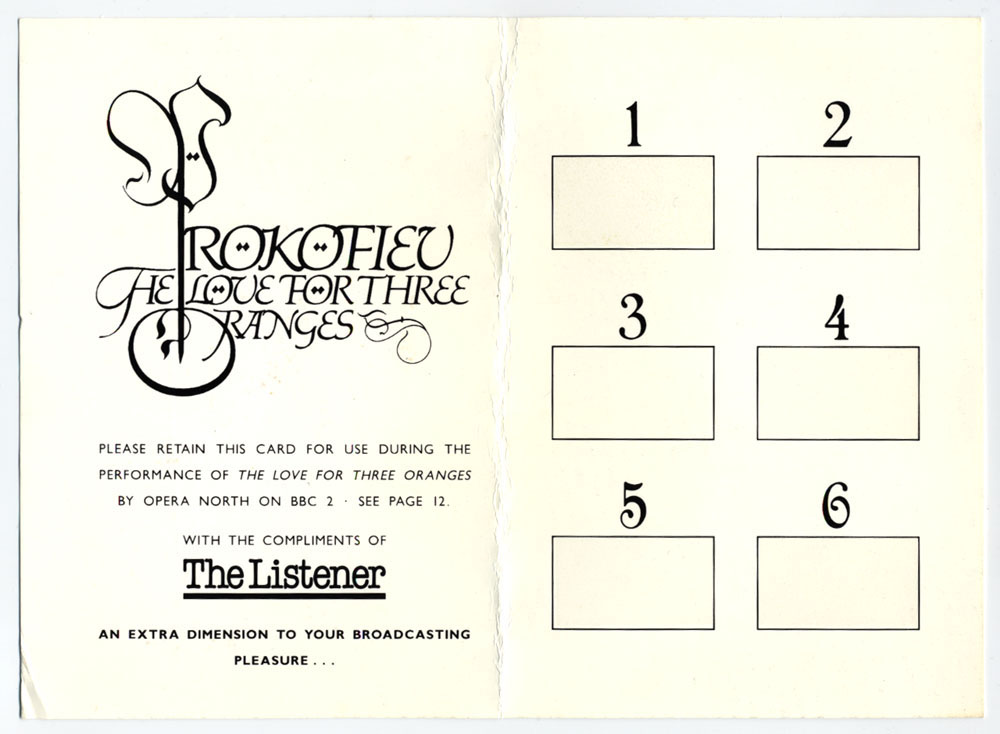
Decor aside, the most notable feature of this production, and the broadcast itself, was the scratch-and-sniff card which was provided to every member of the audience, and to any viewers who bought a copy of the BBC’s Listener magazine before the screening. Each time a numbered card appeared on the stage the audience had to scratch and sniff the relevant panel. The scents—which include orange, of course—are less offensive than those for John Waters’ Polyester (1981) although the audience is still surprised into sniffing the farts of the demon, Farfarello.
card.jpg

Elsewhere on { feuilleton }
The Quay Brothers archive
Punch and Judy, Michel de Ghelderode, and the Brothers Quay

punch1.jpg

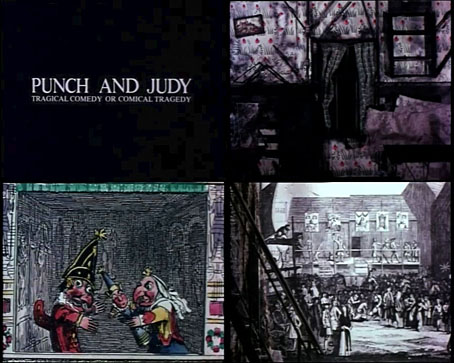
The Quay Brothers’ first animated film, Nocturna Artificialia, was released in 1979. Prior to this there had been some short experiments but since these are always described as “lost” it’s doubtful that we’ll ever see them. The artistic success of Nocturna Artificialia prompted the Quays and producer-colleague Keith Griffiths to consider fresh outlets for their talents, and resulted in funding from Britain’s Arts Council for two arts documentaries combining live-action film with animated interludes. Nocturna Artificialia has long been available for home viewing on the various Quays DVDs but the two early arts films, Punch and Judy: Tragical Comedy or Comical Tragedy (1980) and The Eternal Day of Michel de Ghelderode, 1898–1962 (1981), are omitted from the reissue canon for reasons that have never been very clear. Both films have been impossible to see unless you’re an academic or film programmer, at least until now. Once again, YouTube has provided an outlet for exceptional rarities.

punch2.jpg

Punch and Judy: Tragical Comedy or Comical Tragedy

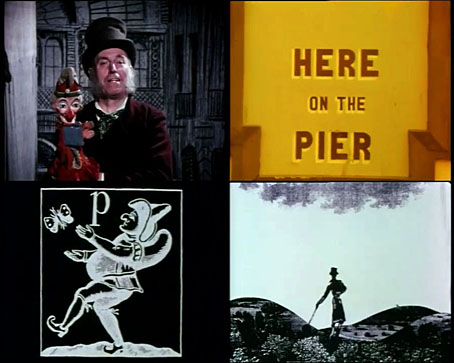
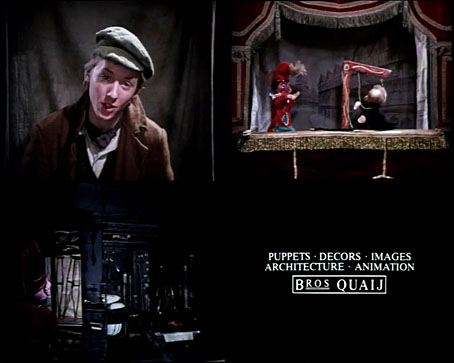
Now that finally I’ve watched these films it’s understandable why they don’t fit so easily with the Quays’ more personal output. Punch and Judy has obvious superficial parallels with Jan Švankmajer’s Punch and Judy (1966) but Švankmajer’s film is his own idiosyncratic interpretation of the murderous puppet. The Quays film is much more straightforward, devoting most of its running time to a history of Mr Punch and the other puppet characters. The story of Punch himself (narrated by Joe Melia) is intercut with a contemporary performance of the play by a genuine Punch and Judy man, Percy Press. Animated sequences are limited to small inserts between the documentary material before a lengthier section at the end that illustrates Harrison Birtwhistle’s Punch and Judy opera. This last section shows how much the Quays had developed their animation techniques since their first film, and is reminiscent of the opera sequences in their later film about Leoš Janáček. Animation aside, there’s little else that’s recognisably Quay until the credits which are lettered by the brothers. (For this film and the following one they credit themselves as the “Brothers Quaij”.) Punch and Judy: Tragical Comedy or Comical Tragedy was of sufficient quality to be screened by the BBC in 1981 as part of the Omnibus arts strand.

punch3.jpg

The Eternal Day of Michel de Ghelderode, 1898–1962

ghelderode1.jpg

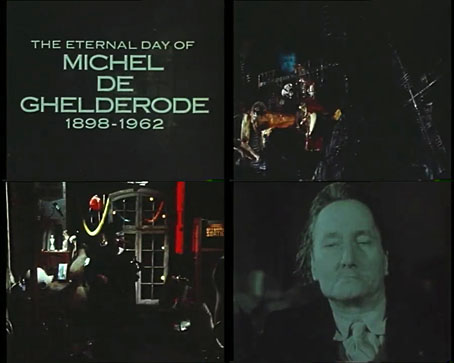
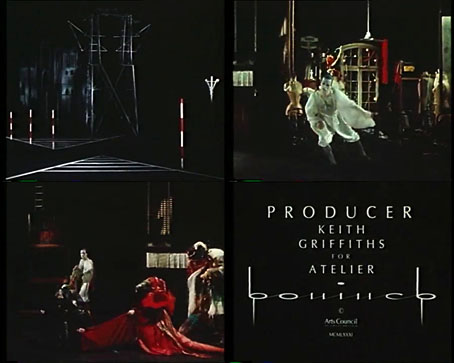
Michel de Ghelderode was a Belgian playwright whose grotesque and macabre works, many of which feature masks and puppets, are favourites of the Quays. This is a shorter film than the previous one (30 minutes rather than 45) but the territory is closer to the Quays’ own concerns. The animated sequences are fewer but they’re marvellous pieces, especially the longer central sequence which animates Ghelderode’s Fastes d’enfer (Chronicles of Hell). The figures in the latter piece may depict Ghelderode’s characters but the decor is 100% Quay, with a nocturnal cityscape and shadows from one of the trams that drift through their early films. A bonus for me was the music by Dome (Bruce Gilbert and Graham Lewis), a duo for whom the Quays later designed a record sleeve.

ghelderode2.jpg

The rest of the film consists of archive footage of Ghelderode wandering Belgian streets, and live performance of other scenes from his plays. All of this is strange and fascinating, only spoiled a little by the picture being very dark in places. (The screen shots here have been brightened.) Keith Griffiths says that this was a result of the film not being properly exposed, a consequence of the company still learning film-making as they went along. This may also explain why the film is missing from the official canon. If so, it’s a shame since it’s closer to the Quays’ own interests than some of their later commissions.

ghelderode3.jpg

Now that these films have surfaced there’s one more short from the early years that’s still unavailable. Ein Brudermord (1981) is based on a Franz Kafka short story, and runs for a mere 6 minutes. Meanwhile, I’m also hoping that someone may eventually post better copies of the Stravinsky and Janáček films, both of which have been prevented from DVD reissue by the copyrights on the music.

Elsewhere on { feuilleton }
The Quay Brothers archive
More Quays: Slow Time—Tempus Fugit

slow1.jpg

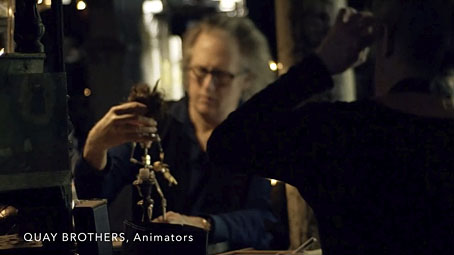
This short video—officially released to YouTube by the makers of Leffe, a Belgian beer—is two films in one: Slow Time is a brief portrait of the Brothers Quay by Gary Tarn, more fleeting even than Christopher Nolan’s film; Tempus Fugit is an ad by the Quays for Leffe beer that’s more typical than many of their earlier commissions from the commercial world. The portrait is one of six promotional pieces that Leffe have made about artists. Belgian beer seems a fitting product for the Quays when you know that the production company they formed with Keith Griffiths in 1979, Koninck, took its name from a Belgian beer mat.

slow2.jpg

slow3.jpg

Tempus Fugit.

Elsewhere on { feuilleton }
The Quay Brothers archive
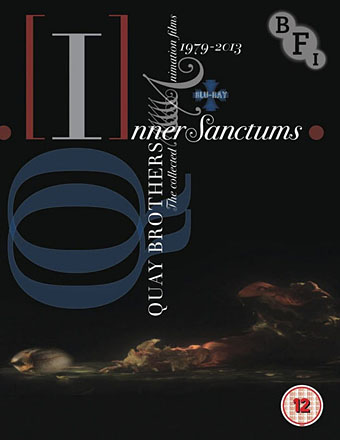
Inner Sanctums—Quay Brothers: The Collected Animated Films 1979–2013

quays.jpg

In previous posts about the Quay Brothers’ films I’ve expressed a hope that we might see a new collection from the BFI that gathers together more of their recent works. That’s what we have now in a 2-disc Blu-ray set that will be released in the UK on 10th October.

quay.jpg

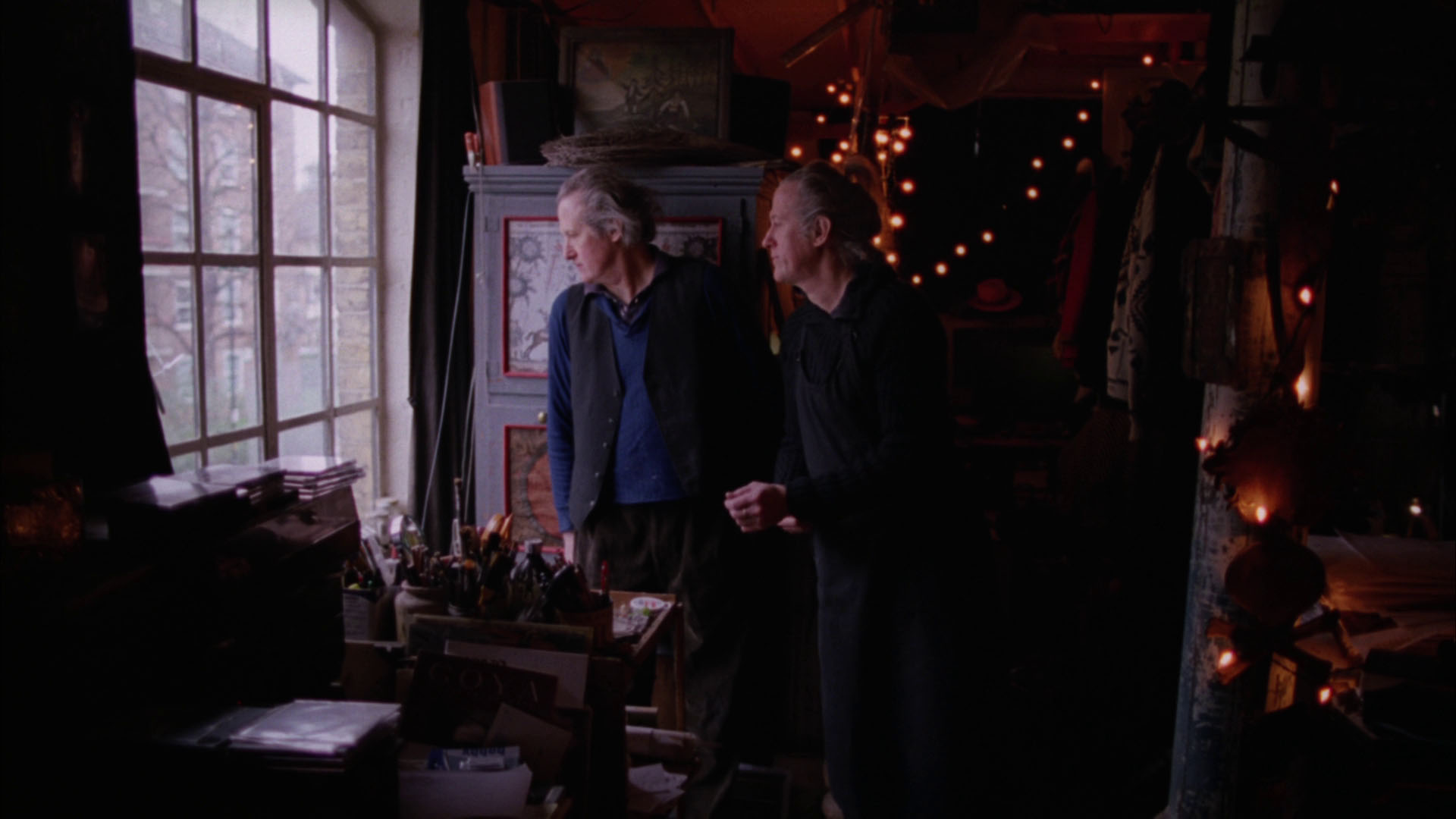
Quay (2015) directed by Christopher Nolan.

The new collection repeats the contents of the earlier BFI DVD set, The Short Films 1979–2003, while adding some of their recent commissions including Maska (2010), Through the Weeping Glass (2011), and Unmistaken Hands: Ex Voto F.H. (2013). Among the extras there’s a short portrait of the brothers, Quay (2015), directed by Christopher Nolan. This shows the Quays at work in their Southwark studio where they discuss the technical details of animation and puppet-making a little more than I’ve seen in other interviews. Nolan’s film is both beguiling and frustrating, the latter for being so inexplicably short. When I first saw Quay announced I thought it might be a feature-length documentary rather than a fleeting glimpse; the Quays have been interviewed regularly over the past few years so they’re not exactly unforthcoming. I’m hoping now that Nolan’s public enthusiasm for the brothers might at least help them to make another feature, a decade having elapsed since The Piano Tuner of Earthquakes (2005).

street1.jpg

Street of Crocodiles (1986).

As to the films, seeing them in high-definition is certainly a plus although the earliest ones were all made in 16mm so they don’t gain a great deal. Street of Crocodiles, however, looks superb, and I found myself noticing details that I’d earlier missed despite numerous viewings. I’m disappointed that two early shorts, Igor: The Paris Years (1982) and Leoš Janáček: Intimate Excursions (1983), remain unreleased due to apparent problems with music copyrights. (See this post for YouTube links.) Also uncollected are their other music videos apart from the two produced for His Name Is Alive, together with a handful of other short pieces. (See this post for further links.)

street2.jpg

Street of Crocodiles (1986).

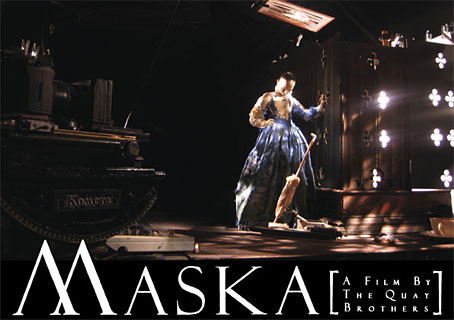
Of the longer films on the second disc, Maska has become a favourite, with its combination of a baroque science-fiction scenario (from Stanisław Lem) and a score by Penderecki. Through the Weeping Glass, a 30-minute documentary about the medical oddities housed in the Mütter Museum in the Quays’ home city of Philadelphia, is a kind of companion piece to The Phantom Museum (2003), a similar study of the Wellcome Collection in London. This is the first film the Europhile Quays have made in the US, and comes with a short documentary showing them at work on the film, and an interview about the production. I’m still getting used to their shift to digital video—I miss the grain and texture of their films—but since I’ve been working digitally myself for many years now I can’t complain if others choose to do the same.

maska1.jpg

The preview discs of the new collection came without the booklet which will be present in the package. This will include an updated Quays Dictionary by Michael Brooke (as featured in the previous BFI collection), and the 2012 “interview” by the deceased calligrapher Heinrich Holzmüller, On Deciphering the Pharmacist’s Prescription for Lip-Reading Puppets. The latter appeared in the catalogue for the Quays’ MoMA exhibition where it was printed at an eye-straining point size. I’m hoping the BFI version will be an improvement.

The Films
Nocturna Artificialia (1979)
The Cabinet of Jan Švankmajer (1984)
This Unnameable Little Broom (1985)
Street of Crocodiles (1986)
Rehearsals for Extinct Anatomies (1988)
Stille Nacht I: Dramolet (1988)
Ex-Voto (1989)
The Comb (1990)
Anamorphosis (1991)
The Calligrapher (Parts I, II, III) (1991)
Stille Nacht II: Are We Still Married? (1992)
Stille Nacht III: Tales from Vienna Woods (1993)
Stille Nacht IV: Can’t Go Wrong Without You (1994)
In Absentia (2000)
The Phantom Museum (2003)
Songs for Dead Children (2003)
Eurydice, She So Beloved (2007)
Alice in Not so Wonderland (2007)
Kinoteka Ident (2008)
Inventorium of Traces (2009)
Wonderwood for Comme des Garçons (2010)
Maska (2010)
Through the Weeping Glass (2011)
Unmistaken Hands: Ex Voto F.H. (2013)

Special features
Introduction by the Quay Brothers (2006, 20 mins)
Quay (2015, 8 mins): a film by Christopher Nolan
Quay Brothers audio commentaries for This Unnameable Little Broom, Street of Crocodiles, Stille Nacht I-III and In Absentia
The Falls [excerpt] (1980, 5 mins)
BFI Distribution ident (1991, 30 secs)
The Summit (1995, 12 mins)
No Bones About It: Quay Brothers (2010, 12 mins)
Behind the Scenes with the Quay Brothers (2013, 31 mins)
Unmistaken Hands: Ex Voto F.H. trailer (2 mins)

Elsewhere on { feuilleton }
The Quay Brothers archive
Holzmüller and the Quays

ib1.jpg

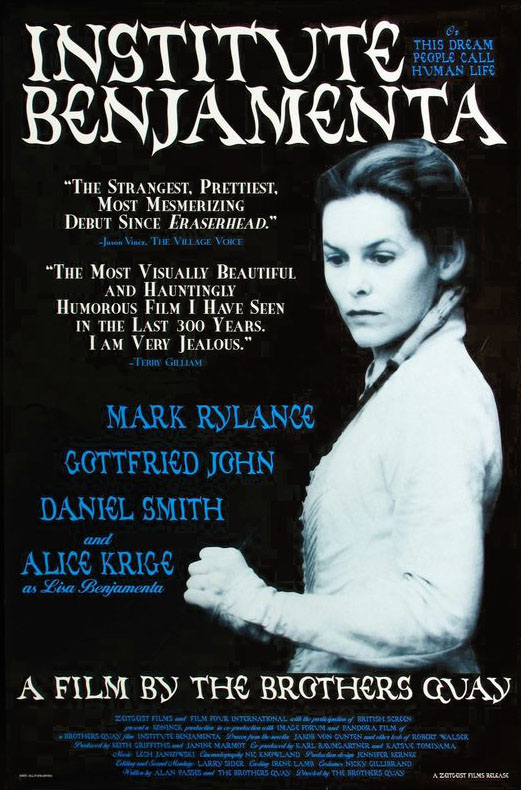
US one sheet (1996).

Heinrich Holzmüller (also spelt Holtzmüller) was a German printmaker and calligrapher active during the 16th century. He may have been dead for centuries but this inconvenience didn’t prevent him from appearing as an interviewer in the catalogue for the MoMA exhibition of artworks by the Brothers Quay that ran throughout the end of 2012.

ib4.jpg

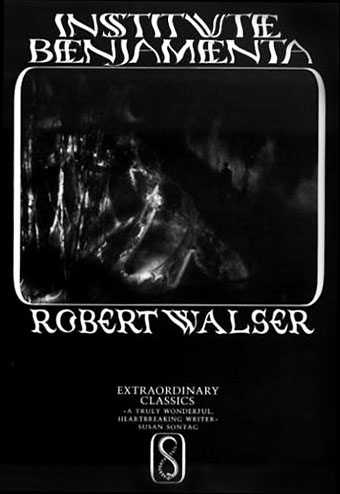
Film tie-in edition of Jakob von Gunten (1995).

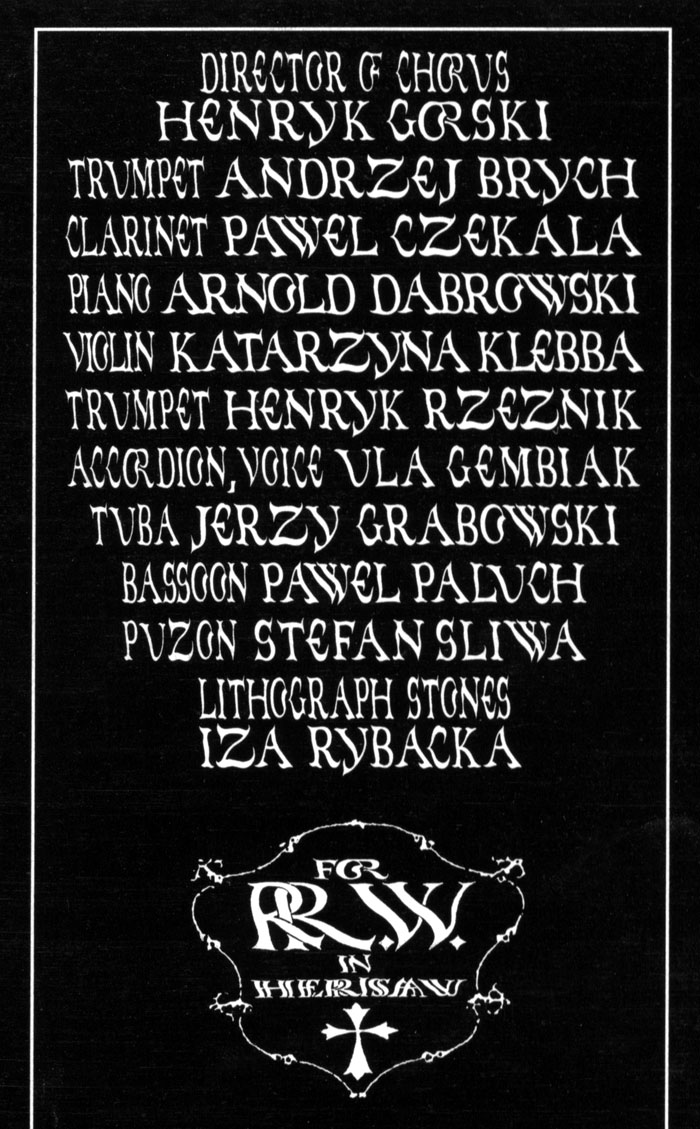
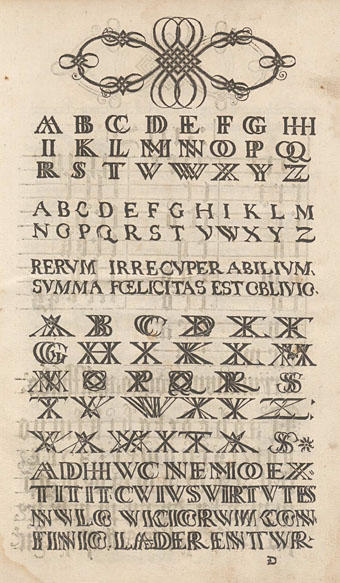
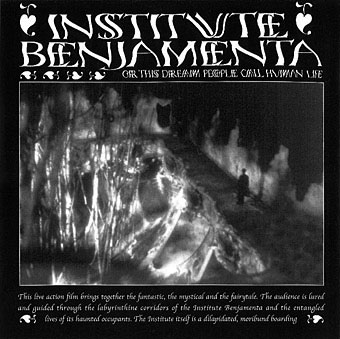
One of the more informative pieces of information to come from that interview concerned the Quays’ resurrection of typefaces designed by Holzmüller in his Liber Perutilis, a book about lettering and calligraphy published in 1553. The Quay versions were most visible around the time of the production of their first feature, Institute Benjamenta (1995): you can see them on the posters, on the cover of the Serpent’s Tail tie-in edition of Jakob von Gunten and also inside the rare soundtrack CD which the Quays designed for Lech Jankowski.

ib2.jpg

Institute Benjamenta soundtrack booklet (1998).

ib3.jpg

Institute Benjamenta soundtrack booklet (1998).

I’ve had the MoMA catalogue since it was published, and more than once had searched half-heartedly for Holzmüller’s book without success. A more recent search turned up the goods, however (sometimes it helps to keep following leads from one page to another): a copy of Liber Perutilis may be found online at the Universitätsbibliothek Basel.

holzmuller.jpg

Liber Perutilis is only a short book compared to some in the field but it’s much more varied and original than others I’ve seen. Among the alphabets which the Quays digitised there are sets showing the letters doubled and tripled in the manner of monograms. The Quays have often signed themselves using a double Q so this may explain the attraction. The undoubled alphabet is especially striking for Holzmüller’s distortions of the letterforms which make them seem like characters viewed under rippled glass. At a time when most books about lettering and calligraphy were showing alphabets produced by careful and elegant hands this is a feature which to our eyes seems surprisingly advanced. The Quays have copied the alphabets fairly closely, making minor changes such as rounding off an E and adding the J and U which are always missing in Latin alphabets of the period. Elsewhere in the book there are many examples of calligraphic flourishes and some unusual pieces of decorative knotwork. As for Holzmüller’s posthumous interview, copies of the MoMA catalogue are still available, while the interview itself will be reprinted in the booklet for the BFI’s forthcoming Blu-ray collection, Inner Sanctums—Quay Brothers: The Collected Animated Films 1979–2013.

Elsewhere on { feuilleton }
The Quay Brothers archive