Weekend links: fifth anniversary edition

demuth.jpg

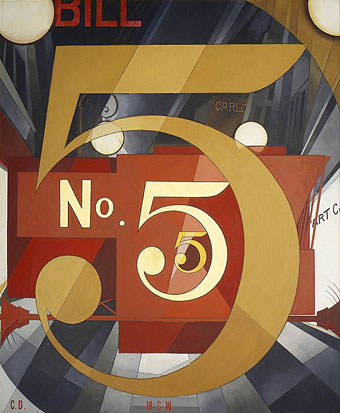
The Figure 5 in Gold (1928) by Charles Demuth.

It’s a little surprising to find I’ve been doing this for five whole years yet here we are. Having seen a number of blogs call it quits at the five-year point I should note that I don’t feel quite that exhausted although maintaining a discipline of daily posting can be a chore at times, especially when you’re pressured by work. On the whole the advantages continue to outweigh the disadvantages. Some of the discoveries here have fed back into things I’ve been working on or opened avenues for future exploration. Researching something for an audience (however slight that audience or the resulting post) encourages you to look more deeply into a given subject; sometimes you learn more as a result and occasionally make surprising discoveries. Obsessions are teased out which might otherwise have lain dormant. Yes, it’s an extra bout of work but I’ve spent much of my life saying to people “if you like that, you may like this”, and that’s all many of these posts are doing.

This year promises to be an interesting one so watch this space. And, as always, thanks for reading!

John x

On to the links…

Cathedral Scan translates the architectural plans of Gothic cathedrals into open-ended musical scores via custom software. There’s more at Blake Carrington‘s website.

Forty-three William Burroughs recordings (tape experiments and readings) at the Ubuweb archives.

• The opening scene of Deadlock (1970), an obscure German film with a theme by the mighty Can.

Strange Lands: A Field-Guide to the Celtic Otherworld, a new book by Andrew L Paciorek.

• The enduring nature of Frankenstein, currently on stage at the National Theatre, London.
shimojo.jpg

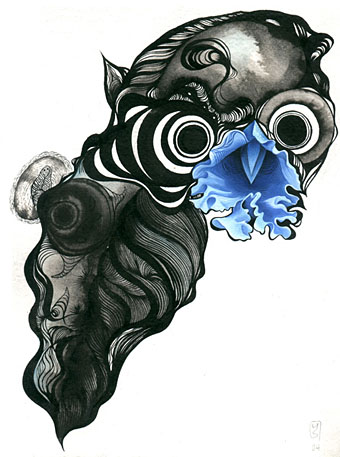
Owl One (2004) by Yuri Shimojo.

¡Activista! by Sonny Smith: Drag Queens, Borders, Rivers, Death and Transformation.

• Estonian sculptor Mati Karmin makes furniture out of Russian anti-submarine mines.

Alan Moore’s contribution to the Save Our Libraries campaign.

• Innsmouth Free Press is raising funds for their running costs.

A history of queer street art (Facebook link, unfortunately).

Illuminated book design for Heston’s Fantastical Feasts.

Physica Sacra, an engraving set at Flickr.

Egypt (1985) by Tuxedomoon | Egyptian Basses (1998) by Coil | Soleil D’Egypte (2001) by Natacha Atlas.
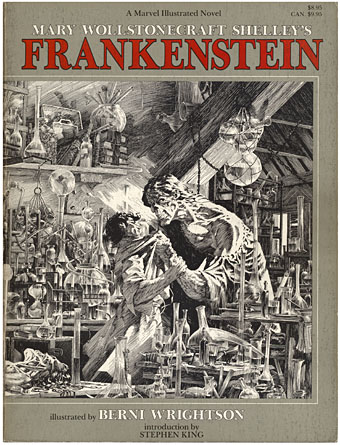
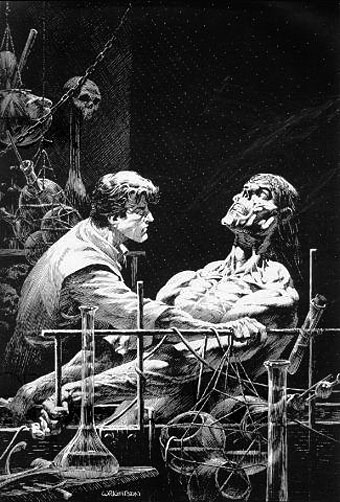
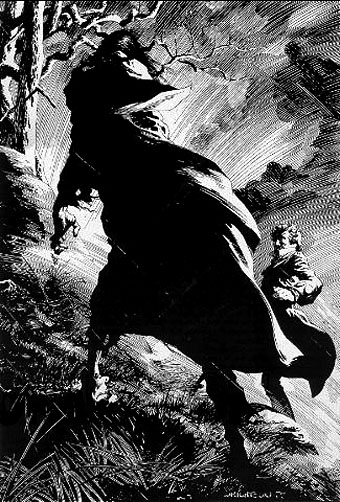
Berni Wrightson’s Frankenstein

frankenstein1.jpg

A recent conversation with Evan J Peterson touched on the subject of Mary Shelley’s Frankenstein. Evan is currently working on something based on the novel and—in the interests of disclosure—he wrote a very flattering piece about these pages recently. In addition to this, Peter Ackroyd’s latest book works his familiar intertextual games with the same story, placing the monster creator in London where he meets various significant literary types. Andrew Motion reviewed the latter this week and wasn’t impressed.

frankenstein2.jpg

Which preamble brings us to Berni Wrightson’s treatment of the story and a work which was a major inspiration for my HP Lovecraft comics and illustrations. Wrightson’s illustrated edition of Shelley’s complete novel was published in 1983 with an introduction by Stephen King. I’d admired Wrightson’s technique for years but wasn’t always impressed by his subject matter which tended to revolve around the stock selection of favourite American horror characters—vampires, werewolves, zombies and so on—while much of his early art was indebted to the EC horror comics which never interested me at all. Jokey horror has always seemed to me a debased and neutered horror, horror-lite, and yes, that includes plush Cthulhus and the rest of that tat.

frankenstein3.jpg

So the immediate attraction of the Frankenstein book was seeing Wrightson take the story back to its origins and treat it seriously. Frankenstein—creator, monster and myth—has been subject to as much degradation as Dracula over the past century which made Wrightson’s approach very welcome. Crucially, it also gave me the key to interpreting Lovecraft visually. It was very evident that his drawings owed a debt to a favourite illustrator of mine, Gustave Doré; two of the pieces were almost straight copies of Doré drawings from The Rime of the Ancient Mariner. In terms of overt influence, Wrightson’s book is dedicated to the great Roy G Krenkel, one of the finest fantasy illustrators of the early 20th century. I wasn’t aware of it at the time but Wrightson’s style here also owes much to American illustrator Franklin Booth (1874–1948), one of Krenkel’s own influences. If the monster in his drawings had a touch of the lumbering EC zombie about its features that was allowable given the other influences at work, and besides, his compositions are perfect. Once I started work on my Lovecraft drawings I quickly found an approach that suited my own obsessions with fine line and detail. But it was Wrightson’s example which pointed the way.

The only problem discussing this is that the copies available on various sites, including Wrightson’s own gallery pages, don’t do the drawings much justice at all. (There’s a large copy of one picture here.) Where the more detailed pieces are concerned you’ll have to try and find a copy of the book. This year is the 25th anniversary of the book’s publication so Dark Horse Comics will be publishing a hard cover edition in October 2008. In addition, Darkwoods Press have announced an “ultimate edition” which will reprint all the artwork (some drawings weren’t used) with quality reproduction. No further information about that, however, and given that they’ve having to source all of the original drawings it may be a while before it appears.

Elsewhere on { feuilleton }
The illustrators archive

Previously on { feuilleton }
Berni Wrightson in The Mist
The monstrous tome
Franklin Booth’s Flying Islands