John Austen’s Little Ape

austen1.jpg

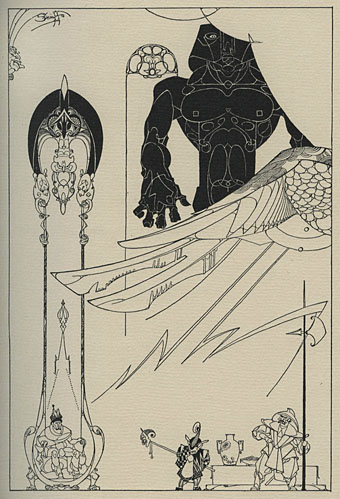
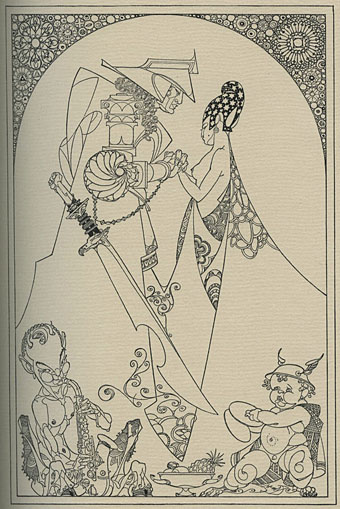
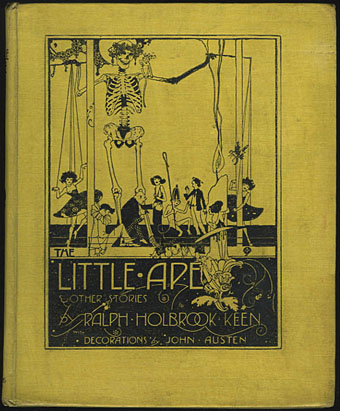
British illustrator John Austen (1886–1948) illustrated many classic works of fiction throughout the 1920s, one of which, Hamlet, was recently reprinted by Dover Publications. His other work isn’t so easy to find, however, and I’d not seen Little Ape and Other Stories (1921) until Nick H drew my attention to a copy for sale at silver-gryph’s eBay pages. (Thanks, Nick!)

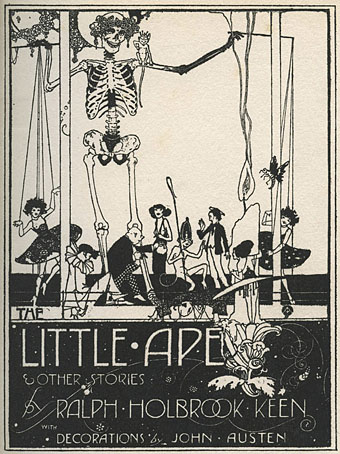
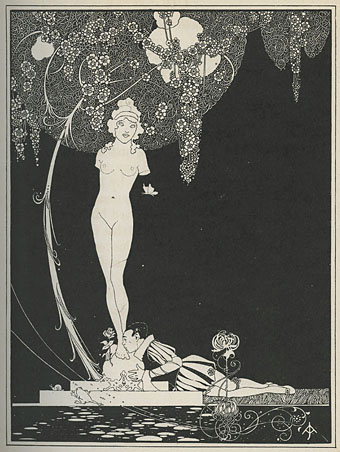
Ralph Holbrook Keen’s story collection was Austen’s first illustrated edition although you wouldn’t necessarily take it for a debut work. There are the familiar nods to Beardsley—the black-and-yellow cover especially—and possibly Harry Clarke whose influence is more evident in the Hamlet drawings. Clarke and Austen exhibited together in 1925. The skeleton with a floral crown makes me think of the rose-crowned skeleton in Edmund J. Sullivan’s Rubáiyát (1913), although this may be a result of Sullivan’s drawing having been made very familiar by its use on Mouse & Kelley’s posters for the Grateful Dead. One of the many connections between the Golden Age of Illustration and the Golden Age of Psychedelia.
austen2.jpg

austen3.jpg

Continue reading “John Austen’s Little Ape”

RS Sherriffs’ Tamburlaine the Great

sherriffs01.jpg

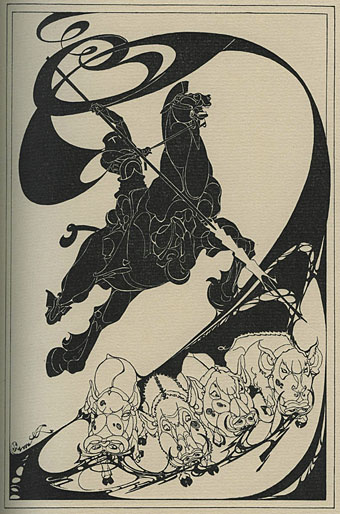
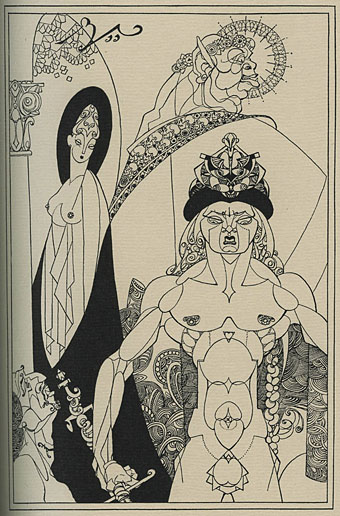
I would have posted this by now if it hadn’t been for the recent unpleasantness. Robert Stewart Sherriffs (1906-60) was a Scottish artist who I confess I hadn’t come across before until Nick H (thanks, Nick!) drew my attention to this book at silver-gryph’s eBay pages. Sherriffs’ illustrated edtion of The Life and Death of Tamburlaine the Great by Christopher Marlowe was published in a limited edition in 1930.

The drawings are black-and-white throughout, and of such a quality you have to wonder why Dover or someone hasn’t done a reprint. The general approach owes much to the usual suspects, notably Aubrey Beardsley and Harry Clarke, but there’s a development of these earlier styles that you also find in the work of Ray Frederick Coyle and Beresford Egan. In addition to the full-page plates Sherriffs also provided a number of insect vignettes, the last of which is a Death’s-head Hawkmoth.

sherriffs02.jpg

sherriffs03.jpg

sherriffs04.jpg

Continue reading “RS Sherriffs’ Tamburlaine the Great”

Weekend links 184

lefler.jpg

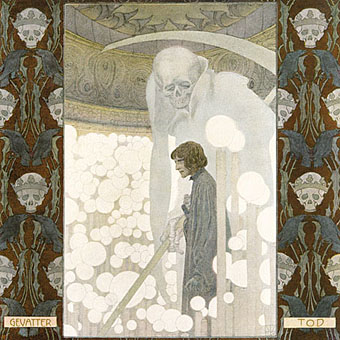
Gevatter Tod (Godfather Death, 1905) by Heinrich Lefler. Via Beautiful Century.

An inevitable hangover from Halloween this week. At 50 Watts: A Modern Dance of Death (c. 1894) by Joseph Sattler, Harry Clarke Revisited, and more Ex Libris Mr Reaper | At Design Observer: Keith Eggener on When Buildings Kill: Sentient Houses in Fiction and Film | At Dangerous Minds: An interview with horror soundtrack composer Fabio Frizzi | Clive Hicks-Jenkins on illustrating the ghost stories of MR James.

Punk 45: The Singles Cover Art of Punk 1976–80, a book by Jon Savage & Stuart Baker with an accompanying compilation album on Soul Jazz Records. Savage & Baker selected a handful of favourite covers here.

De humani corporis fabrica by Vesalius is back in print as a beautiful two-volume hardback edition. See sample pages here.

…the business of the writer is to find something out for yourself and to stick by it. To forge a new mythology out of materials pertinent to the moment. Otherwise you’re at the mercy of their mythology, which is a destruction of language, above everything else. This non-language, this bureaucratic-speak of the global corporate entities, is a horror in the world. So that strange language we started with – that piece of Kerouac – I think is more valuable than ever.

Iain Sinclair (yes, him again) talking to James Campbell about his new book, American Smoke.

Bob Mizer & Tom of Finland, an exhibition at the Museum of Contemporary Art, Los Angeles.

• From 2010: The Bridget Riley Look, The Bridget Riley Sound, Bridget Riley’s Rolling Papers.

The Strange and Mysterious History of the Ouija Board. Related: Ouija Boards at Pinterest.

Highway 62 posted some close-ups of my adaptation of The Call of Cthulhu.

• “This is not a coincidence”: Max Dax talks to Andrey A. Tarkovsky.

Anthony Lane‘s Foreword to The Big New Yorker Book of Cats.

• At AnOther: Nicolas Roeg on Mirrors and Memory.

Toys and Techniques: a blog.

Death And The Lady (1970) by Shirley & Dolly Collins | Clang Of The Yankee Reaper (1975) Van Dyke Parks | All And Everyone (2011) by PJ Harvey

John Austen’s Hamlet

austen01.jpg

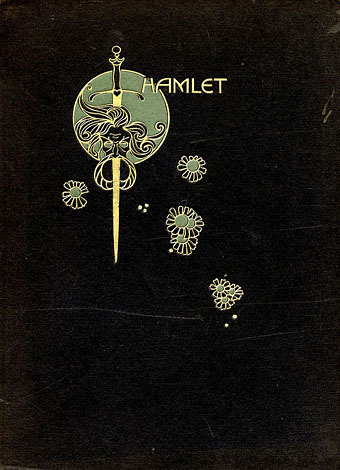
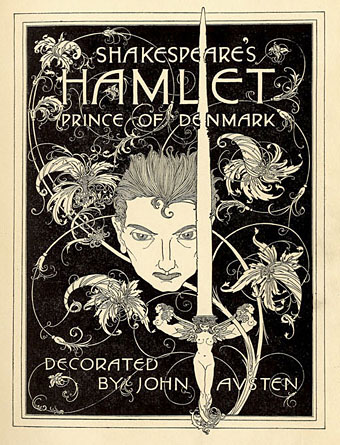
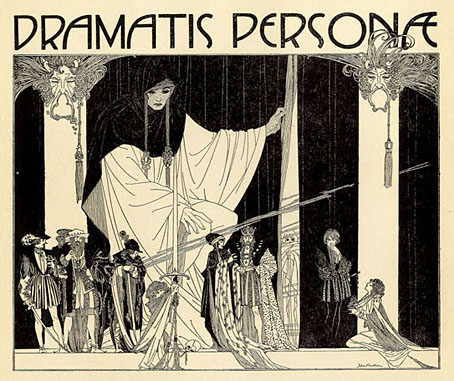
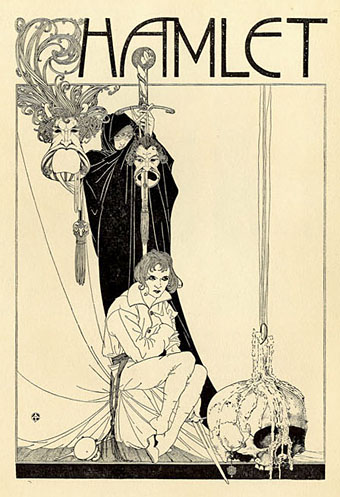
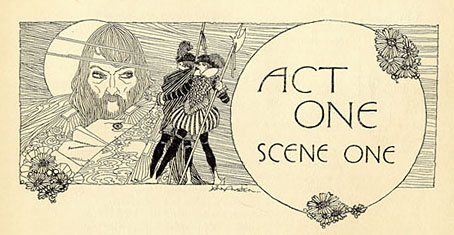
The 1922 edition of Hamlet “decorated” by British artist John Austen (1886–1948) is a lot more visible today than it was a few years ago, thanks to a reprint by Dover Publications in their Calla Editions series. The scans here are from an original printing at VTS. Austen’s Hamlet is often rated as his chef d’oeuvre, and with good reason, he manages to lend some visual splendour to a play whose concerns are a lot more introspective than the usual illustration standards of The Tempest and A Midsummer Night’s Dream. Masks, swords and skulls are recurrent symbols. Yes, the drawings owe a great deal to Harry Clarke’s example—all those manga faces, spiny fingers and swathes of black—but that’s no bad thing if you can pull it off. If you’re going to borrow a style then you may as well take from the best.

austen02.jpg

austen03.jpg

austen04.jpg

austen04-1.jpg

Continue reading “John Austen’s Hamlet”

Whirlpools

whirlpool.jpg

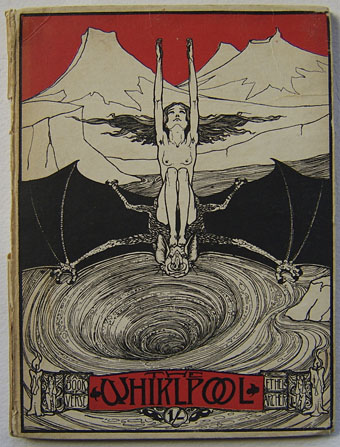
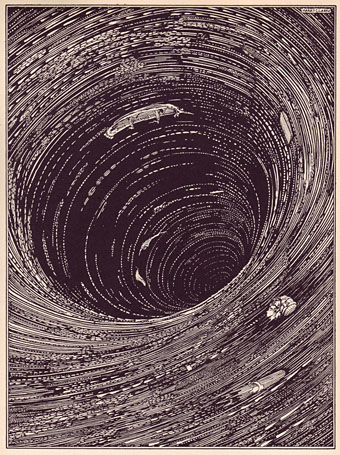
This was a surprise. My first thought on seeing the cover for Ethel Archer’s “book of verse”, The Whirlpool, was that its swirling waters were borrowed from Harry Clarke’s typically astonishing illustration for A Descent into the Maelström by Edgar Allan Poe. The problem there is that the Ethel Archer book was published in 1911 while Clarke’s first collection of Poe illustrations didn’t appear until 1919. The cover for the Archer book was by Ethel’s husband, Eugene Wieland, the publisher of Aleister Crowley’s Equinox periodical/occult treatise, and also the publisher of this volume. Crowley provided an introduction to the book. Given these occult associations it’s possible that Harry Clarke might have seen a copy of this. Clarke’s work appeared in Austin Spare’s own occult periodical, The Golden Hind, and he wasn’t averse to producing occult art of his own. This isn’t to say that Clarke necessarily took anything from the Archer book—sometimes a whirlpool is just a whirlpool—but it’s not outside the bounds of possibility.

There’s a copy of Ethel Archer’s book currently on sale at eBay, together with some original drawings by Eugene Wieland. The cover above came via John Eggeling’s Flickr page of rare book covers. The Poe illustration is via 50 Watts.

maelstrom.jpg

Previously on { feuilleton }
The Sapphire Museum of Magic and Occultism