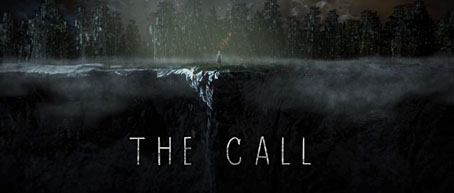
Now what could this be about? Like last week’s writhings, PixelBump’s film is short but sweet. To say more would be to spoil its 90 seconds. Watch it here.
Elsewhere on { feuilleton }
• The Lovecraft archive
A journal by artist and designer John Coulthart.

Now what could this be about? Like last week’s writhings, PixelBump’s film is short but sweet. To say more would be to spoil its 90 seconds. Watch it here.
Elsewhere on { feuilleton }
• The Lovecraft archive
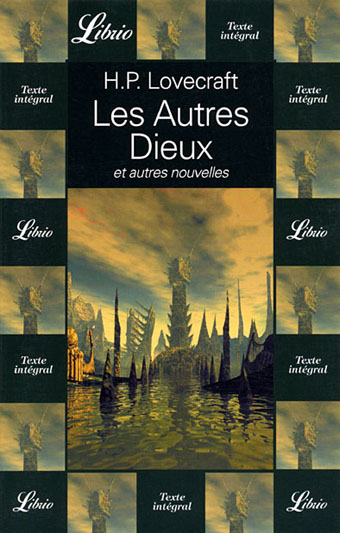
Les Autres Dieux et autres nouvelles (2002).
In 2002, French publisher J’ai Lu used my perennially popular view of R’lyeh on the cover of a small collection of HP Lovecraft’s fiction. This replaced a Michael Whelan painting on an earlier edition which looks fine but which happens to be a detail from one of his old Elric covers.
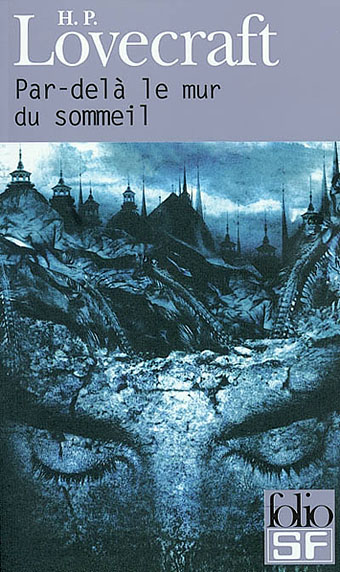
Par-delà le mur du sommeil (2002). Cover art by Eikasia.
Looking through the Lovecraft pages at Noosfere this week turned up some recent French covers I’d not seen before. One of the striking things about cover art for French genre titles is the amount of artists who also work in comics. This isn’t so surprising given the scale of the French comics world but in the UK the tendency is for people to work in one area alone. Artists such as myself who move freely from comics to cover art to graphic design are a very small minority.
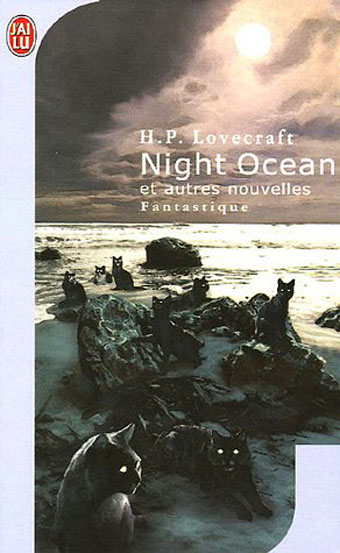
Night ocean et autres nouvelles (2005). Cover art by Richard Guérineau.
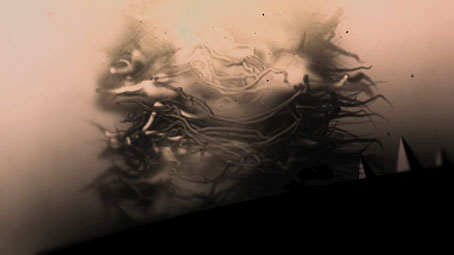
Adam Proctor’s After Effects experiment lasts all of 30 seconds but he titles it Ph’nglui mglw’nafh Cthulhu R’lyeh wgah’nagl fhtagn which makes it relevant to the week’s theme. Watch it here.
Elsewhere on { feuilleton }
• The Lovecraft archive
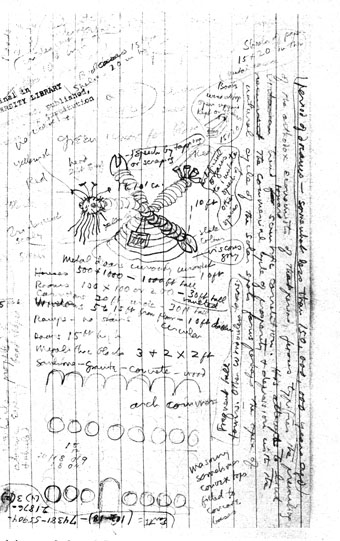
One of the tasks this week has been sketching out a member of the Great Race of Yith, the consciousness-hopping alien scholars whose exploits are detailed in HP Lovecraft’s The Shadow Out of Time. Their appearance isn’t at all mysterious: Lovecraft describes them in some detail (and sketched them in his notes above) and they were illustrated by Howard V. Brown for their first publication in Astounding Stories in June 1936. But I’ve only ever drawn any of Lovecraft’s creatures when there’s been a good reason (or a commission) so this was the first time I’d had to think seriously about how I wanted to depict a Yithian.
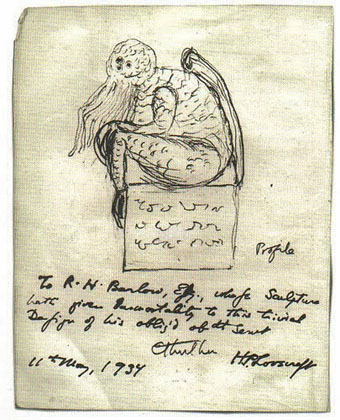
The results will be posted here in due course but in the meantime here’s a couple more of Lovecraft’s own sketches of his creations. The Cthulhu sketch is one of two showing the statue from the story. The most interesting detail for me is the multiple eyes which aren’t described in the text.
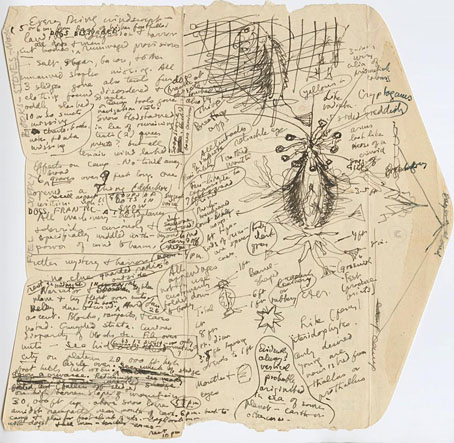
The Great Race of Yith have always struck me as somewhat improbable even if you take into account alien evolutionary paths. Similar creatures populate the early science fiction magazines (Frank R. Paul painted many of them), and this is one place where I feel slightly let down by Lovecraft’s imagination. In the recent batch of drawings I’ve also been depicting one of the Mi-go and some of the Elder Things from At the Mountains of Madness. The latter are at the opposite end of the scale to the Great Race, sufficiently alien without seeming absurd.
Elsewhere on { feuilleton }
• The Lovecraft archive
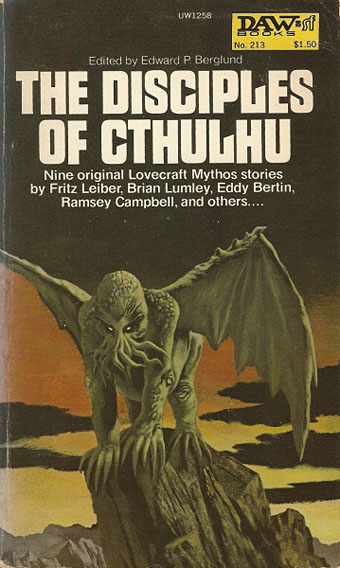
The Disciples of Cthulhu (1976).
A disagreement I have with the burgeoning world of Lovecraft art is the relentless focus on monsters—and I say this in a week when I’ve been working on a new commission of exactly this: six pictures of Lovecraftian creatures. Lovecraft famously emphasised atmosphere as the paramount ingredient in a weird story, and atmosphere in his fiction is often generated by his descriptions of landscape and architecture; Angela Carter’s insightful essay in the George Hay Necronomicon (1978) was entitled Lovecraft and Landscape. Architecture often receives considerable attention in the stories: The Call of Cthulhu, The Dreams in the Witch House, The Haunter of the Dark, and At the Mountains of Madness all concern invented (or reimagined) architectural settings. Given this, you’d expect architecture to be more represented in Lovecraft art but this is seldom the case. When it comes to Cthulhu, a creature whose myriad representations must be reaching some kind of critical mass, artists will lavish great attention on tentacles, claws and flourished wings but the Cyclopean stones of R’lyeh are invariably reduced to a tentative backdrop.
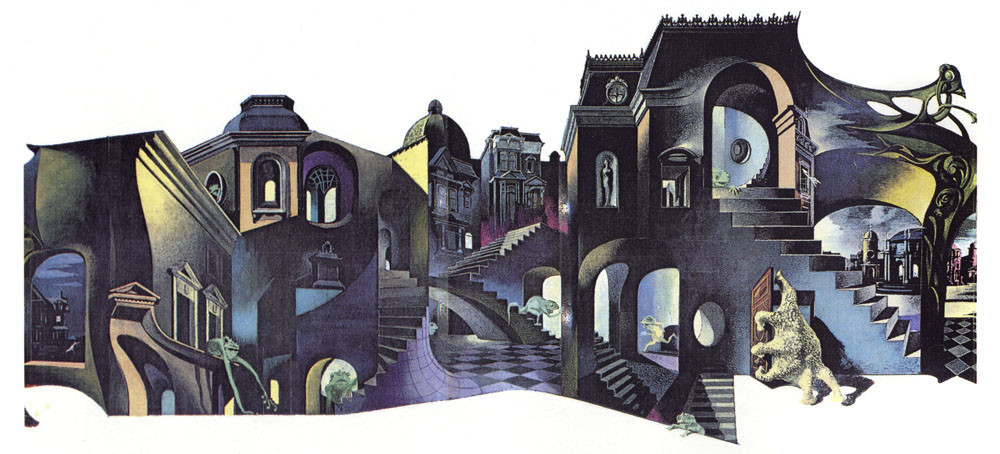
I mostri all’angolo della strada (The Monsters on the Street Corner, 1966).
Hence the attraction of the wraparound cover by Karel Thole for I mostri all’angolo della strada, a Lovecraft story collection with one of the few cover designs I’ve seen that attempts to communicate anything of the writer’s preoccupations with angled space. Thole was a very prolific Dutch artist, producing many covers for Italian publisher Mondadori, and painting covers for Mondadori’s SF magazine, Urania, for over 20 years. The first paintings of Cthulhu I saw were those by Thole (above) and Bruce Pennington in Franz Rottensteiner’s The Fantasy Book (1978); Thole’s monster doesn’t have the required scale (and Pennington’s cover is a favourite) but for me it still carries a Proustian charge. The art for I mostri all’angolo della strada was featured in The Cosmical Horror of HP Lovecraft (1991), one of the first attempts to anthologise Lovecraft-related illustration past and present. The book contains many excellent reprints together with dubious material from European comics. Thole’s street scene—a curious combination of Escher, De Chirico and Art Nouveau—stood out among page after page of slavering abominations. I’d like to see more art that follows this direction; less of the monsters, more of the monstrous architecture.
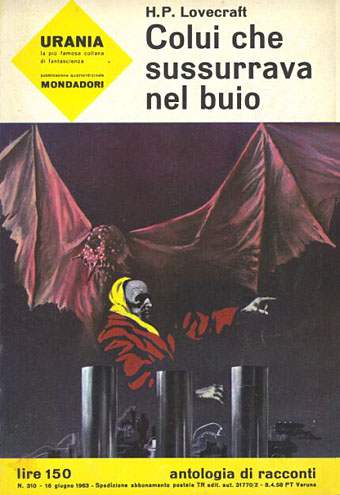
Colui che sussurrava nel buio (The Whisperer in Darkness, 1963).