Weekend links 817

paolozzi.jpg

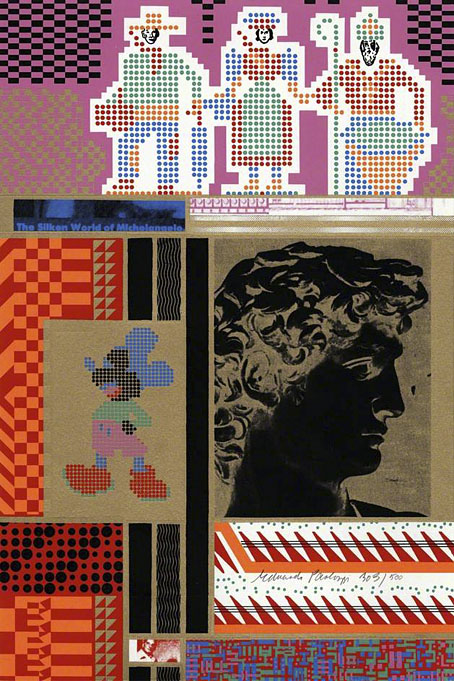
The Silken World of Michelangelo (1967) by Eduardo Paolozzi.

• “By the late 19th century, representing time as a line was not just widespread—it was natural. Like today, it would have been hard to imagine how else we could represent time. And this affected how people understood the world.” Emily Thomas on the evolution of our thinking about the nature of time.

• At Green Arrow Radio: Bill Laswell and the Cosmic Trip, in which the indefatigable performer/producer talks about his career and Cosmic Trip, a new album by saxophonist Sam Morrison.

• At Public Domain Review: Snail Homes, Bog Bodies, and Mechanical Flies: Robert Testard’s Illustrations for Les secretz de l’histoire naturelle (ca. 1485).

• Among the new titles at Standard Ebooks, the home of free, high-quality, public-domain texts: Continental Op Stories by Dashiell Hammett.

• The winter catalogue of lots for the After Dark: Gay Art and Culture online auction. Homoerotic art, photos, historic porn, etc.

• New music: The Third Mind. A Sonic Tribute to the Dreamachine by Various Artists.

• Mix of the week: DreamScenes – February 2026 at Ambientblog.

A Conversation with Tarotplane by AJ Kaufmann.

• RIP Bud Cort.

Timewhys (1971) by Tonto’s Expanding Head Band | Time Be Time (1990) by Ginger Baker | Time Scale (2009) by Belbury Poly

Weekend links 739

burr.jpg

New Moon and Evening Star (c.1932) by George Elbert Burr.

• If you’re eager to see a physical copy of the forthcoming Moon and Serpent Bumper Book of Magic then Alan Moore World has screengrabs from a teaser video posted by US distributors Penguin/Random House to the social-media pit formerly known as Twitter. I’ve yet to receive a copy myself so I’m pleased to see the foil overlay on the cover looking as eye-catching as I’d hoped. Library Journal gave the book a starred review earlier this month.

• At Bandcamp: George Grella profiles Material, Bill Laswell’s long-running polycultural ensemble. Two of the albums on this list are all-time favourites of mine.

• Mix of the week: DreamScenes – August 2024 at AmbientBlog.

The Book of Sand by Jorge Luis Borges: A Hypertext.

• At Unquiet Things: Owls, Bats, and Moths in Art.

• At Dennis Cooper’s: Varvara Stepanova Day.

Jon Hopkins’ favourite music.

• RIP Gena Rowlands.

Desert Sands (1958) by Eugene LaMarr and His Magic Accordion | Grains Of Sand (1989) by Opal | Infinite Sands (1997) by Robert Henke

Weekend links 715

hugo.jpg

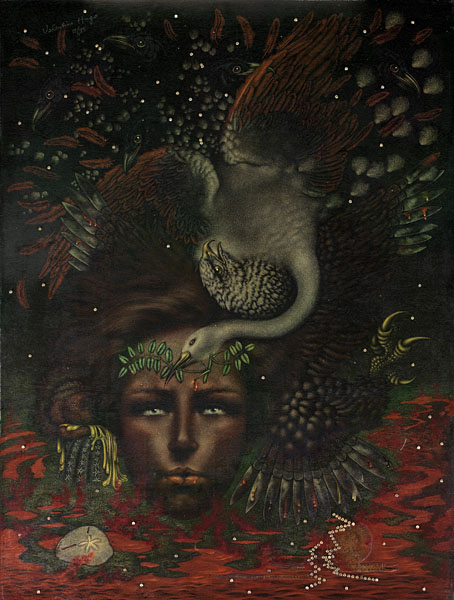
Portrait d’Arthur Rimbaud (1933) by Valentine Hugo.

• Among the new titles at Standard Ebooks, the home of free, high-quality, public-domain texts: At the Mountains of Madness by HP Lovecraft.

Retro-Forteana is “Andrew May’s Forteana Blog, focusing on the weirder fringes of history (and other old-fashioned stuff)”.

• Mixes of the week Bill Laswell Mix No. 7: The Return of Celluloid by Voice of Cassandre, and Isolatedmix 126 by Saphileaum.

• At Bajo el Signo de Libra: The second part of a look at photographs by Herbert List of Italians and Italian life.

• New music: Worship: Bernard Herrmann Tribute by The Lord, and Cursory Asperses by Celer.

• At Wormwoodiana: Mark Valentine on the joy of obscure journals.

• At Dennis Cooper’s: Paul Clipson Day.

Persher’s favourite music.

At The Mountains Of Madness (1968) by HP Lovecraft | Mountains Of The Moon (2002) by Jah Wobble And Temple Of Sound | Mountains Crave (2012) by Anna von Hausswolff

Weekend links 714

agar.jpg

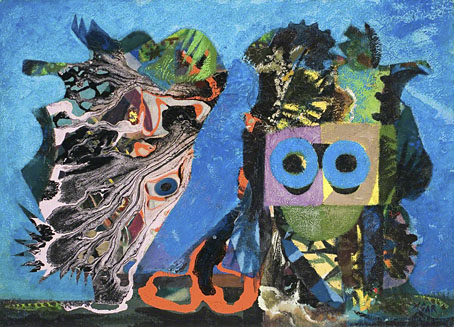
An Exceptional Occurrence (1950) by Eileen Agar.

• New music: The Endless Echo by Pye Corner Audio, coming soon from Ghost Box. PCA continue to fly the flag for the original Ghost Box mission of bringing various forms of weirdness to electronic music. The new album “draws inspiration from scientific and science-fictional notions about the nature of time and the idea that it may be entirely unreal”. Over at Bandcamp there’s Here by Stefano Guzzetti and Ian Hawgood.

• “Powell and Pressburger emerge from this film, more than ever, as sui generis: inventors of their own kind of film, gentleman amateurs of cinema in some ways…” Peter Bradshaw reviewing Martin Scorsese’s Made in England: The Films of Powell and Pressburger.

Velocity and Creation, a pair of short films by Vadim Sherbakov made with magnets, glitter and inks. The scores are too bombastic but I like the visuals.

Art is for increasing life. That, I believe, after all the other purposes receive their due, is really what it’s for—why we revere it, why we give our hearts to it. What do I mean by increasing life? How can we live more, given that we can’t live longer? Through attention and intensity. Being fully present to the world, and feeling without reservation: the two things that making art requires and that experiencing it involves.

William Deresiewicz on thirteen ways of looking at art

Modern Illustration is a project by illustrator Zara Picken, featuring print artefacts from her extensive personal collection.

• Mix of the week: Aquarium Drunkard presents Pulp Jazz: Twenty-First Century Groove Music. Great stuff.

• At Public Domain Review: Tales of the Catfish God: Earthquakes in Japanese Woodblock Prints.

• At The Quietus: Jonathan Meades interviews Saint Leonard. And vice versa.

• At Dennis Cooper’s: Michelangelo Antonioni Day.

• The Strange World of…Bill Laswell.

Creation (1971) by Arthur Brown’s Kingdom Come | Création Du Monde (1971) by Vangelis | Creation (1977) by Tangerine Dream

Weekend links 706

jardine.jpg

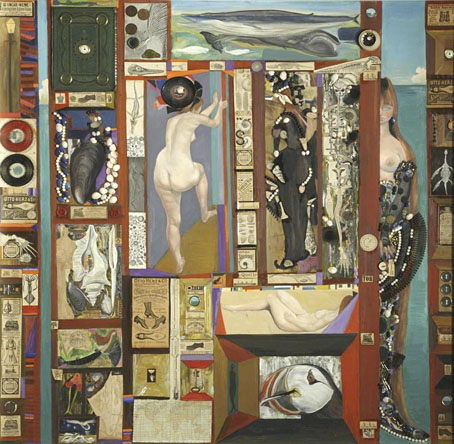
Sea Change (c.1966) by George Wallace Jardine.

A paucity of links this week thanks to the Xmas blight which reduced my RSS feed to a wasteland of no activity at all or too many of those lazy listicles devoted to “our top ten things of the year”. There was, however, this from Simon Reynolds:

I miss the inter-blog chatter of the 2000s, but in truth, connectivity was only ever part of the appeal. I’d do this even if no one read it. Blogging, for me, is the perfect format. No restrictions when it comes to length or brevity: a post can be a considered and meticulously composed 3,000-word essay, or a spurted splat of speculation or whimsy. No rules about structure or consistency of tone. A blogpost can be half-baked and barely proved: I feel zero responsibility to “do my research” before pontificating. Purely for my own pleasure, I do often go deep. But it’s nearer the truth to say that some posts are outcomes of rambles across the archives of the internet, byproducts of the odd information trawled up and the lateral connections created.

Setting aside the inter-blog conversation, which I was never very interested in, Reynolds articulates precisely why I still enjoy posting things here. I also agree with his comments about the psychological constraints that doing the same for Substack or similar would impose: a paying readership creates responsibilities that would make the whole thing feel like another form of work rather than play. To Reynolds’ comments I’d add that I also enjoy having a tiny area of the internet over which I exercise complete control. If I fall out with my webhost, as I did in the summer, I can move the entire site to a new location.

Reynolds expanded on his article at his regular forum, blissblog, where he examines the current state of the thing that people used to call the blogosphere. My thanks to Simon for including this place in his list of diehard operatives. I can’t say I’ve noticed the younger generations picking up the habit (then again, I haven’t really been looking…) but the small percentage of any generation who want to do more than simply follow the herd will always find outlets for their interests. And the tools for doing this have never gone away. This particular medium may not suit most people, but for those who can accommodate themselves to the format it’s a better way to spend your time than marinating your soul in the corrosive sump of social media.

• Elsewhere: Among other things, 2024 will be the year that the earliest manifestation of Walt Disney’s ubiquitous rodent enters the public domain in the USA. Jennifer Jenkins lists some of the more prominent books, films, songs, etc that will be following suit.

• At Open Culture: The Beautiful Anarchy of the Earliest Animated Cartoons.

• At Dennis Cooper’s: Another day for Shirley Clarke.

Suspended Animation (1980) by Bernard Szajner | Animation (1983) by Cabaret Voltaire | Reanimation (1996) by Bill Laswell feat. DJ Rob Swift