Weekend links 636

frey.jpg

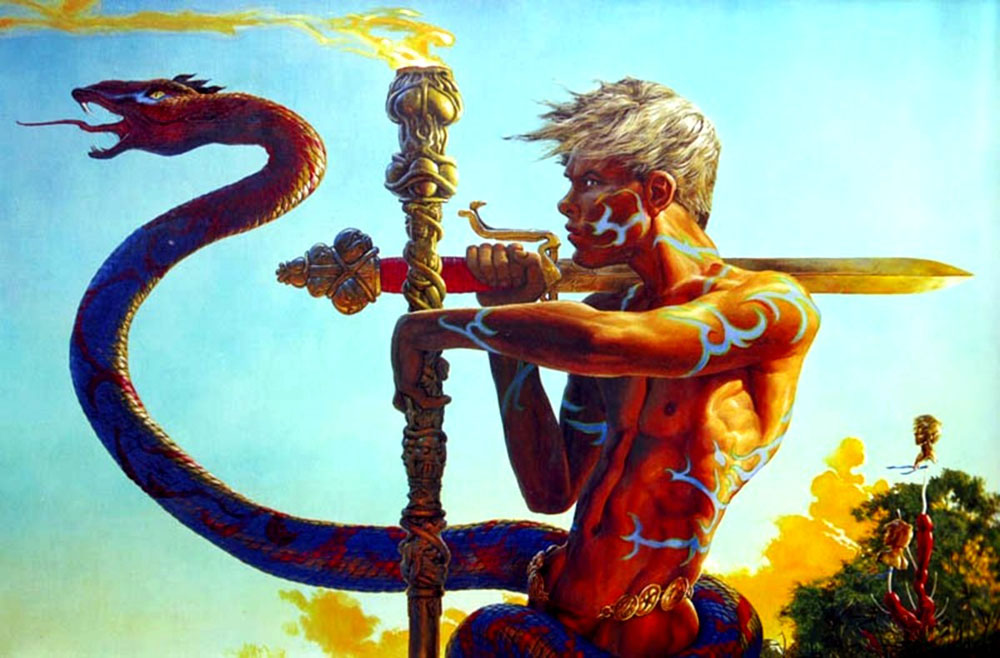
Untitled painting by Oliver Frey based on The Wild Boys by William Burroughs.

• RIP Oliver Frey, a prolific illustrator and comic artist whose art for UK computer magazines in the 1980s made a lasting impression on a generation of games players, hence this obituary at Eurogamer. On this site, however, Frey is also remembered for his artistic alter-ego “Zack” (previously), an equally prolific creator of comic-strip erotica for Britain’s few gay-porn mags at a time when any such material being sold in the UK ran the risk of police seizure or even a court appearance. For a while, Zack’s Rogue and Tom of Finland’s Kake were rare examples of assertive, unashamedly lustful gay characters with strips of their own, which makes Oliver Frey something of a pioneer, and a daring one at that.

• “The title characters were a trio of boys named Jupiter Jones, Pete Crenshaw, and Bob Andrews, who live in the fictional California town of Rocky Beach, not far from Hollywood, on the coast…” Colin Fleming on the satisfyingly spooky adventures of Robert Arthur Jr’s Three Investigators. I was never as obsessive as Fleming was but I read all of the books about the trio that I could find in our local library.

• “Though its inimitable visual style has safeguarded it as a quintessential cult film most at home behind a shroud of pot smoke, the influence of Koyaanisqatsi has been sweeping.” Josef Steen on 40 years of Godfrey Reggio’s Koyaanisqatsi.

• “Putting it simply, coincidences and curiosities and chance encounters happen when people go looking for zodiacs.” Mark Valentine on Britain’s terrestrial zodiacs.

• At Literary Hub: Marguerite Duras on writing the screenplay for Alain Resnais’s Hiroshima Mon Amour.

• New/old music: a reissue of Solar Maximum by Majeure.

• New music: Kerber Remixes by Yann Tiersen.

• At Dennis Cooper’s: Ingrid Caven Day.

• Threnody To The Victims Of Hiroshima (1959-61) by Krzysztof Penderecki | Memory Of Hiroshima (1973) by Stomu Yamash’ta | Hiroshima Mon Amour (1977) by Ultravox!
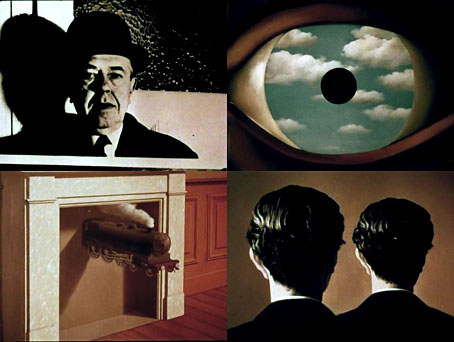
Magritte: The False Mirror

magritte2.jpg

Another short film about René Magritte’s paintings, The False Mirror was made three years after the artist’s death in 1970, a time when his work had started to receive widespread international attention. Prior to the 1960s Magritte wasn’t exactly unknown but it wasn’t until the arrival of Pop Art that his paintings began to be reappraised. The production credits for The False Mirror are surprising for such a short piece, the film being directed by art critic David Sylvester (whose book of interviews with Francis Bacon is essential), and photographed by Bruce Beresford, later to become a well-regarded film director. Among the voices reading from the artist’s statements is ELT Mesens, another Belgian artist and friend of Magritte’s whose presence in the later incarnation of the British Surrealist Group gave that small society some authentic gravitas. (George Melly talks about Mesens and the British Surrealists in this film.) The commentary runs over familiar ground: descriptions of the artist’s childhood encounter with a painter in a cemetery (also referred to in Magritte, ou la lecon de chose), and the details of his mother’s suicide (dramatised in David Wheatley’s film). I’d been wondering recently what Magritte might have made of the increasingly excessive prices being paid for his artworks. One of the comments here provides a possible answer when he says he’d be happy if people destroyed his paintings.

Previously on { feuilleton }
Magritte, ou la lecon de chose
René Magritte album covers
Monsieur René Magritte, a film by Adrian Maben
George Melly’s Memoirs of a Self-Confessed Surrealist
The Secret Life of Edward James
René Magritte by David Wheatley

Magritte, ou la lecon de chose

magritte.jpg

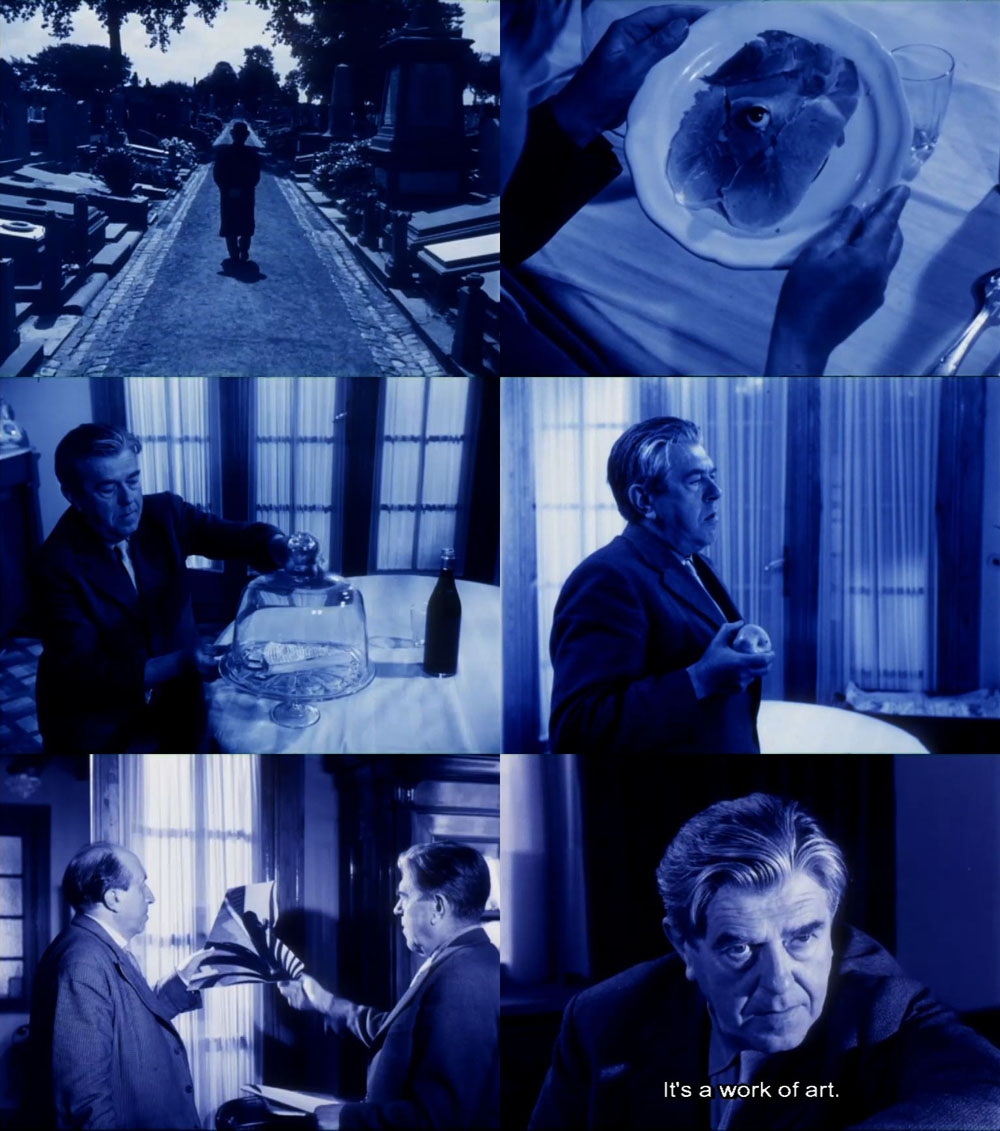
Good to find this one at last with English subtitles. Magritte, ou la lecon de chose is a short study of René Magritte’s paintings made in 1960 by Luc De Hersch. The title translates as “Magritte, or The Object Lesson”, and the film is of note for a few brief scenes in which the artist becomes a performer in order to communicate something of his aesthetic philosophy. We’re also shown a scene of Magritte and friends choosing a title for one of his paintings, while a voiceover provides further explication of the Magrittian view of reality. Given the access the director had to the artist, the film is frustratingly short but it serves as a reminder that there was a time when Magritte’s paintings seemed much more mysterious than they do today.

Previously on { feuilleton }
René Magritte album covers
Monsieur René Magritte, a film by Adrian Maben
George Melly’s Memoirs of a Self-Confessed Surrealist
The Secret Life of Edward James
René Magritte by David Wheatley

Weekend links 635

bubble.jpg

A close-up image of the surface of a soap bubble. The image reveals ‘lipid islands’ of soap floating on a very thin film of water. The film on which the soap floats is so thin that it does not interfere with the light hitting it, therefore allowing the light to pass through. This creates an appearance of a black abyss. Magnification x250.”

• Coming soon from Strange Attractor Press: Everything Keeps Dissolving, Conversations with Coil edited by Nick Soulsby. I helped out a little with this one so I’m looking forward to seeing it. And since the cult fervour around the group remains undiminished, anyone interested in buying a copy is advised to do so sooner rather than later.

• There are over 90 stories in The Complete Short Stories of JG Ballard (quantities vary according to edition) but few of them have been adapted into other media. The Drowned Giant is an exception, an animated short directed by Tim Miller.

• “You could spend your life exploring its dream logic without arriving at a definitive destination.” Anne Billson on the mysteries of Lucile Hadžihalilović’s Earwig.

• Meta-mix of the week: links to yearly mixes of favourite ambient releases by A Strangely Isolated Place.

• At Spoon & Tamago: Matchstick cookies keep the flame of tradition alive.

• At Dennis Cooper’s: George A. Romero Day.

Felicia Atkinson’s favourite music.

• RIP Wolfgang Petersen.

Das Boot: Titel (1981) by Klaus Doldinger | Martin (1983) by Soft Cell | Everything Keeps Dissolving (2000) by Coil

OM I, a film by Myron Ort

ort1.jpg

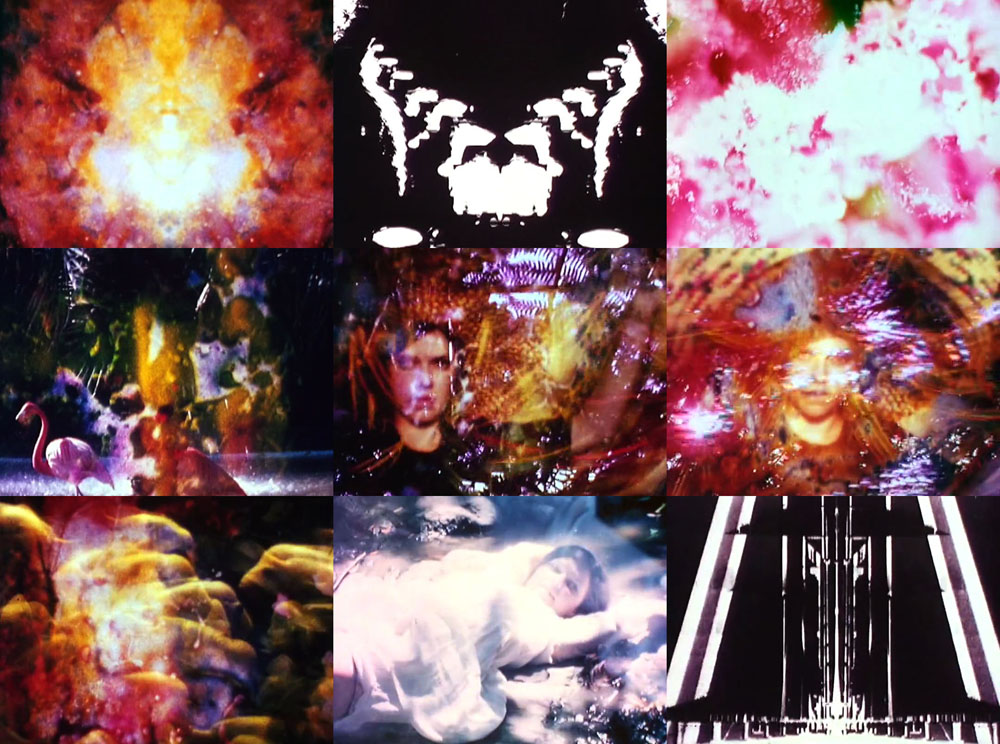
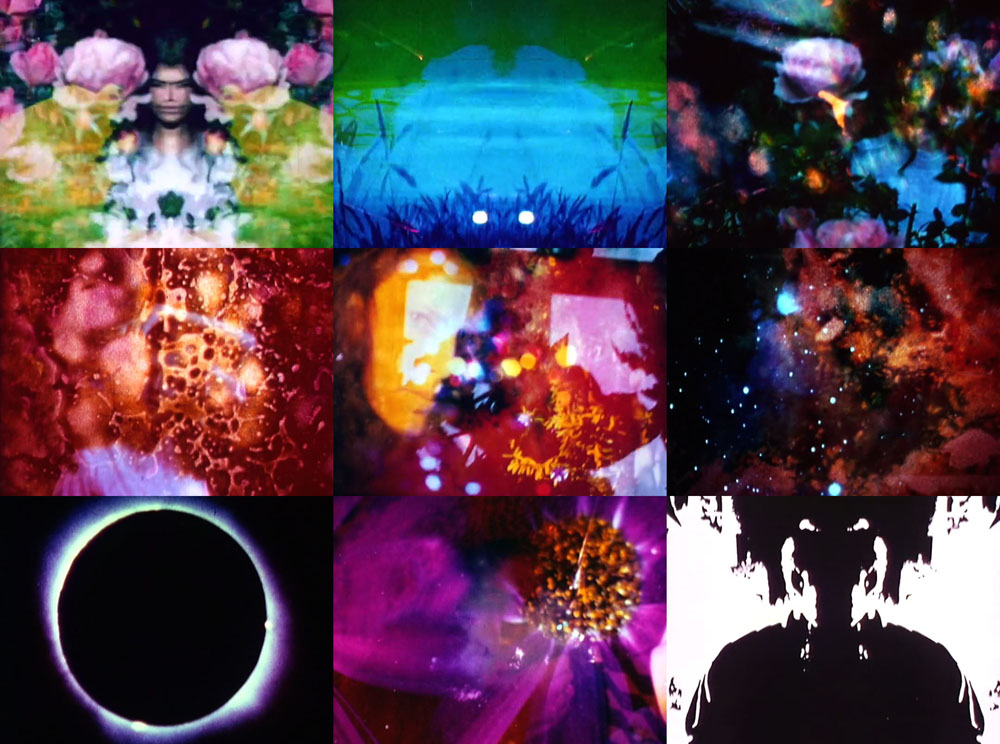
As should be evident from the stills, OM I is yet another example of psychedelic cinema, and a very good one at that. Myron Ort’s 20-minute silent film (add your own soundtrack) originates with experiments the director made in the late 60s and early 70s using hand-painted stock combined with optical printing.

ort2.jpg

The film isn’t wholly abstract—the raw material includes shots of people and animals, together with heavily processed military footage—but the processing creates a kaleidoscopic feel by mirroring many of the shots, one of those simple tricks that’s always effective. (For a more recent example of mirrored psychedelia, see the monochrome mushroom freakout in A Field in England.) There’s a lot more like this at Myron Ort’s Vimeo page including two sequels to OM I, and a related film Ommo, which runs hand-painted raw material through the optical printer to delirious effect.

Elsewhere on { feuilleton }
The abstract cinema archive