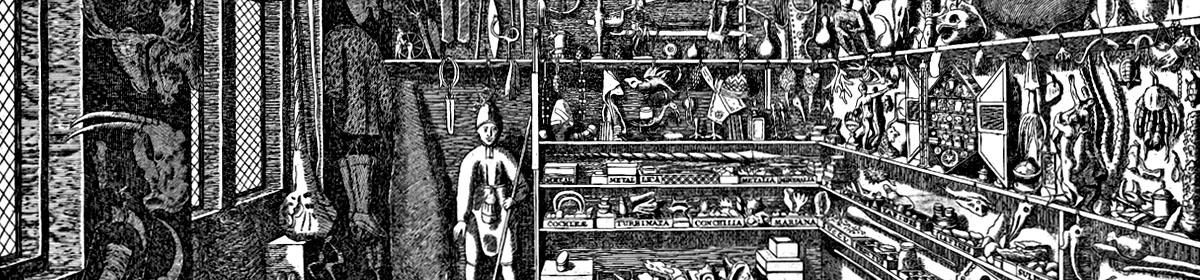
A temple to mystery and imagination
| The Large Hadron Collider.
Maldoror illustrated

Les Chants de Maldoror by Corominas (2007).
There seems to be no escaping from HP Lovecraft just now, the illustration above having been created for a PDF publication entitled CTHULHU, Cómics y relatos de ficción oscura, produced by these people. The Cthulhu-zine seems to be unavailable but you can see more of these splendid illustrations, based on Lautréamont’s Les Chants de Maldoror (1869), at Dorian Gray BD. The artist, Corominas, has an additional blog showcasing more commercial work.
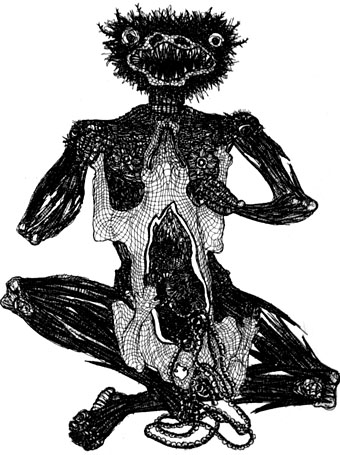
Les Chants de Maldoror by Jacques Houplain (1947).
Lautréamont’s delirious masterpiece isn’t exactly the easiest book to illustrate but the Corominas drawings certainly capture some of its ferocious energy. The Surrealists were big Maldoror enthusiasts, of course, and did much to establish Lautréamont’s current reputation. Salvador Dalí produced a series of engravings for a Skira edition in 1934 although his drawings look less like illustrations of the text than a rifling of the artist’s usual preoccupations. The picture above by Jacques Houplain is one of a series of twenty-seven engravings produced for a French edition in the 1940s. More recently, Jean Benoît created (among other things) a Maldororian dog and there’s even been an attempt at a comic-strip adaptation from Hernandez Palacios. On the whole I prefer the Corominas pictures but then I’m biased towards that style of drawing which owes something to all the comic artists and illustrators influenced by Franklin Booth.
Elsewhere on { feuilleton }
• The illustrators archive
• The etching and engraving archive
Previously on { feuilleton }
• Franklin Booth’s Flying Islands
• Carlos Schwabe’s Fleurs du Mal
• The art of Jean Benoît
New things for July
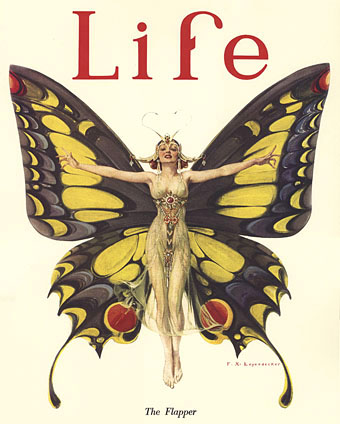
The Flapper by Frank X Leyendecker, Life magazine (1922).
• 2008 is turning out to be a great year for Lovecraft aficionados. As well as the stupendous Lovecraft Retrospective: Artists Inspired by HP Lovecraft, we’re also awaiting Frank Woodford’s feature length documentary, Lovecraft: Fear of the Unknown. I’m lucky to have my work included in Frank’s film which is easily the best documentary to date concerning the life and work of HPL. Among the interviewees are Neil Gaiman, John Carpenter, Guillermo Del Toro, Caitlin R Kiernan, Peter Straub, Ramsey Campbell and Lovecraft scholar ST Joshi. The film will receive its first (?) public screening later this month at the San Diego Comic Con:
Thursday, July 24
8:00–9:45pm
Room 26AB
• Over the weekend Arthur Magazine cleared the $20,000 it needed to keep running before the three-day deadline elapsed. A stunning piece of fund-raising which shows how much people value Jay and company’s efforts.
• The gorgeous cover above is the work of Frank X Leyendecker (1876–1924), brother of the more well-known (and gay) Joseph C Leyendecker. Makes me think I should make a post of Butterfly Women if only as an excuse to track down more pictures of Loie Fuller.
• Last but not least: happy birthday Lorraine!
Rene Beauclair
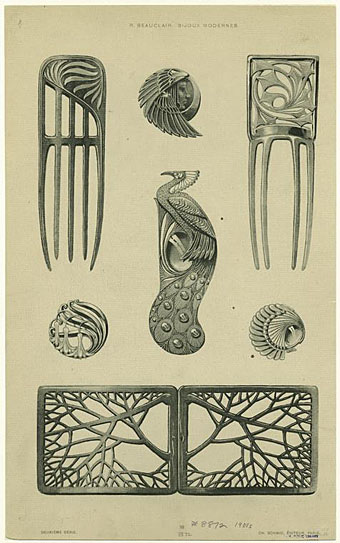
Bijoux modernes (c. 1900) from a series of Art Nouveau designs by Rene Beauclair. As usual the peacock caught my attention on this page. There’s more by Beauclair at the NYPL Digital Gallery
Previously on { feuilleton }
• Elizabetes Iela 10b, Riga
• The Divine Sarah
• Whistler’s Peacock Room
• Lalique’s dragonflies
• Lucien Gaillard
The recurrent pose 19

A Flandrinesque photo from this deviantART user which also happens to be entitled Flandrin, hence the close correspondence to the original.
Elsewhere on { feuilleton }
• The recurrent pose archive