On the silver disc

zulawski.jpg

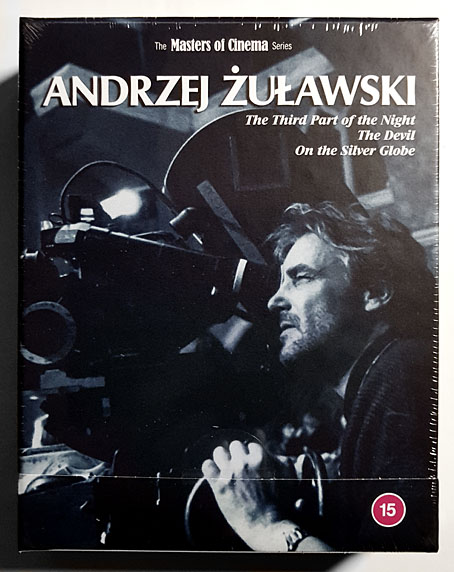
In today’s post…finally. I ordered this at the end of February but production problems delayed the May release so it’s taken this long to make its way into the world. It’s worth the wait, of course, these films have been difficult to see for years, although the recent resurrection of On the Silver Globe has given the film a revitalised existence in bootleg circles. Zulawski’s unfinished science-fiction epic is the main attraction here—most of the substantial extras are devoted to it—but I’m looking forward to seeing The Devil again after only having watched it as a low-grade digital copy.

An uncompromising visionary and a true maverick of European cinema, the Masters of Cinema Series is proud to present three films by Andrzej Zulawski, all making their UK debuts on Blu-ray from definitive restorations.

Rich with multilayered symbolism and apocalyptic imagery, The Third Part of the Night is Zulawski’s highly influential debut feature film. After his whole family is slaughtered during the Nazi-occupation of Poland, Michal (Leszek Teleszynski) decides to join the resistance but descends into madness after encountering a doppelgänger of his murdered wife.

The Devil is a violent tale of Satanic seduction during the Prussian invasion of Poland in the 17th century, which proved so controversial upon release that it was banned for 16 years.

And finally, On the Silver Globe, Zulawski’s masterpiece about a team of astronauts who land on a desolate planet and start a new society. When filming was 80% complete, the Polish government ordered the production to be shut down and all the negatives be destroyed. Miraculously, the original film reels were preserved and ten years later the film was presented at the Cannes Film Festival to great acclaim.

If any of this sounds interesting then I also recommend Zulawski’s fourth feature, Possession. The less said about that one, the better. It’s a wild ride.
Ian Miller album covers

miller02.jpg

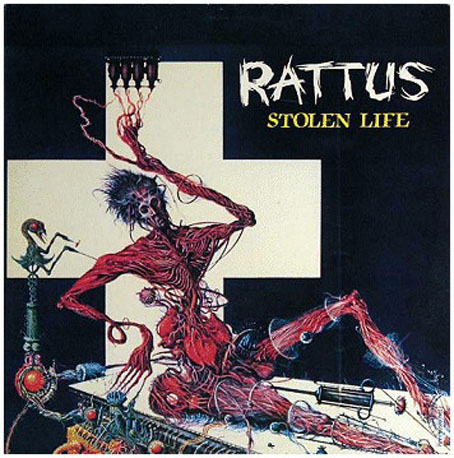
Stolen Life (1988) by Rattus.

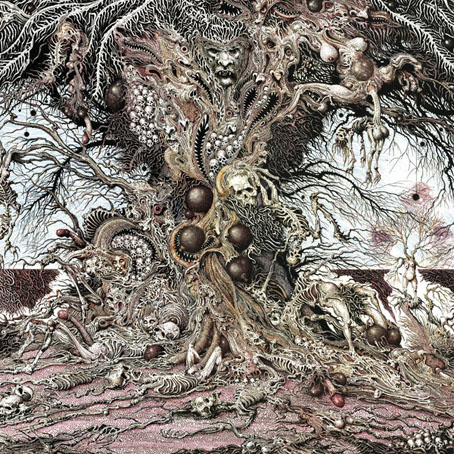
Continuing an occasional series about artists or designers whose work has appeared on record sleeves. Ian Miller’s career, which dates back to the early 1970s, has encompassed book-cover illustration, art for magazines and role-playing games, also the occasional film design. His credits in the music world, however, are limited to this handful of covers plus a few interiors, most of them for punk bands or metal outfits of one type or another. I still prefer CDs for my music listening but the 12-inch vinyl sleeve has always been the best showcase for cover art, especially the hyper-detailed renderings that are Miller’s speciality.

miller04.jpg

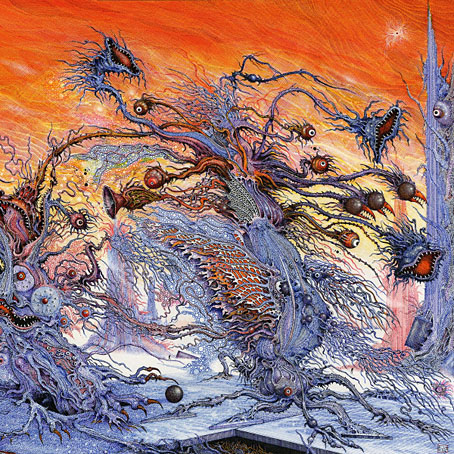
Cosmovore (2018) by Ulthar.

Lovecraftian metal band Ulthar seem to have adopted Miller recently as their regular cover artist. Their Cosmovore album uses a third (?) version of Miller’s cover for the 1974 Panther Mountains of Madness paperback. (See The Art of Ian Miller for the second version.) The original is still one of my favourite Lovecraft illustrations of all, not least for the way he turns one of the relatively small and placid Elder Things into a towering kaiju—the scale can be gauged by the tiny human figures in the background—battling what appears to be an equally gigantic and frenzied shoggoth. Or maybe they’re both shoggoths since these are shape-shifting creatures? I’ve never been sure, but whatever they may be, they’re more than a match for the frenzy unleashed at the end of Lovecraft’s story.

miller03.jpg

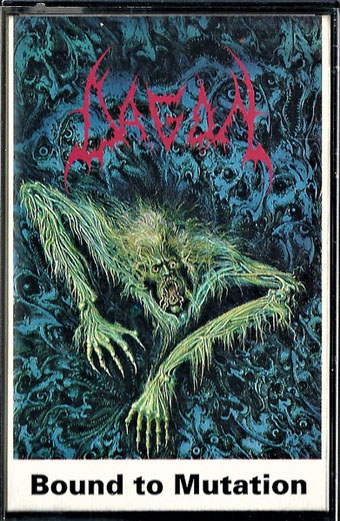
Bound To Mutation (1991) by Dagon.

miller01.jpg

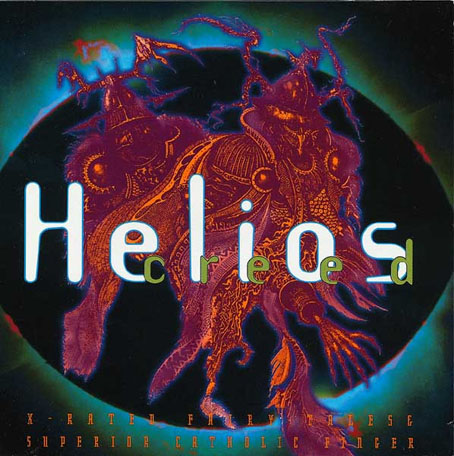
X-Rated Fairy Tales / Superior Catholic finger (1994) by Helios Creed.

A CD reissue of two Creed albums on Cleopatra Records. This one isn’t listed on Discogs because Miller receives no art credit.

miller05.jpg

Providence (2020) by Ulthar.

Continue reading “Ian Miller album covers”

Twilight, a film by György Fehér

twilight1.jpg

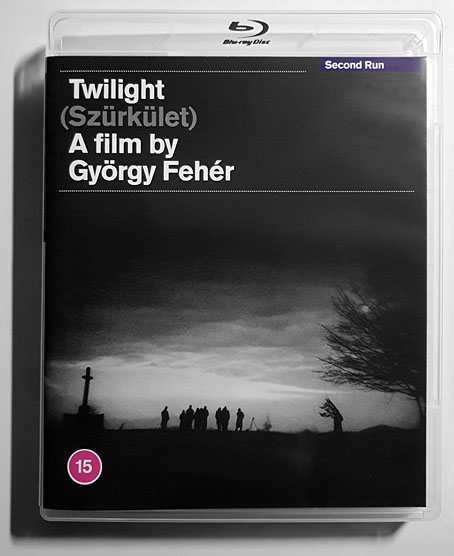
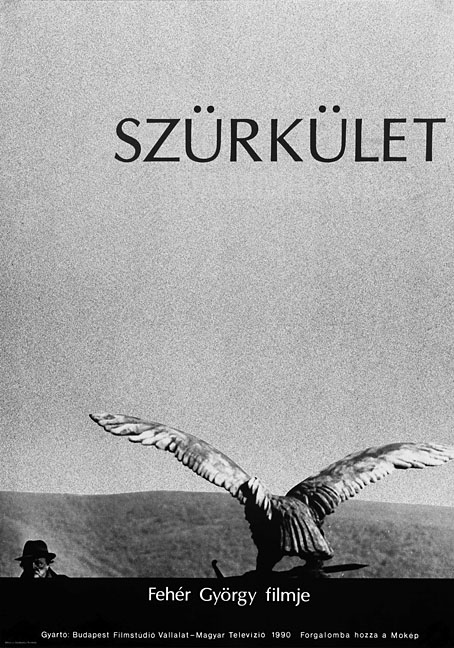
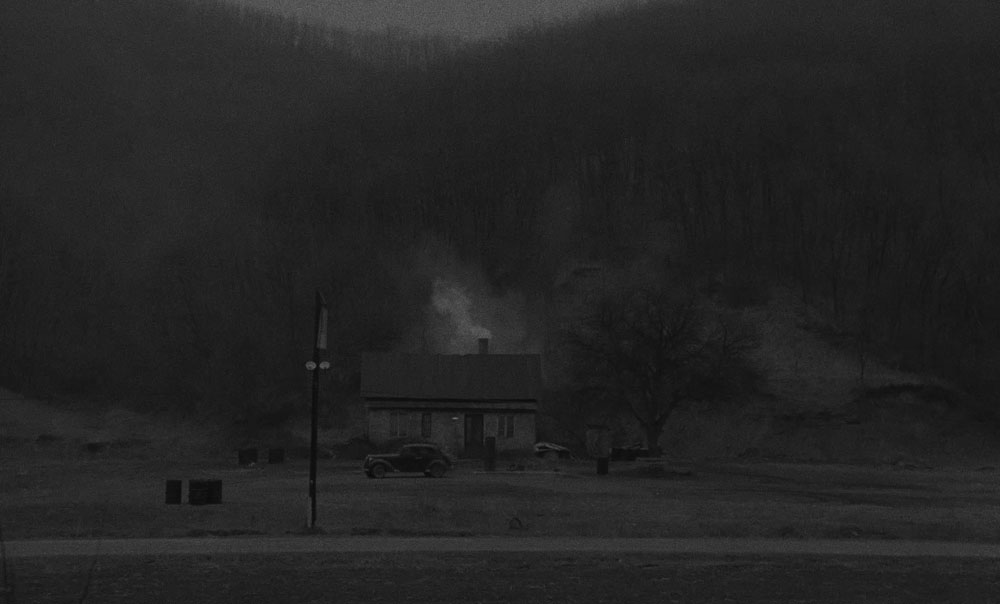
There’s a Thomas Ligotti story—you’ll have to forgive my not recalling the title—in which the world is suffused in an inexplicable and persistent twilight, a condition that you see manifested for real in this remarkable film by György Fehér. Twilight was released in 1990 but for a long time hasn’t been easy to see. Second Run announced their region-free blu-ray edition a couple of months ago, another film which, like Son of the White Mare, is a restoration presented by the National Film Institute of Hungary. The new disc arrives with filmed appreciations by the Quay Brothers, Peter Strickland and others. Mention in the publicity of the Quays, Strickland and Béla Tarr, who the film credits as a consultant, was enough to make me order this without knowing anything further.

twilight2.jpg

A seasoned detective investigates a series of child murders, succumbing to an all-consuming and tragic obsession with the case, finding empty solace in his quest for vengeance. What emerges is not a crime story, but a harrowing venture through the darkness of the human soul.

Twilight unfolds with breathtaking cinematography and haunting sound design, allowing the mystery to emerge in tantalisingly atmospheric and meditative fashion.

A police procedural, then, but not one like any you’ve seen before. The narrative is reduced to a skeletal trace, subsumed, like Ligotti’s world, by the twilight atmosphere. Tarr’s films are an obvious reference here; Fehér’s investigation takes place in the same misty, rain-sodden rural nowhere as Sátántangó (which Fehér helped produce), and shares with Tarr’s epic a similar approach to shot duration and camera movement. Fehér was a cinematographer before he became a director, so the shots may be long but they’re also mesmerising and perfectly choreographed. The film is placeless and also rather timeless, in that it’s evidently set in the past but the antique quality might equally be the product of an isolated backwater. All the cars and phones and typewriters look old, while the men wear big coats and big hats; the atmosphere isn’t so much film noir as film gris. (Fehér followed Twilight with an adaptation of The Postman Always Rings Twice which I now have to see.)

twilight3.jpg

There’s a lot more I could say about this but I hadn’t really intended to write a review. I ought to note, however, the three musical cues which sustain the sombre visuals, and which repeat throughout: the opening chords from Béla Bartók’s Bluebeard’s Castle; the opening chords of Brüder Des Shattens—Sohne Des Lichts by Popol Vu, which are slowed and muted to create a Thomas Köner-like drone; and (very surprisingly) the last minute or so of Hello Earth by Kate Bush, which seems to have been used mainly for the song’s borrowing of Tsintskaro, a Georgian folk song which most people know either from The Hounds Of Love or from its earlier appearance in the plague scenes in Werner Herzog’s Nosferatu. I recognised the Bush track immediately, and was a little disconcerted at first, but the music is as muted as the other pieces, and subtly looped to create a refrain which contrasts with Bartók’s ominous overture, something we may take as a leitmotif for the murdered girls.

As I was saying only a couple of weeks ago, “it’s a big cinematic world out there, and ‘world cinema’ is more than just a few shelves in an entertainment store”. It is indeed. Consider this Exhibit A.

Previously on { feuilleton }
The Cremator by Juraj Herz

Weekend links 686

bickus.jpg

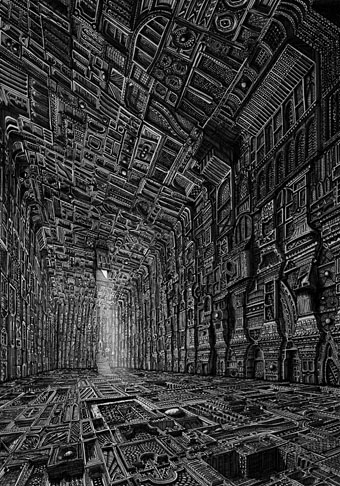
The Great Lab (2020); speculative architecture by Gytis Bickus. “This room is where the majority of the hallucinogenic substances are archived, within the walls & floors. It seems as though the architecture itself is being affected by the hallucinogenic substances stored within its fabric.”

• “They ran the recording through a vocoder, so it sounded staticky, like a voice infused with white noise, and put it at the end of the song. Then they went home.” Mark Dent on Change The Beat by Beside (aka Bee-side or Beeside), a song produced by Bill Laswell & Michael Beinhorn that includes one of the most sampled vocal lines in hip-hop. A great piece of audio-archaeology: I knew the sample but had no idea this song was its source. I only got to hear the Change The Beat very recently when I found a copy of Materialism, a collection of early Laswell productions, in a charity shop.

• At Unquiet Things: Artist, Chemist, Goofball: Catching Up With Tyler Thrasher.

• DJ Food looks at psychedelic posters created for London’s Middle Earth club.

His last commissioned work for Radio Berlin was a fantastical play he had composed himself. The transcript, titled “Lichtenberg: A Cross-Section,” ranks among the strangest things that he ever wrote. Beings who live on the moon are charged with the task of investigating the career of Georg Christoph Lichtenberg, a prominent physicist of the German Enlightenment. The moon beings have uncanny names—Labu, Quikko, Sofanti, and Peka—and they convene as the Moon Committee for Earth Research, which deploys odd contraptions for its work, each of them “easier to use than a coffee grinder.” There is a “Spectrophone,” which permits them to hear and see everything that happens on Earth; a “Parlamonium” that translates human speech into music; and an “Oneiroscope” that allows the researchers to observe human dreams. With the aid of these devices, the moon beings seek to understand why humans are so afflicted with misery. Their investigations finally reach the tentative conclusion that even if humans are unhappy, “perhaps it is their unhappiness that allows them to advance.” To honour the scientific achievements of Herr Lichtenberg, they conclude by naming a crater in his honour, a crater from which shines a “magical light that illumines the millennium.”

Peter E. Gordon on Walter Benjamin’s radio years

• At Dennis Cooper’s: Spotlight on…Brigid Brophy In Transit (1968).

15 lighthouses from the Smithsonian Magazine Photo Contest.

Sathnam Sanghera’s favourite songs.

• RIP William Friedkin and Jamie Reid.

• New music: The Long Song by Drøne.

Lighthouse (1978) by Tim Blake | Walk To The Lighthouse (1980) by John Carpenter | The Lighthouse (1994) by Hector Zazou ft. Siouxsie

HP Lovecraft: Tales of Horror

hpl.jpg

Cover design by Jo Obaroswki.

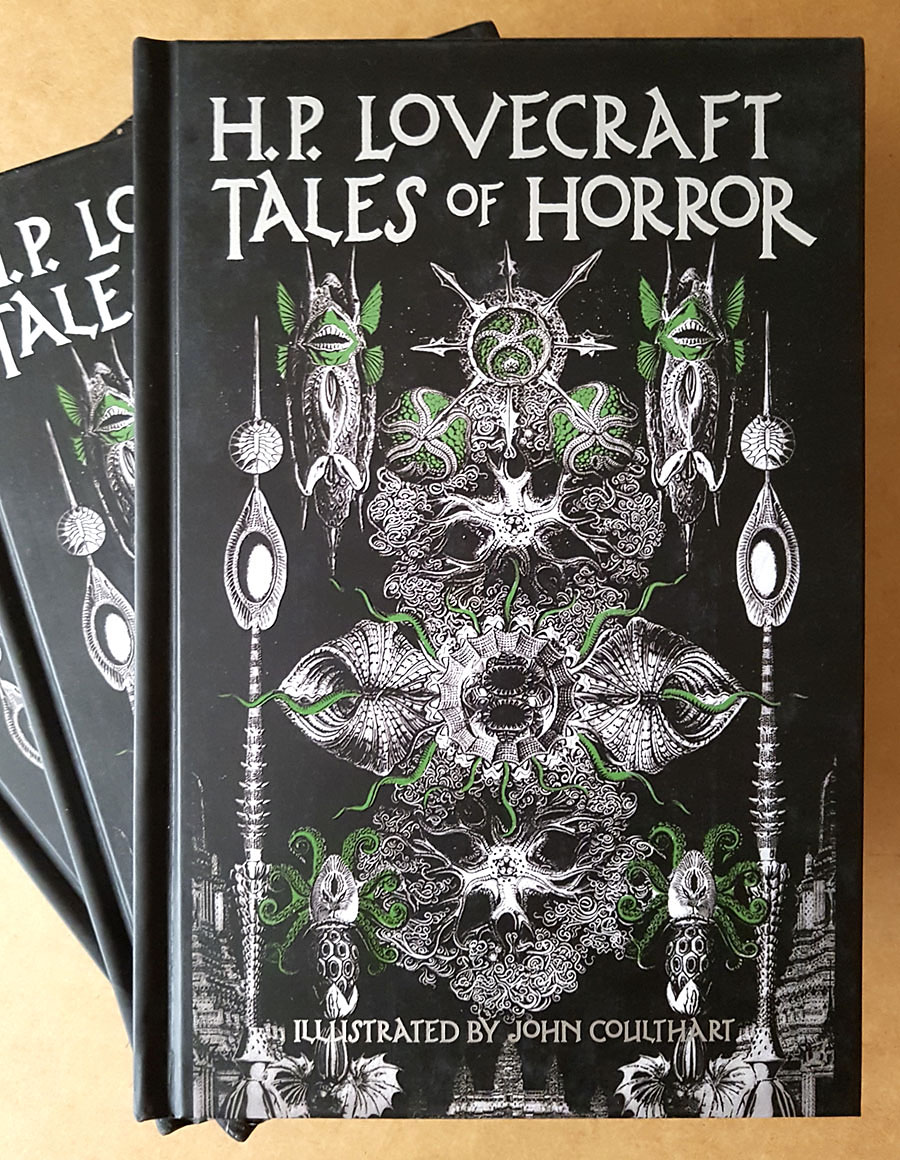
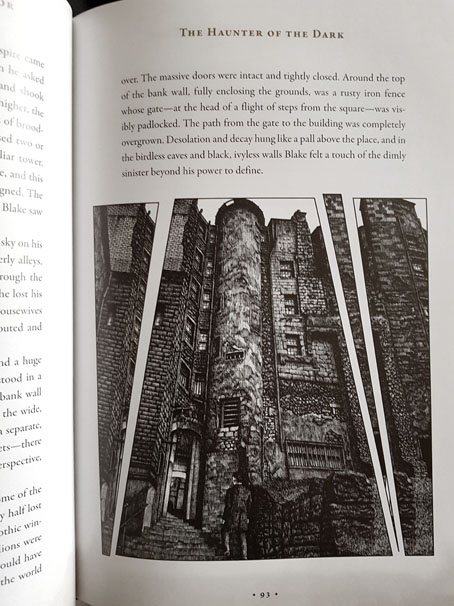
More Lovecraftiana (for a change). Today’s mail included the surprise delivery of these books, a very late arrival since the book was published over a year ago. Well better late than never, I was very pleased to be involved with this one which has been published by Fall River Press, an imprint of Barnes & Noble. The plan was to reprint a small number of Lovecraft stories on colour pages accompanied by my artwork. So the book is also a reprint of many of my earlier Lovecraftian drawings, from the comic strips to more recent illustrations, with the pictures carefully cropped and, in some places, reworked a little to match the stories.

The contents:
• Introduction by Stefan Dziemianowicz
The Call of Cthulhu
The Colour Out of Space
The Haunter of the Dark
The Whisperer in Darkness
The Dunwich Horror
The Thing on the Doorstep

hpl2.jpg

The end result is very impressive. The book is solidly bound in hard covers with the cover art featuring metallic silver ink and gloss highlights. The interior design is by Gavin Motnyk who chopped up and tinted my drawings (with my approval) in a very effective manner. Many of the panels at the end of my adaptation of The Call of Cthulhu were presented with this kind of fragmentation so I was happy to see this extended to other drawings. In addition to presenting the artwork in a new way it also helped compensate for some of the shortcomings in drawings that date back to 1986. Not everything is this old, however. I sent Gavin a copy of my redrawn R’lyeh panorama which has been printed across the endpapers.

For now this is the most substantial collection of my Lovecraft artwork in print. And since it’s being distributed by Barnes & Noble it’s also relatively easy to find (although that title, Tales of Horror, is very similar to other collections). Fall River Press will be publishing another classic horror volume featuring my illustrations towards the end of the year. More about this later.

Elsewhere on { feuilleton }
The Lovecraft archive