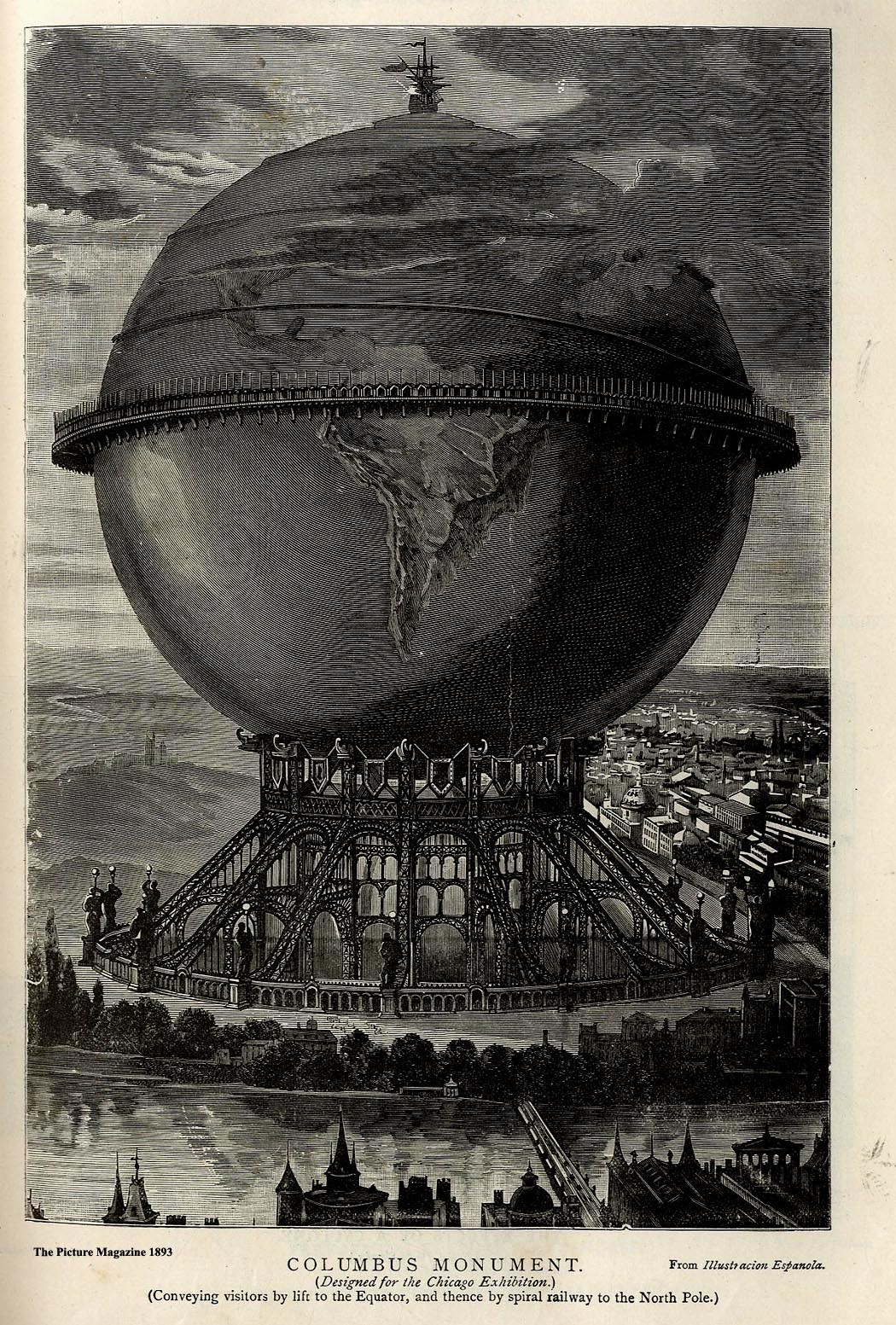
The Columbus Monument

columbus.jpg

You can always rely on expositions and world’s fairs for architectural extravagance. This monster globe was an unrealised proposition for the 1893 World’s Columbian Exposition in Chicago and would have required potential visitors to be conveyed “by lift to the Equator, and thence by spiral railway to the North Pole.” What Columbus’s ship is doing perched at the top of the world is anyone’s guess. I’ve not been able to discover who was responsible for this; Erik Larson’s book about the fair (and the career of serial killer HH Holmes), The Devil in the White City, doesn’t mention the monument in its index.

Previously on { feuilleton }
Exposition Universelle publications
Exposition cornucopia
Return to the Exposition Universelle
The Palais Lumineux
Louis Bonnier’s exposition dreams
Exposition Universelle, 1900
The Palais du Trocadéro
The Evanescent City

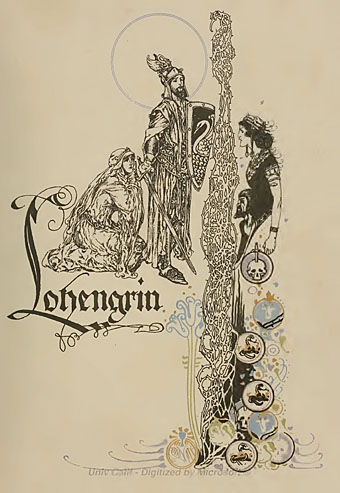
Willy Pogány’s Lohengrin

lohengrin1.jpg

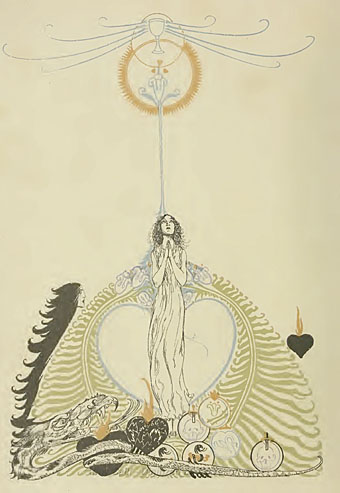
Not sure how I managed to miss this at the Internet Archive, a copy of Pogány’s lavishly illustrated rendition of Wagner’s Lohengrin from 1913. This followed two earlier Wagner adaptations for Tannhaüser (1911) and Parsifal (1912). Golden Age Comic Book Stories has scans of the other two equally stunning volumes.

lohengrin2.jpg

Elsewhere on { feuilleton }
The illustrators archive

Previously on { feuilleton }
Willy Pogány’s Parsifal

Polish posters: Freedom on the Fence

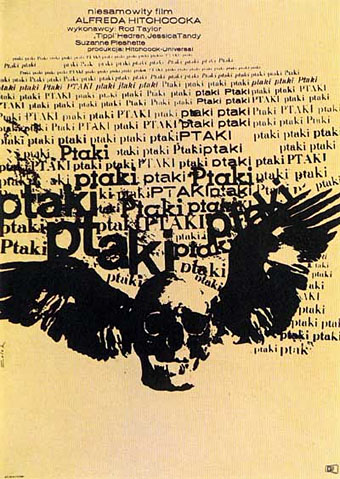
ptaki.jpg

Poster for Alfred Hitchcock’s The Birds, designed by Bronislaw Zelek (1965).

Freedom on the Fence is a 40-minute documentary film by Andrea Marks about the history of the Polish poster which includes a look at the many unique cinema and theatre designs produced in the 1960s and ’70s. Marks spent ten years working on this short film, interviewing many of the artists responsible for designs such as the one above. While searching around for links I came across a brief interview with {feuilleton} favourite Franciszek Starowieyski who died in February.

As to the current state of the art form in Poland, Marks has this unsurprising but still dispiriting note:

The Polish government no longer finances most cultural events; theatres cannot afford to publish artistic posters, and the idea of a film as an excuse to make a poster has vanished. Ironically, although the climate of Communism was a good ground for creating posters, the freedom of a free market society has resulted in a more restrictive climate for the creation of powerful posters. The art form is forever changed. A few concerned collectors and publishers, such as Krzysztof Dydo and Edmund Lewandowski, are attempting to keep the art form alive by commissioning and publishing new works, but their efforts alone will not overcome the situation. It is hoped that an outside appreciation of pre-1980s poster design history in Poland will ultimately help to encourage the government and private interests to commission more posters from Polish artists.

Freedom on the Fence is due to be released on DVD later this year.

An interview with the director

Previously on { feuilleton }
The Robing of The Birds
Franciszek Starowieyski, 1930–2009
Czech film posters