Three stages of Icarus

icarus1.jpg

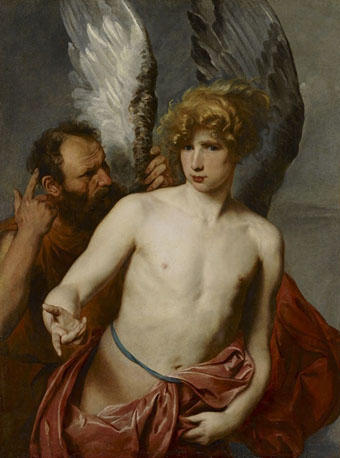
Daedalus and Icarus (1615–1625) by Anthony van Dyck.

The story of the doomed youth as seen via the few Icarus works at the Google Art Project. Brueghel’s famous painting is absent, unfortunately, so I won’t quote the equally famous lines by Auden either. Van Dyck gives us a golden-haired twink that Auden might approve of although I seem to recall the poet preferred rougher trade. No indication as to how those wings are supposed to function when they don’t seem to be attached to anything. The father points ominously skyward while the boy already knows where he’s headed.

icarus2.jpg

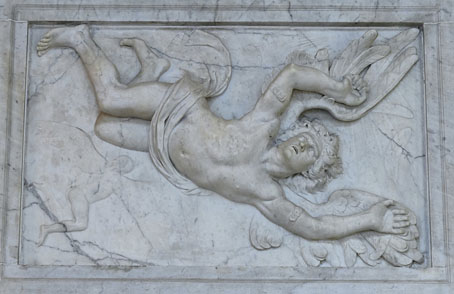
Icarus (1655) by Artus Quellinus.

Artus Quellinus was a Flemish sculptor whose work is a deliberate harking back to Classical antecedents.

icarus3.jpg

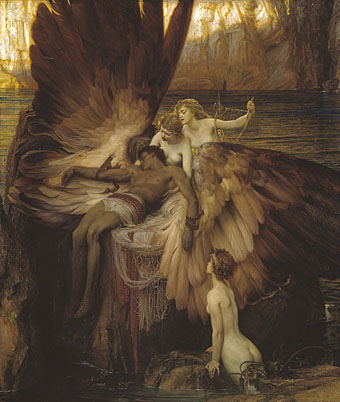
The Lament for Icarus (1898) by Herbert Draper.

Herbert Draper has been dismissed for years as a late-Victorian kitsch-monger, far too academic to be worthy of consideration. Since I often feel an affection for anything that upsets art critics I rather like his brand of fin-de-siècle soft porn. Many artists of the period at least varied their output often enough to avoid accusations of unseemly interests. Not so Draper, whose oeuvre runs the gamut of wet mythological females: naiads, sirens, kelpies, mermaids, etc. Even with dead Icarus as a subject he has to throw in a naiad or three. Van Dyck’s twink has transmuted here into a muscular hunk; he’d need to be strong to wield those colossal wings. Interesting to see from the study below that the figure was developed considerably from the original model. The study is also a better piece of draughtsmanship than the painting where the right arm seems wrong somehow, and the legs appear to be melting down the rock on which he’s beached. Barry Windsor Smith produced a variation on the theme in the 1980s that may have been inspired by the Draper, something he called Self-Portrait with Wings.

icarus4.jpg

Study for Icarus (1898) by Herbert Draper.

Previously on { feuilleton }
The end of Orpheus

Skull, 1983

skull.jpg

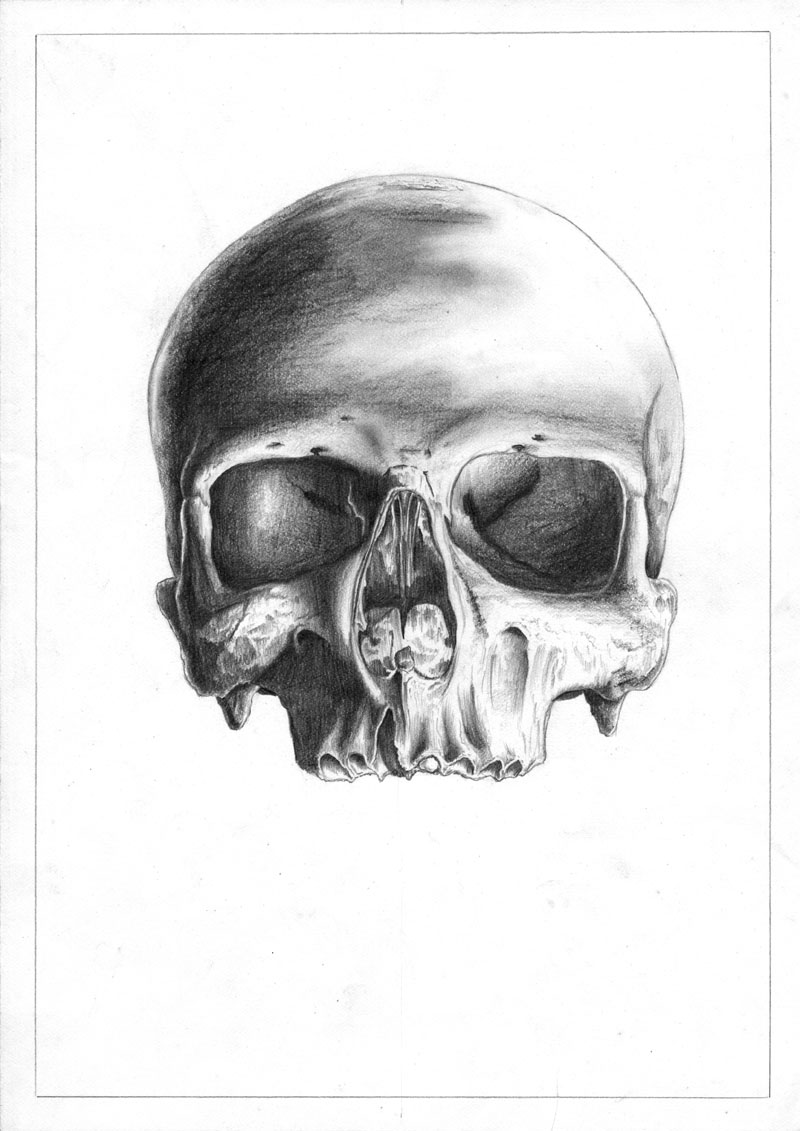
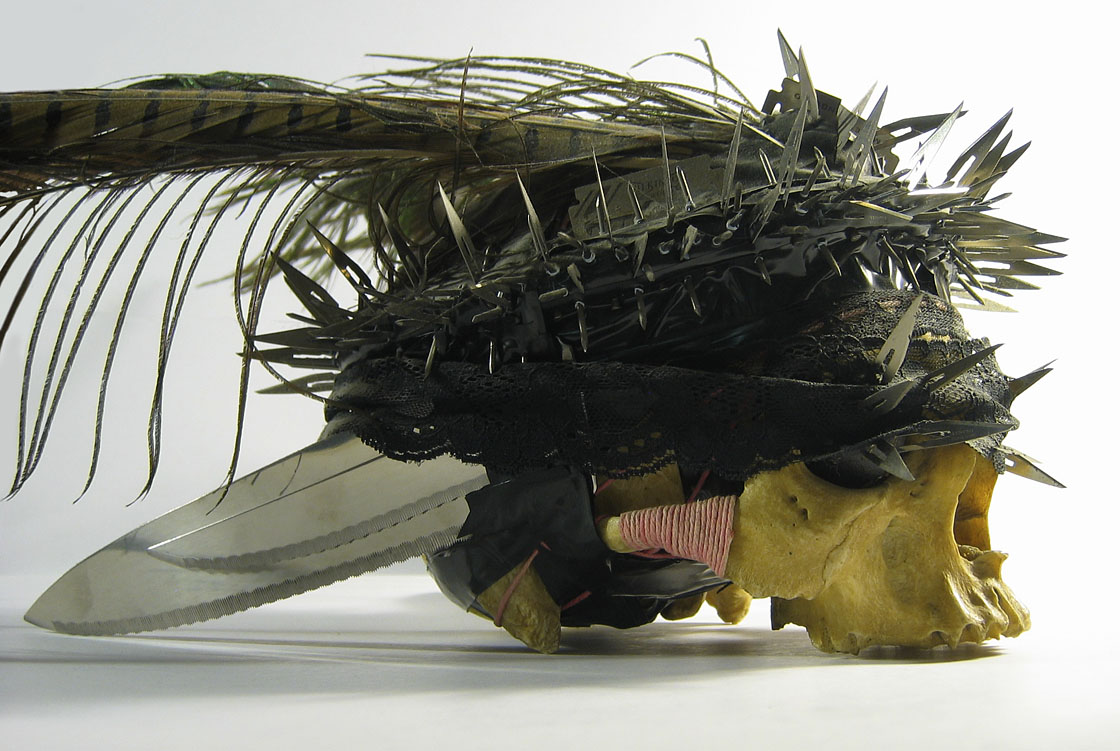
Mention yesterday of pencil drawing prompted me to dig out this item from one of my old portfolios. It was drawn shortly after I was given a somewhat battered human skull by a student nurse (hello, Victoria, wherever you are), an object I sketched on a number of occasions before eventually making it into the finger-slashing fetish object below which appeared recently in the The Thackery T. Lambshead Cabinet of Curiosities. The drawing dates from 1983—I remember listening to the Art of Noise EP Into Battle whilst working—and it’s unusual for me in showing the drawn object alone on a sheet of paper with no attempt made to place it in a scene. It’s also a slightly misjudged rendering; this ink drawing from a year later shows a more careful representation of the skull’s proportions, spoiled a little by the pointless and unconvincing seascape I placed behind it.

skull2.jpg

The art of Michael Leonard

leonard1.jpg

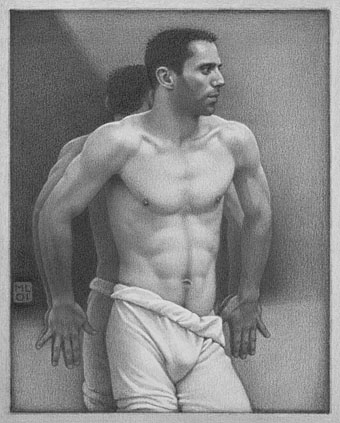
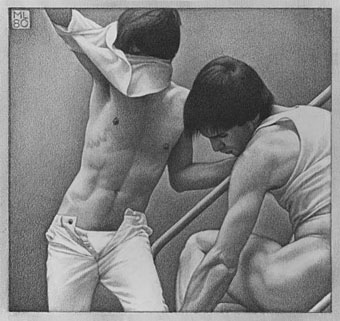
Against the Glass.

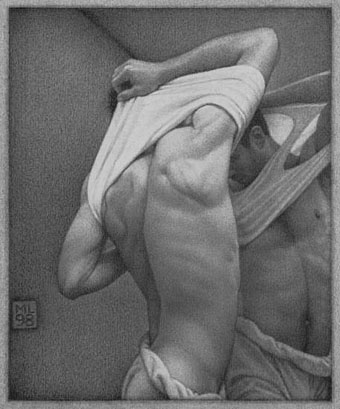
British artist Michael Leonard received a passing mention here some time ago for his work as an illustrator in the 1970s. Since that time he’s concentrated on establishing himself as a portraitist of considerable repute, with a painting of the Queen and Spark the Corgi hanging in the National Portrait Gallery. These fantastic pencil drawings show a more homoerotic side of his work, part of a large series of nude (or near-nude) studies in which beautiful men (and also a number of women) are perfectly rendered. I’ve always liked pure pencil drawing, the challenges of doing it to this standard are considerable, as are the pleasures of seeing such a successful application of the simplest of media. The compositions work really well, tight and often cropped to concentrate the attention. Leonard applies a similar approach in his paintings, some of which replicate or echo the pencil works. I prefer the pencils but then I have a predilection for monochome art. You can judge his paintings for yourself here.

leonard2.jpg

Twisting Torsos.

leonard3.jpg

On the Steps.

Elsewhere on { feuilleton }
The gay artists archive

Austrian arcades

austria1.jpg

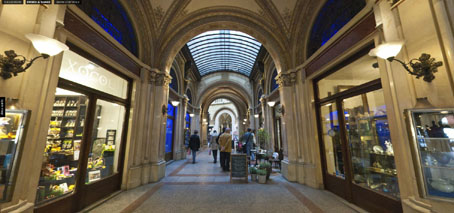
The Passage of Palais Ferstel – Shopping Arcade, Vienna #1 by Gary Quigg.

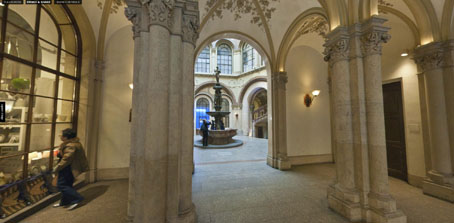
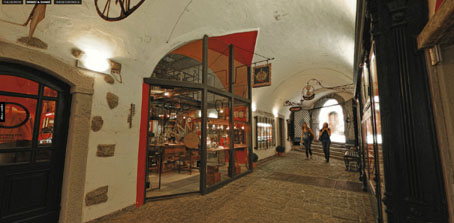
Given their enclosed nature and multiple vistas, arcades are well-suited to panoramic photography, so it’s a surprise when more examples don’t turn up at 360Cities. The ones here are recent additions from Vienna and Steyr in Austria. The Palais Fertsel is a particularly lavish place with some suitably lavish shops which include a branch of the Xocolat chain of chocolatiers. The arcade in Steyr is an oddity since it seems to be filled with clock sellers and watchmakers, and has an elaborate mechanical clock poised above its crossing.

austria2.jpg

The Passage of Palais Ferstel – Shopping Arcade with Fountain, Vienna #3 by Gary Quigg.

austria3.jpg

Steyr, Upper Austria, A Clockwork Arcade by Roberto Scavino.

Elsewhere on { feuilleton }
The panoramas archive

Previously on { feuilleton }
Cours et passages à Paris
Arcades panoramas
Arcades
Passage des Panoramas
Passages 2
Passages

Hector Guimard elevations

guimard1.jpg

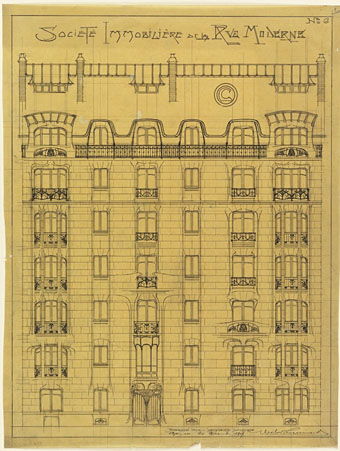
Design for the Facade of Societé Immobilière de la Rue Modern, No. 6 (1909).

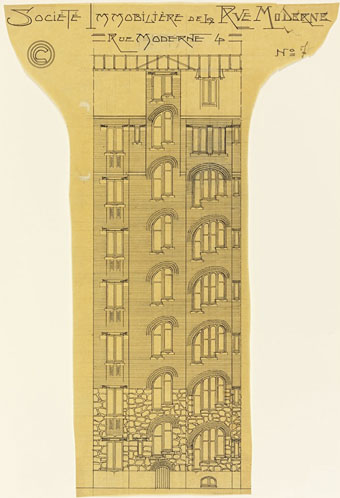
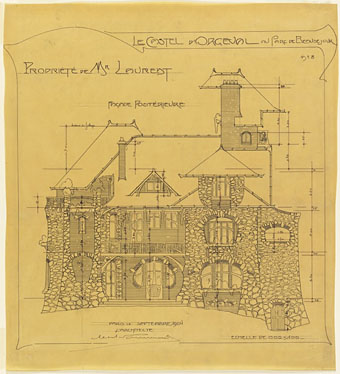
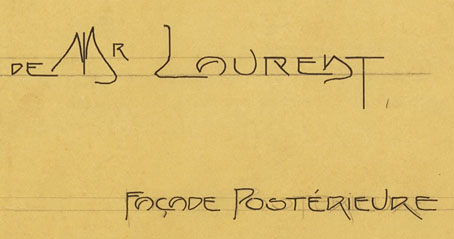
Drawings by French architect and designer Hector Guimard (1867–1942), the man who gave Paris those plant-like entrances to the Metro stations. The examples here can be seen in greater detail at the Google Art Project where there’s a few more of his works including his typically organic smoking bench. One thing I like about the architectural drawings is seeing the way he stylised his lettering. Frank Lloyd Wright used to do the same on his plans but I doubt there are any architects today who do the same.

guimard2.jpg

Elevation of an Apartment Building, Société Immobilière, rue Moderne (now rue Agar) (1909–11).

guimard3.jpg

Rear Facade, Castel d’Orgeval, Parc Beauséjour, near Paris: Elevation (1904).

guimard4.jpg

Previously on { feuilleton }
Hector Guimard sketches
Temples for Future Religions by François Garas
Elizabetes Iela 10b, Riga
Atelier Elvira
Louis Bonnier’s exposition dreams
The Maison Lavirotte
The House with Chimaeras