Lovecraft’s Monsters unleashed

lm1.jpg

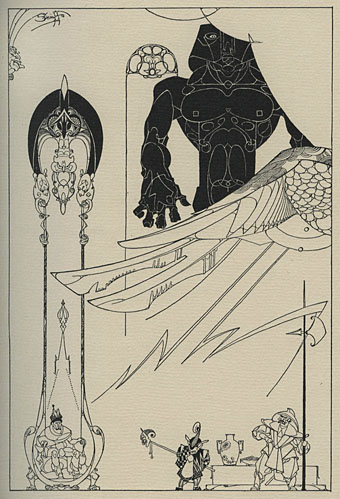
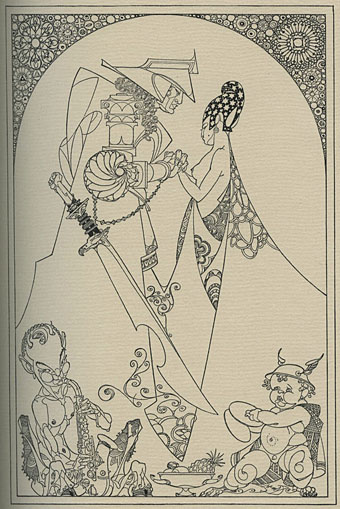
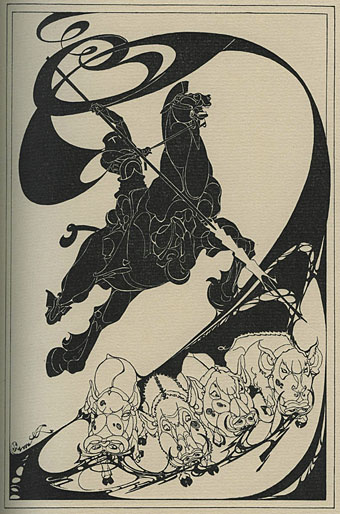
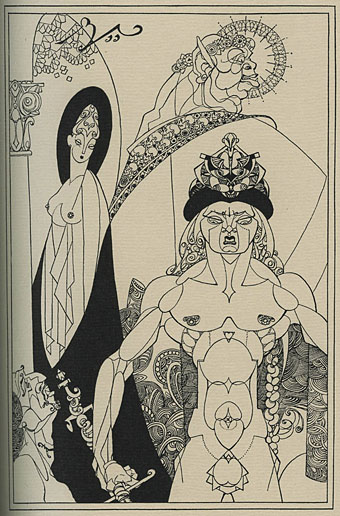
I posted my illustrations for this anthology back in December, after which Tachyon also asked me to create a cover for the book, something that hadn’t been planned at the outset. Lovecraft’s Monsters, edited by Ellen Datlow, is in the shops this month so here’s the cover and a few of my page layouts from the interior. I’m very pleased with this one so it’s been good to hear it’s been selling well already, and picking up positive reviews. My illustrations may be seen at large size here while the book itself should be available via all the usual outlets. If you insist on shopping in a river filled with piranhas then here’s a link. (That fish head on the cover is based on a piranha as it happens.)

The big Lovecraft collection from Centipede Press, A Mountain Walked, was also supposed to be out this month but the release has been bumped (again) to May 2014. It’s a huge volume so I’m not surprised if it’s taking longer than expected.

lm2.jpg

lm3.jpg

lm4.jpg

Elsewhere on { feuilleton }
The Lovecraft archive

The world of the future

century21-01.jpg

Pages from the Official Souvenir Program for the Seattle World’s Fair, 1962. Very typical corporate design by RT Matthiesen and Associates but not bad for all that. The pages give an overview of the exposition, punctuated by ads from its sponsors, while the text sets forth the purpose of the event which was intended to give a taste of life in the new Space Age. NASA’s Project Mercury missions were ongoing during the time the fair was being planned so the ethos of the event was very much tied to the obsessions of the time, obsessions fuelled by Cold War competition and a desire for an automated future. The technocratic side of things is to the fore in the booklet which trots out the usual utopian vision of life in “Century 21” as being one of short working-hours, a great deal of leisure, personal air-cars, and revolving houses. My childhood encyclopaedias were filled with this sort of thing which has only given me a lifelong suspicion of any kind of wild futurology, positive or negative. Those books were also filled with pictures of monorails, and the Seattle exposition had a monorail all of its own which I’m pleased to see is still running today.

century21-02.jpg

century21-03.jpg

century21-04.jpg

Continue reading “The world of the future”

Space Needle USA

spaceneedle01.jpg

That observation tower again. Previous posts here have exhausted the Paris Exposition Universelle as a subject so it’s time to look elsewhere, and the Century 21 Exposition which was held in Seattle in 1962 seems as good a place to start as any. If you’re interested in old expositions then it’s always good to find a decent site devoted to them, and the site for the Seattle event is particularly useful. Space Needle USA is one of the many pieces of documentary ephemera available to browse and download, a 76-page commemorative booklet by Howard Mansfield devoted to the design and building of the tower:

The Space Needle, a modernistic totem of the Seattle World’s Fair, was conceived by Eddie Carlson as a doodle in 1959 and given form by architects John Graham Jr., Victor Steinbrueck, and John Ridley. When King County declined to fund the project, five private investors, Bagley Wright, Ned Skinner, Norton Clapp, John Graham Jr., and Howard S. Wright, took over and built the 605-foot tower in less than a year.

Good to see some of the alternative designs, one of which isn’t so different to one of the designs proposed in the 19th century for a London tower that would rival the Eiffel Tower in Paris.

spaceneedle02.jpg

spaceneedle03.jpg

spaceneedle04.jpg

spaceneedle05.jpg

Continue reading “Space Needle USA”

Gigapixel ArtZoom

seattle.jpg

This is a few months old but I just discovered my bookmark of the page. The view is a panorama of Seattle but with a difference since this one encourages you to play hunt the artist. The streets are scattered with many of Seattle’s artists and performers, some of them easier to find than others. Michael Cohen, the director of the project explains:

We first sought out the perfect rooftop location from which to shoot such a panorama. We were lucky enough to find the Bay Vista condominium building, and thanks to the gracious owners, get access to amazing 360-degree views that include the Seattle Center, the Olympic Sculpture Park, and Seattle’s stadiums, as well Mount Rainier, Puget Sound, and Lake Union. We also discussed the project with John Boylan, who has deep roots in the Seattle art scene. He helped us attract great interest from the arts community to come out and help create this celebration of the arts in Seattle. John introduced us to Elise Ballard, who coordinated the efforts of everyone involved in producing the entire piece. And finally, videographer Kris Crews helped us assemble a team to shoot video footage of the artists and performers from the ground.

Art aside, the panorama is detailed enough to be able explore many of the otherwise hidden details of city life such as rooftop gardens and the mechanical paraphernalia that accumulate on the tops of buildings. Nice view of the Space Needle as well.

Elsewhere on { feuilleton }
The panoramas archive

Weekend links 205

lin.jpg

King’s Cloak (2012) by Alice Lin.

• The week in Finnegans Wake: illustrations by John Vernon Lord for a new Folio Society edition; The Guardian‘s review from 1939; Christina Scholz explores Joyce’s use of the Ant and the Grasshopper fable; Sheng Yun wonders when Dai Congrong will compete the first Chinese translation of the book; Stephanie Boland on riverrun, the latest theatrical adaptation.

• It’s Robert Aickman‘s centenary year so Faber are reissuing several volumes of his peerless “strange stories”. And it’s good to see the great Clark Ashton Smith finally receive the blessing of Penguin Classics.

• The Teenage Boyfriend of the Beat Generation: Marcus Ewart slept with Allen Ginsberg (who showed him how to give a proper blowjob), and had an eight-year relationship with William Burroughs.

Yet another advocate of shorter work time was JS Mill. He dismissed the ‘gospel of work’ proposed by Thomas Carlyle in part because it drew a veil over the real costs of work, including slave work that Carlyle sought to defend. Instead, Mill advocated a ‘gospel of leisure’, arguing that technology should be used to curtail work time as far as possible. This stress on technology as a means to shorten work time was later to feature in Bert­rand Russell’s 1932 essay, ‘In Praise of Idleness’.

David Spencer on The Case for Working Less

• More Steve Moore memorials: Mitch Jenkins put the pages from Unearthing online, while Pádraig Ó Méalóid posted a personal appreciation at The Beat.

Linda Marsa on how psychedelics are helping cancer patients deal with their illness.

• The Weird Album: art by Enrique Alcatena (including some Lovecraftian pieces).

• Didgeridoom: Director Ted Kotcheff talks to Robert Barry about Wake in Fright.

The Jealous God (1985), a comic strip by Alejandro Jodorowsky & Silvio Cadelo.

• The Dune in Your Head: Ethan Gilsdorf on the greatest SF film never made.

50 minutes of Kraftwerk on Rockpalast in 1970. Astonishing.

• At 50 Watts: Sheet-music covers from Sweden in the 1920s.

Harvard discovers old library books bound in human skin.

Same-sex marriage is now legal in England and Wales.

Wyrd Daze has reached issue 5.

Kaleidoscopes at Pinterest.

Flight From Ashiya (live on TV! 1967?) by Kaleidoscope (UK) | Lie To Me (1969) by Kaleidoscope (US) | Kaleidoscope (1984) by The Rain Parade