Owls and flowers

1: The pattern

pattern.jpg

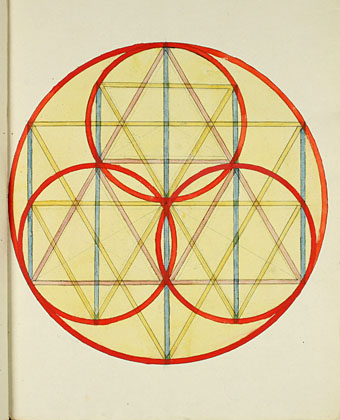
A plate design by Christopher Dresser.


2: A novel by Alan Garner

garner.jpg

The Owl Service (1967). Cover design by Kenneth Farnhill.


3: A Granada TV serial

granada.jpg

The Owl Service (1969). Eight episodes, written by Alan Garner, directed by Peter Plummer.


4: A diversion

clockwork.jpg

Chapter 8 of The Owl Service.

hills.jpg

Gillian Hills as Alison in The Owl Service.

aco.jpg

Gillian Hills (left) as Sonietta in A Clockwork Orange (1971).


5: A single by Pram

pram.jpg

The Owl Service (2000) by Pram. Cover art by Mary Jo Bole.


6: Ghost Box

belbury.jpg

The Owl’s Map (2006) by Belbury Poly. Design by Julian House.

Track 1: Owls And Flowers

advisory.jpg

As The Crow Flies (2011) by The Advisory Circle. Design by Julian House.

Track 11: Learning Owl Reappears


7: A group

owlservice.jpg

The Owl Service.


8: A Folio Society edition

hopes.jpg

The Owl Service (2013) by Alan Garner, illustrated by Darren Hopes.


9: Twelve audiological pathways

ayitc.jpg

In Every Mind: Transmission Resonances, Volume 1 (2015) by A Year In The Country.

Transmission Resonances: Volume 1 takes as its wellhead the continuing reverberations of the 1969 cathode ray version of Alan Garner’s The Owl Service.

It pushes open the attic door from whence the scratching descends and travels to places that surprised, intrigued and even delighted our good selves when it was being shaped on our own particular audiological potters wheels.

Previously on { feuilleton }
To Kill a King by Alan Garner
Red Shift by Alan Garner

Laurence Housman’s The Sensitive Plant

sensitive02.jpg

Shelley’s The Sensitive Plant is a lengthy poem written after the death of Percy and Mary Shelley’s first child. Laurence Housman illustrates the sombre garden scenes in a minutely detailed manner, and manages to incorporate some concerns of his own. Pan isn’t mentioned in the poem but Housman adds a Pan figure which he describes in a note as “the garden deity”, and a symbol of nature untamed.

sensitive01.jpg

sensitive03.jpg

Continue reading “Laurence Housman’s The Sensitive Plant”

Laurence Housman’s End of Elfintown

elfin01.jpg

More Laurence Housman, and a book I’d not seen before. Jane Barlow’s The End of Elfintown (1894) is a typical piece of Victorian fairy poetry—her “elves” are also flower-dwelling “Fays”, and Oberon is mentioned—but Housman’s renderings give a very different impression. In place of the usual delicate creatures he shows a very sensual company, all satyr ears and enormous Pre-Raphaelite manes. The frontispiece is very Beardsley-like, especially those entwined roses.

elfin02.jpg

elfin03.jpg

Continue reading “Laurence Housman’s End of Elfintown”

The Reflected Faun

housman.jpg

Another one to add to the stock of fauns, satyrs and Pan figures that proliferate from the 1890s to the 1920s, Laurence Housman’s The Reflected Faun appeared in The Yellow Book in 1894. The magazine’s publisher, John Lane, also published Arthur Machen’s The Great God Pan in the same year although an early version of Machen’s story had appeared a few years before. What’s notable about Housman’s drawing is the way he combines in a single image several distinct themes: Faunus/Pan, the reflected Narcissus, and all those tales of beguiling spirits lurking in water. The nature of the spirit in this picture is distinctly androgynous, a detail that wouldn’t have impressed those critics who considered The Yellow Book to be an unwholesome publication. The androgyny may be taken as deliberate: Housman was one of London’s “Uranian” artists, and a few years later joined George Cecil Ives’ Order of Chaeronea, a secret society for gay men and lesbians. In the light of this, the drawing might be interpreted as a symbol for a clandestine existence where true desires remain buried or submerged.

Elsewhere on { feuilleton }
The illustrators archive

Previously on { feuilleton }
Aubrey Beardsley’s Keynotes
In the Key of Yellow
Ads for The Yellow Book
The Piper at the Gates of Dawn
The Great God Pan
Peake’s Pan

Weekend links 258

stalenhag.jpg

Simon Stålenhag‘s SF artwork will be published in book form if funding is secured. In the future everything will be crowdfunded for 15 minutes.

• Mixes of the week: FACT Mix 494 is a fantastic dub selection by Colleen; Secret Thirteen Mix 151 is by Sally Dige; Stephen Mallinder‘s return to the doom-laden Industrial music of the 1980s suits the post-election mood. Mallinder’s mix is helping promote Industrial Soundtrack for the Urban Decay, a documentary by Amélie Ravalec.

• “…it felt more like real life to me than the average hour-long television show.” Sopranos creator David Chase on what he enjoyed about Twin Peaks. Related: Twin Peaks Tarot cards.

Sound & Song in the Natural World edited by Tobias Fischer & Lara Cory. A book about animal music and communication with a 60-minute CD of field recordings.

• “The psychedelic renaissance has already begun, and for the most part I welcome it,” says Erik Davis in a wide-ranging interview with Sean Matharoo.

• It rumbles on: Brown Pundits on “An Embarrassment at PEN”. A useful collection of stories, reactions and polemic from the past two weeks.

Fanny and Stella: The Shocking True Story, a play by Glenn Chandler about Victorian London’s scandalous pair of cross-dressing men.

• Artist Charles Ray causes a problem for the Whitney Museum of American Art with his sculpture of a naked Jim and Huckleberry Finn.

• “Don’t believe Orson Welles,” says his biographer Simon Callow, “especially when he calls himself a failure.”

• A return to Adolph Sutro’s Cliff House features several photos I’d not seen before.

• More Tarot: Arcana: The Tarot Poetry Anthology is looking for funding.

• At Dangerous Minds: The ancient magic of the record label.

Foreign Movie Posters

Tarot (Ace of Wands theme, 1970) by Andy Bown | Distant Dreams (Part Two) (1980) by Throbbing Gristle | The Devil In Me (1982) by Stephen Mallinder