Weekend links 293

meyohas.jpg

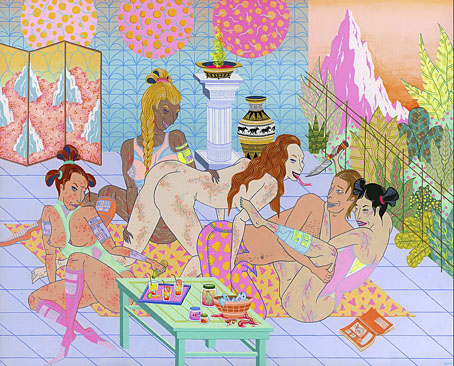
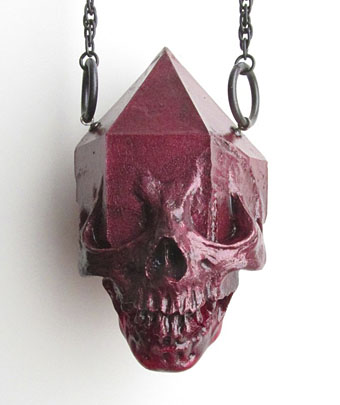
Red Petals by Sarah Meyohas.

• “For MMoB, I want it to be like a [Werner] Herzog movie, so at our concerts the people on stage aren’t necessarily people who are named. We’re trying to create an entity that is beyond music and relates visually and sonically with everything in a way that’s different.” Randall Dunn talks to Simona Mantarlian and Daniel Jones about the Master Musicians of Bukkake and his production work for other artists.

• “Is reel-to-reel tape the new vinyl?” asks FACT mag. It’s certainly better than cassette tape (if less convenient) but it was always a niche format for albums, even in the 1970s. Rene Chun made a similar argument for an emerging trend last October. Those expensive machines do look tempting… Early adopters should start collecting here before prices rise.

Airwaves: Songs From The Sirens is a new release of spectral audio transmissions by A Year In The Country: “…a gathering of scattered signals plucked from the ether, cryptograms that wander amongst the airwaves…” Physical versions come with the usual plethora of monochrome artefacts.

A vivid memory to his friends, Litvinoff was one of those people whose performance was their life. His most lasting achievement was the profound influence he had on Performance – the hallucinatory film directed by Nic Roeg and Donald Cammell, and starring Mick Jagger, which captured the London of the late 1960s, merging pop stardom, violent criminality, illegal drugs, gender-blurring, the occult and Jorge Luis Borges.

Jon Savage on David Litvinoff

• Virgin Prunes “are THE #1 most underrated group of the post-punk era” says Richard Metzger. I’d say that honour goes to The Passage but the Virgin Prunes were unique even if they’re too often dismissed as a freak footnote in the U2 story.

Magic, Witches & Devils in the Early Modern World is a free exhibition at the John Rylands Library, Manchester, that will run until August 2016. Related: “John Dee painting originally had circle of human skulls, x-ray imaging reveals.”

• “What I’m seeing now is an awful lot of people just following things. We tried to find our own thing and ask, ‘What else is there?'” Charles Hayward on the past and present of post-punk band This Heat.

• “I’ve never been tempted to write anything that was not essentially nightmarish.” Thomas Ligotti in a comprehensive profile (originally run in 2010) at Dennis Cooper’s blog.

• Mixes of the week: An introduction to Stereolab by Jon Dale, and Silent Radio Transmission Jan 2016 by SilentServant.

• Kicked Toward Saintliness: Max Nelson on the dark erotics of Jean Genet’s Our Lady of the Flowers.

• Reverse Engineering: Danny Hyde on Coil, Backwards and NIN.

Fuck Yeah! Anna von Hausswolff

Harry Flowers (1970) by Jack Nitzsche | Flowers In The Air (1970) by Sally Eaton | Darkness: Flowers Must Die (1972) by Ash Ra Tempel

Jumping, a film by Osamu Tezuka

jumping.jpg

Osamu Tezuka is best known as a prolific manga pioneer and the creator of Astro Boy. He also found time to direct several short animations which play with the form a little more than is allowed in big commercial productions. Copyright restrictions have been keeping these away from YouTube but Jumping (1984) is an exception. This is six minutes from the viewpoint of a young girl jumping along a street. A car approaches so she jumps over it. Then she jumps over a hedge, and a house, and… Watch it and see.

Standing stones

stones07.jpg

Standing Stones (recto) (1960) by Jonathan D. Cramp.

The Uffington White Horse is famously best viewed from the air which not only prompts continual speculation about its creation but also explains why there aren’t many paintings of it. White horses in British art are either the physical creatures or the much later chalk figures that can be found on southern hillsides. More surprising, perhaps, is the lack of paintings of Britain’s many neolithic monuments. Gothic and other ruins were a common feature of Romantic art but—Stonehenge aside—the circles and monoliths that litter the British landscape seem to have been ignored until very recently.

All the paintings here are from the BBC’s Your Paintings catalogue of the art on public display in Britain, and its notable that their dates coincide with the popular resurgence of interest in neolithic monuments. (The site does show a few older paintings but they’re a mix of the unattributed and the unimpressive.) Derek Jarman’s paintings of Avebury are absent since they were featured here last month. I especially like the stark and sombre picture by Gomer Lewis, an artist whose work I hadn’t seen before.

stones02.jpg

Standing Stone (1976–1977) by Helen F. Wilson.

stones06.jpg

Standing Stones (1977) by Peter Standen.

Continue reading “Standing stones”

The Song of the White Horse by David Bedford

bedford.jpg

Many of the old TV documentaries I link to are ones I saw when first broadcast and wanted to see again, but this edition of the BBC’s Omnibus from 1978 is one I missed. The late David Bedford is a familiar name in British music: in the 1970s he was as much known for his orchestral arrangements for Kevin Ayers, Roy Harper, Mike Oldfield, et al as for his own album-length compositions. The Omnibus film concentrates on the composition and performance of a new Bedford piece inspired by the ancient earthwork known as the White Horse of Uffington.

The first half of the film has Bedford visiting the White Horse and nearby Wayland’s Smithy before returning to his studio where he shows the film crew some of his electronic gear. Later we get to see Mike Ratledge of Soft Machine helping create an electronic equivalent of the sound made by the Blowing Stone. The second half of the film has a complete performance of Bedford’s piece which takes its libretto from The Ballad of the White Horse by GK Chesterton. The sound quality doesn’t do the composition any favours at all but Bedford did record the piece in 1983 for Mike Oldfield’s label.

Previously on { feuilleton }
Hill figures

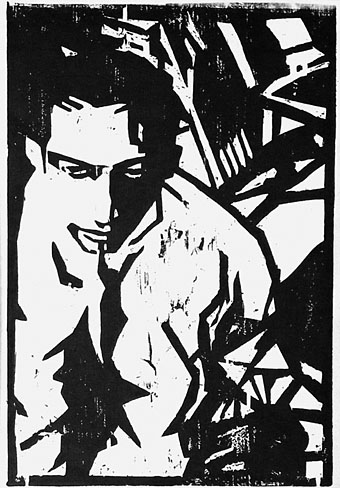
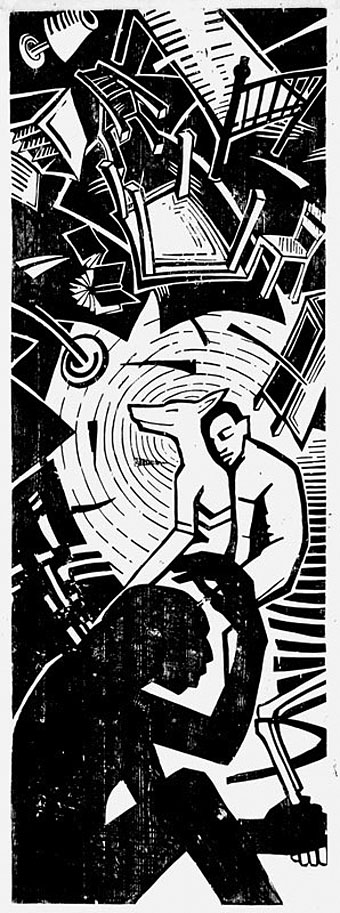
The art of Frantisek Kobliha, 1877–1962

kobliha05.jpg

Untitled.

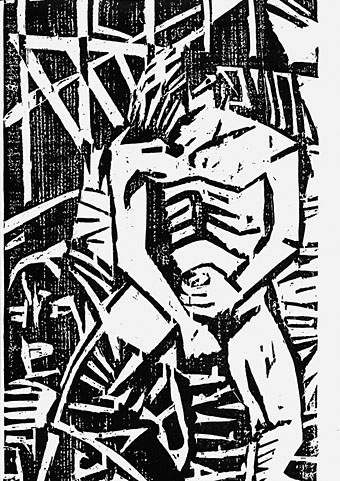
Another unfamiliar name, Frantisek Kobliha was a Czech Symbolist whose output includes a great deal of monochrome work in a variety of media: woodcuts, lithographs and the like. This may explain why he doesn’t make the larger Symbolist studies despite the quality of his work. Among his series of prints there’s that Symbolist perennial, the Temptation of St Anthony.

These examples may be found at larger size here (slow to load but many pages) and here. Thanks to Thom for the tip!

kobliha06.jpg

Untitled.

kobliha09.jpg

May (1911).

Continue reading “The art of Frantisek Kobliha, 1877–1962”