Neutron designs

neutron2.jpg

The Bowie overload this week had me thinking again about Derek Jarman’s unmade science-fiction film, Neutron, an apocalyptic work that would have starred David Bowie if the finance had been forthcoming. Jarman’s description in an earlier post about the film remains tantalising:

There are six published manuscripts of Neutron, which zig-zag their anti-heroes Aeon and Topaz across the horizon of a bleak and twilit post-nuclear landscape. ‘Artist’ and ‘activist’ in their respective former lives, they are caught up in the apocalypse, where the PA systems of Oblivion crackle with the revelations of John the Divine. Their duel is fought among the rusting technology and darkened catacombs of the Fallen civilization, until they reach the pink marble bunker of Him. The reel of time is looped—angels descend with flame-throwers and crazed religious sects prowl through the undergrowth. The Book of Revelations is worked as science fiction.

Lee [Drysdale] and I pored over every nuance of this film. We cast it with David Bowie and Steven Berkoff, set it in the huge junked-out power station at Nine Elms and in the wasteland around the Berlin Wall. Christopher Hobbs produced xeroxes of the pink marble halls of the bunker with their Speer lighting—that echo to ‘the muzak of the spheres’ which played even in the cannibal abattoirs, where the vampire orderlies sipped dark blood from crystal goblets.

neutron.jpg

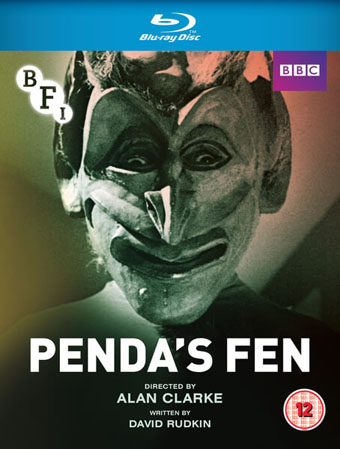
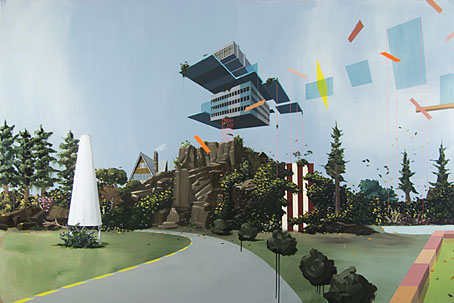
This is one of those great what-if projects along with Jodorowsky’s film of Dune, Nicolas Roeg’s Flash Gordon, and others, so it was a surprise to discover a handful of recent designs for Neutron produced by students at the Wimbledon College of Art. The video here is a short collection of stills by Jonny Blackmore. There’s another of his pieces here, and further designs by Gabrielle Cole here and here. I’m guessing that these were part of a college assignment but if anyone knows otherwise please leave a comment. As to the original Neutron, some version of the script must still exist (Jon Savage was apparently involved in later stages) as must Christopher Hobbs’ designs. Maybe we’ll see them in a book one day.

Previously on { feuilleton }
Derek Jarman’s Neutron

Weekend links 291

brooks.jpg

Femme avec des fleurs (1912) by Romaine Brooks.

• This week’s anniversary of the Charlie Hebdo murders was noted by some of those who defended the magazine last year. “I don’t write about Charlie Hebdo in France,” said Robert McLiam Wilson, “they have plenty of people who can do that. But I’ll do almost anything I’m asked to do in the anglosphere. Why? Well, two reasons. Because none of the other Charlie people bothers to do it. And because, really, that’s where all the bullshit lives.” A year on, and the bullshit-mongers seem to have fallen silent, what with knee-jerk outrage being a short-lived affair, and the Bataclan massacre having demolished one of the main criticisms, namely that the magazine wouldn’t have been attacked if the artists and writers had shown some respect. “[Charlie Hebdo‘s] real crime is not racism but its challenge to what has become an unbreakable commandment for many contemporary liberals: ‘Thou shalt not cause offence’,” says Kenan Malik. At Literary Hub Adam Gopnik explored the same issue in a foreword for Stéphane Charbonnier’s Open Letter.

• “Immersion in the past is no escape from the present, but it supplies a constant corrective to the narrative spit out daily by media, advertising, politics, and all those other forces that attempt to mould our thinking like jelly in a pan.” Luc Sante (again) talking to Simone Wolff about his books, Low Life and The Other Paris.

• “…throwing a lot of money behind vintage equipment? Well, that’s just a millionaire’s game. Dave Grohl can do that, but David Bowie doesn’t care about that. Just stick a microphone in front of him and he’s really happy.” Tony Visconti talking to Allyson McCabe about the music business and producing Bowie.

• “Nico Hogg’s photography captures the transformation of urban London,” says George Kafka who talks to Nico about a collection of his work, Sign & Signifiers, which I designed late last year.

• At Strange Flowers: James Conway talks to Cassandra Langer about her recent biography of artist Romaine Brooks (1874–1970).

• At Dangerous Minds: Godzilla, girls and guns, the science-fiction art of Noriyoshi Ohrai. There’s more at Pinterest.

• Mixes of the week: XLR8R Podcast 420 by Andrey Pushkarev, and Secret Thirteen Mix 172 by Julien Bayle.

• Alan Moore’s magnum opus, Jerusalem, will be published later this year. Gosh Comics has a teaser.

New York Public Library makes 180,000 high-res images available online.

Prints of darkness: macabre vintage posters

Scarfolk Television is coming

Godzilla (1977) by Blue Öyster Cult | Giant Robot / Machines in the Modern City / Godzilla (1992) by Praxis | Free-Bass (Godzillatron Cush) (1995) by Axiom Funk

MMMM

batty.jpg

Post number four thousand coincides with Roy Batty’s birthday, so happy birthday, Roy. Best not wish him many happy returns… It’s also David Bowie’s birthday and album release day but he’s receiving enough attention for that already.

WordPress always sends a statistics summary at the end of each year. The stats for 2015 looked like this:

The Louvre Museum has 8.5 million visitors per year. This blog was viewed about 900,000 times in 2015. If it were an exhibit at the Louvre Museum, it would take about 39 days for that many people to see it.

The busiest day of the year was January 18th with 3,460 views. The most popular post that day was The gay artists archive.

No surprise about the most popular section of the site which frequently gets double the traffic of any single post. Input to that section of the blog has fallen off over the past year but I do have a couple more posts lined up when I get a spare moment.

These are the posts that got the most views in 2015.

1 The art of NoBeast June 2007
2 The art of Takato Yamamoto June 2007
3 Phallic casts 2011
4 Compass roses August 2011
5 The art of Thomas Eakins, 1844–1916 March 2006

The phallic casts post had a huge spike of traffic on New Year’s Day for some reason. Some of the attention for these posts will be from Facebook but since I don’t have an account there—and Facebook also hides their referral details—you can’t be certain. As always, my thanks to everyone who takes the time to read and to comment.

The Strange Case of Yukio Mishima

mishima.jpg

This is another of those excellent television documentaries that I have imprisoned on a video tape somewhere so it was good to find on YouTube. The Strange Case of Yukio Mishima (1985) was directed by Michael MacIntyre for the BBC’s Arena arts strand. This was the year that Paul Schrader’s Mishima: A Life in Four Chapters was released so the documentary had some topical value even though Schrader’s film isn’t mentioned at all (something that wouldn’t happen today). MacIntyre begins as Schrader does, however, with the events of the final day of Mishima’s life on November 25th, 1970, before rewinding to present a biographical portrait of the writer/actor/director. There’s more footage than I remembered of Mishima discussing his work (in English) while John Hurt reads from Mishima’s writings. Commentary is supplied by biographer Henry Scott Stokes, translator Donald Keene, photographer Eikoh Hosoe (creator of the famous Mishima beefcake poses), director Nagisa Oshima, and Mishima’s lover Akihiro Maruyama, an actor who the credits also describe as a “female impersonator”.

Previously on { feuilleton }
Tamotsu Yato’s men with katanas
Forbidden Colours
Mishima’s Rite of Love and Death

Vilmos Zsigmond, 1930–2016

vz1.jpg

McCabe & Mrs Miller (1971).

Watch enough films from the 1970s and you’ll eventually run across something photographed by Vilmos Zsigmond. And if you were watching on TV, video or even DVD there’s a good chance that his subtle grading of light and shade would have been spoiled or, in low-light scenes, reduced to murk. (TV used to be the worst for also cropping widescreen films.) Screengrabs on a web page don’t do his work any justice either but that can’t be helped. Happily, many of these films are now available in high-definition.

vz2.jpg

Images (1972).

vz3.jpg

Deliverance (1972).

vz4.jpg

The Long Goodbye (1973).

vz5.jpg

The Deer Hunter (1978).

vz6.jpg

Heaven’s Gate (1980).

vz7.jpg

Heaven’s Gate (1980).

vz8.jpg

Heaven’s Gate (1980).