L’Image, 1896–1897

image01.jpg

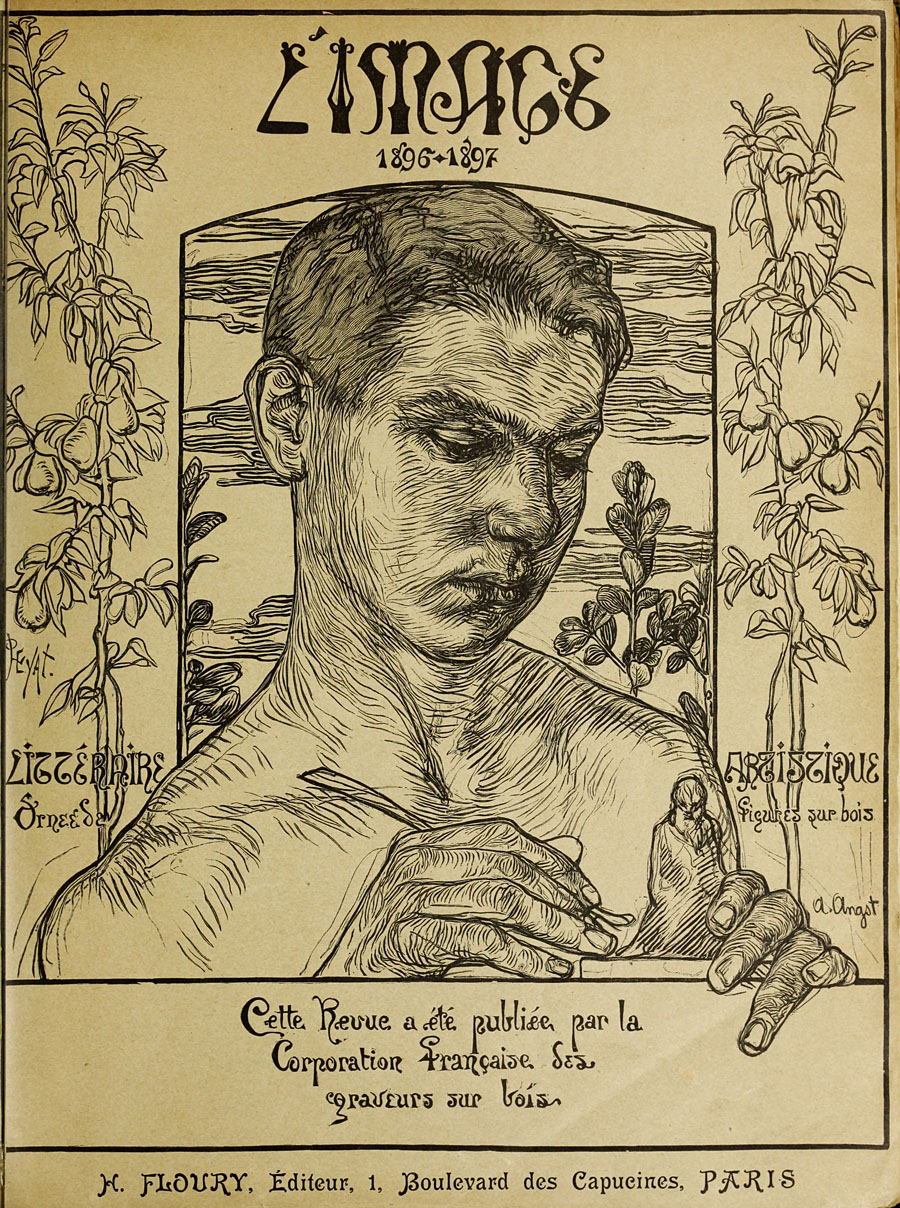
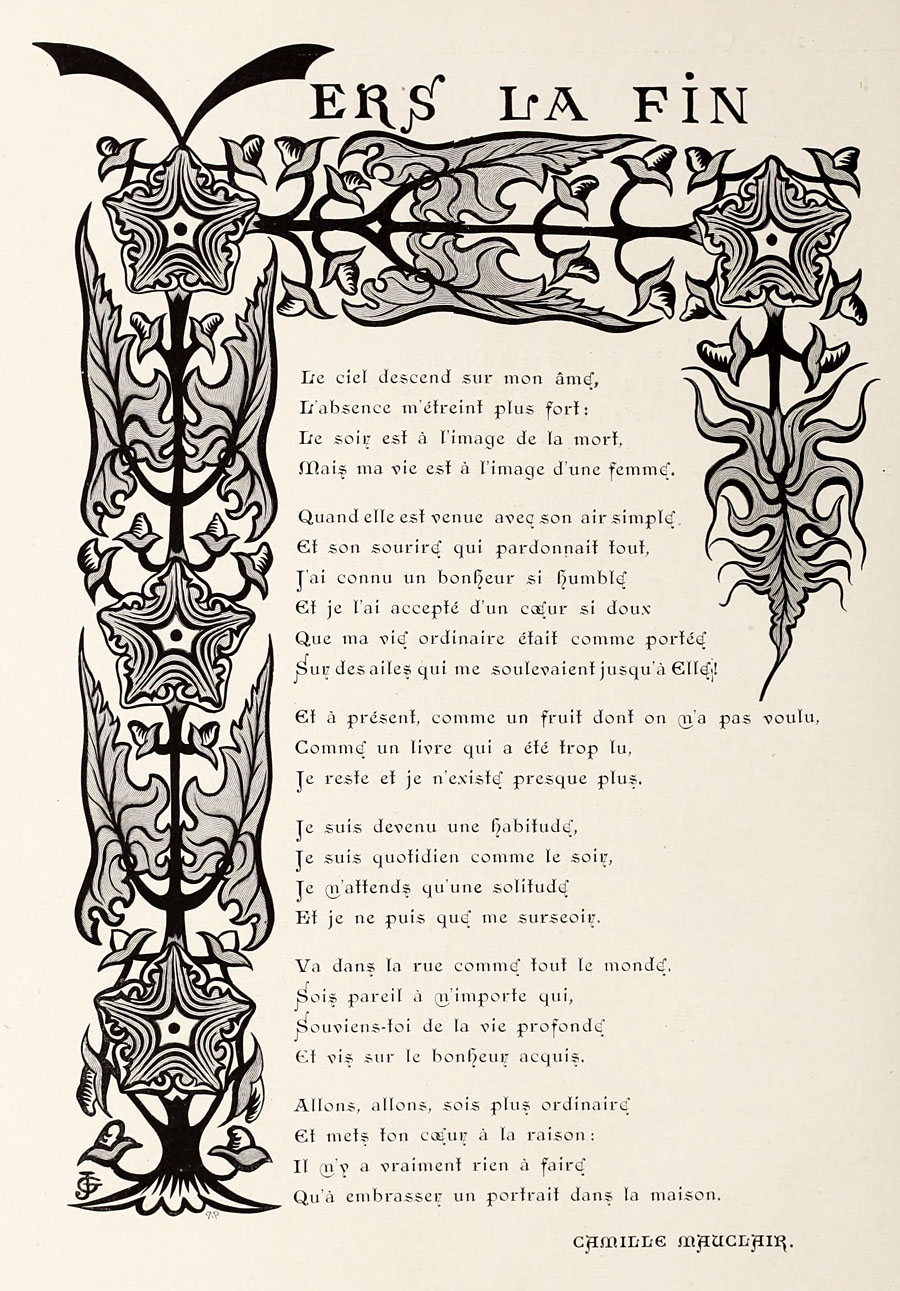
L’Image was a short-lived French publication dedicated to the art of contemporary wood engraving. Short-lived it may have been but its position at the birth of Art Nouveau means that many of its smaller graphics have been recycled ever since in studies of the period. One of these graphics, a fleuron by Jean-Jacques Drogue, was the subject of an earlier post when I was tracing the origin of a motif used for many years by my colleagues at Savoy Books. I eventually found Drogue’s fleuron in a collection of rather poor scans at Gallica, a good resource but one whose web interface (and often the materials themselves) leaves much to be desired.

image02.jpg

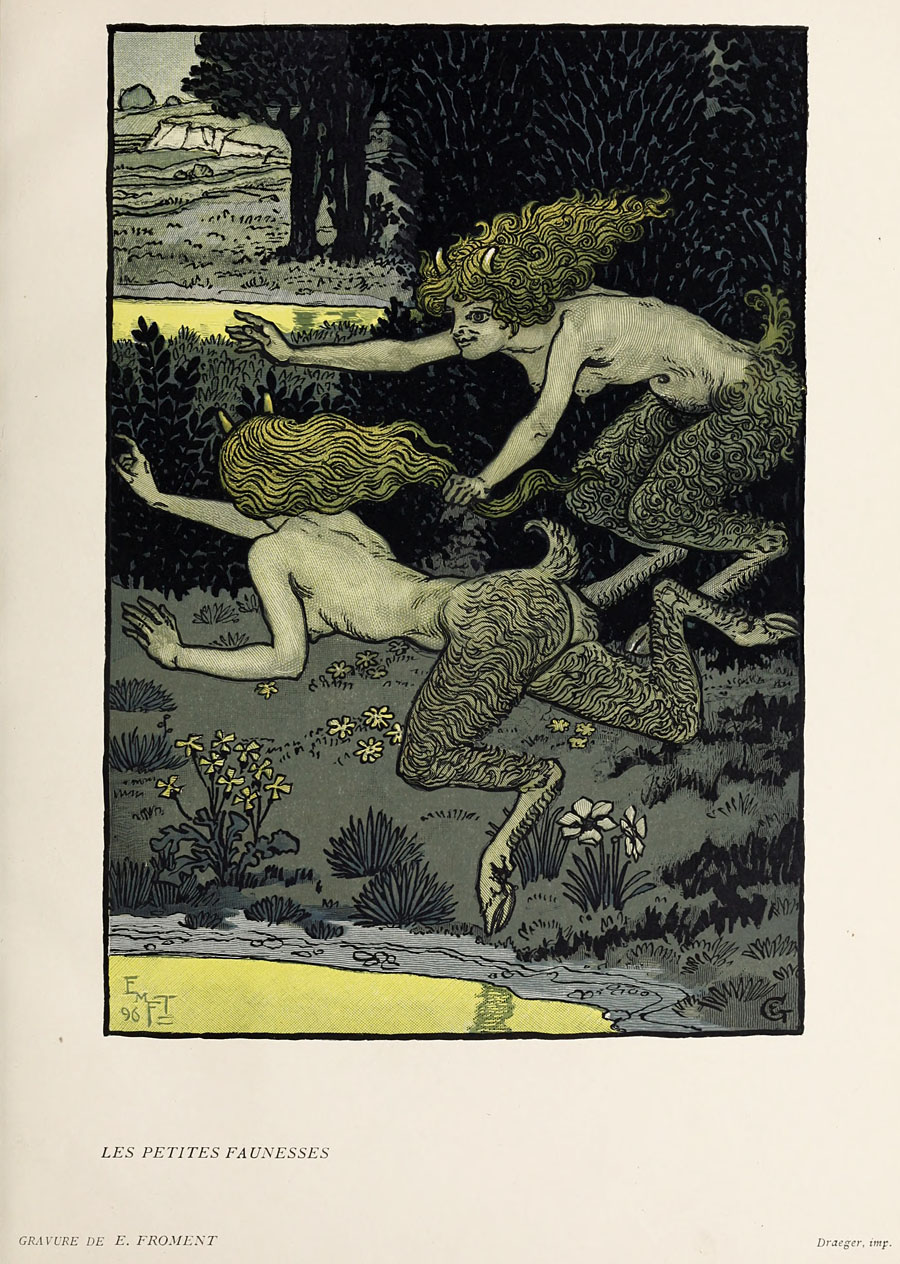
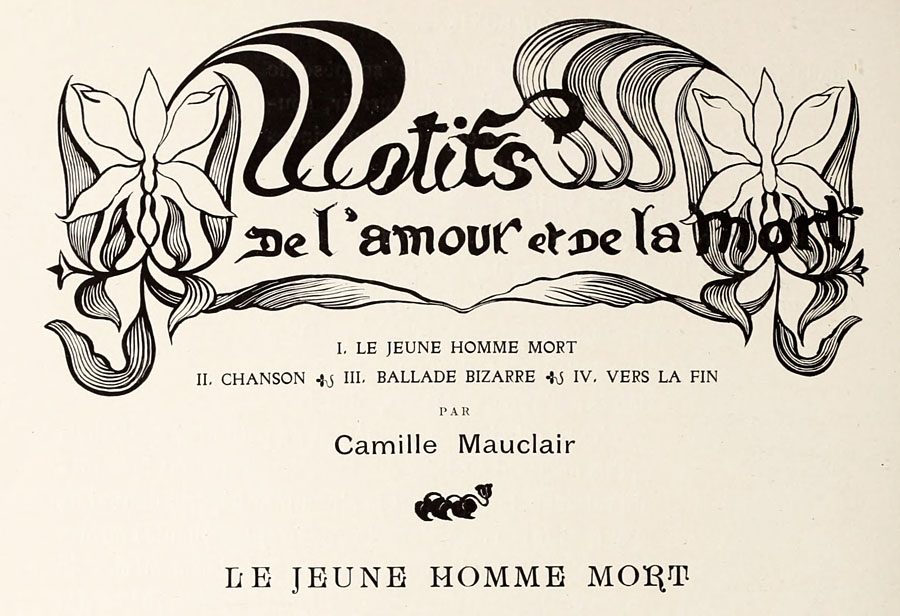
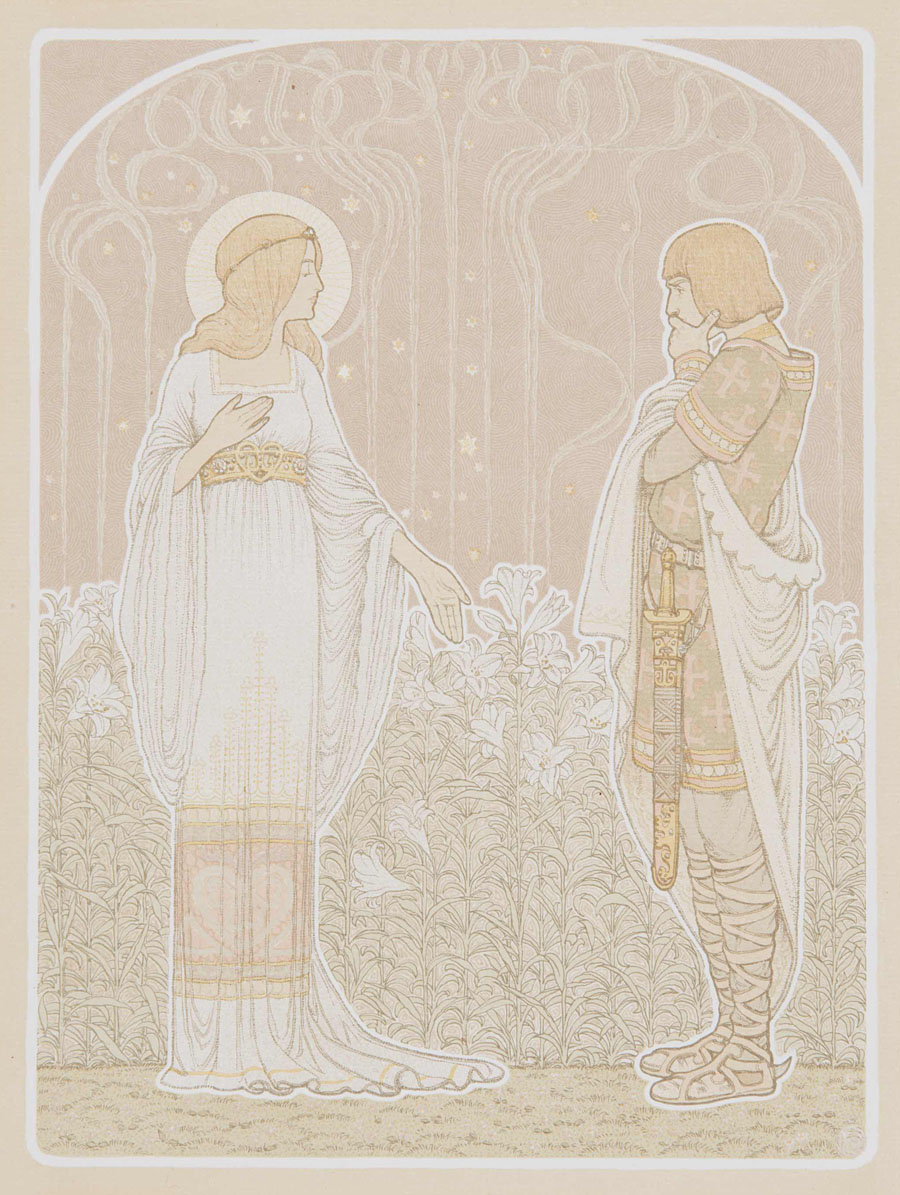
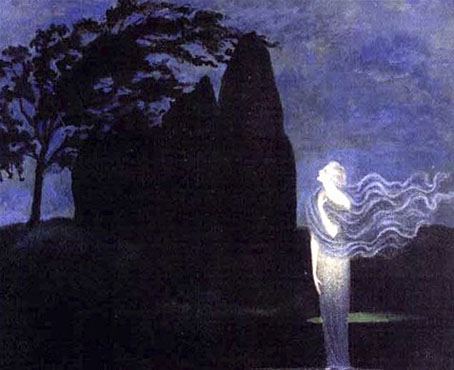
All the images here are from a collection of the entire run of L’Image at the Internet Archive which are much better quality and which include the early issues missing from Gallica. The most notable thing about the earlier issues is the way they combine the Art Nouveau style with Symbolist art; in addition to an engraving by Carlos Schwabe that I hadn’t seen before there’s a very Symbolist piece about nocturnal Bruges featuring art by Georges de Feure.

image03.jpg

image04.jpg

Continue reading “L’Image, 1896–1897”

The art of Henricus Jansen, 1867–1921

henricus0.jpg

This week’s post is another by Sander Bink about a neglected artist of the Dutch fin de siècle. Once again, this is an artist whose work was new to me. The Mucha-like style of the later pictures (and the one above from the same series) are especially good. My thanks again to Sander for the post.

* * *

Henricus Jansen (1867–1921) was a Dutch painter, graphic artist and illustrator who used ‘Henricus’ as his artist’s name, ‘Jansen’ being a very common and decidedly unsexy surname. He originated from The Hague where Art Nouveau and symbolism flourished in the 1890s more than any other Dutch city.

In the little that has been written about Henricus he is usually considered not to be avant-garde or progressive enough to be an ‘important artist’ (whatever that may mean). He is, however, mentioned in the standard reference work Symbolism in Dutch Art by Polak from 1955. Extensive studies have never been published about him and my main source of information about his life and work is an unpublished university thesis from 1988 by Louis Baeten of which I happen to have a copy. Baeten had spoken to Henricus’s daughter who was then still alive. According to the thesis Henricus must have made hundreds of drawings and paintings but they seem to be quite rare nowadays and seldom come to auction.

henricus1.jpg

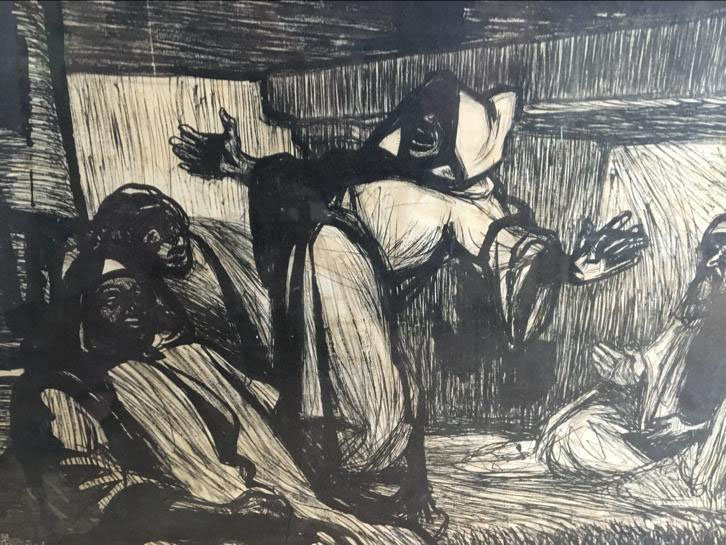
For example, Henricus visited Tunisia in 1901 where Baeten says he produced more than 67 pastels and drawings of which “only seven survive”. These were exhibited in The Hague in 1901, and Leiden in 1907. One of these is depicted here from a private collection: a charming, somewhat cartoon-like ink drawing of three Tunisian male figures.

henricus2.jpg

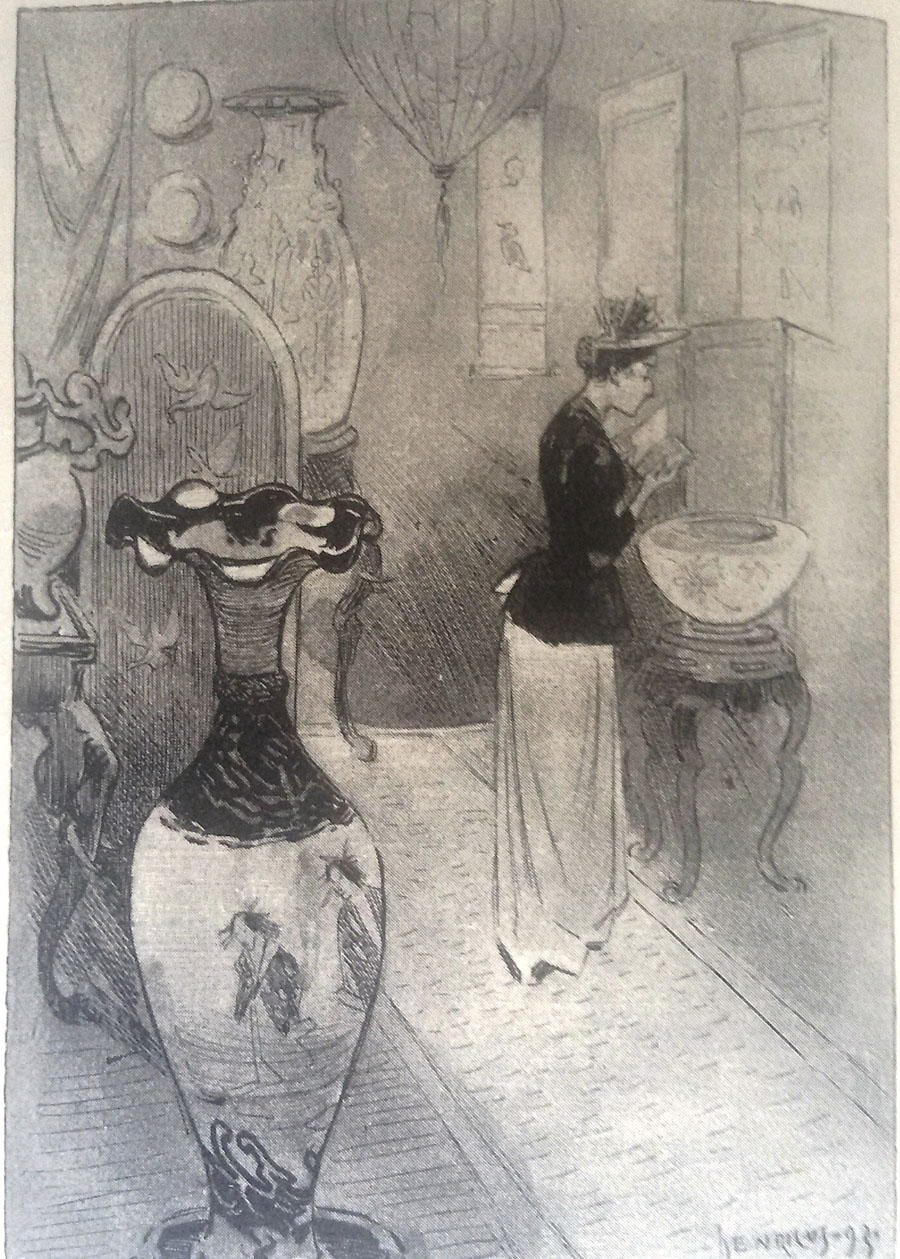
From 1887 till 1892 Henricus lived in Paris where he mingled in the bohemian and artistic circles around Le Chat Noir, and knew people like Rodolphe Salis and Paul Verlaine. The drawings and illustrations he produced from around 1890 are strongly influenced by Parisian graphic artists like Steinlen, Grasset and Willette, uncommon models in Dutch art of the 1890s. Examples like the drawing of a lady in an antique market (above) are to be found in his illustrations for a book by Johan Gram, ‘s-Gravenhage in onzen tijd (The Hague nowadays) from 1893.

henricus3.jpg

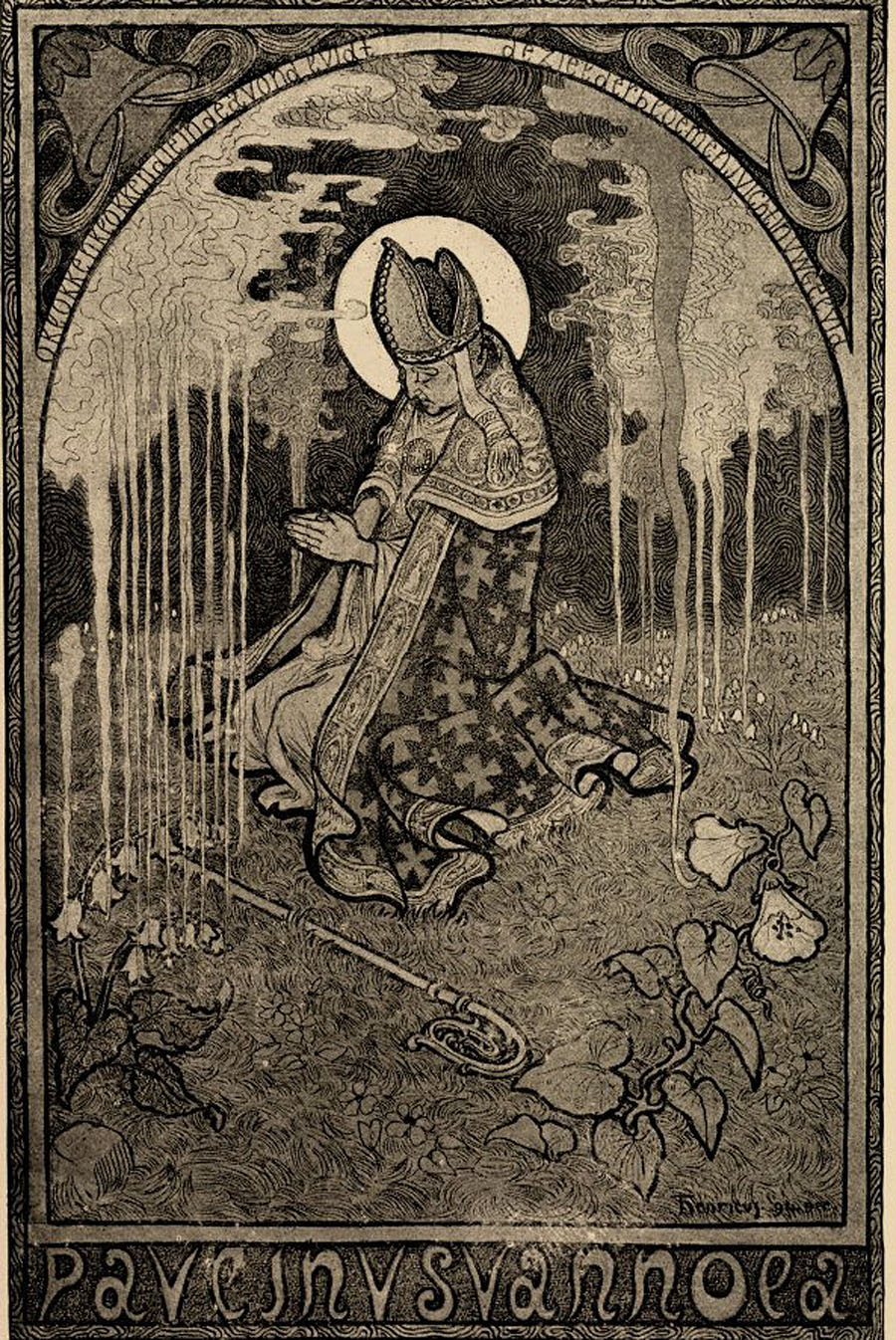
More Symbolist in style, and therefore probably more of interest to { feuilleton } readers, are his illustrations for the popular magazine Elsevier’s. The picture shown here is a lithograph he made for the poem ‘Paulinus van Nola’ by the Flemish poet Pol de Mont, published in 1895.

henricus4.jpg

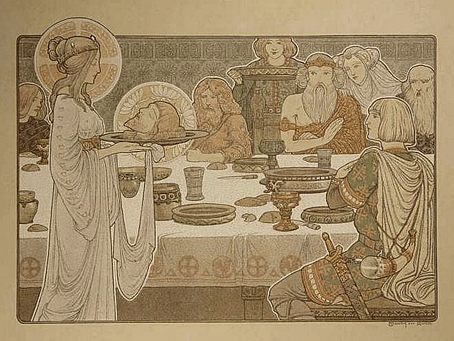
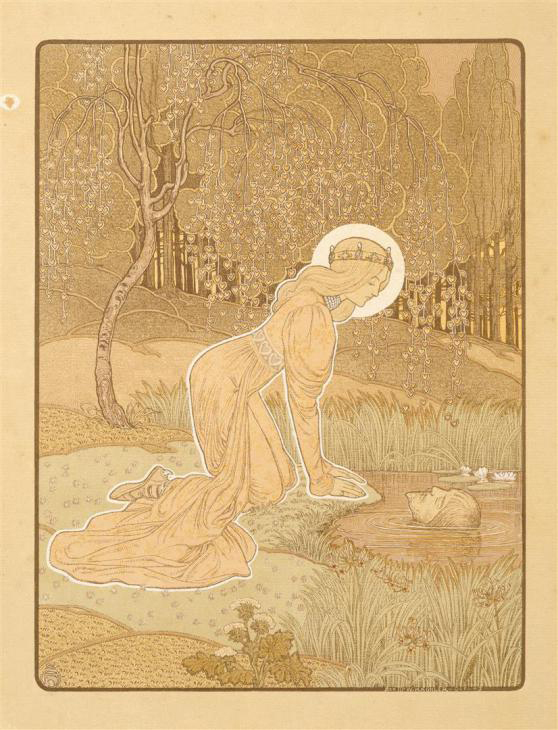
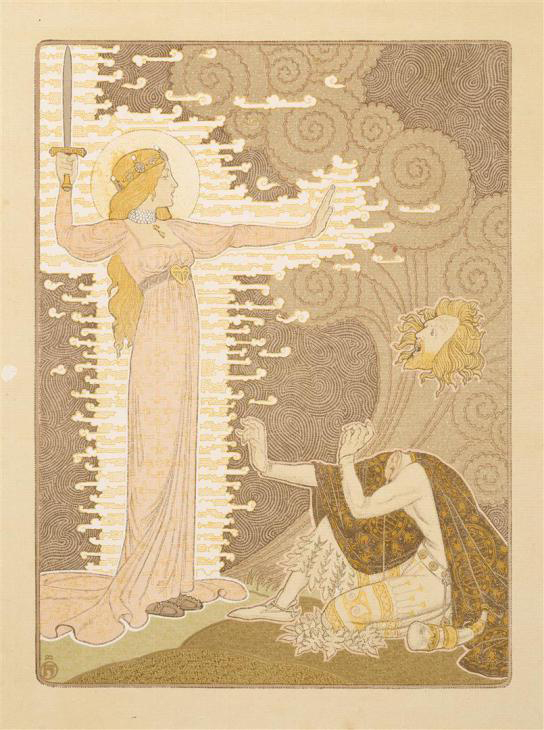
But his chef d’oeuvre is a series of lithographs inspired by the medieval folk song Heer Halewijn (Lord Halewijn), published in 1904 and exhibited in The Hague the same year, of which three are depicted here (from the collection Van der Peppel.) The most famous of the series is plate number sixteen in which Lord Halewijn’s head is decapitated by a charming lady. It is obviously inspired by Beardsley’s Salomé but is made with an entirely different technique and in colours. There is also a touch of Puvis de Chavannes and Carlos Schwabe to them. They are among the finest examples of Dutch fin de siècle graphic art.

Sander Bink

henricus5.jpg

henricus6.jpg

Previously on { feuilleton }
The art of Antoon van Welie, 1866–1956
The art of Simon Moulijn, 1866–1948
René Gockinga revisited
Gockinga’s Bacchanal and an unknown portrait of Fritz Klein
More from the Decadent Dutch
The art of Bolesław Biegas (1877–1954)

univers.jpg

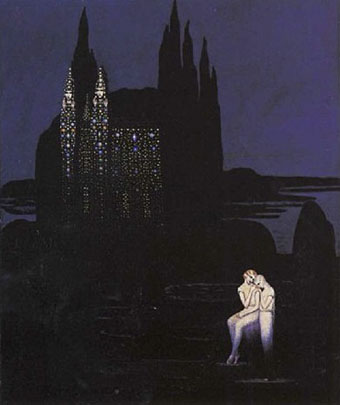
Univers de la tendresse (1918).

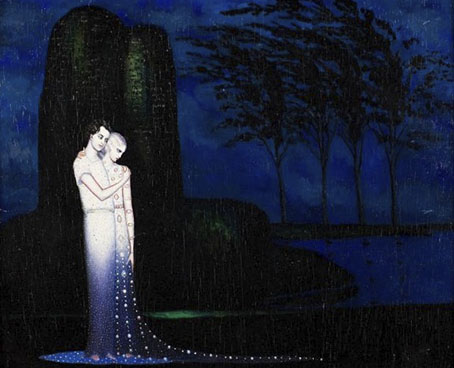
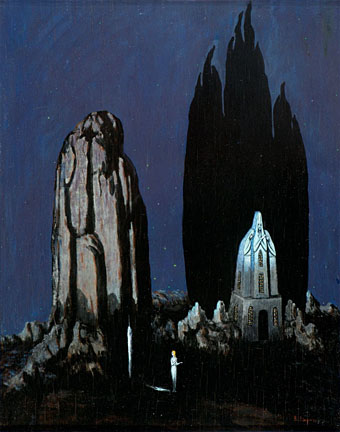
This Polish artist came to my attention recently while looking for something in a book about Surrealist art. As before, the web has its uses especially when it comes to discovering more about artists such as Biegas who were never prominent enough to be given more than a passing mention in art histories. Biegas isn’t really a Surrealist, however, although Apollinaire apparently liked some of his stylised sculptures. The paintings Biegas produced from around 1920 separate into two surprisingly different groups: semi-abstract portraits rather like the later wholly abstract works of František Kupka, and the Symbolist-styled nocturnes featured here. I naturally prefer the latter, not least because some of them nod to the dark cypresses and islands that populate many of Arnold Böcklin’s paintings, but the portraits and sculptures are often very good as well. There’s an artist’s website although the reproductions there are small and watermarked.

byron.jpg

Lord Byron (1919).

chopin.jpg

Chopin (1919).

grotto.jpg

Grotto of the Temple of Secrets (1924).

Continue reading “The art of Bolesław Biegas (1877–1954)”

The art of Antoon van Welie, 1866–1956

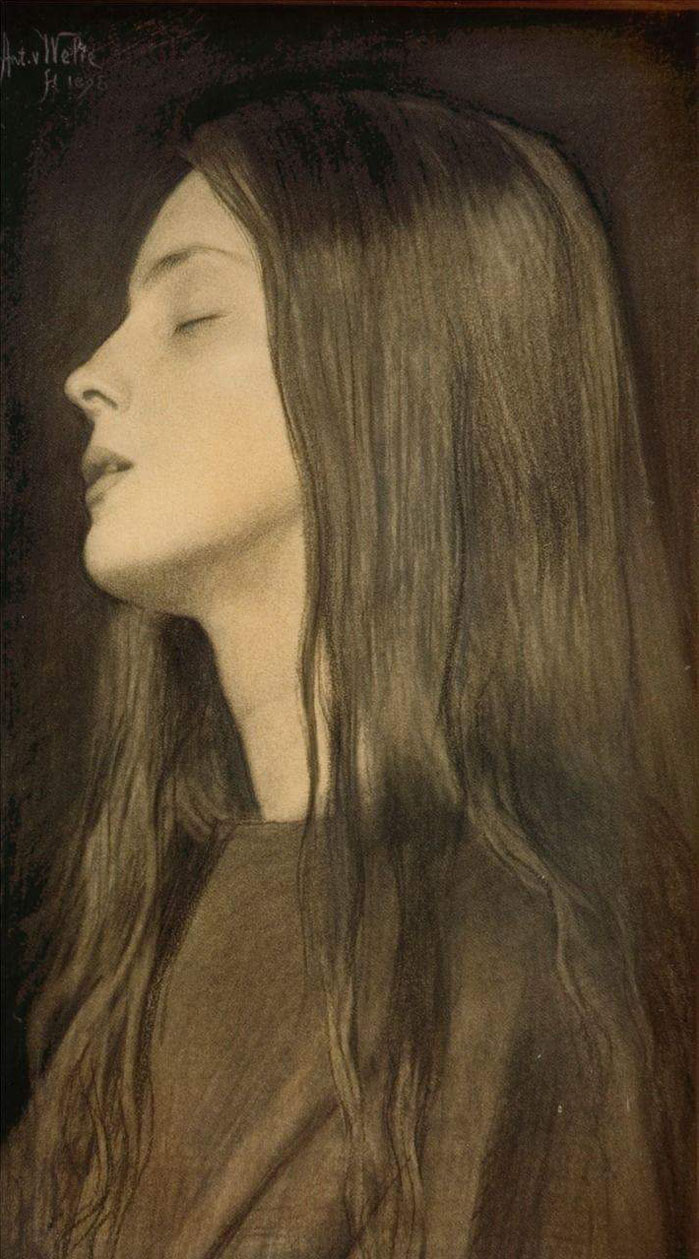
vanwelie1.jpg

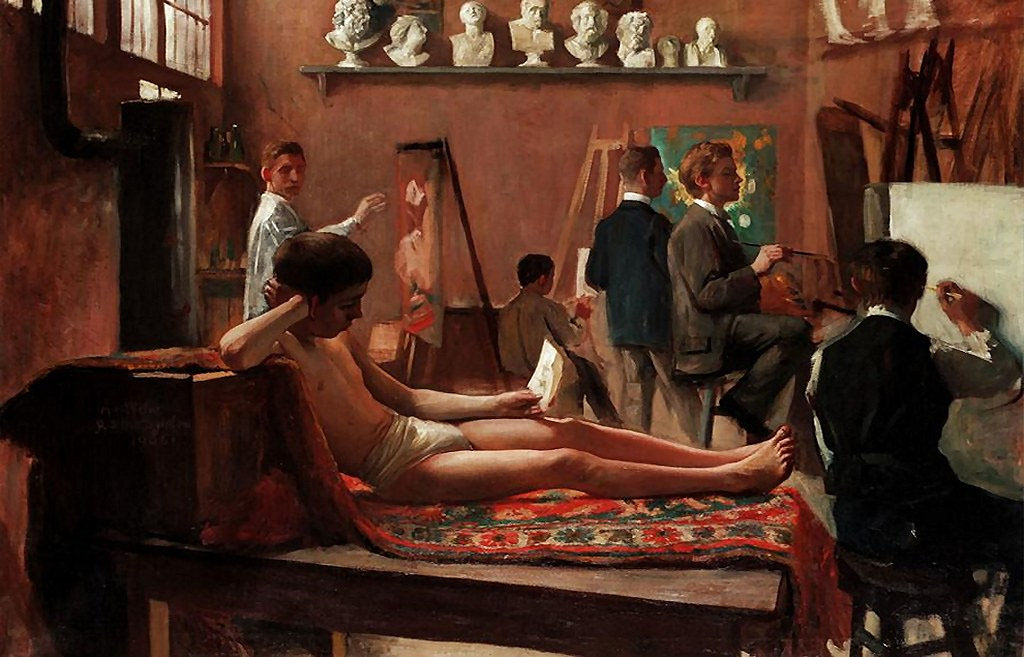
The Artists’ Studio (1906).

This week’s post is another by Sander Bink about a neglected artist of the Dutch fin de siècle. There’s no need for me to add a great deal to Sander’s appraisal below other than to point out the evident debt that Antoon Van Welie seems to owe to the Pre-Raphaelites for whom Ophelia was a popular subject. British artists of the 19th century have often been criticised for adding little to the evolution of Continental art but the influence of the Pre-Raphaelites and the Arts and Crafts movement pervades European Symbolism. My thanks again to Sander for the post.

* * *

Antoon van Welie (Dutch Wikipedia only) was a Dutch painter known mainly for his portraits of the rich and famous. Around 1900 his work was praised by writers and critics such as Camille Mauclair, Jean Lorrain and Anatole France. He had studios in The Hague, London, Paris and The Vatican. There’s not much information about him in English, and for a long time there wasn’t a great deal in Dutch either, since during his lifetime he was already more or less forgotten. His being openly gay could have been one of the reasons. Male beauty is one of his subjects, as illustrated by The Artists’ Studio. His preference for depicting Catholic priests and flamboyant society ladies might also have been a little too extravagant for Dutch artistic standards of the period. The influence of Symbolism and mysticism on his work sets him a little apart from the crowd as well. All this does make him somewhat of a “decadent” or fin de siècle artist. What surely did not help his posthumous fame was a portrait of Mussolini he painted in 1921, and apparently he later also made one of Hitler. But in 2003 he was rescued from art-historical oblivion by the good people of the Louis Couperus Museum in The Hague. An exhibition there was followed in 2007 by a larger one at Museum Het Valkhoff in Nijmegen: The Last Decadent Painter. The book published for the occasion gives an extensive overview of Van Welie’s life and oeuvre but is unfortunately only available in Dutch.

The portraits which made him famous in his day are, in my opinion, technically not that great and sometimes tend toward kitsch. More subtle and beautiful are his early Symbolist works which, like those by Simon Moulijn, are strongly influenced by Maeterlinck’s neo-mystical writings.

vanwelie2.jpg

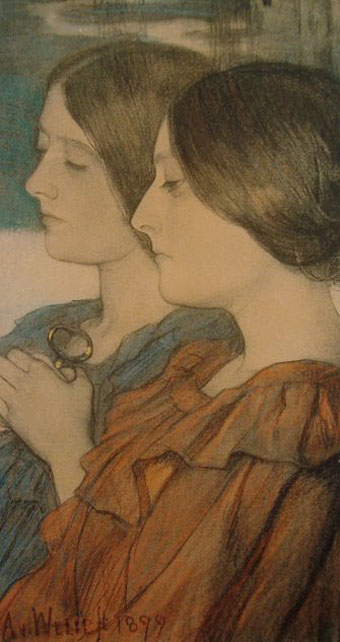
Aglavaine en Sélysette (1899).

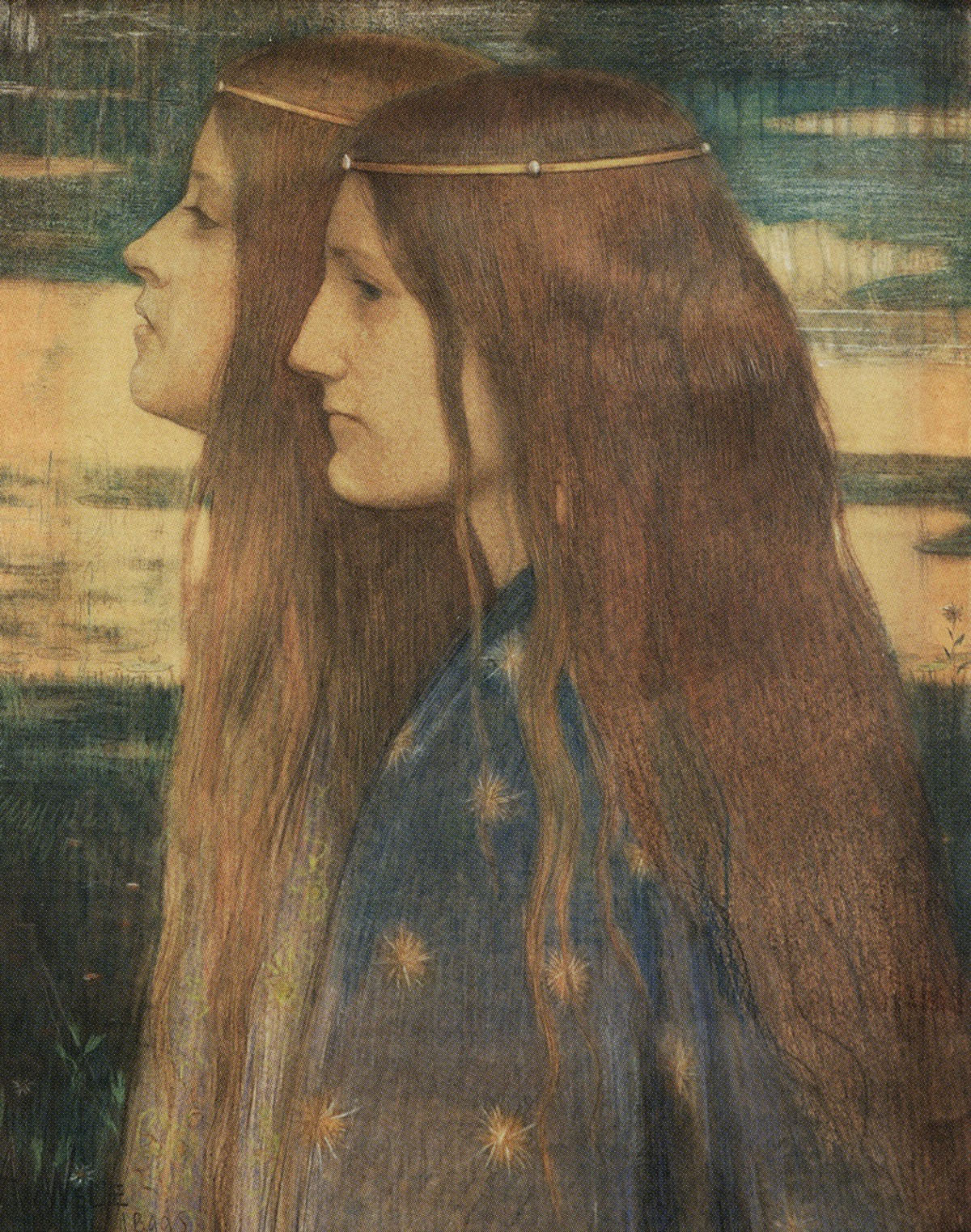
Some quite refined examples are the lithograph Aglavaine en Sélysette and the pastel Les Princesses de Légende, both directly inspired by Maeterlinck’s plays.

vanwelie3.jpg

Les Princesses de Légende (1899).

vanwelie4.jpg

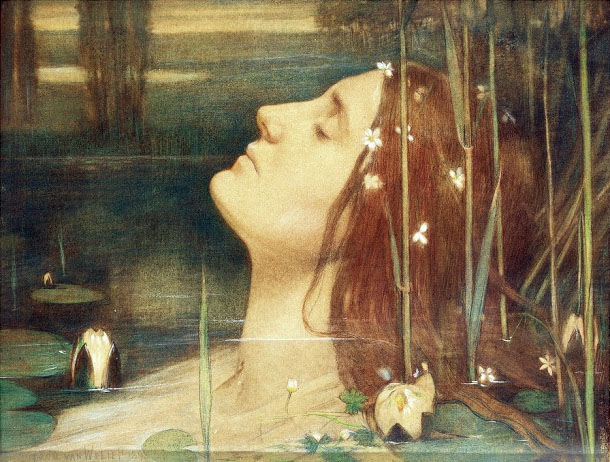
Ophelia.

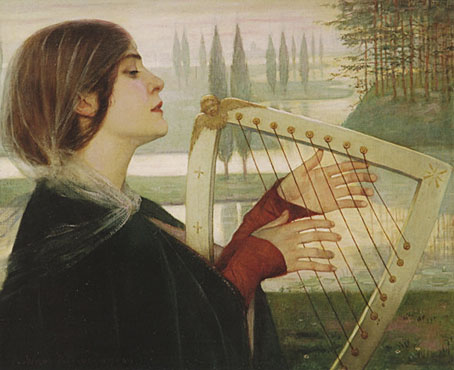
Literature was an important influence, as it was for many other Symbolist painters, and Van Welie duly produced the pastel Ophelia in 1898–’99. The same goes for musical themes, an example of which is the serene pastel Holy Cecilia with Lyre.

vanwelie5.jpg

Holy Cecilia with Lyre (1899).

vanwelie6.jpg

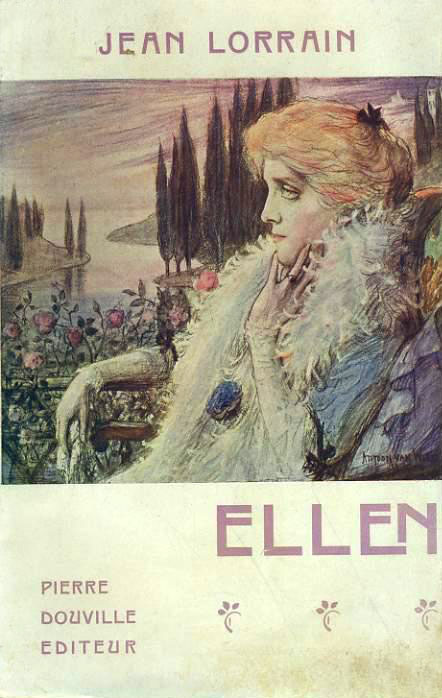
He also designed book covers like the one for Jean Lorrain’s novel Ellen from 1906.

vanwelie7.jpg

La Douleur (1895).

But his most attractive work and as far as I am concerned one of the finest works of 1890s Dutch art is the chalk drawing La Douleur. Although the title emphasizes the young lady’s suffering, she also seems to be in a (sexual) ecstasy. A paradoxical beauty like Baudelaire’s femmes damnées: “de terribles plaisirs et d’affreuses douceurs”.

Sander Bink

Elsewhere on { feuilleton }
The gay artists archive

Previously on { feuilleton }
The art of Simon Moulijn, 1866–1948
René Gockinga revisited
Gockinga’s Bacchanal and an unknown portrait of Fritz Klein
More from the Decadent Dutch
The art of Simon Moulijn, 1866–1948

moulijn5.jpg

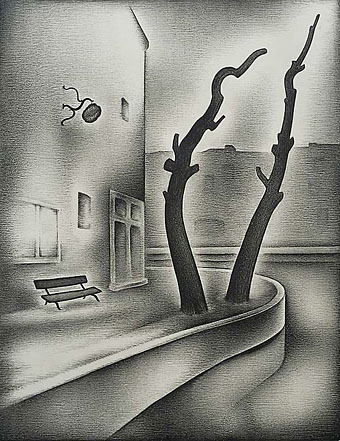
Landscape, Drenthe (1896). Collection Hein Klaver.

Sander Bink’s previous guest posts here concerned some of the forgotten artists of the Dutch fin de siècle, in particular the Beardsley-inspired work of René Gockinga. This new post from Sander is more Symbolist-oriented, with a look at the work of another Dutch artist.

* * *

Simon Moulijn was a Dutch painter and graphic artist whose work shows a striking affinity with European Symbolism, in particular his prints and paintings made in the 1890s which would appear to provide a link between Dutch Realism and mystical Symbolism. Beyond their historical context, these are simply beautiful pictures which is, of course, the most important thing.

moulijn6.jpg

Cover design for Nachtsilene, 1902.

Landscapes were Moulijn’s main theme; some bring to mind the land- and cityscapes of Fernand Khnopff in which the world has become silent: a serene, quiet world, free from the noise and misery of modern life. “Anywhere out of this world”, but within the world we already know. Although not “Decadent” like Khnopff—there are no femmes fatales in his landscapes—Moulijn must certainly have been inspired by Khnopff and similar artists. Van Gogh and Jan Toorop were important for Moulijn as well. That Moulijn was well-versed in Symbolism and other new art forms at the time such as Art Nouveau is evidenced by his exhibition at Siegfried Bing’s Paris Gallery in 1895. Like many of the artists of his generation, he was greatly inspired by the mystical writing of Maeterlinck. No wonder, then, that he designed book covers and illustrations for Marie Marx-Koning, a Dutch writer unjustly neglected today, whose novels and stories also show a strong affinity with European mystical Symbolism.

moulijn1.jpg

Night (1893). Lithograph.

These qualities are already exemplified by Moulijn’s first printed work, the lithograph Night from 1893 which depicts a traditional Dutch subject, a farm; but there are no peasants, and the nightly tones and silence make it look more like a farm from an Ingmar Bergman film than a landscape by his painter contemporaries from The Hague School.

moulijn2.jpg

Farm at Diphorn (1896). Gemeentemuseum Den Haag.

moulijn4.jpg

Spring (1896). Drents Museum.

moulijn3.jpg

Autumn (1895). Drents Museum.

An 1896 painting with the same subject, Farm at Diphorn, brings to mind the imaginary landscapes of Félix Vallotton, as do, more or less, two pastels which I personally feel to be his best: Spring and Autumn. Once again, the coloured areas in these Symbolist landscapes are reminiscent of a Vallotton or Franz Melchers. But where Vallotton’s landscapes might be characterised as psychological landscapes, these two by Moulijn are almost abstract experiments in colour.

moulijn7.jpg

Vampire (1916). Collection Van Wezel.

Finally mention must be made, for curiosity’s sake and to satisfy the reader’s Decadent needs, of the 1916 coloured lithograph Vampire. This demonstrates Moulijn’s affinity with a more Decadent Symbolism, although by this time the style was increasingly outmoded.

Sander Bink

Previously on { feuilleton }
René Gockinga revisited
Gockinga’s Bacchanal and an unknown portrait of Fritz Klein
More from the Decadent Dutch