Ver Sacrum, 1900

vs-1900-01.jpg

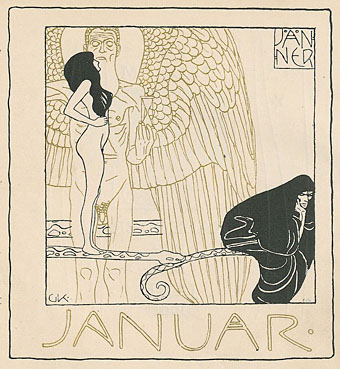
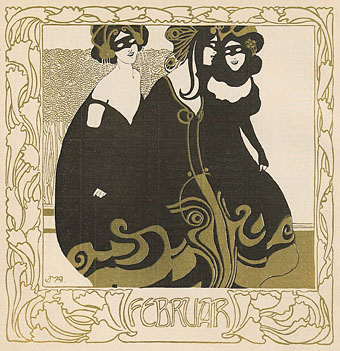
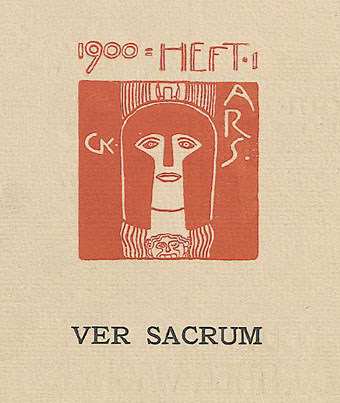
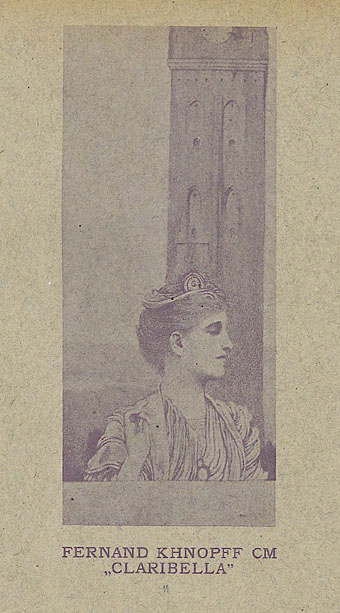
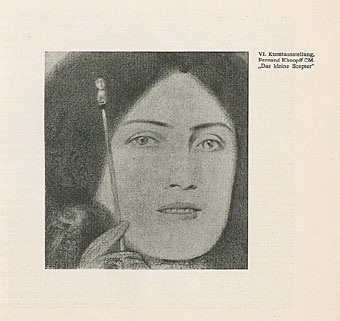
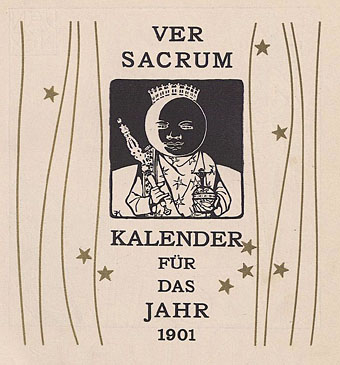
Continuing an occasional series of posts about Ver Sacrum, the art journal of the Viennese Secession. The collected issues for 1900 undergo a change of design, and not necessarily for the better. Gone are the decorative covers of previous years, replaced by small emblem-like vignettes for each issue. The one above is a design by Gustav Klimt whose work is featured throughout this year. Other familiar names include the Belgian Symbolist Fernand Khnopff, Ludwig von Hofmann and Marcus Behmer. The page design is generally less interesting, unfortunately, although the magazine did retain its square format and there are many impressive examples of Art Nouveau graphics. The complete set of pages for this volume can be viewed or downloaded here.

vs-1900-02.jpg

vs-1900-03.jpg

Continue reading “Ver Sacrum, 1900”

A Picture to Dream Over: The Isle of the Dead

iod_basle.jpg

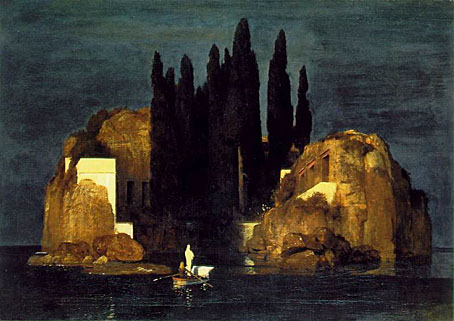
The Isle of the Dead (second version, 1880), Kunstmuseum, Basel.

In the sudden flares of light over the water, reflected off the sharp points of his cheeks and jaw, a harder profile for a moment showed itself. Conscious of Sanders’s critical eye, Father Balthus added as an afterthought, to reassure the doctor: “The light at Port Matarre is always like this, very heavy and penumbral – do you know Böcklin’s painting, ‘Island of the Dead’, where the cypresses stand guard above a cliff pierced by a hypogeum, while a storm hovers over the sea? It’s in the Kunstmuseum in my native Basel –”

The Crystal World (1966) by JG Ballard.
rachmaninov.jpg

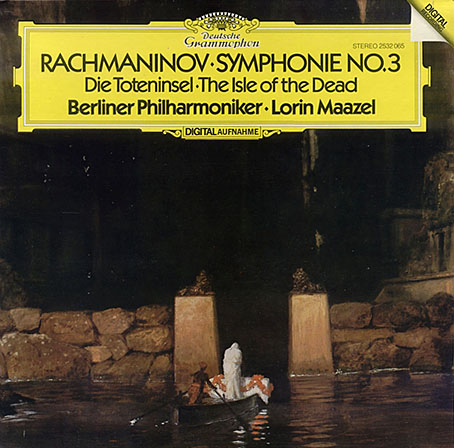
A 1982 recording.

Today’s post is another guest piece over at Tor.com where I run through a history of some of the works in different media inspired by Arnold Böcklin’s The Isle of the Dead (1880–1886). The four versions of Böcklin’s painting are favourites of mine so I’ve touched on this subject a couple of times before but this is the first time I’ve gone into any detail examining their influence. Many artworks have become highly visible in the past century via copies, parodies and imitations: think of Leonardo’s Mona Lisa and The Last Supper, or Michelangelo’s David and The Creation of Adam. What’s fascinating about The Isle of the Dead is that it’s not one picture but four versions of the same scene, and they’ve all been very influential not as parodies but as direct inspirations for other artworks—musical compositions, feature films, a novel—yet few people would recognise the artist’s name. My post only scratches the surface by running through some of the more well-known works but there’s a whole website devoted to the subject for anyone wishing to investigate further.
coc.jpg

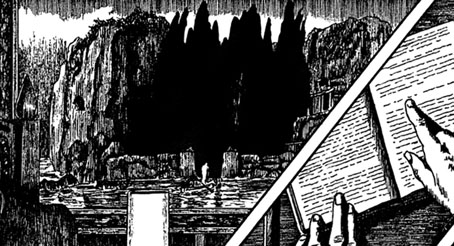
The Call of Cthulhu (1988).

Modesty prevented me from mentioning my own work in the Tor post but I’ll do so here. Among the many references ladled into my adaptation of The Call of Cthulhu there’s the 1886 Leipzig version of Böcklin’s painting in the background of a panel. A prefiguring of the end of the story and also an excuse to add to the list of works acknowledging one of the great Symbolist paintings.

Previously on { feuilleton }
The Isle of the Dead in detail
Arnold Böcklin and The Isle of the Dead

Vrubel’s Demon

vrubel1.jpg

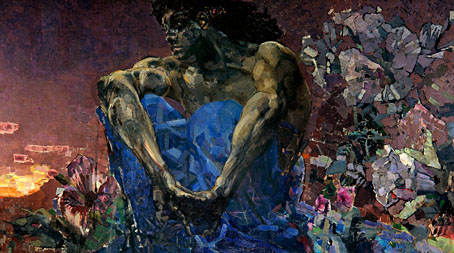
Demon (sitting) (1890) by Mikhail Vrubel.

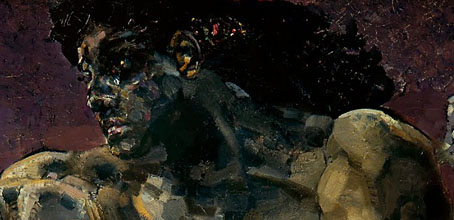
Another Symbolist painting ferreted out from the collections at the Google Art Project, this is actually one of a number of demon figures painted by Mikhail Vrubel (1856–1910). The subject marks it as Symbolist but the almost Expressionist style is very 20th century which makes its date of 1890 all the more surprising.

vrubel2.jpg

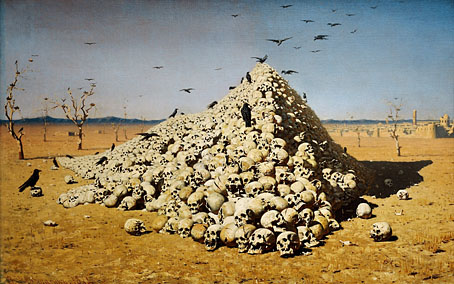
This is one of two Vrubels at the Google page for The State Tretyakov Gallery, Moscow. In the same collection there’s also The Apotheosis of War (1871), Vasily Vereshchagin’s timeless (if heavy-handed) canvas whose yawning skulls can now be explored in detail.

vereshchagin.jpg

Previously on { feuilleton }
Diaghilev’s World of Art

The Isle of the Dead in detail

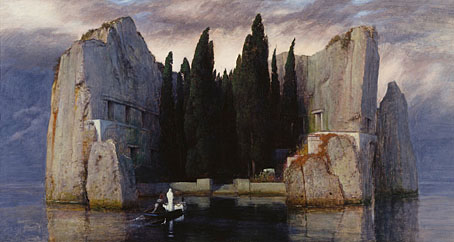
bocklin1.jpg

More from the Google Art Project where a couple of paintings by Swiss Symbolist Arnold Böcklin (1827–1901) may be explored, one of them an 1883 version of cult favourite The Isle of the Dead. No need to repeat the history of that work when I’ve already written about it. The version here is from the Alte Nationalgalerie, Berlin, and is the one I’ve seen reproduced in books the least so it’s good to find it in high-quality.

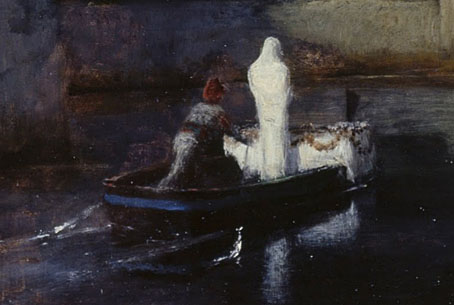
bocklin2.jpg

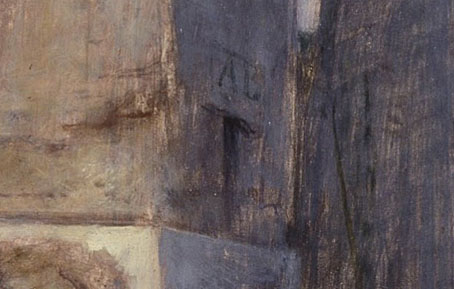
bocklin3.jpg

Böcklin painted five versions of this scene, one of which was lost during the Second World War. A couple of them, this one included, have his initials placed over the doorway of a tomb, a detail which isn’t always visible in reproductions.

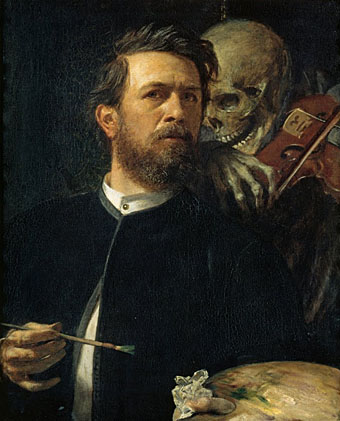
bocklin4.jpg

In the same collection is another gloomy Böcklin work, Self-Portrait with Death Playing the Fiddle (1872), and I hadn’t noticed before that the fiddle only has one string, the lowest, which would no doubt create a suitably dolorous melody.

For more on The Isle of the Dead see Toteninsel.net, a site dedicated to the many works in different media derived from the paintings. If you need a musical accompaniment whilst browsing, Rachmaninoff wrote the ideal piece.

Previously on { feuilleton }
Arnold Böcklin and The Isle of the Dead
Deutsche Kunst und Dekoration #25

dkd25-01.jpg

A design by Emanuel Margold.

This post concludes the delve into back numbers of Deutsche Kunst und Dekoration, the German periodical of art and decoration. Volume 25 covers the period from October 1909 to March 1909, and while the Internet Archive has further editions available they make a big jump after this number to 1923. The later editions are still interesting, of course, but in presentation and content they’re very different to what went before. Despite the text of these magazines being entirely German it’s been an education going through them not only for the detailed attention given to artists often passed over in books, but also for the articles reporting notable events in European art history as they happened. We have the Robarts Library of the University of Toronto to thank for having made these publications available.

dkd25-02.jpg

An illustration from a series by Carl Otto Czeschka for Die Nibelungen by Franz Keim.

dkd25-03.jpg

Continue reading “Deutsche Kunst und Dekoration #25”