Mirko Racki’s Inferno

racki.jpg

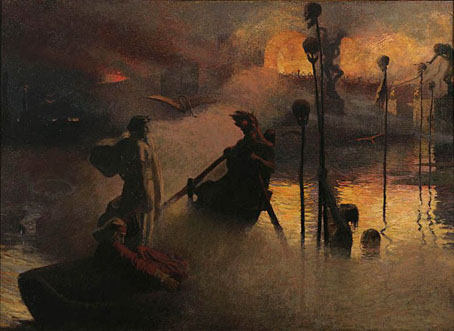
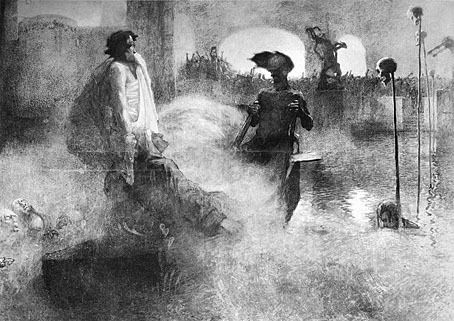
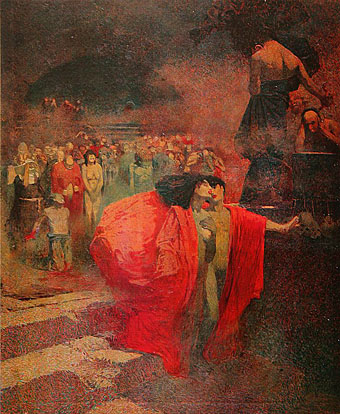
Mirko Racki (1879–1982) was a Croatian painter whose early work fits the template of allegorical Symbolism even if he was never part of any Symbolist movement. Dante’s Divine Comedy was a favourite subject: these canvases are among the available examples which also include a series of etchings. The painting above showing Charon ferrying Dante and Virgil across the Styx struck me for being closer to Wayne Barlowe’s more recent depictions of Hell than the kinds of infernal imagery you’d expect from the early years of the 20th century. This quality, which you find in other artists from Eastern Europe, may be a result of the Academy being less of a dominant force than it was in Western European countries. It’s still the western artists that dominate the web, however, so details about Racki’s work are scant. The third painting shows Paolo and Francesca being sent to the second circle of the Inferno. (Racki tip via Beautiful Century.)

rack3.jpg

rack2.jpg

Previously on { feuilleton }
Albert Goodwin’s fantasies
Harry Lachman’s Inferno
Maps of the Inferno
A TV Dante by Tom Phillips and Peter Greenaway
The last circle of the Inferno

Kupka in Cocorico

kupka1.jpg

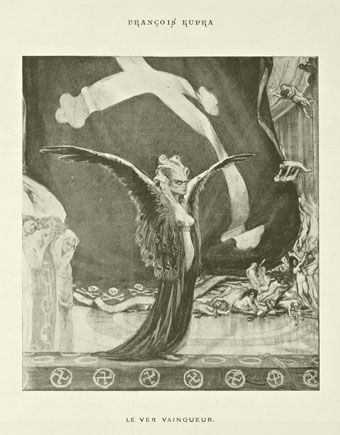
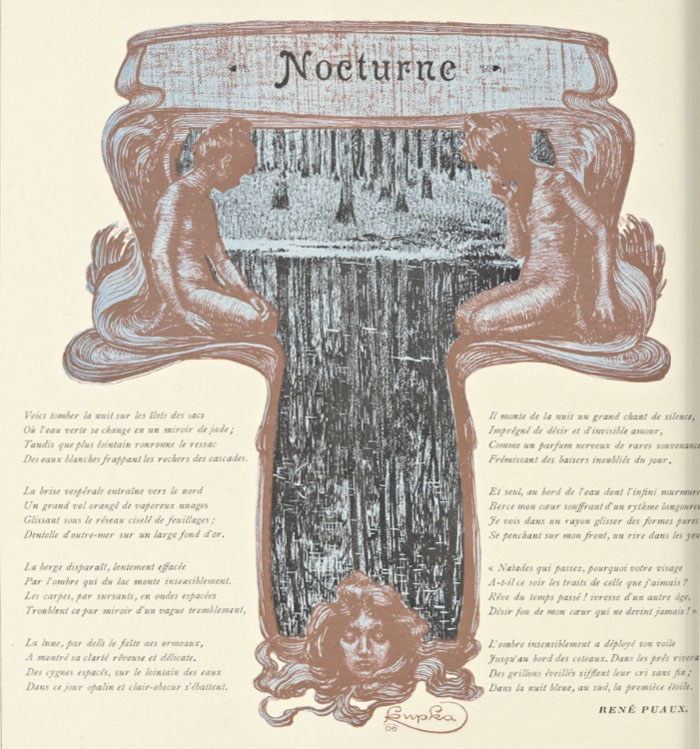
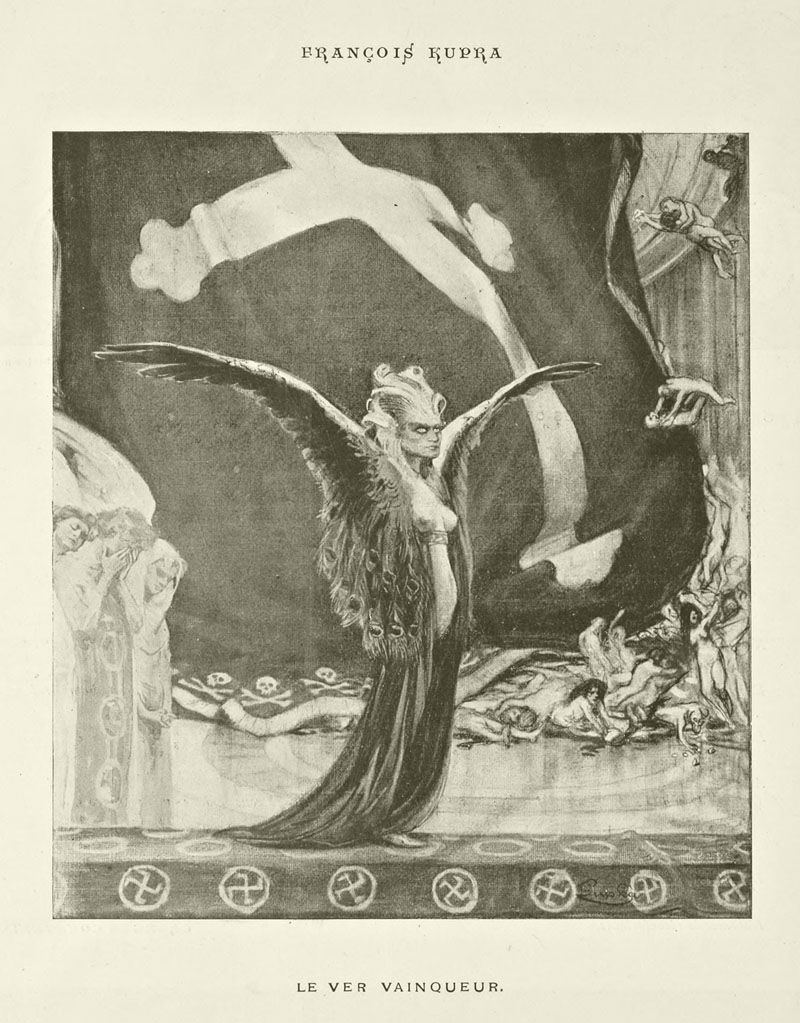
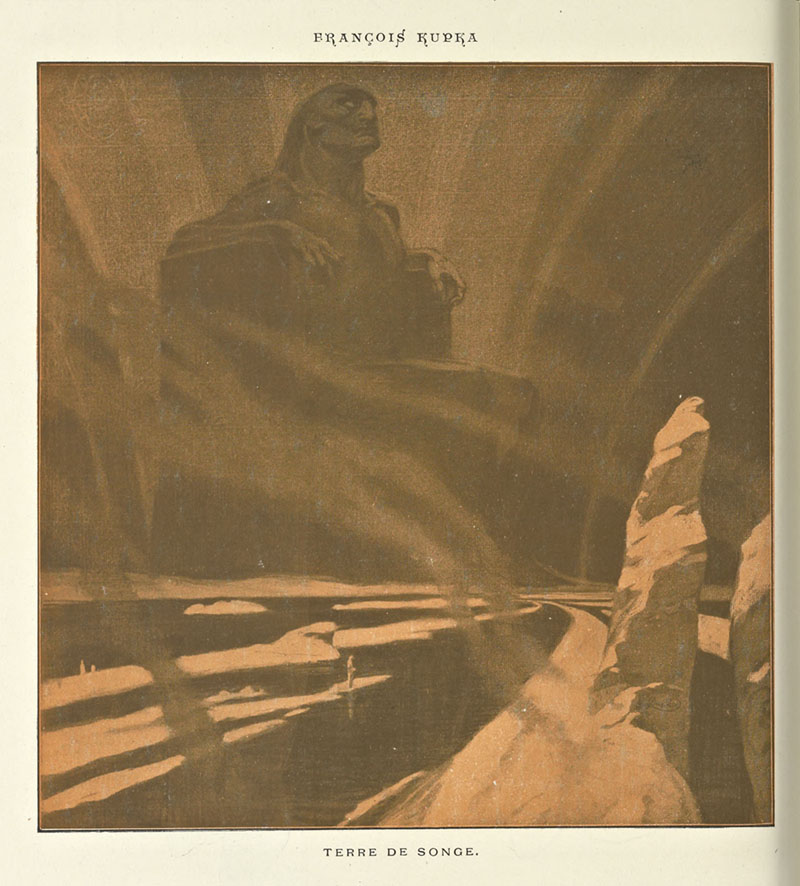
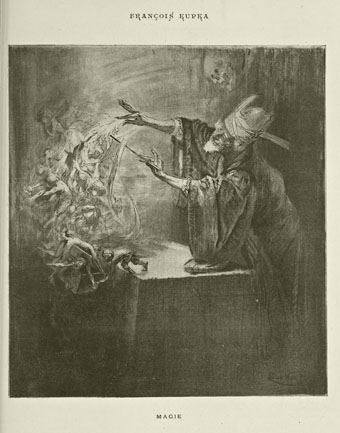
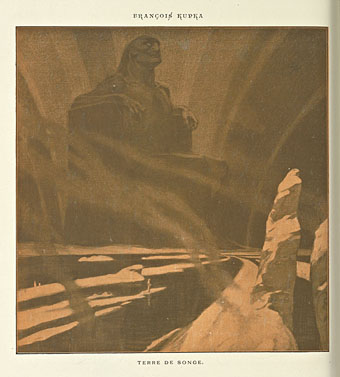
As noted yesterday, Czech artist František Kupka produced a cover for French magazine Cocorico together with this handful of interior illustrations, all of which date from around 1900. Kupka was living in Paris at the time, and several of these drawings reflect his connections to the Symbolist movement. I’ve posted his Poe illustration before but everything else here is new to me. The most striking piece is Terre de Songe (Land of Dreams) which illustrates a text piece with the same title. Kupka aficionados will recognise this as a variation on a print he made in 1903, Resistance, or The Black Idol, a drawing which today seems to be his most popular (or most visible) work. I’ve wondered a few times whether a tiny speck visible in The Black Idol was meant to be a human figure, something which Terre de Songe confirms. A fantastic drawing in all senses of the word.

The four pictures which follow Terre de Songe are less impressive, a series of double-page satirical drawings whose obscure meaning isn’t helped by their being folded into the centre of the magazine. They’re included here for the sake of completeness.
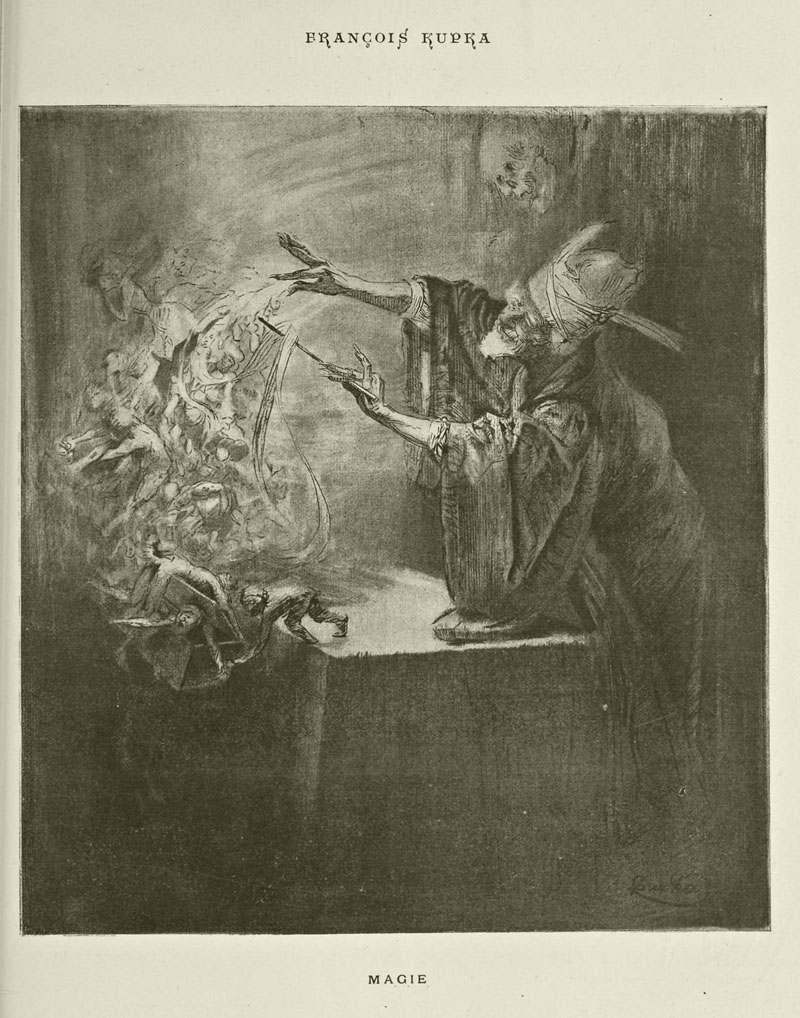
kupka2.jpg

Magic.

kupka3.jpg

The Conqueror Worm (after Edgar Allan Poe).
kupka4.jpg

Land of Dreams.

Continue reading “Kupka in Cocorico”

The art of Edmond van Offel, 1871–1959

offel01.jpg

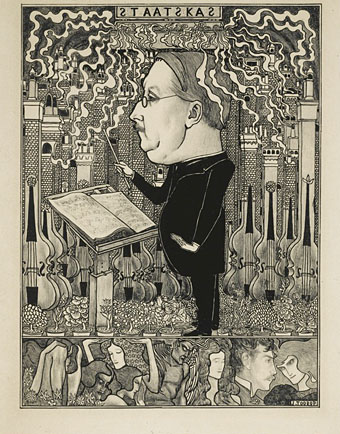
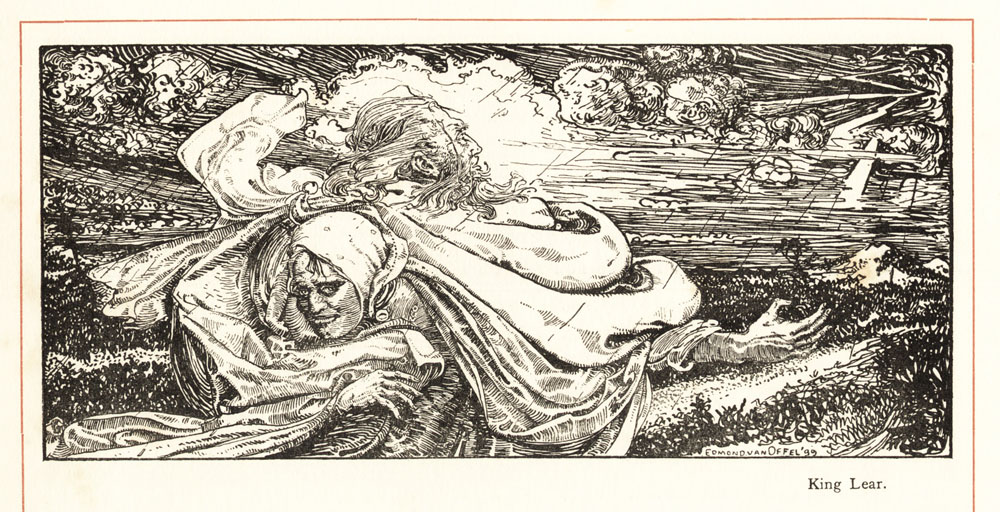
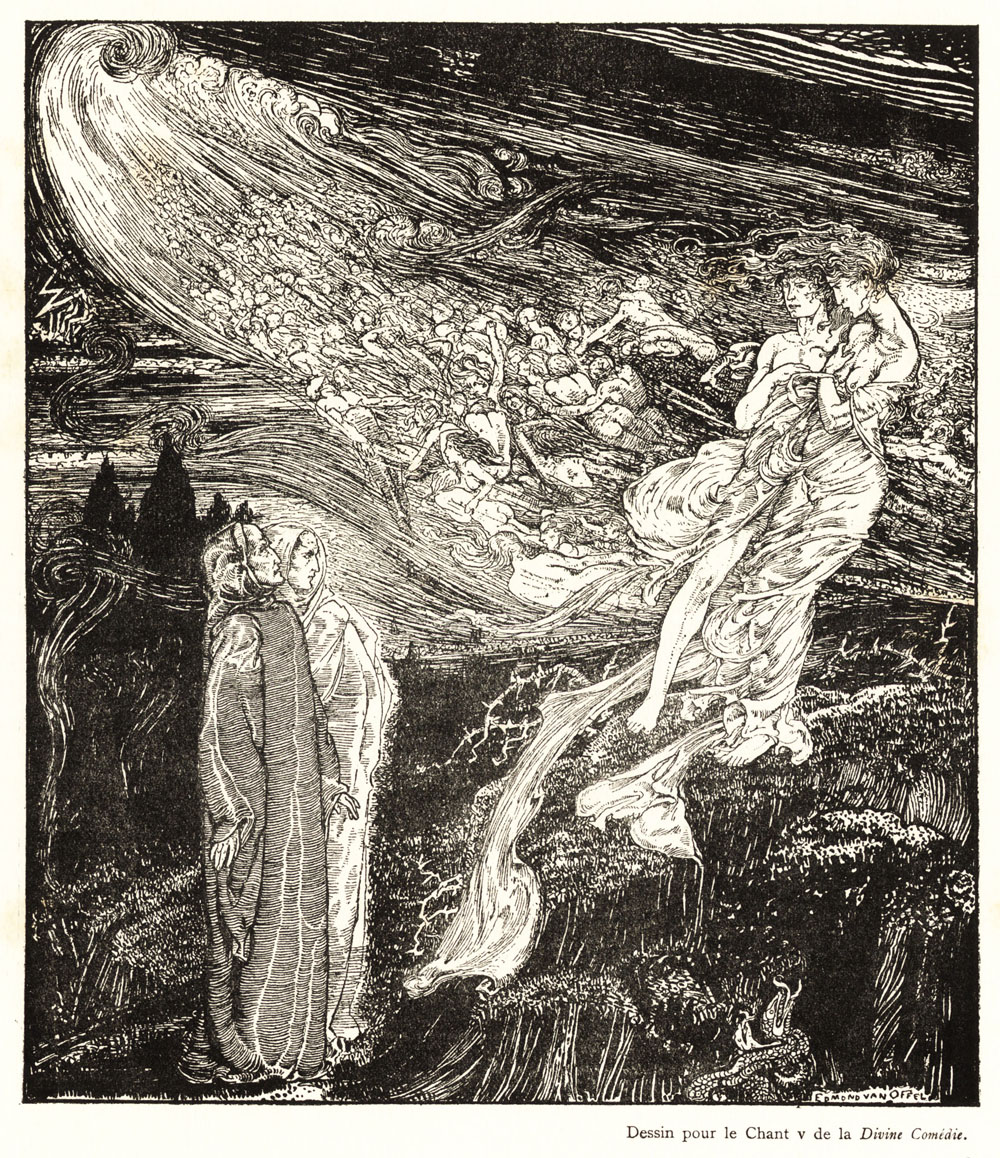
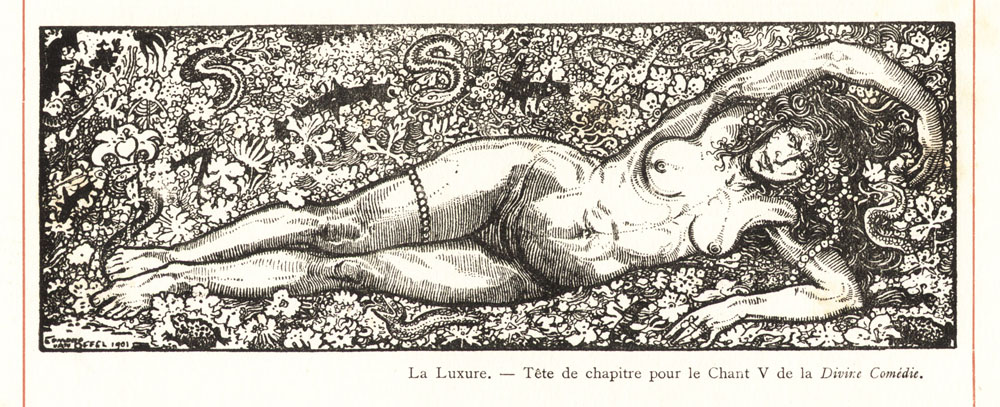
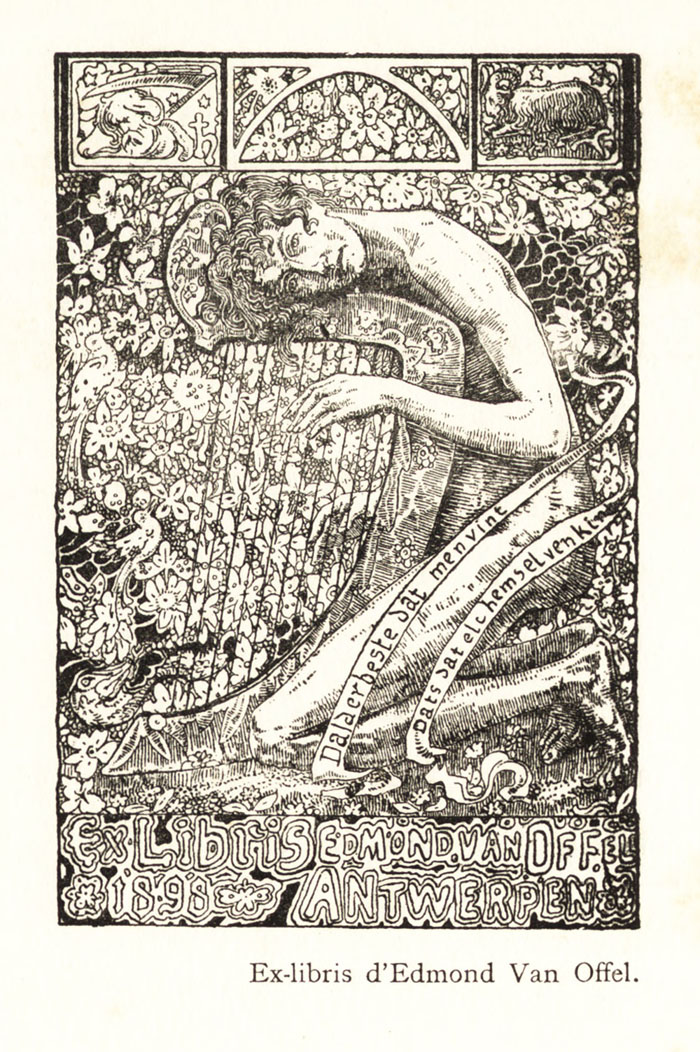
Edmond van Offel was a Belgian artist who Philippe Jullian features in two of his books about Symbolist art but whose work I’d not seen anywhere else—at least until now. All the pictures here are from a collection published in Paris in 1902 which may be the one Jullian used for his selections. The book contains both Jullian drawings together with a great deal of other work comprising illustrations, vignettes, bookplates and also some of the artist’s writings. Offel’s combination of detailed line-work and attenuated figures is reminiscent of Charles Ricketts who may have been an influence.

offel02.jpg

offel03.jpg

offel04.jpg

Continue reading “The art of Edmond van Offel, 1871–1959”

Symbolist Temptations

khnopff.jpg

The Temptation of St Anthony (1883) by Fernand Khnopff.

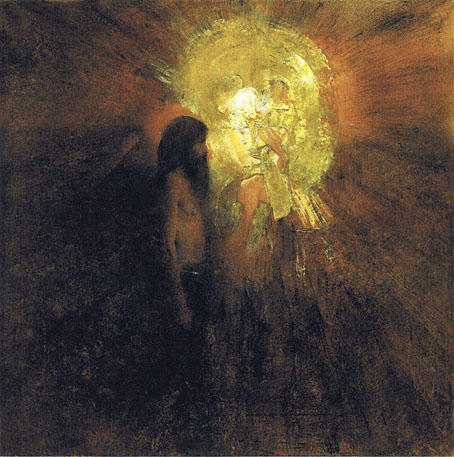
This should really be more Symbolist Temptations since Odilon Redon belongs among these artists. Redon may have devoted more of his time than anyone else to the saint’s travails but other artists also took up the theme. Fernand Khnopff seldom depicted religious subjects but his painting—an early work—is remarkable for the way it reduces the phantasmagoric pageants of previous centuries to a simple face-to-face confrontation.

rops.jpg

The Temptation of St Anthony (1878) by Félicien Rops.

Félicien Rops, on the other hand, can always be relied upon to be vulgar and blasphemous in equal measure. The Devil lurking behind the cross was probably added to balance the composition but that silly expression makes the picture seem more comical than shocking. Similar skull-faced cherubs may be found in other Rops prints.

Continue reading “Symbolist Temptations”

Odilon Redon’s Temptations

redon09.jpg

Saint-Antoine: Au secours, mon Dieu! (Saint Anthony: Help me, O my God!)

St. Anthony and his temptations provide another connection between the Surrealists and the Symbolists via Gustave Flaubert and his phantasmagoric drama. Flaubert’s The Temptation of St Anthony (1874) doesn’t quite stand in relation to the art of the time as does Oscar Wilde’s Salomé but, with its predominant themes of sex, death and spiritual transcendence, it both suited and pre-empted the concerns of the Decadence. Odilon Redon was particularly taken with the book, and from 1888 to 1896 produced three sets of lithograph illustrations. The examples here are from the final set of 24 images. A few of these are the ones you see most often in Symbolist studies, often in poor reproductions, but the other sets have some memorable moments. What’s most notable about all the drawings is how little the saint appears in them, Redon choosing to depict either the visions or the subjects of Flaubert’s philosophical discussions. See the complete set here.

redon10.jpg

Et partout ce sont des Colonnes de basalte, … la lumière tombe des voûtes (And on every side are columns of basalt, … the light falls from the vaulted roof)

redon11.jpg

Mes baisers ont le gout d’un fruit qui se fondrait dans ton cœur! … Tu me dédaignes! Adieu! (My kisses have the taste of fruit which would melt in your heart! … You distain me! Farewell!)

redon12.jpg

Des fleurs tombent, et la tête d’un python paraît (Flowers fall and the head of a python appears)

Continue reading “Odilon Redon’s Temptations”