Monsieur René Magritte, a film by Adrian Maben

magritte1.jpg

Until the end of his life, [Magritte] preferred to take the tram.

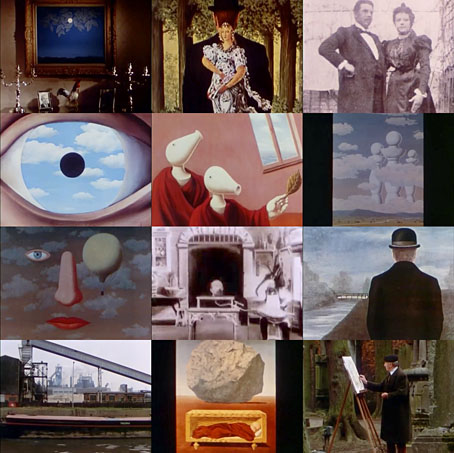
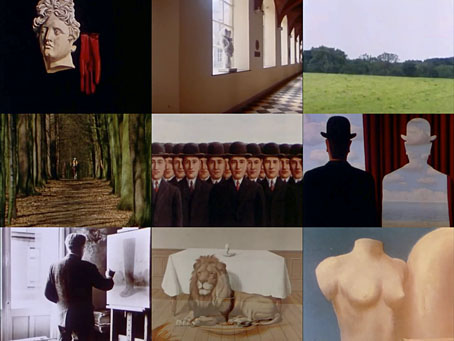
Now there’s an attitude I approve of. George Melly in his BBC film about Surrealism mentions visiting Magritte at his home in Brussels, and we see Magritte’s house at the beginning of Adrian Maben’s 50-minute film about the artist’s life and work. Maben’s film was made in 1978 as an Franco-German TV production but the narration, by Maben himself, is in English. Surrealism seemed to be back in vogue in 1978: as mentioned yesterday, the Hayward Gallery in London staged an exhibition of Surrealist art that year, the BBC commissioned George Melly’s film as a result of this, while over on rival network ITV there was the marvellous documentary about Surrealist patron Edward James who modelled for one of Magritte’s most famous paintings, La reproduction interdite (1937).
magritte2.jpg

Adrian Maben’s name will be familiar to Pink Floyd obsessives as the director of Pink Floyd: Live at Pompeii (1972), and if you’re familiar with that film you can recognise the same shooting style in his Magritte film which deploys similar slow zooms, tracking shots and images sliding in and out of the frame. The music is credited to a surprising combination of Béla Bartók (mostly piano) and Roger Waters, although some of the pieces from the latter are actually by Pink Floyd, there’s even some of the opening of Obscured By Clouds. In style and content the film is as good as anything the BBC were producing at the time, with extracts from a TV interview with the artist, and also some of Magritte’s high-spirited home movies made with his wife and friends.

Magritte and Pink Floyd are a fitting match, some of the Floyd’s album covers could be Magritte paintings rendered photographically: two men shaking hands, one of whom is on fire; a giant pig adrift over a power station. Storm Thorgerson always acknowledged the debt that Hipgnosis owed Magritte’s example, it’s there in the title of the first Hipgnosis book, Walk Away René, and in this short Tate interview from 2011 where he mentions the Wish You Were Here album as being a very conscious Magritte homage.

Previously on { feuilleton }
George Melly’s Memoirs of a Self-Confessed Surrealist
The Secret Life of Edward James
René Magritte by David Wheatley
George Melly’s Memoirs of a Self-Confessed Surrealist

melly1.jpg

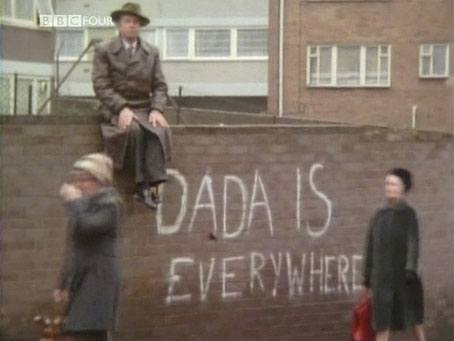
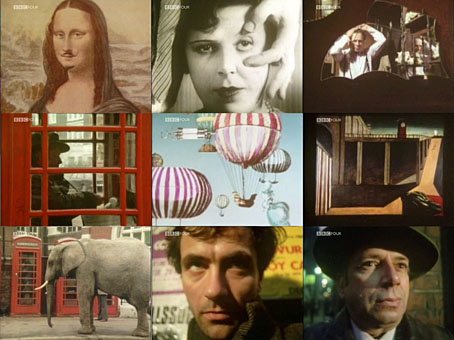
It’s a short step from Dada to Surrealism, and George Melly provides a brief skate through the philosophies of both in this 25-minute BBC film from 1978. Melly, like JG Ballard, was struck by Surrealism at an impressionable age, and the love affair was a lasting one. Both Melly and Ballard championed Surrealism during periods when it was deeply unfashionable, an oppositional stance that Ballard seemed to relish.

melly2.jpg

Melly’s enthusiasm was so well-known that he was often called upon as a token advocate of Surrealism whenever one was required by the TV channels, hence this film whose title implies an admission of something disreputable. A major exhibition of Surrealist art was taking place in 1978 at the Hayward Gallery in London, and it’s to this exhibition that Melly journeys, explaining (and demonstrating) what it means to be a Surrealist along the way. I saw this when it was first broadcast, and the absurd phone calls to strangers inspired myself and a few school-friends to similar activities; teenage pranks seemed less frivolous with an artistic justification. There’s a slight connection to yesterday’s post in Melly’s recounting of an anecdote from the 1950s when he was spared a night-time beating by his reciting of Kurt Schwitters’ Ursonate to a group of belligerent youths. Elsewhere you get to see punk band The Stranglers scowling at the camera—Melly suggests that the punks might be inheritors of the Dadaist attitude—and director Alan Yentob standing at a urinal.

Previously on { feuilleton }
The Secret Life of Edward James
René Magritte by David Wheatley

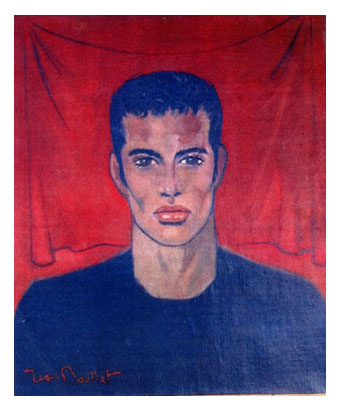
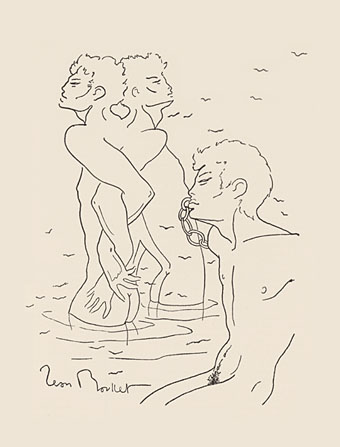
The art of Jean Boullet, 1921–1970

boullet3.jpg

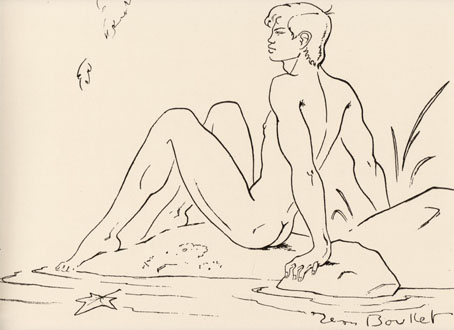
From Antinous (1954).

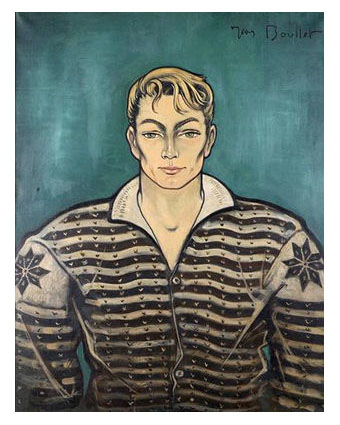
A few drawings and paintings by Jean Boullet, a prolific French illustrator who was also a writer—passionate about “sexology, conjuring, magic, demonology, and mythology”, says Wikipédia—and a film critic. His illustrations range from books by Raymond Radiguet, Boris Vian and Edgar Allan Poe to unabashed homoerotic collections of his own, one of which, Tapis volant (1945), has an introduction by Jean Cocteau. Boullet’s figures are very Cocteau-like, especially those depicting the sailors which Cocteau also liked to draw and fantasise about. The Au Bonheur du Jour gallery has many pages of Boullet’s drawings and publications, while Bibliothèque Gay has several posts showing complete sets of drawings from some of his books. Many of the artist’s drawings circulating without credit on the web seem to originate there. Don’t miss Metamorphoses (1950).

• See also: The Male Universe of Subversive Genius Jean Boullet by Julien Beyle.

boullet1.jpg

Portrait of Jean Marais.

boullet2.jpg

Portrait of Kenneth Anger.

boullet4.jpg

Continue reading “The art of Jean Boullet, 1921–1970”

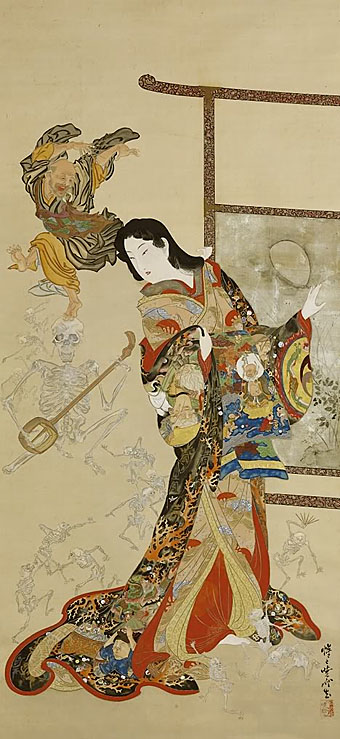
The Hell Courtesan

yoshitoshi.jpg

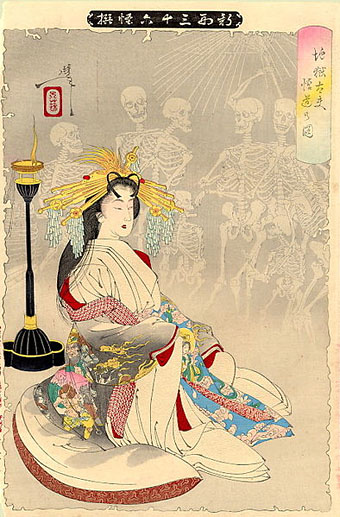
The Enlightenment of Jigoku-dayu (1890) from the series New Forms of Thirty-six Ghosts by Tsukioka Yoshitoshi.

Jigoku-dayu of Takasu was a courtesan adopted by the Zen Priest Ikkyu (1394–1481), who converted her to a religious life and gave her a literary education. She is seated in meditation with a ghostly vision of a procession of the skeletons of a courtesan and her entourage, thus showing her the impermanence of life.

Jigoku-dayu is portrayed here as a high-ranking courtesan. Her white robe is embossed with fine key patterns and her outer robe is decorated with the Goddess of Mercy on the front and at the back with scenes of hell. Her name consists of Jigoku (hell), a term for the lowest form of unlicensed prostitute and dayu (respect) for a courtesan of the highest rank. (via)

See also Junko Mizuno‘s contemporary drawings of Jigoku-dayu.

kyosai1.jpg

Jigoku-dayu (date?) by Kawanabe Kyosai.

kyosai4.jpg

Jigoku-dayu (another version) by Kawanabe Kyosai.

Continue reading “The Hell Courtesan”

Dunes

dunes4.jpg

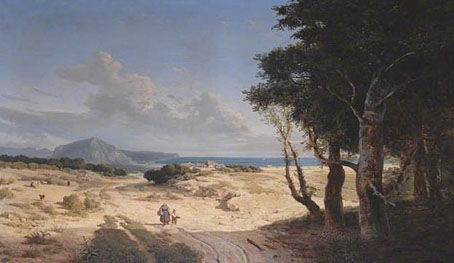
Sand Dunes near Boulogne-sur-Mer, France (c. 1870) by Joséphine Bowes.

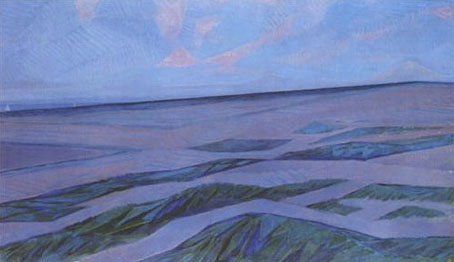
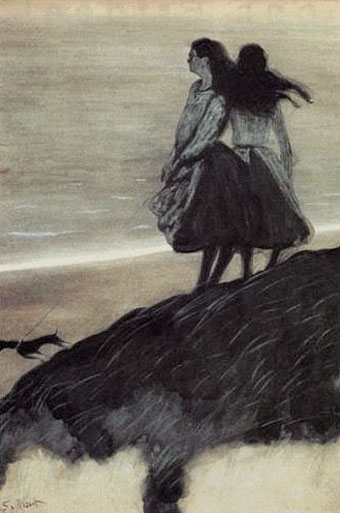
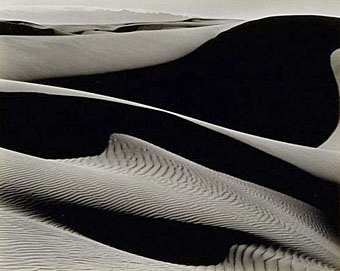
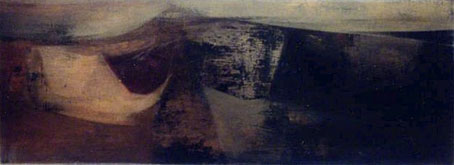
Dunes. Having visited the sand dunes that run along the French and Belgian coast it’s notable how much dune art has taken them as a subject. Belgian Symbolist Léon Spilliaert returned to them frequently, and managed to invest the littoral with a greater sense of mystery than many of his contemporaries.

dunes1.jpg

Dune Landscape (1911) by Piet Mondrian.

dunes6.jpg

Girls on a Dune (1913) by Léon Spilliaert.

dunes2.jpg

Dunes, Oceano (1936) by Edward Weston.

dunes5.jpg

Dune (1961) by Alexander MacKenzie.

dunes3.jpg

Pale Dunes (1970) by Ronnie Landfield.