Cormac McCarthy’s venomous fiction

cormac.jpg

Cormac McCarthy’s venomous fiction

Richard B. Woodward
The New York Times, April 19, 1992

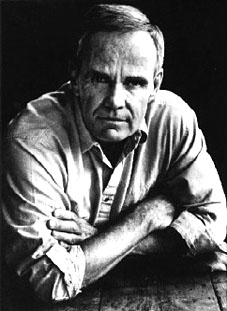
“YOU KNOW ABOUT MOJAVE RATTLESNAKES?” Cormac McCarthy asks. The question has come up over lunch in Mesilla, N.M., because the hermitic author, who may be the best unknown novelist in America, wants to steer conversation away from himself, and he seems to think that a story about a recent trip he took near the Texas-Mexico border will offer some camouflage. A writer who renders the brutal actions of men in excruciating detail, seldom applying the anesthetic of psychology, McCarthy would much rather orate than confide. And he is the sort of silver-tongued raconteur who relishes peculiar sidetracks; he leans over his plate and fairly croons the particulars in his soft Tennessee accent.

“Mojave rattlesnakes have a neurotoxic poison, almost like a cobra’s,” he explains, giving a natural-history lesson on the animal’s two color phases and its map of distribution in the West. He had come upon the creature while traveling along an empty road in his 1978 Ford pickup near Big Bend National Park. McCarthy doesn’t write about places he hasn’t visited, and he has made dozens of similar scouting forays to Texas, New Mexico, Arizona and across the Rio Grande into Chihuahua, Sonora and Coahuila. The vast blankness of the Southwest desert served as a metaphor for the nihilistic violence in his last novel, Blood Meridian, published in 1985. And this unpopulated, scuffed-up terrain again dominates the background in All the Pretty Horses, which will appear next month from Knopf.

“It’s very interesting to see an animal out in the wild that can kill you graveyard dead,” he says with a smile. “The only thing I had seen that answered that description was a grizzly bear in Alaska. And that’s an odd feeling, because there’s no fence, and you know that after he gets tired of chasing marmots he’s going to move in some other direction, which could be yours.”

Keeping a respectful distance from the rattlesnake, poking it with a stick, he coaxed it into the grass and drove off. Two park rangers he met later that day seemed reluctant to discuss lethal vipers among the backpackers. But another, clearly McCarthy’s kind of man, put the matter in perspective. “We don’t know how dangerous they are,” he said. “We’ve never had anyone bitten. We just assume you wouldn’t survive.”

Finished off with one of his twinkly-eyed laughs, this mealtime anecdote has a more jocular tone than McCarthy’s venomous fiction, but the same elements are there. The tense encounter in a forbidding landscape, the dark humor in the face of facts, the good chance of a painful quietus. Each of his five previous novels has been marked by intense natural observation, a kind of morbid realism. His characters are often outcasts—destitute or criminals, or both. Homeless or squatting in hovels without electricity, they scrape by in the backwoods of East Tennessee or on horseback in the dry, vacant spaces of the desert. Death, which announces itself often, reaches down from the open sky, abruptly, with a slashed throat or a bullet in the face. The abyss opens up at any misstep.
Continue reading “Cormac McCarthy’s venomous fiction”

War of the Worlds book covers

wotw_penguin.jpg

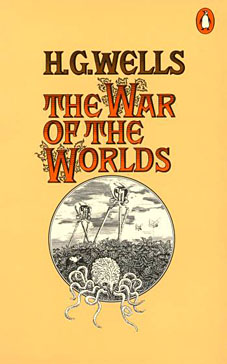
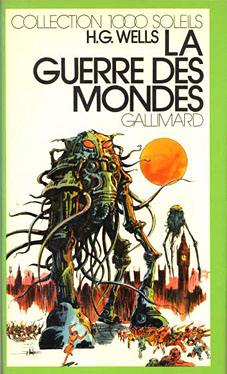
Continuing the cover art theme, here’s a whole gallery of covers devoted to one book only, HG Wells’ The War of the Worlds, from 1898 to the present. Once again it’s fascinating to see how styles evolve and how different artists and designers approach the task of providing art for the same book. The most common approach with this particular novel has evidently been to depict the tripod machines laying waste to the Home Counties. The samples here follow the pattern: the uncredited 1967 Penguin edition above was the one I read originally (I still have a copy); the other is a cover by Philippe Druillet from 1973 showing a particularly heavy-footed and tentacular Martian vehicle. The site also includes some great interior illustrations.

wotw_druillet.jpg

Elsewhere on { feuilleton }
The book covers archive

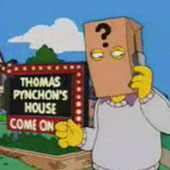
A literary recluse: The mystery of Pynchon

pynchon_simpsons.jpgThe cult writer is about to publish his first novel for nine years. But the best-selling author of V and Gravity’s Rainbow remains an enigma to his millions of fans. By Louise Jury
August 17, 2006
The Independent

He is so elusive a writer that he makes Harper Lee appear a socialite. He gives no interviews and shuns all photo opportunities. Thomas Pynchon, cult figure of American prose, is a nightmare for his publicists.

But the mystery surrounding the 69-year-old author will serve only to increase the clamour when his next novel, Against the Day, is published in December simultaneously in the UK and the US. It will be his first novel in nine years and only his sixth—plus a collection of early fiction—since his astonishing debut with V in 1963.

Finally announcing the date yesterday, Dan Franklin of Jonathan Cape, his British publisher, said that to have a new work was “incredibly exciting”. He added: “Against the Day is an epic that is awesome in its scope and imagination.”

Continue reading “A literary recluse: The mystery of Pynchon”

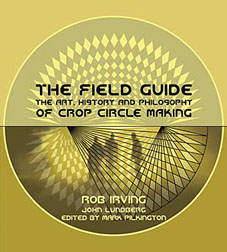
How to make crop circles

crop_circles.jpgThe Field Guide: the Art, History & Philosophy of Crop Circle Making
by Rob Irving & John Lundberg.
Edited by Mark Pilkington

Three decades ago, two men in their fifties began flattening circles into the fields of Hampshire and Wiltshire. Little did they know that their Friday night antics would seed an international phenomenon that continues to change people?s lives to this day.

Now, in the first book of its kind—part history and part how-to guide—the secrets of the crop circle world are revealed, by the people behind the modern era?s most astounding artform. Whether you think crop circles represent a genuine mystery, a new kind of art, or an elaborate practical joke, The Field Guide is sure to leave a lasting impression.

The English landscape would never be the same again!

• How two men in their fifties “conned the world” and spawned an international phenomenon.
• Three generations of crop circle makers tell the stories behind the amazing crop formations, in the first book of its kind.
• Secrets of the artists revealed in a complete “how-to” guide!
• Inside the world of the “croppies”, the people who study the crop circles.
• Bizarre beliefs examined, bogus science exposed!
• In-depth interviews with Doug Bower, the man who started it all, and The Circlemakers, the team behind some of the most spectacular formations on record.
• From the team behind www.circlemakers.org and the editor and publisher of Strange Attractor Journal.

£8.99, Pb, 288pp, heavily illustrated. ISBN 0954805429
File under Art / Culture / Paranormal Phenomena
Available late August 2006 from all good bookshops
or from www.strangeattractor.co.uk and www.circlemakers.org
Strange Attractor Press
BM SAP
LONDON WC1N 3XX

Hail, horrors! hail, infernal world!

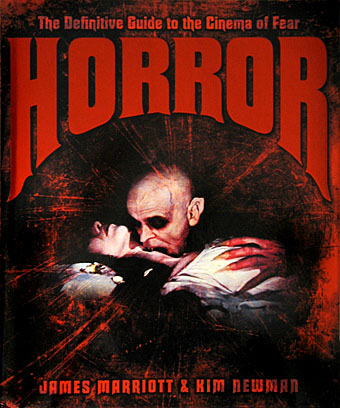
horror.jpg

This marvellously lurid 250pp tome turned up in the post today, something I was looking forward to seeing as I wrote 30 of the reviews within, as well as some longer essays on Dracula, Lovecraft and a brief history of occult cinema. Nice layout, lots of colour and some great photos, many of which I haven’t seen elsewhere which isn’t always the case with books like this; I’ll enjoy reading the rest of it. Not sure when it’s due for publication just yet as Andre Deutsch/Carlton Books’ web presence is sketchy to say the least.

Update: The book was published on October 2nd, 2006.

Previously on { feuilleton }
The music of The Wicker Man
Nosferatu
David Rudkin on Carl Dreyer’s Vampyr