Jewelled butterflies and cephalopods

miller.jpg

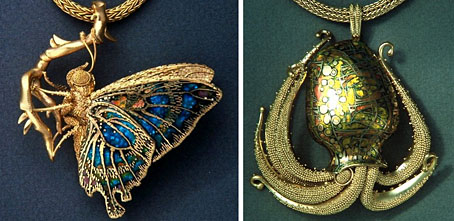
Above: gold, silver & enamel butterfly and squid, both by John Paul Miller. More at this Flickr page.

Below: Tintenfisch und Schmetterling (Octopus and Butterfly; 1900) by Wilhelm Lucas von Cranach, a master jeweller who liked his octopuses.

Tips by Chateau Thombeau and Fine & Dandy (NSFW).

cranach.jpg

Previously on { feuilleton }
Geoffrey Haberman’s brass insects
Elizabeth Goluch’s precious metal insects
Kelly McCallum’s insect art
The art of Jo Whaley
The art of Philippe Wolfers, 1858–1929
Lalique’s dragonflies
Lucien Gaillard

Eros: From Hesiod’s Theogony to Late Antiquity

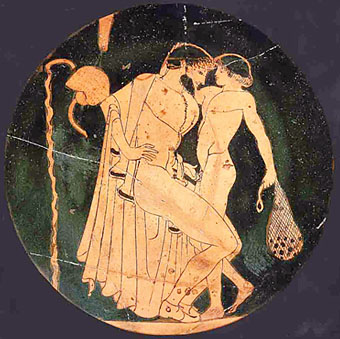
palaestra.jpg

Man courting a boy at the palaestra (530–430 BCE).

Greek love seems to be the theme this week. Having been reading in Margaret Walters’s The Nude Male about the sodomitical habits of the Spartans (are you listening, Frank Miller?), and the general enthusiasm (a Greek term, incidentally) for the youthful male body, news arrives of an exhibition at the Museum of Cycladic Art in Athens “dedicated (to) Eros and its various manifestations in antiquity”.

There in three rooms reserved for artistic renditions of sexual congress, pederasty (socially accepted in ancient times), homoerotic love, and the quaintly named “bucolic love affair”, viewers are bombarded with what the ancients were clearly good at: being bawdy. From scenes of anal copulation to mutual oral sex, to lucky charms of giant phalluses and engravings of frenzied sex with the half-man, half beast satyrs and silens, Eros is depicted in all its glory.

“I delight in the prime of a boy at 12,” one scribe declares in a text highlighted on a wall. “One of 13 is much more desirable. He who is 14 is a still sweeter flower of the lovers. And one who is just beginning his 15th year is yet more delightful. The 16th year is that of the gods. And as for the 17th, it is not for me but for Zeus to seek it.”

Aristophanes, the 5th century BC comic, who embraced the obscene, devising 106 ways of describing the male genitals and 91 those of the female, would not have been disappointed. (More.)

There’s a catalogue available but their website is saying it’s out of stock at the moment. Eros: From Hesiod’s Theogony to Late Antiquity runs to April 5, 2010.

Sex and sanctity: Eros exhibition bares all in Athens

Elsewhere on { feuilleton }
The gay artists archive

Previously on { feuilleton }
The fascinating phallus
Hadrian and Greek love

The fascinating phallus

nude.jpg

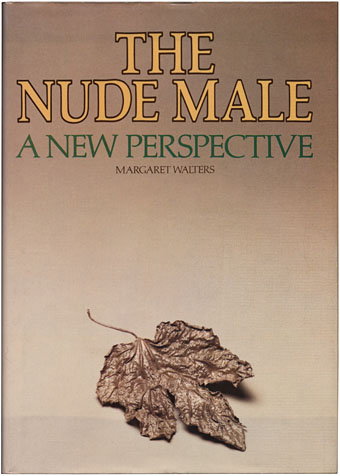
The latest used book purchase was this volume from 1978 and just the kind of unusual art book I enjoy finding. The witty cover design is by Patricia Pillay. Inside, Margaret Walters argues the necessity of her study by pointing out how little the male nude has been seriously studied in 20th century art history despite the form being a far more varied one than the female equivalent. The book is illustrated throughout (no colour plates, unfortunately) and looks like being a fascinating read, “fascinating” being an apt word as Walters notes in her introduction:

For the Romans Fascinus, the god of luck, was a personified phallus. (The modern word “fascinate” derives from the Latin word meaning enchant or charm; that magic power of warding off evil and attracting good fortune from the gods was the phallus.) In ancient Egypt, in classical Greece, all through the Roman world, phallic objects and figures abound. The phallus is carved in monumental stone, painted on domestic objects, worn as a charm (called fascinum) round the neck; herms, stone pillars with human heads and genitals, stood guarding crossroads and doorways.

amulets.jpg

Roman phallic amulets in the Musée Saint-Remi.

Previously on { feuilleton }
The Triumph of the Phallus
Le Phallus phénoménal
Phallic bibelots
Phallic worship
The art of ejaculation

The end of Orpheus

orpheus1.jpg

Orphée endormant Cerbère by Henri Peinte (1887).

It’s often difficult to imagine a perfectly innocent motive when looking at works such as these. Did the world really need another statue of Orpheus or is the true intention revealed by those carefully sculpted buttocks, with the mythology added as a convenient subterfuge? We’ll never know, of course, and that’s part of the fun. Orpheus, Narcissus, Icarus and the rest gave 19th century sculptors and painters the excuse to portray unclad men and youths in a manner which would have been highly suspect—scandalous, even—had the subjects been shown in a contemporary context. In Oscar Wilde’s definition, art reflects the spectator; in Philip Core’s definition, camp is a lie which tells the truth. Camp art, therefore, can tell a truth about the artist whilst reflecting the concerns of the spectator. As it turns out, this work by Henri Peinte (1845–1912) had its delights, camp or otherwise, concealed by a prudish sheet of cloth when cast in bronze, a common fate of reproductions intended for home display.

orpheus2.jpg

Orpheus by John Macallan Swan (1896).

The Encyclopaedia Orphica collects many of the numerous representations of Orpheus, including this equally lithe depiction by John Macallan Swan (1847–1910) with a pose reminiscent of Peinte’s sculpture. Swan’s painting of the poet charming the savage beasts combines two of his recurrent themes, wild cats and unclothed males. Was he another Uranian with a camp sensibility or is this mere academic innocence? Whatever the answer it’s easy to see why Jean Cocteau—who once said “I am a lie that tells the truth”—made Orpheus his pagan saint.

Elsewhere on { feuilleton }
The gay artists archive

Previously on { feuilleton }
Antonin Mercié’s David
Reflections of Narcissus
Narcissus
La Villa Santo Sospir by Jean Cocteau