George Melly’s Memoirs of a Self-Confessed Surrealist

melly1.jpg

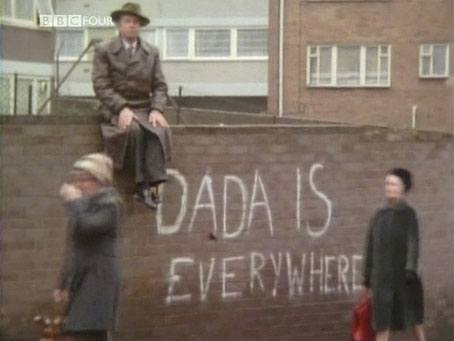
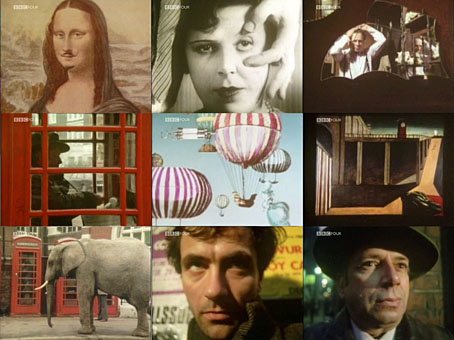
It’s a short step from Dada to Surrealism, and George Melly provides a brief skate through the philosophies of both in this 25-minute BBC film from 1978. Melly, like JG Ballard, was struck by Surrealism at an impressionable age, and the love affair was a lasting one. Both Melly and Ballard championed Surrealism during periods when it was deeply unfashionable, an oppositional stance that Ballard seemed to relish.

melly2.jpg

Melly’s enthusiasm was so well-known that he was often called upon as a token advocate of Surrealism whenever one was required by the TV channels, hence this film whose title implies an admission of something disreputable. A major exhibition of Surrealist art was taking place in 1978 at the Hayward Gallery in London, and it’s to this exhibition that Melly journeys, explaining (and demonstrating) what it means to be a Surrealist along the way. I saw this when it was first broadcast, and the absurd phone calls to strangers inspired myself and a few school-friends to similar activities; teenage pranks seemed less frivolous with an artistic justification. There’s a slight connection to yesterday’s post in Melly’s recounting of an anecdote from the 1950s when he was spared a night-time beating by his reciting of Kurt Schwitters’ Ursonate to a group of belligerent youths. Elsewhere you get to see punk band The Stranglers scowling at the camera—Melly suggests that the punks might be inheritors of the Dadaist attitude—and director Alan Yentob standing at a urinal.

Previously on { feuilleton }
The Secret Life of Edward James
René Magritte by David Wheatley

Vasarely, a film by Peter Kassovitz

vasarely.jpg

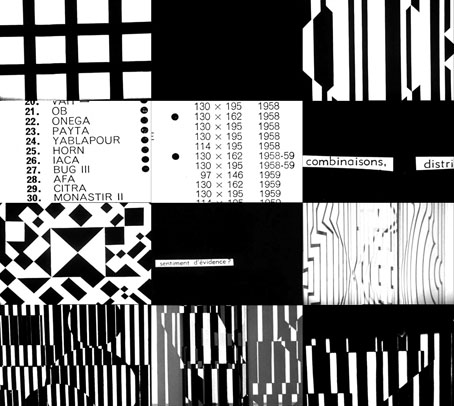
I’ve always liked Victor Vasarely’s brand of Op-Art so this short film from 1960 would be of interest even without the addition of a score, Neg-Ale, by Iannis Xenakis. Considering the stature of the composer the music fails to add much at all so it’s no surprise to read at Ubuweb that Xenakis later withdrew it from his catalogue. Kassovitz’s film is worth watching for Vasarely’s artworks, however, especially some three-dimensional creations I hadn’t seen before.

Previously on { feuilleton }
Escher and Schrofer

The sphinx of Wolf City

wolfcity.jpg

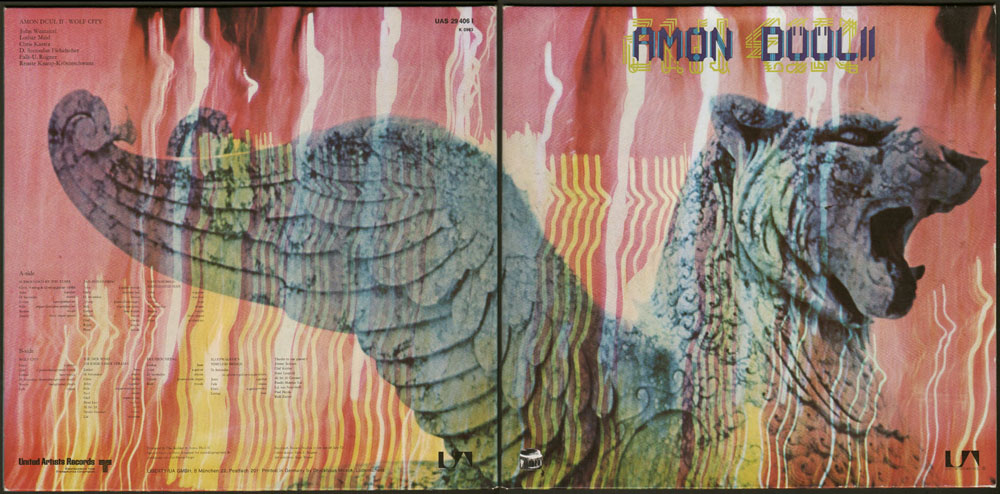
Wolf City (1972) by Amon Düül II.

Behold another favourite album cover by a favourite band, one of several superb designs for Amon Düül II by Falk-U Rogner who was also the group’s keyboard player. Rogner’s suitably hallucinogenic cover images are worth a post of their own but this one requires attention today since I happened to solve the mystery of the location of the Düül sphinx during the recent hiatus.

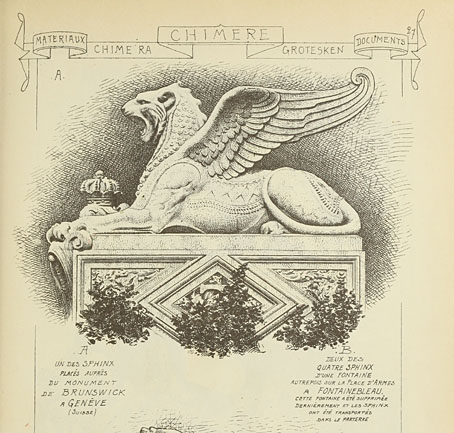
Ever since I began these blog posts I’ve had a feeling that the endless trawling of image archives might one day turn up the location of this stone creature. It was only ever going to be something you’d find by accident, and that’s precisely what happened with the discovery of the drawing below in volume 4 of Materials and Documents of Architecture and Sculpture (1915) by A. Raguenet, a set of books I’ve been plundering recently for architectural details.
sphinx1.jpg

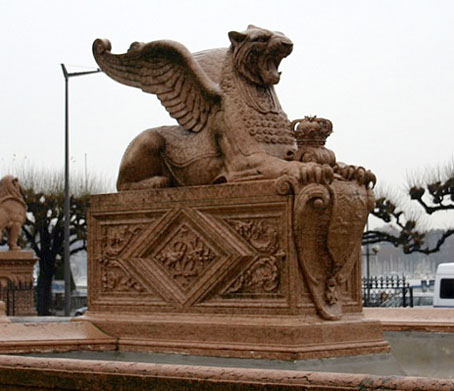
Compare with this photo.

The notes for the drawing offer enough information to trace the location to the Brunswick Monument in Geneva, a mausoleum built in 1879 for the Duke of Brunswick. The monument is a typically Gothic edifice guarded by a number of stone lions plus this splendid sphinx on a plinth by a pool of water. On the opposite side of the monument there’s a matching bird-headed sculpture. Amon Düül II were a German group so it was always likely that the sphinx would be in Europe somewhere, if not Germany itself. The photo below is a detail from this Flickr shot which is the best match I’ve found for the angle of the cover photo. Jean Franel was the monument architect but statues are often the work of specialist artists, and I’ve yet to find a name attached to these examples.
sphinx2.jpg

Photo by Till Westermayer.

Elsewhere on { feuilleton }
The album covers archive

Previously on { feuilleton }
Frémiet’s Lizard

Heimkiller and High

giger2.jpg

Heimkiller.

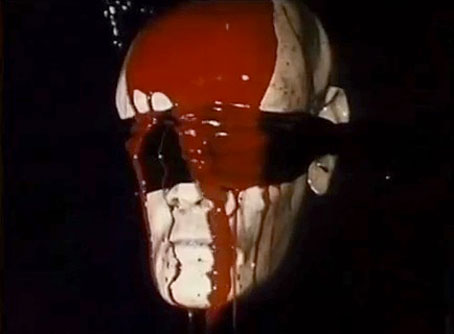
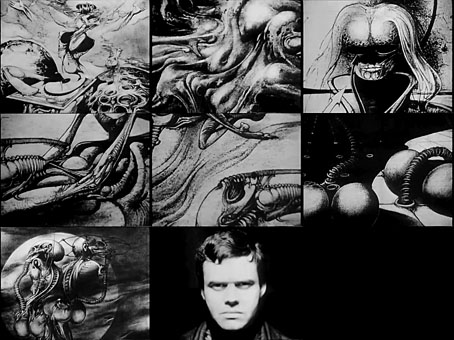
More Giger. Among the pre-Alien films, Passagen (1972), a documentary by FM Murer about the artist’s work, is the one I’d most like to see. That’s yet to appear online, however, so in the meantime here’s two shorts from 1967 which are the earliest entries in Giger’s filmography. Heimkiller is a brief study of Giger’s Blood-Glass sculpture which shows the piece in action and does little else. High is the first of several collaborations with director FM Murer, a black-and-white journey through the late Surrealism of Giger’s early works, some of which show a slight Dalí influence. I’ve always liked the drawings in his Shafts series, some of which can be seen here: views of plunging walls threaded with staircases that were derived from nightmares about a cellar stairway in his parents’ house.

giger3.jpg

High.

Elsewhere on { feuilleton }
The fantastic art archive

Previously on { feuilleton }
The Man Who Paints Monsters In The Night
Hans by Sibylle
HR Giger album covers
Giger’s Necronomicon
Dan O’Bannon, 1946–2009
Alejandro Jodorowsky’s Dune
The monstrous tome

Clocks of the Midnight Hours: The Work of Max Eastley

eastley1.jpg

I was hoping this might turn up on YouTube eventually, my copy being stuck on a VHS tape. Clocks of the Midnight Hours (1986) is a 25-minute film about the music of Max Eastley directed by Simon Reynell. The title is taken from a Borges poem. What makes Eastley’s music special is that all his instruments are unique “sound sculptures” that range through autonomous devices, to wind- and water-activated instruments, to creations requiring human performance. Some of the sounds, if not the look of the instruments, will be familiar to anyone who’s heard Buried Dreams, the album Eastley made in 1994 with frequent collaborator David Toop. Both Eastley and Toop appear in the film (the latter masked by a wicker helmet), as does Evan Parker in a performance in Kent’s Cavern, Torquay. An earlier Eastley & Toop collaboration, New and Rediscovered Musical Instruments (1975), may be heard at Ubuweb.

eastley2.jpg

Previously on { feuilleton }
Max Eastley’s musical sculptures