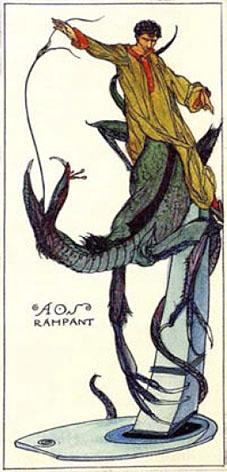
New Austin Spare grimoires

spare.jpg

The latest Starfire catalogue has news of the unearthing of two unfinished grimoires by Austin Osman Spare both of which are due for publication later this year. The two books—The Focus of Life & The Papyrus of Amen-AOS and The Arcana of AOS & the Consciousness of Kia-Ra—date from 1905–06 and I presume the picture from the catalogue shown above is from one of these. No details yet as to price of either volume. Via Arthur.

These two grimoires by Spare are at once enigmatic and full of haunting beauty. The paintings and drawings from each notebook are here reproduced in full colour. With analytical essays by Michael Staley, Stephen Pochin and William Wallace, and an introduction by Robert Ansell, this publication adds to our understanding of Spare’s early years as an artist, mystic and philosopher, and sheds light on the early development of his sigillisation techniques.

Previously on { feuilleton }
Austin Spare absinthe
Austin Spare’s Behind the Veil
Austin Osman Spare

The art of Yannis Tsarouchis, 1910–1989

tsarouchis1.jpg

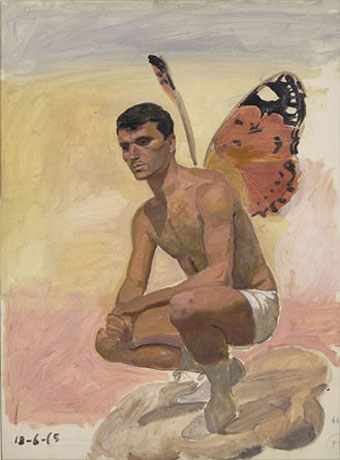
Man with butterfly wings sitting on his heels, study from life (1965).

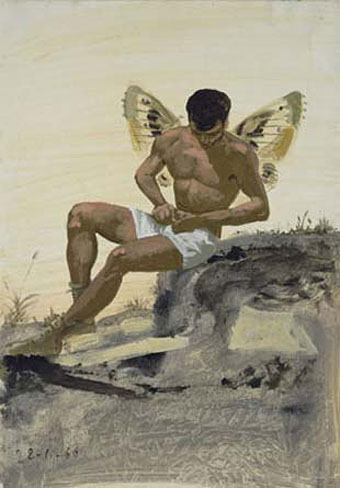
Two paintings by Greek artist Yannis Tsarouchis among whose homoerotic works can be found obsessively recurrent depictions of men with butterfly wings. Via Bajo el Signo de Libra.

tsarouchis2.jpg

Winged spirit buttoning his underpants (1966).

Elsewhere on { feuilleton }
The gay artists archive

Previously on { feuilleton }
Butterfly women

Schott’s Physica Curiosa

schott1.jpg

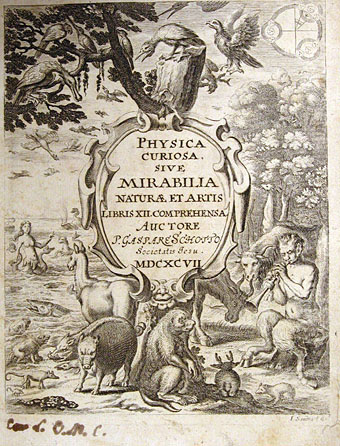
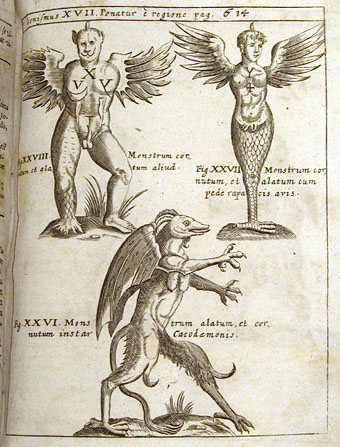
Pages from Physica Curiosa (1697) by Gaspar Schott, a collection of natural anomalies and the usual debatable creatures which belong in a fantastic bestiary. Some of these are similar to illustrations from the same period which I’ve used in Ann & Jeff VanderMeer’s Kosher Guide to Imaginary Animals, due for publication soon by Tachyon.

schott2.jpg

Elsewhere on { feuilleton }
The etching and engraving archive

Secession posters

secession1.jpg

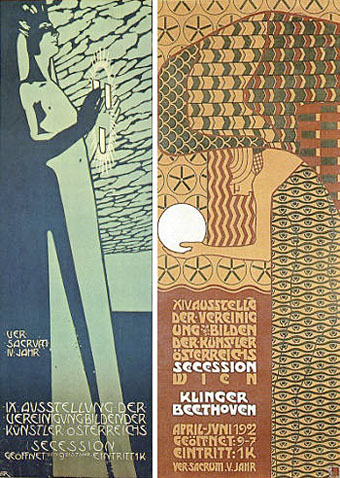
Alfred Roller (1901 & 02).

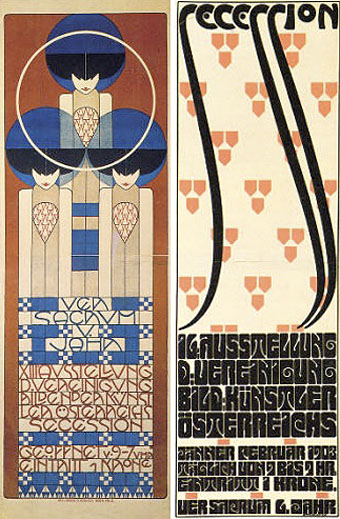
A selection of posters for the Vienna Secession at Lawrence University’s Art of the Poster site. Alfred Roller’s stylised lettering on the poster below was famously adapted by Wes Wilson for his psychedelic designs in the 1960s.

secession2.jpg

left: Koloman Moser (1902); right: Alfred Roller (1903).

Previously on { feuilleton }
The art of Henri Privat-Livemont, 1861–1936
Wilhelm Kåge
Art Nouveau illustration

A profusion of Peake

gormenghast_box.jpg

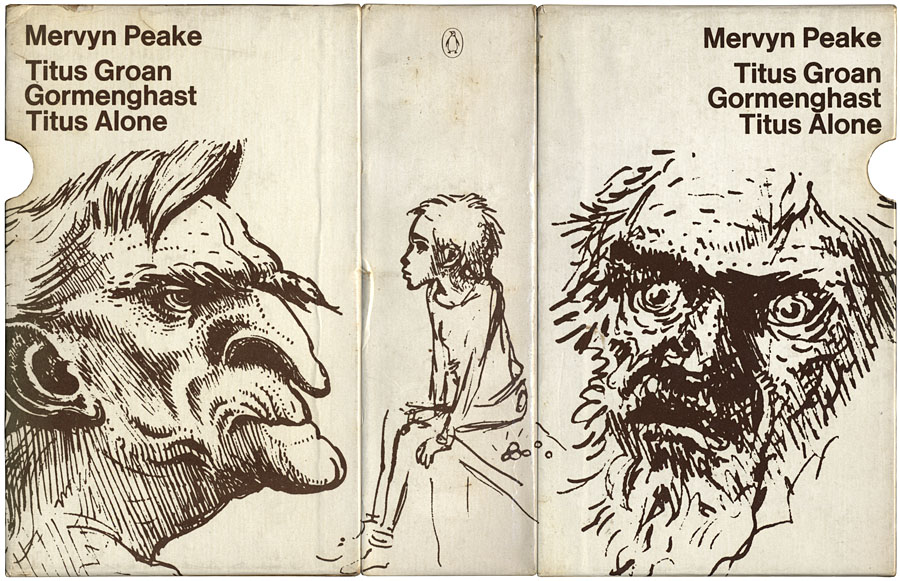
Bellgrove, young Titus and Barquentine by Mervyn Peake. Case designed by Robert Hollingsworth.

I’d thought about posting the covers of my boxed set of Gormenghast paperbacks a couple of years back when there was a flurry of blogospheric attention being given to Penguin cover designs…thought about it then never got round to it. The reason for doing so now is twofold: firstly I’ve been re-reading the books, and secondly some Gormenghast-related news emerged this week which gives this post an additional relevance.

gormenghast1.jpg

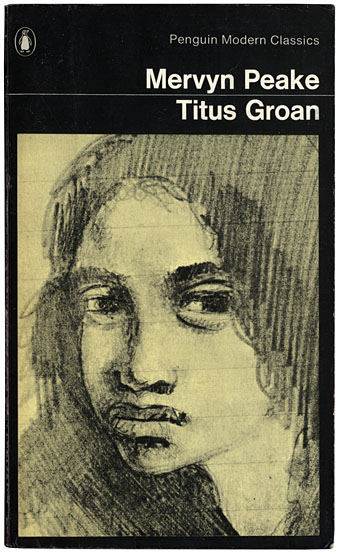
Fuchsia by Mervyn Peake.

The set of Peake paperbacks which Penguin published in 1968 (and their subsequent reprints) were the first editions of Peake’s trilogy which I encountered so I can’t help but regard them as the ones, the only copies I could countenance reading. That may change, however (see below). I’ve no idea how scarce the boxed edition is but the books are reprintings from 1970 so I presume Penguin put out a boxed gift set to make the most of Peake’s posthumous success. I always liked the presentation which is the standard Penguin Modern Classics format of the period, it leaves to you how much you want to regard the books as works of fantasy or simply novels of a rather grotesque and highly imaginative reality. Titus Groan‘s sketch of a glowering and thoroughly unglamorous Fuchsia was a daring choice for a cover intended to lure a newer, younger audience to Peake’s work. The drawing says a great deal about the author’s unsentimental attitude towards his creations; compared to the florid and often delicate covers of the fantasy books being published by Ballantine in the late Sixties (a series which included the Gormenghast trilogy), it seems shockingly unpleasant.

Continue reading “A profusion of Peake”