Raphaël Drouart’s Fleurs du Mal

drouart01.jpg

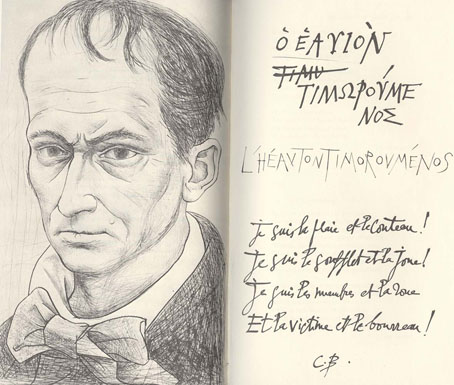
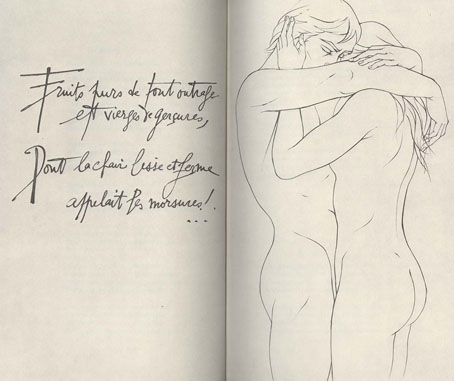
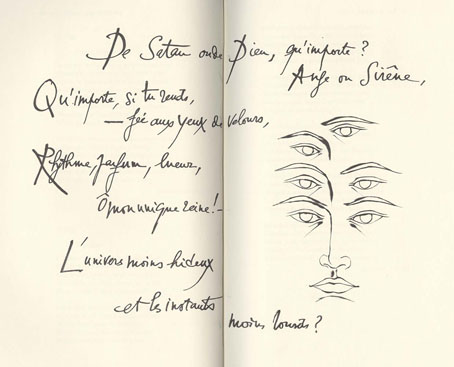
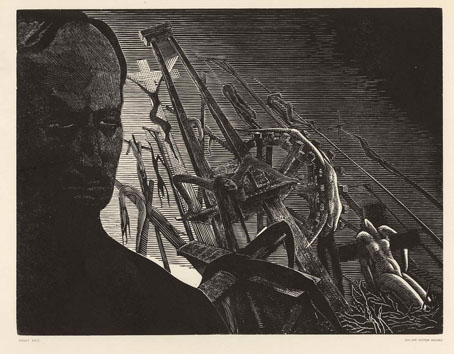
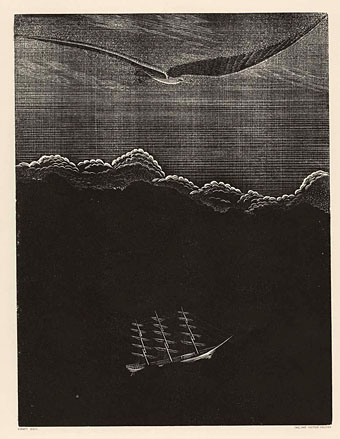
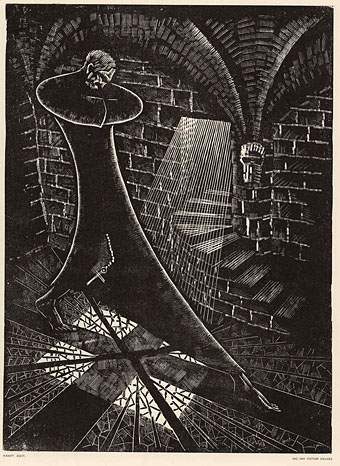
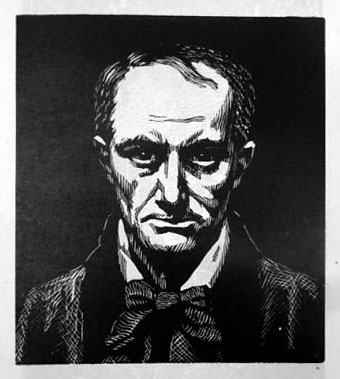
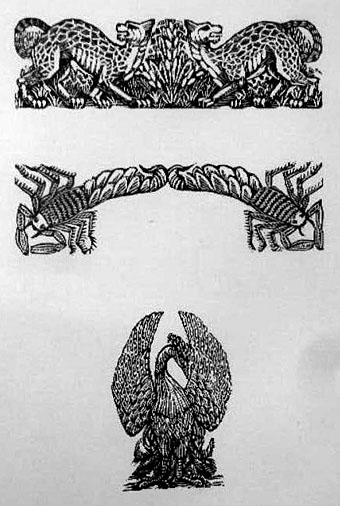
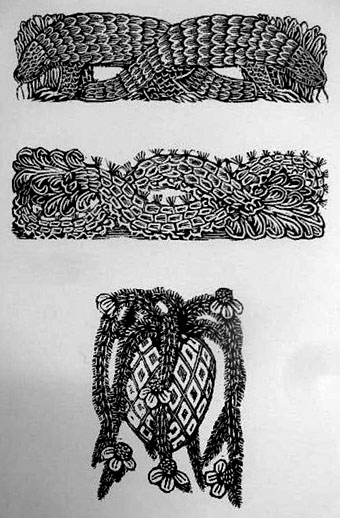
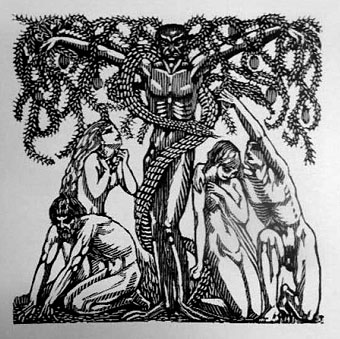
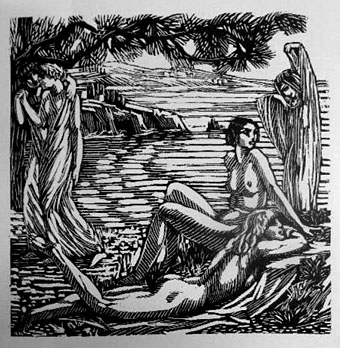
It seems to be Fleurs du Mal Week here. Raphaël Drouart (1884–1972) was another French artist who specialised in woodcut illustrations. The pictures here are from a 1923 edition of Les Fleurs du Mal found on an auction site.

Despite (or because of) the scandalous nature of Baudelaire’s poetry, there are many illustrated editions of this particular collection, not all of them by artists suited to the material. This is often a common fate of those books whose popularity makes them a magnet for illustrators. One thing the various editions do have in common is the portrait of the poet as a frontispiece, although even there the author of Spleen can be made to look dopey or silly. By contrast, Raphaël Drouart captures the familiar scowl well enough, and also fares better than many when it comes to the poems. The combination of woodcuts and skeletons is reminiscent of Posada’s calaveras.

drouart02.jpg

drouart03.jpg

drouart04.jpg

drouart05.jpg

Continue reading “Raphaël Drouart’s Fleurs du Mal”

Tony George-Roux’s Fleurs du Mal

tgr1.jpg

More illustrated Baudelaire. This edition of Les Fleurs du Mal dates from 1917 but the illustrations by Tony George-Roux have a distinctly Symbolist quality even though Symbolism as an art movement was pretty much over by this point. Baudelaire died twenty years before the first Symbolist manifesto was published but that manifesto named him as one of the leading poets of the movement so the connection is a fitting one. There’s a touch of Félicien Rops in some of these plates.

Tony George-Roux (1894–1928) was French, and if he produced more work along these lines I’ve yet to find it. The illustrations, engraved for this edition by Charles Clement, aren’t the best reproductions so I’ve added an additional plate at the end found on another site.

tgr2.jpg

Continue reading “Tony George-Roux’s Fleurs du Mal”

Weekend links 223

paez.jpg

Step Up (2014) by Angelica Paez.

• Lots of attention this week for Kevin Martin whose latest album as The Bug, Angels And Devils, is out now on Ninja Tune. The previous Bug release, London Zoo (2008), was a fierce collection that stood apart from the Grime pack not only for its guest vocalists but also for being informed by Martin’s broad range of influences: industrial and extreme electronics, heavyweight dub, metal and avant-garde jazz. Martin was interviewed by The Quietus and FACT who also asked other musicians to choose their favourite Martin recordings. Elsewhere, The Wire has Swarm, a track not included on the album.

Related: Martin’s four superb compilation albums for Virgin Records have been deleted for years but are worth seeking out: Ambient 4: Isolationism, Macro Dub Infection Volume One & Volume Two, and Jazz Satellites Volume 1: Electrification (Virgin cancelled volume 2). From the NME, 1995: Kevin Martin’s Ten Commandments For All Time.

• “…it never becomes quite clear why two grown men would want to write to each other in the guise of a horse and a cat.” Henry Giardina reviews The Animals: Love Letters Between Christopher Isherwood and Don Bachardy, edited by Katherine Bucknell.

Shufflepoems: A Deck of Poetry by Lydia Swartz. “100 cards, four suits, one stanza per card. Shuffle for a new adventure every time.” The project needs a last-minute push to gain Kickstarter funding so if this sounds interesting go, go, go!

The Haxan Cloak’s favourite heavy metal albums. Metallica’s Master Of Puppets still gets my vote. More from The Quietus: David Stubbs on the Werner Herzog soundtracks of Popol Vuh.

• At Strange Flowers: Waking the witch, a remembrance of occult artist Rosaleen Norton and other characters from Sydney’s Kings Cross area, with news of a planned Norton documentary.

• A nine-note motif has for decades signalled “Asian” in popular music. Kat Chow looks at the history of a musical stereotype.

Joseph Conrad’s Heart of Darkness is the subject for entrants in the Folio Society’s latest illustration competition.

• Irradiating the Object: Rhys Williams talks to writer M. John Harrison.

Does the Sea Serpent Really Look Like an Art Nouveau Oar-fish?

Schrödinger’s cat caught on quantum film.

70s sci-fi art: a Tumblr.

Demodex Invasion (1995) by Techno Animal | Piranha feat. Toastie Taylor (2001) by Techno Animal | Poison Dart feat. Warrior Queen (2008) by The Bug

The Voyage of the Pequod

henry1.jpg

American illustrator Everett Henry (1893–1961) created several maps based on classic American novels but The Virginian and The Adventures of Huckleberry Finn lack the epic, globe-trotting qualities of Moby-Dick, one of the few novels where almost every scene takes place in a different part of the world. The linear nature of the voyage also aids Henry’s design with its graded colours and suitably bloody culmination. The use of vignettes in literary maps reminds me most of the charts drawn by Pauline Baynes for Tolkien’s books but there are plenty of other examples, some of which may be seen at VTS.

henry2.jpg

henry3.jpg

henry4.jpg

henry5.jpg

Elsewhere on { feuilleton }
The illustrators archive

Previously on { feuilleton }
Of the Monstrous Pictures of Whales
Jan Saenredam’s whale
The Whale again
Rockwell Kent’s Moby Dick
Pauline Baynes, 1922–2008

Weekend links 221

cornell.jpg

Untitled (Penny Arcade Portrait of Lauren Bacall) (1946) by Joseph Cornell.

• Having been a Bernard Szajner enthusiast for many years it’s good to see his music receiving some belated reappraisal. David McKenna talked to Szajner about his Visions Of Dune album (which is being reissued by InFiné next month), laser harps, The (Hypothetical) Prophets, and working with Howard Devoto.

• Priscilla Frank posts some big views of Marjorie Cameron’s occult paintings as a preview of the forthcoming exhibition at MOCA Pacific Design Center, Los Angeles.

• Fascinating reading in light of the recent kerfuffle over True Detective, Christopher Loring Knowles on the possible sources of HP Lovecraft’s Cthulhu Mythos.

Those who set up oppositions between the electronic technology and that of the printing press perpetuate Frollo’s fallacy. They want us to believe that the book—an instrument as perfect as the wheel or the knife, capable of holding memory and experience, an instrument that is truly interactive, allowing us to begin and end a text wherever we choose, to annotate in the margins, to give its reading a rhythm at will—should be discarded in favor of a newer tool. Such intransigent choices result in technocratic extremism. In an intelligent world, electronic devices and printed books share the space of our work desks and offer each of us different qualities and reading possibilities. Context, whether intellectual or material, matters, as most readers know.

Alberto Manguel, lucid as always, on the act and import of reading.

• “It’s time to give prog rock’s artist-in-residence Roger Dean his due,” says Amber Frost. No argument there, I did my bit in 2010.

• “Why do the covers of so many self-published books look like shit?” asks B. David Zarley.

• Mixes of the week: FACT mix 455 by Airhead, and Secret Thirteen mix 225 by Clock DVA.

• At Core77: Rain Noe chooses favourite skyscraper photos by Russian urban explorers.

• “O, Excellent Air Bag”: Mike Jay on the nitrous oxide fad of the early 19th century.

Nick Carr goes in search of Manhattan’s last remaining skybridges.

Lauren Bacall at Pinterest.

• Shaï Hulud (1979) by Zed (Bernard Szajner) | Welcome (To Death Row) (1980) by Bernard Szajner | Person To Person (1982) by The (Hypothetical) Prophets