The Scottish Fairy Book

scots01.jpg

A post with some connection to the main news of the week, namely the vote for Scottish independence. At the time of writing the outcome is still in a quantum superposition between Yes and No. I’ve lived in England all my life but I’m half-Scottish (and a quarter Welsh) so the question has a personal relevance beyond being a citizen of the United Kingdom. For the record I would have voted Yes if I’d had the opportunity.

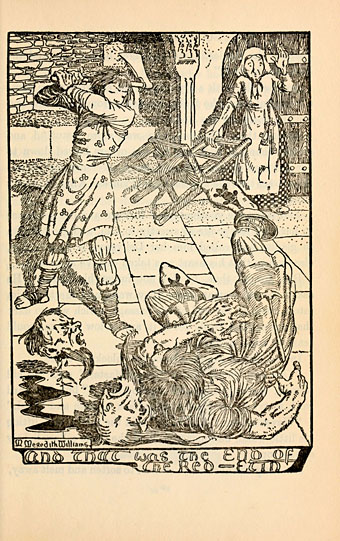
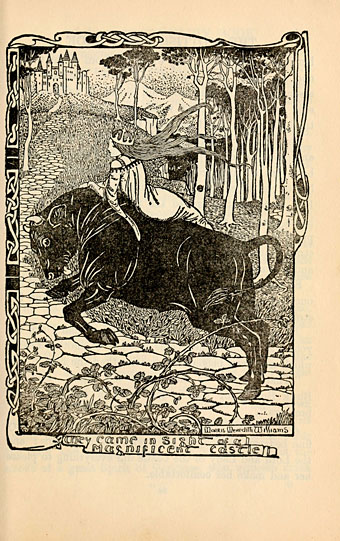
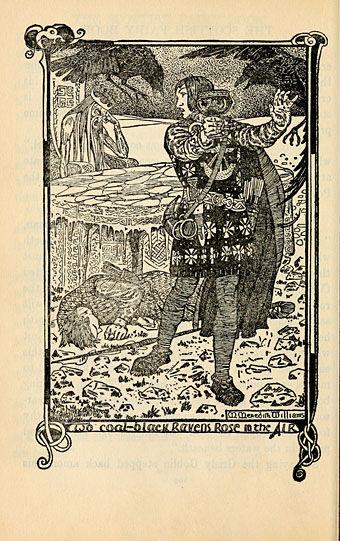
The Scottish Fairy Book (1910) is a popular retelling by Elizabeth Grierson of fairy stories and folk tales. The illustrations are by Morris Meredith Williams (1881–1973), an artist who was born in Wales but lived in Edinburgh for several years. This is only a small selection of Williams’ illustrations for the book which also include many half-pages, vignettes and two self-contained pictorial sequences: Times to Sneeze, and a dialect version of Monday’s Child. Browse the rest of the book here or download it here.
scots02.jpg

scots03.jpg

Continue reading “The Scottish Fairy Book”

Jacques Houplain’s Maldoror

houplain1.jpg

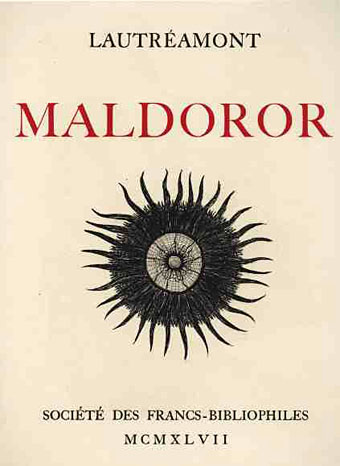
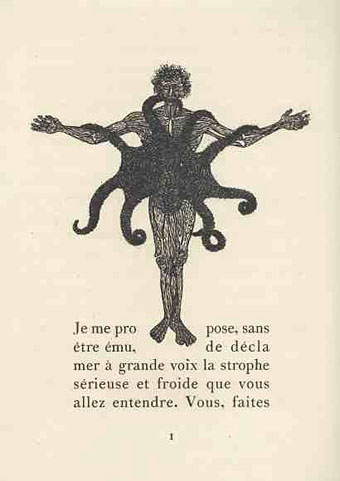
This is more like it. In 2008 when I posted one of Jacques Houplain’s etchings for a 1947 edition of Les Chants de Maldoror there were none of the other pictures in the series to be found. Now there’s a website devoted to Houplain’s work which features a page of his Maldoror illustrations. There’s a crude vigour to these pieces that gets much closer to Lautréamont’s fervour and viciousness than do the illustrations by Houplain’s famous contemporaries. Houplain is also one of the few illustrators to pay some attention to Lautréamont’s frequent digressions into the animal kingdom. The artist’s other work is worth a look; Legendes is a series of prints of medieval demons.

houplain2.jpg

Continue reading “Jacques Houplain’s Maldoror”

Pierre-Yves Trémois’s Fleurs du Mal

tremois1.jpg

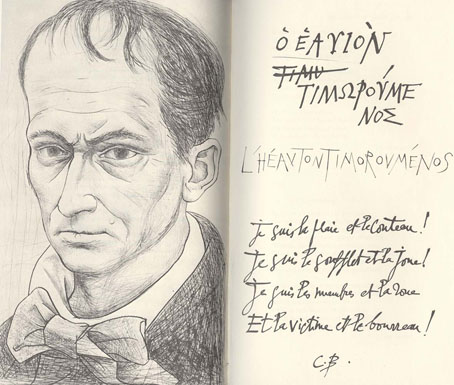
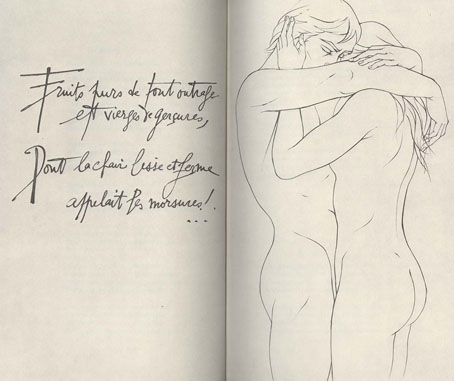
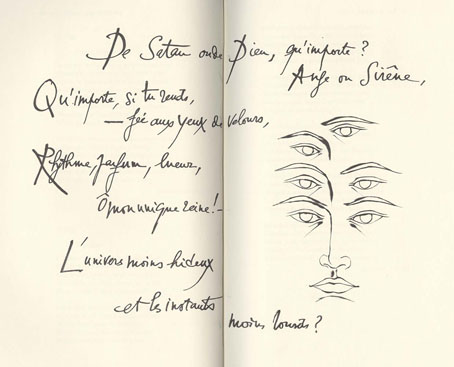
A couple of works by Pierre-Yves Trémois appeared in one of the very first posts here back in 2006 as part of the feature that began the long-running Recurrent Pose series. I like Tremois’s work a great deal so it’s good to find these pages from his 1971 edition of Baudelaire’s Les Fleurs du Mal. There were ten illustrations in all, some of them in the clear-line etching style familiar from his many prints. The Tremois edition is unusual in having some (all?) the poems written out by the artist. He’s also one of the few illustrators to do justice to Baudelaire’s scandalous lesbian verses by showing women who actually seem attracted to one another. Earlier illustrators—if they depicted the theme at all—were much more coy.

tremois2.jpg

tremois3.jpg

Continue reading “Pierre-Yves Trémois’s Fleurs du Mal”

Victor Delhez’s Fleurs du Mal

delhez1.jpg

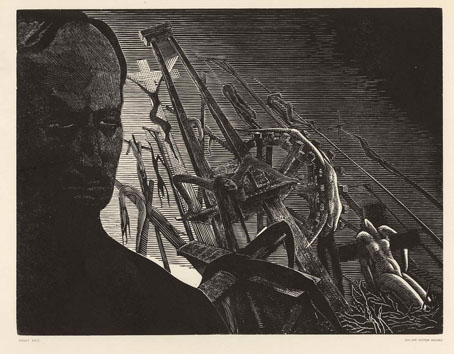
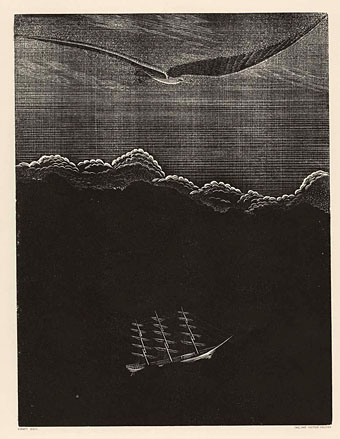
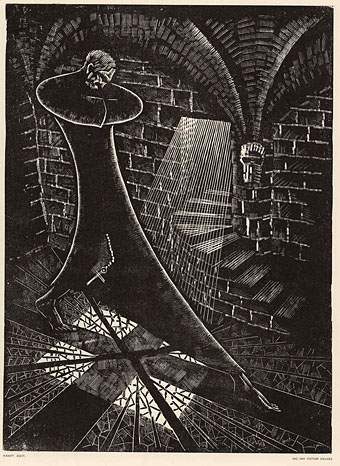
Another illustrated Baudelaire. Two editions that I might have featured in this series have already been posted in quality scans at 50 Watts: the 1935 Fleurs du Mal by Carlo Farnetti, and a 1947 edition by Beresford Egan, the latter being a good example of a well-matched artist and author.

The illustrations here are woodcuts once again, the artist being Victor Delhez (1902–1985), a Belgian who moved to South America. The 1950 Fleurs du Mal which featured these plates contained 20 illustrations in all but these are the only ones online. I hadn’t come across Delhez before but he was a prodigiously talented artist, as can be seen from the print collection at William P. Carl Fine Prints.

delhez2.jpg

delhez3.jpg

Continue reading “Victor Delhez’s Fleurs du Mal”

Raphaël Drouart’s Fleurs du Mal

drouart01.jpg

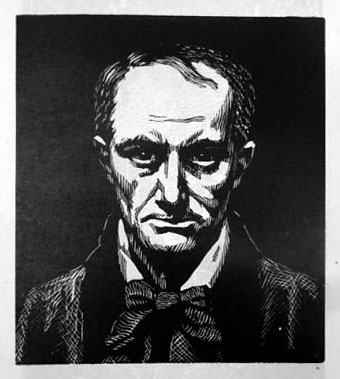
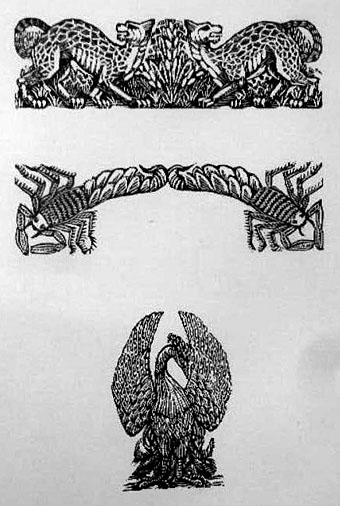
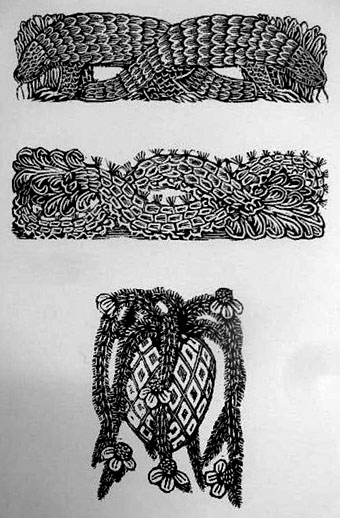
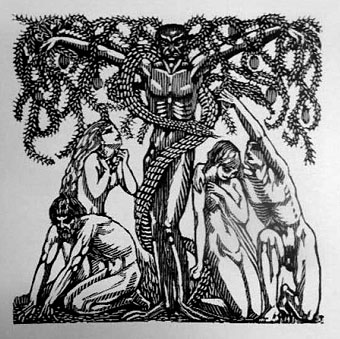
It seems to be Fleurs du Mal Week here. Raphaël Drouart (1884–1972) was another French artist who specialised in woodcut illustrations. The pictures here are from a 1923 edition of Les Fleurs du Mal found on an auction site.

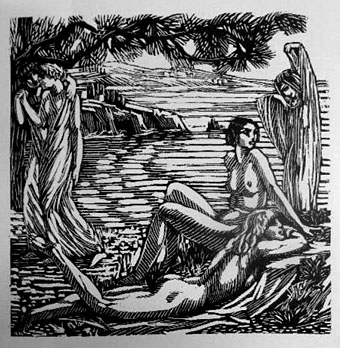
Despite (or because of) the scandalous nature of Baudelaire’s poetry, there are many illustrated editions of this particular collection, not all of them by artists suited to the material. This is often a common fate of those books whose popularity makes them a magnet for illustrators. One thing the various editions do have in common is the portrait of the poet as a frontispiece, although even there the author of Spleen can be made to look dopey or silly. By contrast, Raphaël Drouart captures the familiar scowl well enough, and also fares better than many when it comes to the poems. The combination of woodcuts and skeletons is reminiscent of Posada’s calaveras.

drouart02.jpg

drouart03.jpg

drouart04.jpg

drouart05.jpg

Continue reading “Raphaël Drouart’s Fleurs du Mal”