Antonio Rubino’s Versi e Disegni

rubino01.jpg

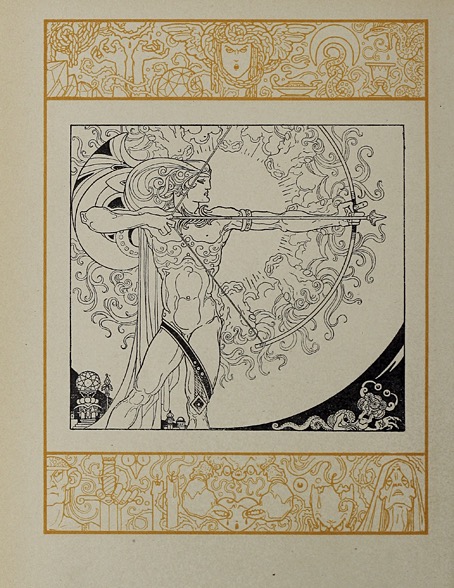
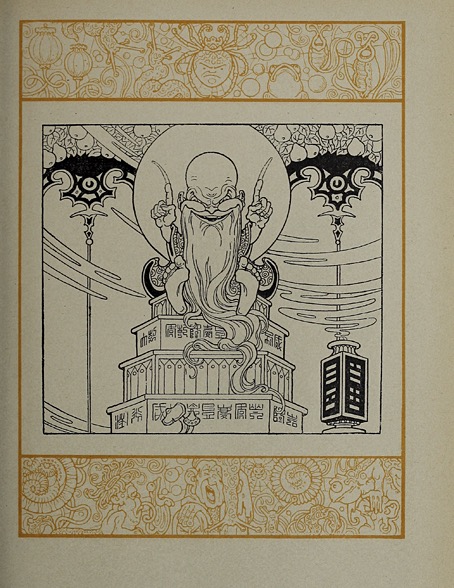
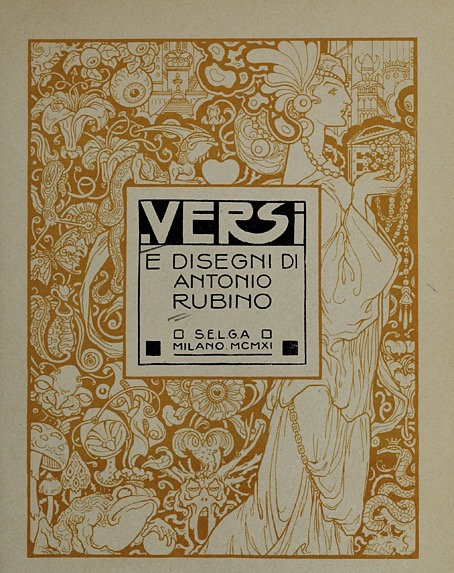
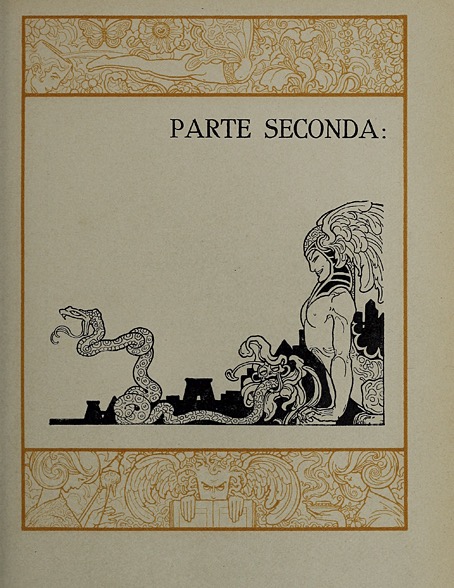
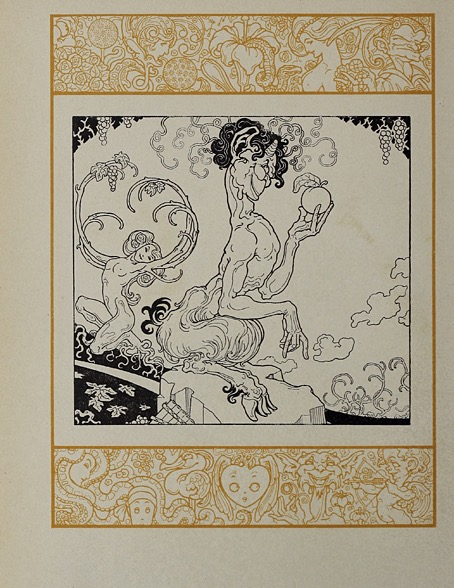
I didn’t know anything about Italian artist Antonio Rubino (1880–1964) until I went searching for information about this book’s creator. Wikipedia describes Rubino as an illustrator, cartoonist, animation director, screenwriter, playwright, author and poet who was also the most prolific comics illustrator in Italy before the First World War. Versi e Disegni is a product of those pre-war years, being published in 1911, a collection of the artist’s poetry with illustrations that range from the grotesquely comic to careful delineations reminiscent of later drawings by Wallace Smith and Dugald Stewart Walker.
rubino02.jpg

The title page sets the mood with its picture of an elegant woman surrounded by a tangle of orchids, fungi, small animals and disembodied eyeballs. The uneven tone continues inside, veering from mythological scenes that feature a surprising quantity of tentacles, to cutesy fare of a type closer to the illustrations from Rubino’s cartoons and children’s books. Not everything in the drawings is to my taste—I’ve never found pictures of gurning gnomes delightful—but it’s all very assured and well-presented, with decorative borders that vary from page to page. Given Rubino’s later successes it’s unlikely there’s much more like Versi e Disegni in his oeuvre but if there is I’d like to see it. His first illustration commission from 1905, for the libretto of Alberto Colantuoni’s operatic adaptation of The Rime of the Ancient Mariner, may be seen here, with the artist confusingly credited by his other forename, Augusto.

• Further reading: The dreamy illustrations of Antonio Rubino
rubino03.jpg

rubino04.jpg

rubino05.jpg

Continue reading “Antonio Rubino’s Versi e Disegni”

Weekend links 819

ohrai.jpg

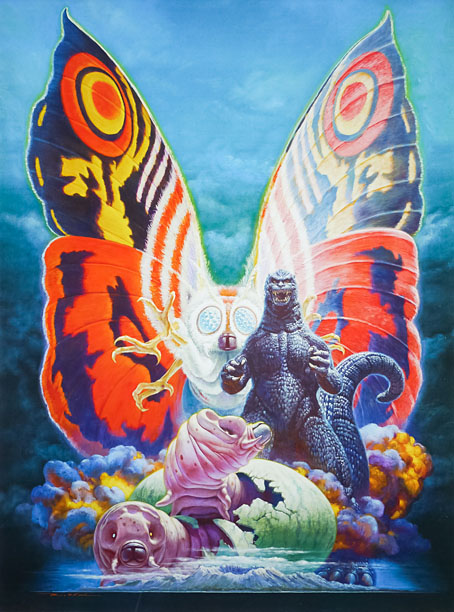
Godzilla vs. Mothra (1992), poster art by Noriyoshi Ohrai.

• At Wormwoodiana: Douglas A. Anderson on the first English translation of The Luminous Fairies and Mothra, a multi-author serial that formed the basis for Ishirō Honda’s film about the giant moth.

• At the Library of Congress: “Lost 19th century film by Méliès discovered at the Library“. 45 seconds of Gugusse and the Automaton (1897).

• At Public Domain Review: The Blinkered Flâneur: Walking with Franz Hessel in 1920s Berlin by Paul Sullivan.

• At Juno Daily: Kevin Richard Martin lists ten albums that shaped his Sub Zero album.

• New music: And All The Clocks Ran Dry by Andreas Voelk & Scott Monteith.

• “Behold Belgium’s beauty in these 15 scenic photographs.”

A Spoon and Tamago Guide to Tohoku.

• The Strange World of…Shane Parish.

• At Dennis Cooper’s: Occults.

• RIP Éliane Radigue.

Mothra’s Song (1961) by Yuji Koseki | Mothra (1984) by Frank Chickens | Mothra (2014) by The 5.6.7.8’s

Weekend links 817

paolozzi.jpg

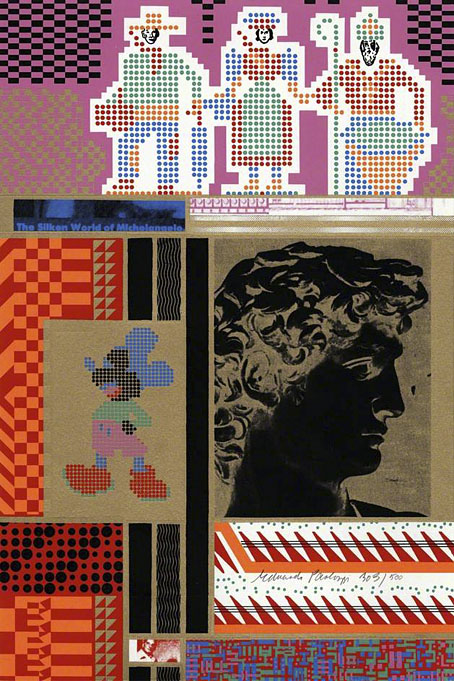
The Silken World of Michelangelo (1967) by Eduardo Paolozzi.

• “By the late 19th century, representing time as a line was not just widespread—it was natural. Like today, it would have been hard to imagine how else we could represent time. And this affected how people understood the world.” Emily Thomas on the evolution of our thinking about the nature of time.

• At Green Arrow Radio: Bill Laswell and the Cosmic Trip, in which the indefatigable performer/producer talks about his career and Cosmic Trip, a new album by saxophonist Sam Morrison.

• At Public Domain Review: Snail Homes, Bog Bodies, and Mechanical Flies: Robert Testard’s Illustrations for Les secretz de l’histoire naturelle (ca. 1485).

• Among the new titles at Standard Ebooks, the home of free, high-quality, public-domain texts: Continental Op Stories by Dashiell Hammett.

• The winter catalogue of lots for the After Dark: Gay Art and Culture online auction. Homoerotic art, photos, historic porn, etc.

• New music: The Third Mind. A Sonic Tribute to the Dreamachine by Various Artists.

• Mix of the week: DreamScenes – February 2026 at Ambientblog.

A Conversation with Tarotplane by AJ Kaufmann.

• RIP Bud Cort.

Timewhys (1971) by Tonto’s Expanding Head Band | Time Be Time (1990) by Ginger Baker | Time Scale (2009) by Belbury Poly

Maurice Leloir’s Three Musketeers

leloir03.jpg

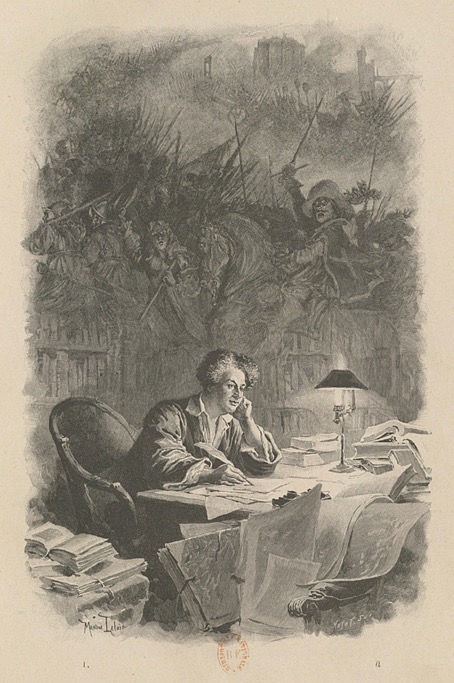
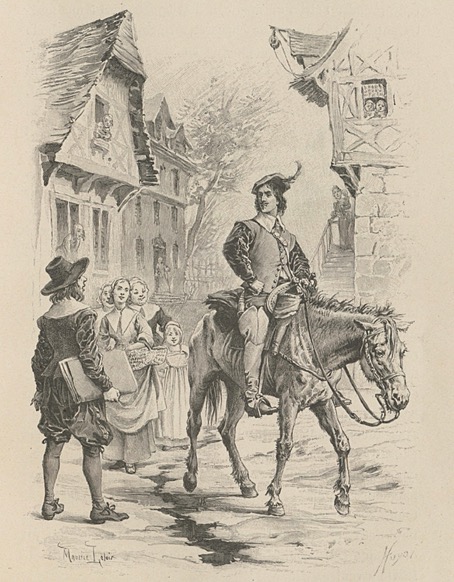
Just after Christmas I watched the recent French film adaptation of The Count of Monte Cristo, after which I resolved to finally read The Three Musketeers, something I’d been intending to do since reading The Count of Monte Cristo four years ago. I’m currently two thirds of the way through The Three Musketeers and enjoying it very much despite the familiarity of the story. (I’ve watched Richard Lester’s two-part film adaptation many times.) For the most part, the novel avoids the flaws which make Monte Cristo a laborious read (Umberto Eco described the latter as “one of the most exciting novels ever written and on the other hand…one of the most badly written novels of all time and in any literature”), but The Three Musketeers isn’t without flaws of its own. I don’t think too many people would regard the lack of descriptive detail as a flaw per se—this is an adventure story, after all—but I enjoy a well-crafted description, and Dumas’s sketching of costume and place ranges from the scant to the non-existent. We’re told, for example, that d’Artagnan is a member of the King’s Guard, and that the Guards and the Musketeers are identifiable by the differences of their uniforms. But I don’t recall any instance when we’re told how these differences are manifest, or even how any of the principle characters dress from day to day. The same applies to the settings; much of the novel is set in the Paris of the 1620s but Dumas ignores any scenic description in what would have been a darker, muddier and altogether less salubrious city than his own Paris of the 1840s.

leloir01.jpg

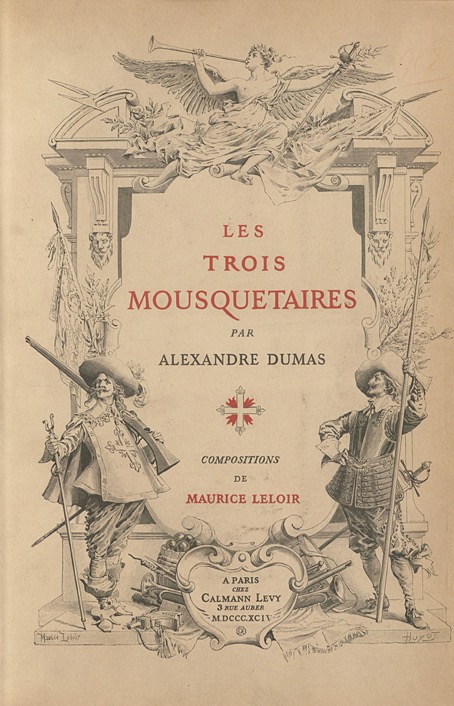
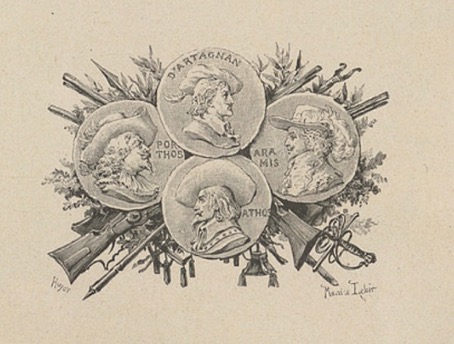
All of which brings us to Monsieur Maurice Leloir (1853–1940) and his illustrations for the novel which were published in a two-volume edition in 1894 (Tome 1 | Tome 2). Leloir was a painter and illustrator with a considerable knowledge of French historical dress; in 1907 he became the founding president of the Société de l’histoire du costume. His illustrations of The Three Musketeers, therefore, may be taken as authoritative when it comes to the costuming of the characters. Leloir was very good with everything else, as it happens; his characterisation is better than those of an earlier edition which makes d’Artagnan and friends barely distinguishable from each other, something not helped by the barbering habits of the day which had every gentleman sporting the same elaborate moustaches.

leloir02.jpg

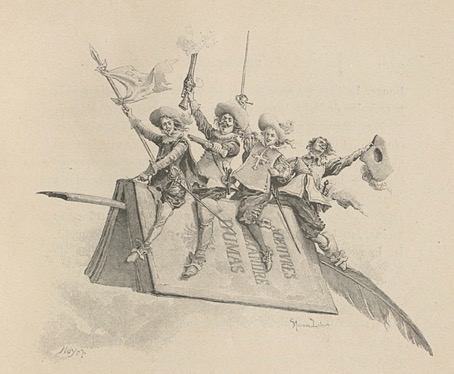
Most of Leloir’s illustrations are placed vignette-style inside the page but a few of the larger ones run across two pages, especially those involving fights or other action scenes. And there are many illustrations, what you see here is a very small sample. A couple of them so closely match scenes in the Richard Lester films that I’m sure the books must have been referred to for details of costuming. Douglas Fairbanks certainly saw them; after playing d’Artagnan in his own film production of The Three Musketeers he invited Maurice Leloir to advise with the costuming of another Dumas adaptation, The Iron Mask, in 1929.

leloir05.jpg

leloir06.jpg

Continue reading “Maurice Leloir’s Three Musketeers”

Tadami Yamada’s illustrated Carnacki

carnacki10.jpg

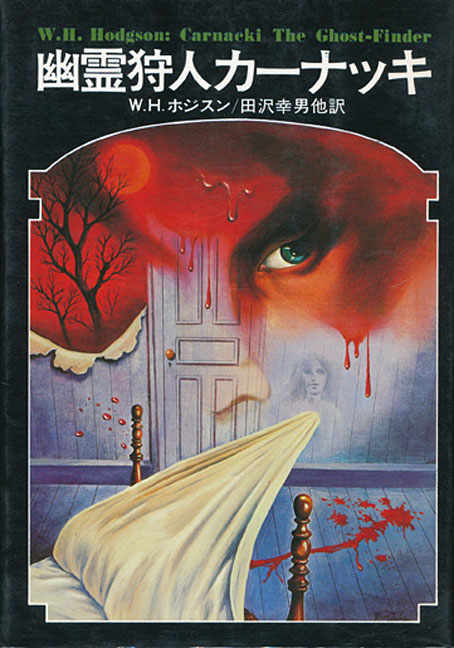
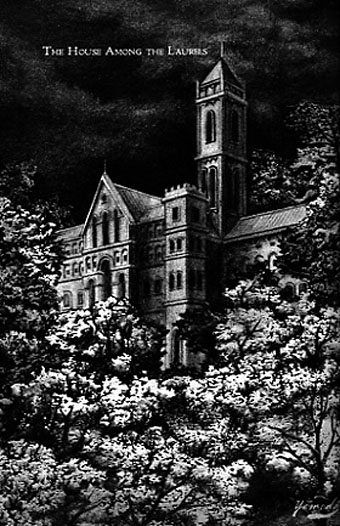
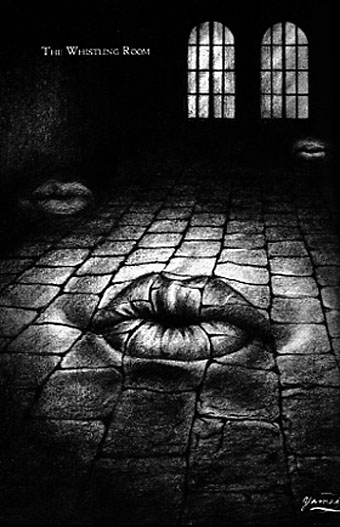
It’s William Hope Hodgson’s occult detective again. Late last year I was looking for Hodgson illustrations after reading Timothy S. Murphy’s William Hope Hodgson and the Rise of the Weird: Possibilities of the Dark but couldn’t find much of interest apart from book covers I’d seen many times before. Tadami Yamada’s illustrations for a Japanese edition of Carnacki, The Ghost-Finder have yet to be catalogued at ISFDB, and don’t seem to have been disseminated much at all. Once again, I’m indebted to 70sscifiart for turning up art that I might not otherwise have seen.

carnacki01.jpg

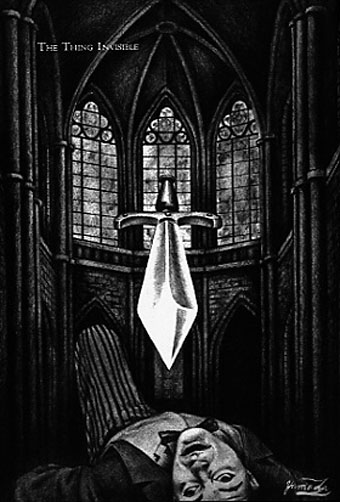
The Thing Invisible.

Information about the Japanese collection was difficult to find in general, a common problem with older Japanese books when most of the online documentation hasn’t been translated. The book was published by Kokusho Kankōkai in 1977 as part of a series of weird fiction reprints along with collections by HP Lovecraft, Algernon Blackwood and others. The Hodgson volume contains the expanded collection of Carnacki stories, with the three posthumously published tales–The Haunted “Jarvee”, The Find and The Hog–appended to the original 1913 edition.

carnacki06.jpg

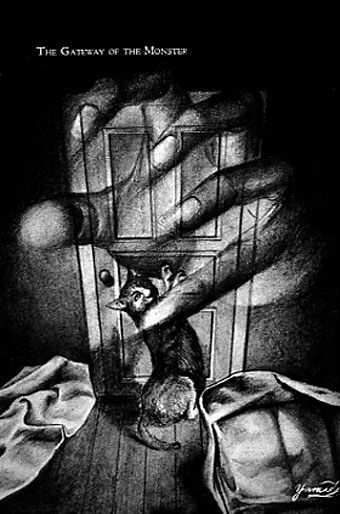
The Gateway of the Monster.

As to the illustrations, these were early works by Tamada, an artist with a lengthy career as an illustrator and painter. The copies of the illustrations don’t reveal much about their medium but they all appear to be paintings; the ones for The Find and The Hog (whose Japanese title translates as The Witch Pig) both show signs of the patterning you get with the decalcomania process, something you can’t easily create in other media. If this book was part of a series then I don’t imagine it was the sole illustrated edition, which raises the possibility that the Lovecraft, Blackwood and other titles were fully illustrated as well. Once again, further research is required.

carnacki08.jpg

The House Among the Laurels.

carnacki02.jpg

The Whistling Room.

Continue reading “Tadami Yamada’s illustrated Carnacki”