The art of Gregorio Prieto, 1897–1992

prieto01.jpg

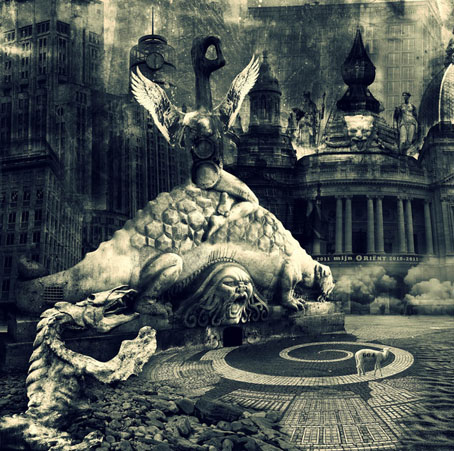
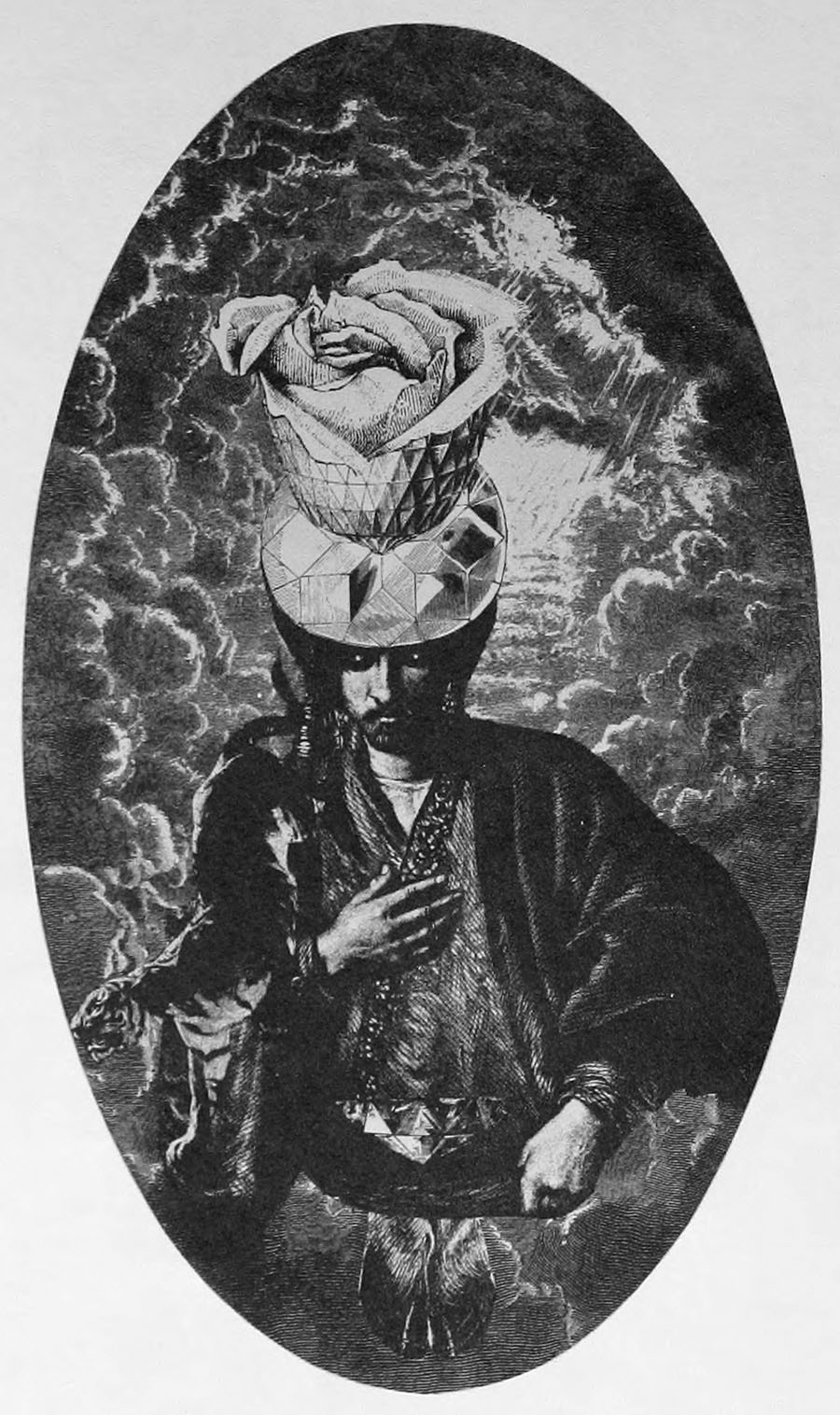
Predicadors del be i del mal (c. 1928–1930).

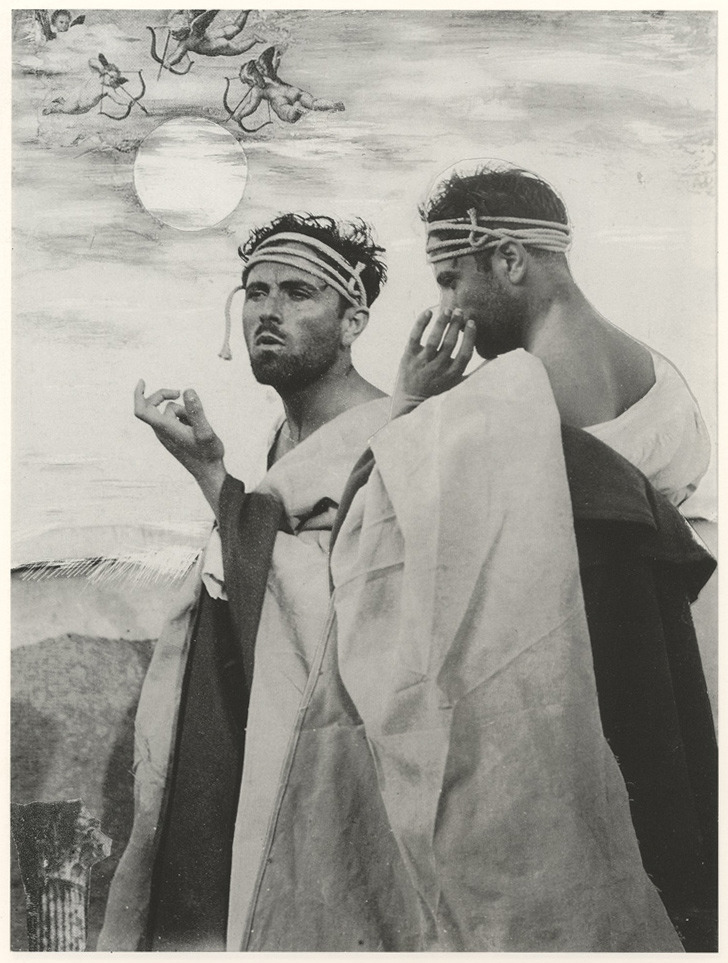
My thanks to Will at 50 Watts for sending these experimental photos by Spanish artists Eduardo Chicharro (1873–1949) and Gregorio Prieto, neither of whose work I’d looked at before. Prieto is of most interest here (that’s him in photo five with the metalwork wrapped around his head) for the homoerotic quality of his other work, a quality which no doubt explains why some of these pictures set the gaydar bells ringing. I thought that Javier at Bajo el Signo de Libra might have featured Prieto already but it seems not.
prieto02.jpg

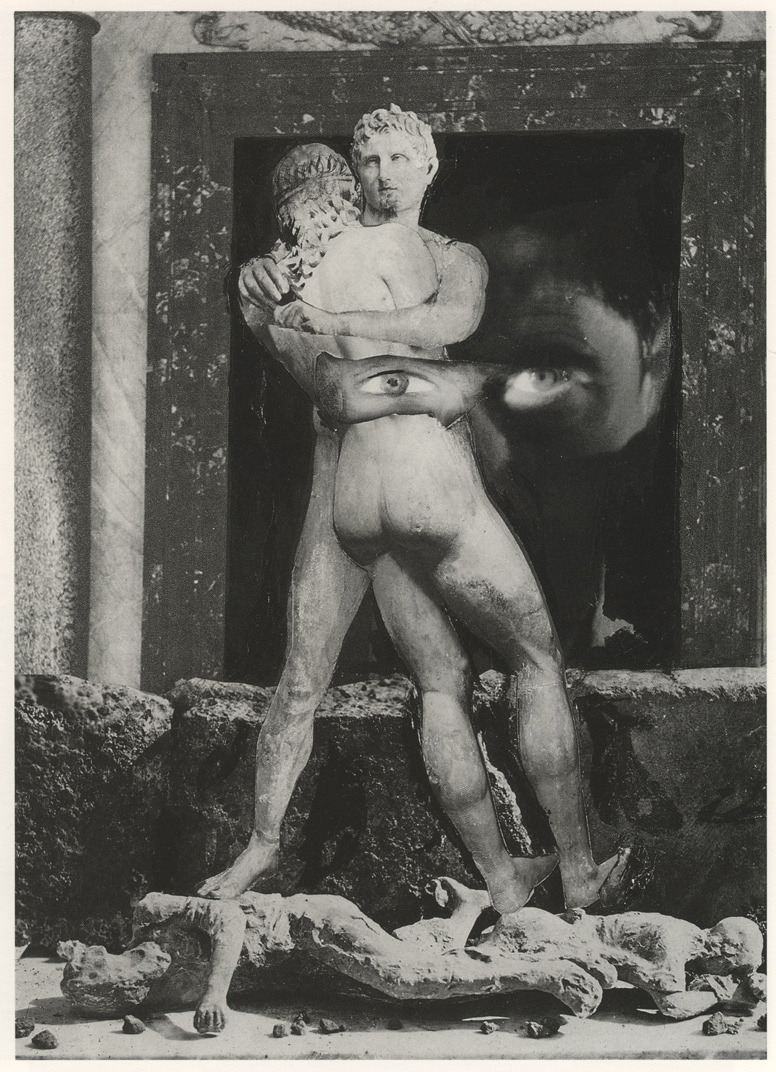
Iluita (c. 1928–1930).

The photos are from Les avantguardes fotografiques a espanya, 1925–1945. The superimposed images are reminiscent of those that Emil Cadoo was producing in the 1950s albeit with more of a deliberate Surrealist flavour; the ruins and Classical references are also a feature of Prieto’s paintings, some of which can be seen here. (Also a coloured print of the first photo above.) The homoerotics is most evident in his line drawings, some of which can be seen here. His reclining youths and embracing sailors look rather Cocteau-like but they probably owe more to the etchings of Picasso’s Vollard Suite which were being produced around the same period. There’s more Picasso-esque Prieto at Flickr including a drawing dedicated to Lorca.

prieto03.jpg

Metamorfosi (c. 1928–1930).

Continue reading “The art of Gregorio Prieto, 1897–1992”

Weekend links 134

ulian.jpg

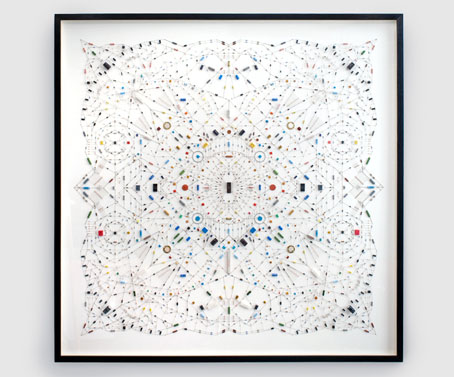
Technological mandala 02 (The beginning) (2012) by Leonardo Ulian.

• The Yellow Magic Orchestra really were the Japanese equivalent of Kraftwerk in 1978. I’d not seen this video for Firecracker before. Same goes for the Technopolis and Rydeen videos. Related: YMO’s synth programmer, Hideki Matsutake, showing off his modular Moog on a Japanese TV show.

Sra is the final book in the Aedena Cycle by Moebius. It’s never been translated into English but Quenched Consciousness has just finished posting the entire book in an unofficial translation.

• “It’s better to have a small amount of good comics, than a big amount of mediocre comics.” Dutch comic artist Joost Swarte interviewed.

• From 2007: The Strange Lovecraftian Statuary of Puerto Vallarta (Thanks, Ian.) Related: More art by Alejandro Colunga.

steam.jpg

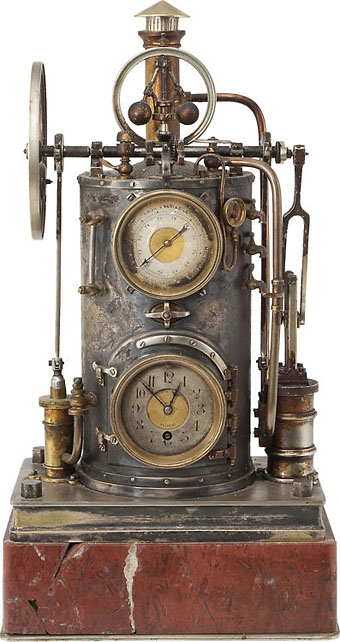
A novelty mechanical clock barometer in the form of a steam engine (c. 1885).

The MR-808: a room-size TR-808 drum machine by Moritz Simon Geist with real instruments played by robot hands.

• “Shoot us and dig the grave; otherwise we’re staying.” The women living in Chernobyl’s toxic wasteland.

Hotel Room Portraits 1999–2012 by Richard Renaldi, a new photo exhibition at Wessel + O’Connor.

Lane’s Telescopic View of the Opening of the Great Exhibition, 1851.

• “I’m the target market, and I don’t like it!” A Creative Catharsis.

Brian Eno’s new ambient album, Lux, is released on Monday.

Collages by Sergei Parajanov.

Techno City (1984) by Cybotron | Techno Primitiv (1985) by Chris & Cosey | Techno Dread (2008) by 2562.

Labirynt by Jan Lenica

labirynt1.jpg

Labirynt.

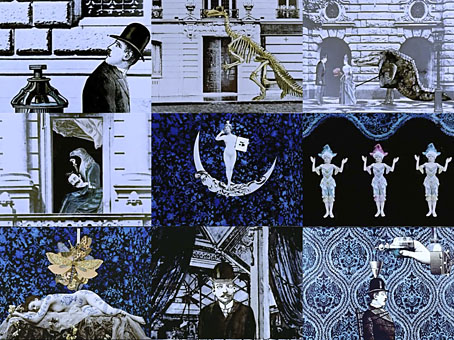
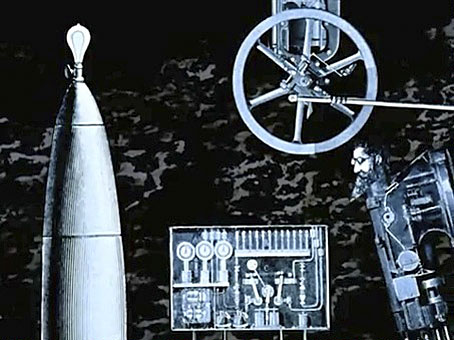
One of the links at the weekend was to this post about the favourite Polish posters of the Brothers Quay, a piece which included an example by designer and illustrator Jan Lenica (1928–2001). Lenica, like the Quays, was also a filmmaker who started out by producing short animations, Labirynt (1963) being one of these works. I’d not come across this before but now that I’ve watched it I’d be very surprised if Terry Gilliam hadn’t seen it at some point in the 1960s, the animation of collaged illustrations and hand-tinted photographs from 19th-century sources is precisely the kind of thing that Gilliam was doing a few years later. So is the generally Surrealist atmosphere with a bowler-hatted protagonist being menaced in the street by a host of hybrid creatures, encountering the women one sees in old erotic postcards, being seized by a giant hand, and so on.

labirynt2.jpg

Many Eastern European animations from the Cold War period involve a degree of political allegory, and Labirynt is no exception. One of the menacing figures is a mechanical gentleman who captures Bowler Hat Man and subjects him to a series of forced operations, eventually building a cage inside the captive’s head. Given this, and some opening shots which show Bowler Hat flying over the city using self-powered wings, it’s not stretching a point to see this 13-minute film as Brazil in miniature. Watch it for yourself here.

Previously on { feuilleton }
Brothers Quay scarcities
Gilliam’s shaver and Bovril by electrocution
Short films by Walerian Borowczyk
The Brothers Quay on DVD

Weekend links 118

owczarek.jpg

The Garden of Urban Delights (2010) by Marcin Owczarek.

His protagonists are misfits: alienated, implicitly gay, longing for love, frequently hard to be around, always fixated on small pleasures that compensate for an essential feeling of not belonging. […] His patroness Edith Sitwell termed him “that rare being, a born writer.” William Burroughs dedicated The Place of Dead Roads to him, declaring Welch “certainly the writer who most directly influenced my work.” John Waters has called In Youth is Pleasure “so precious, so beyond gay, so deliciously subversive, [it] is enough to make illiteracy a worse social crime than hunger.”

Sadie Stein on Denton Welch, a writer I’m embarrassed about still not having read. Edith Sitwell and William Burroughs had a famously disputatious correspondence in the pages of the TLS over The Naked Lunch. An appreciation of Welch’s work was one of the few things they had in common.

• Don’t mention guitars: Robert Hampson on acousmatic music, the curse of Loop and the rebirth of Main.

• No Straight Lines: A Collection Of Queer Comics part one, part two, part three. A history by Justin Hall.

Pieces Of Gold by The Aikiu: shots from gay porn videos repurposed via some smart editing.

• RIP İlhan Mimaroğlu, electroacoustic composer. Ubuweb has a selection of his recordings.

“A good ground rule for writing in any genre is: start with a form, then undermine its confidence in itself,” he says. “Ask what it’s afraid of, what it’s trying to hide – then write that.” For Harrison, the most satisfying writers are “at odds with their cultural context. They’re trying to fit in and failing, or they’re trying to remove themselves and failing. The attempt to resolve the conflict is an angle – a frame or a context – in itself.”

The Guardian’s A Life in Writing profiles M. John Harrison. His new novel, Empty Space, was published on Thursday. There’s also this recent video interview with Arc magazine.

• Stephen Usery interviews editor Russ Kick about The Graphic Canon: Volume One.

At home with Prince Zaleski, the “most decadent and imperial detective in fiction”.

• A Visit with Magritte: photographs by Duane Michals.

Loitering airships could dispense drones on demand.

• Creating a Forever Object: Ian Schon’s Pen Project.

• A Tumblr for the late, lamented Arthur Magazine.

• “Few cities can boast a railway line for the dead.”

The Lost Tapes by Can: An Oral History.

Space Reflex (1963) by Dick Hyman & Mary Mayo | Space Is Deep (1972) by Hawkwind | Space Is The Place (1973) by Sun Ra | Space Moment (1995) by Stereolab | Space Pong (2006) by T++

The Occult Explosion

occult01.jpg

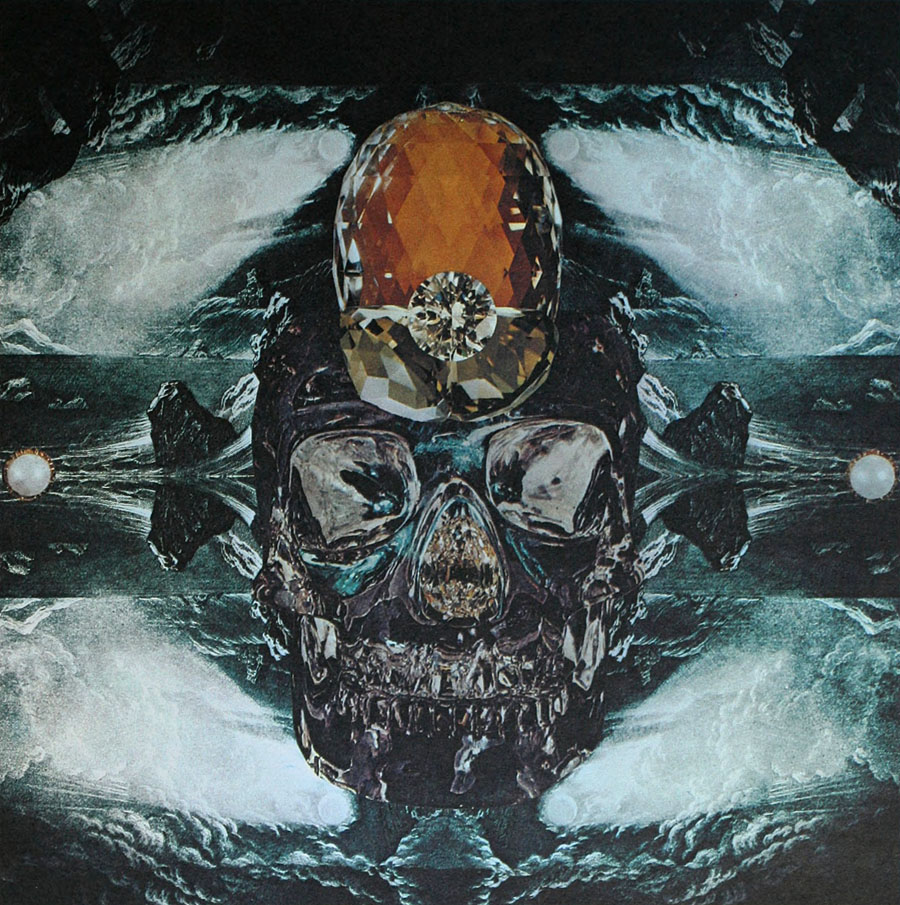
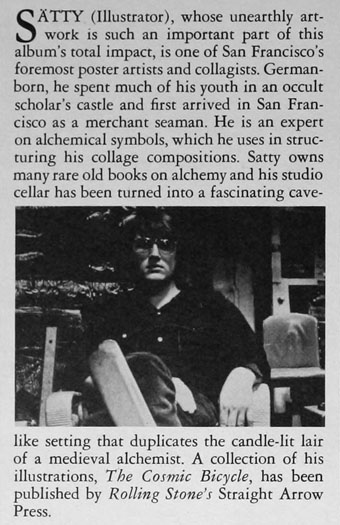
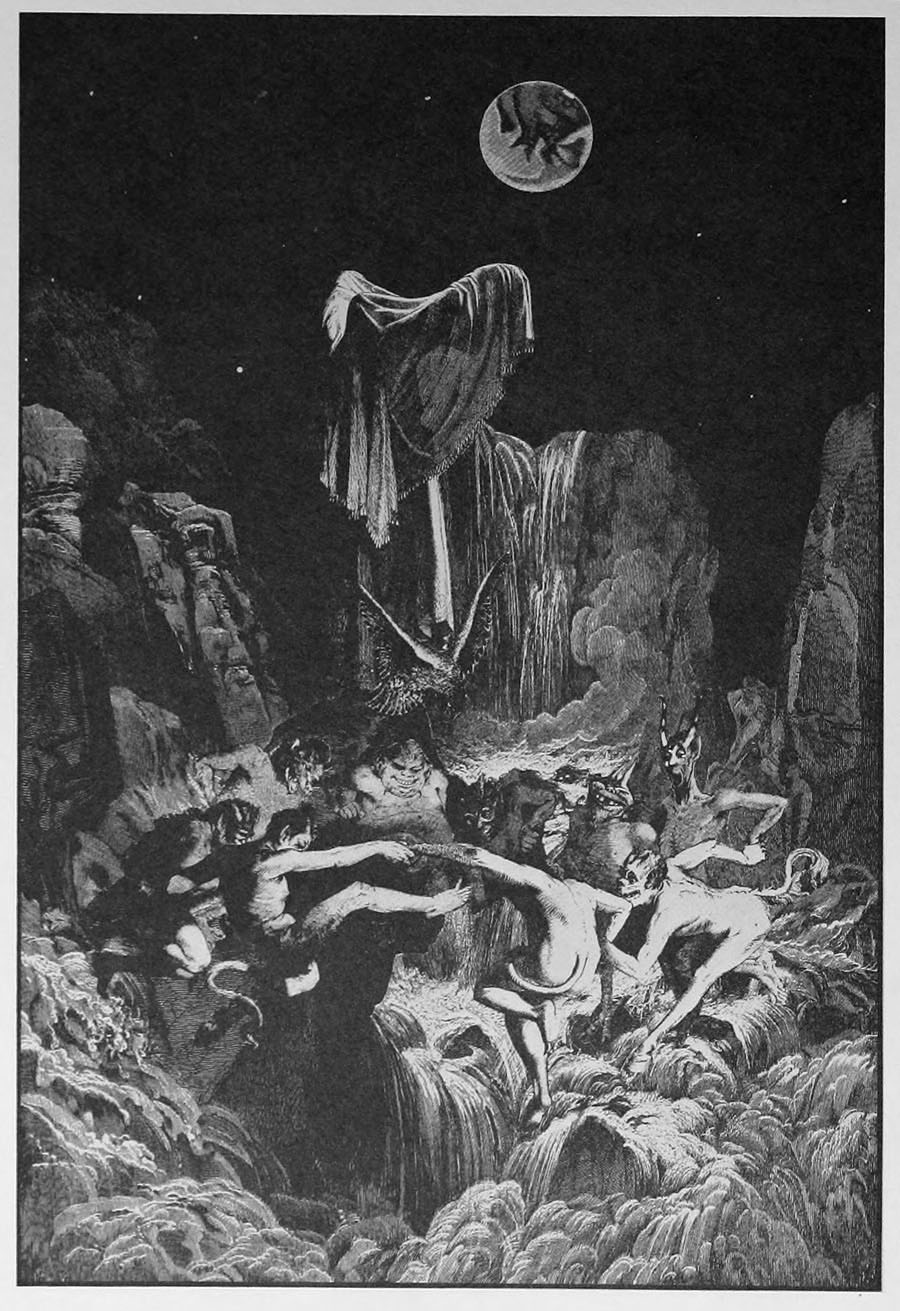
So here’s a strange thing: having spent another working week sifting through scanned books at the Internet Archive what do I find but scans of album booklet art by Wilfried Sätty only a couple of days after writing about his album covers. The album in question may be familiar to some readers but it was a new one to me. The Occult Explosion (1973) was a collection of recorded interviews with people such as Alan Watts and Anton LaVey discussing subjects pertinent to the title, although the general tone is more in the direction of catch-all mysticism than occultism as such. Anton LaVey is there to pronounce about Satanism, of course, and the album also features two songs by British rock band Black Widow, one of which, Come To The Sabbat, has since achieved a kind of novelty notoriety. (There’s a nice video-feedback recording of them playing the song live on Beat Club in 1970.)

Nat Freedland was the author of a book entitled The Occult Explosion for which the album acts as an audio appendix. This is all so typically 1970s: witchcraft, Satanism, rock music, yoga, Alan Watts, UFOs, ESP, and the whole thing packaged in Sätty’s post-psychedelia collages. The entire album is available at the Internet Archive: the recordings are here while the badly-scanned insert pages are here. (There’s a better view of the cover art at Flickr.) Some of the more impressive pieces of Sätty’s art follow, work which has been buried for almost forty years. Just to add to the net of coincidences this week, the last of the pictures below borrows a demon from Gustave Doré’s Divine Comedy, the same source as yesterday’s Rick Griffin poster.

occult08.jpg

occult02.jpg

occult03.jpg

occult04.jpg

Continue reading “The Occult Explosion”