The Library of Babel by Érik Desmazières

library1.jpg

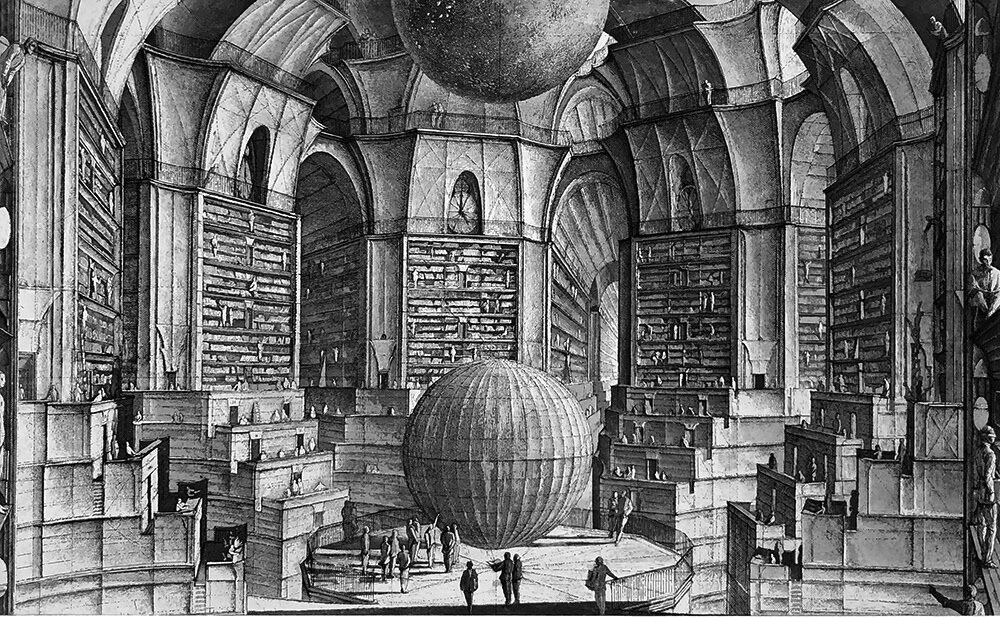
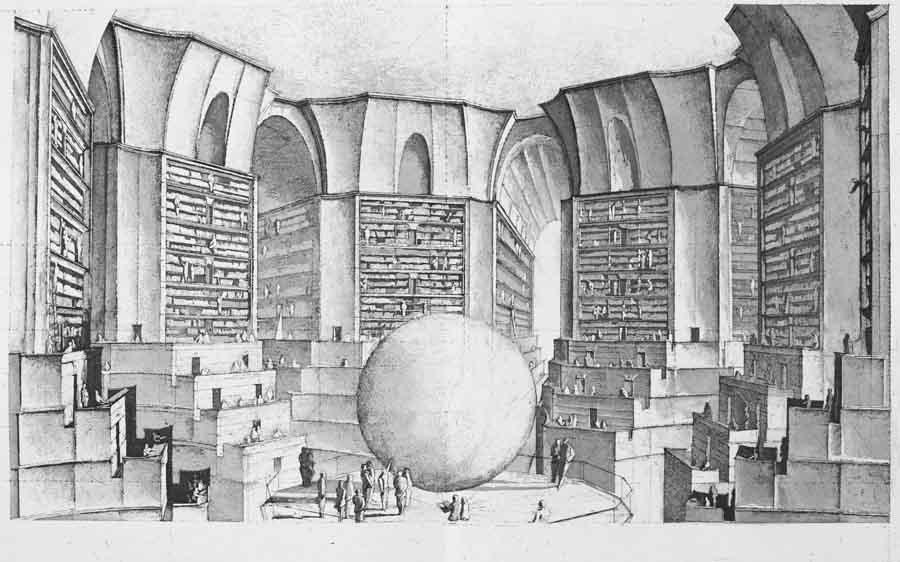
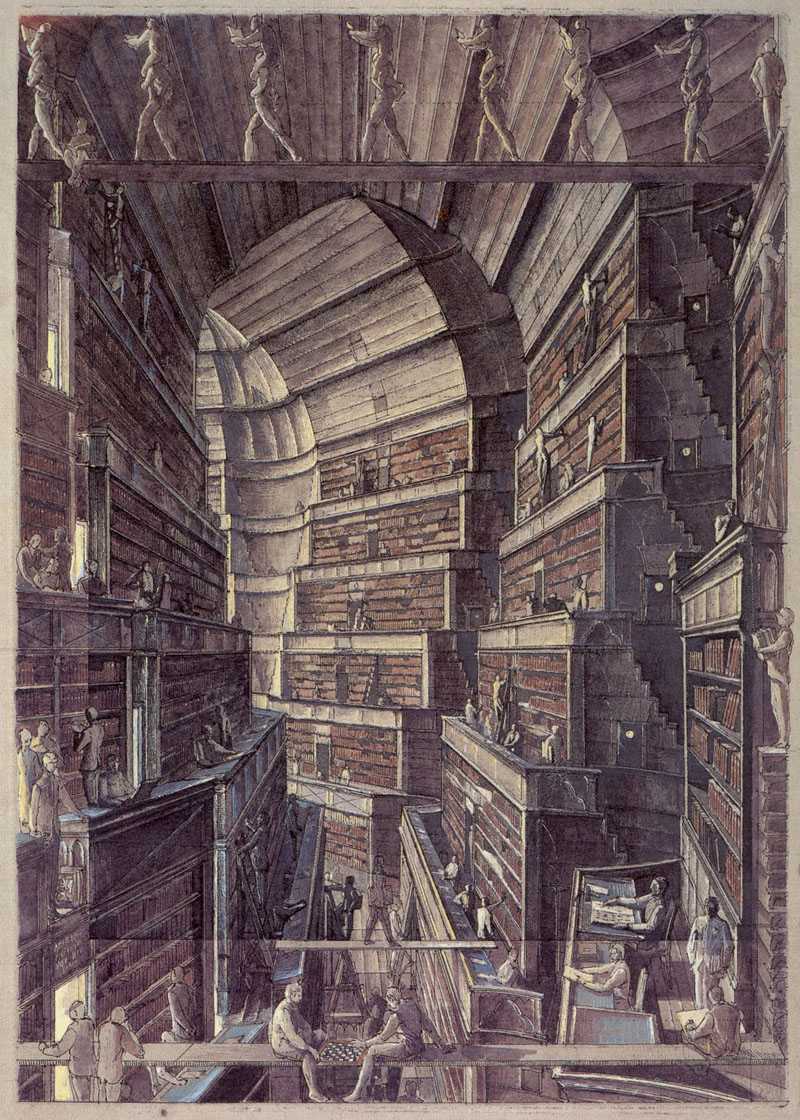
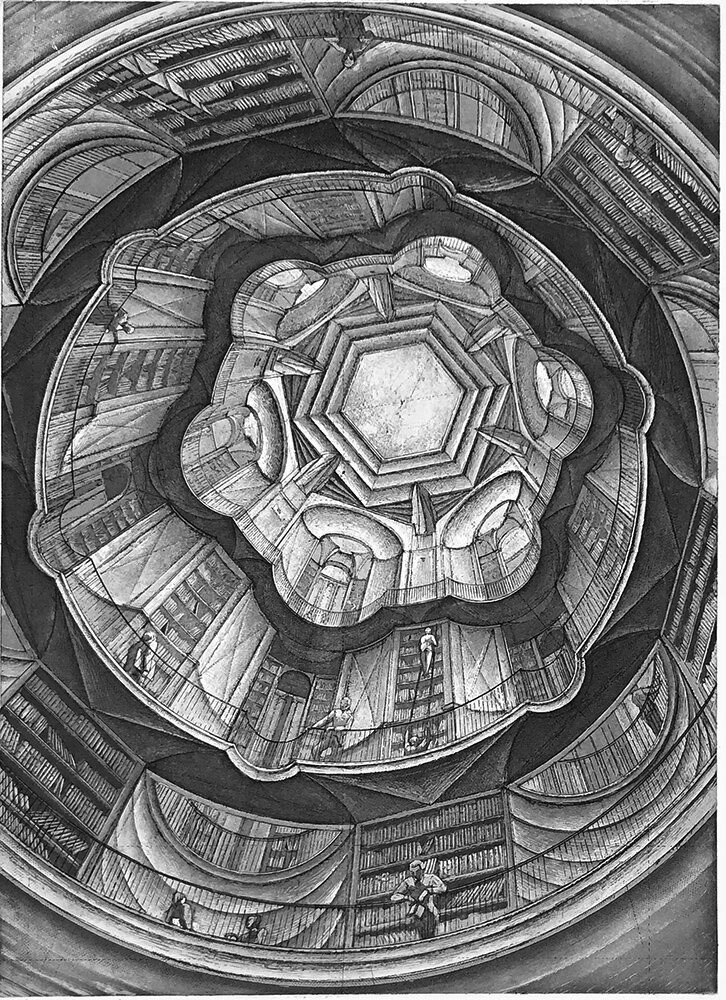
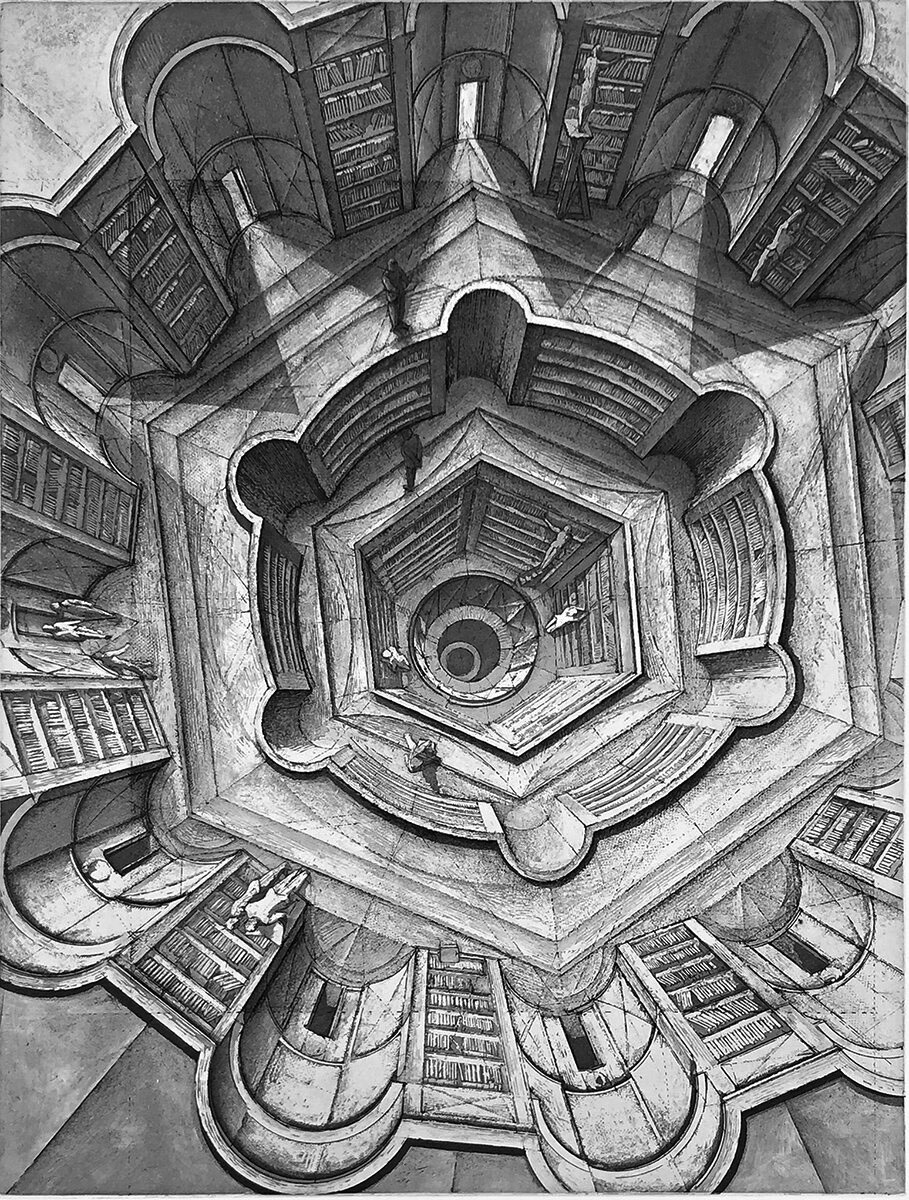
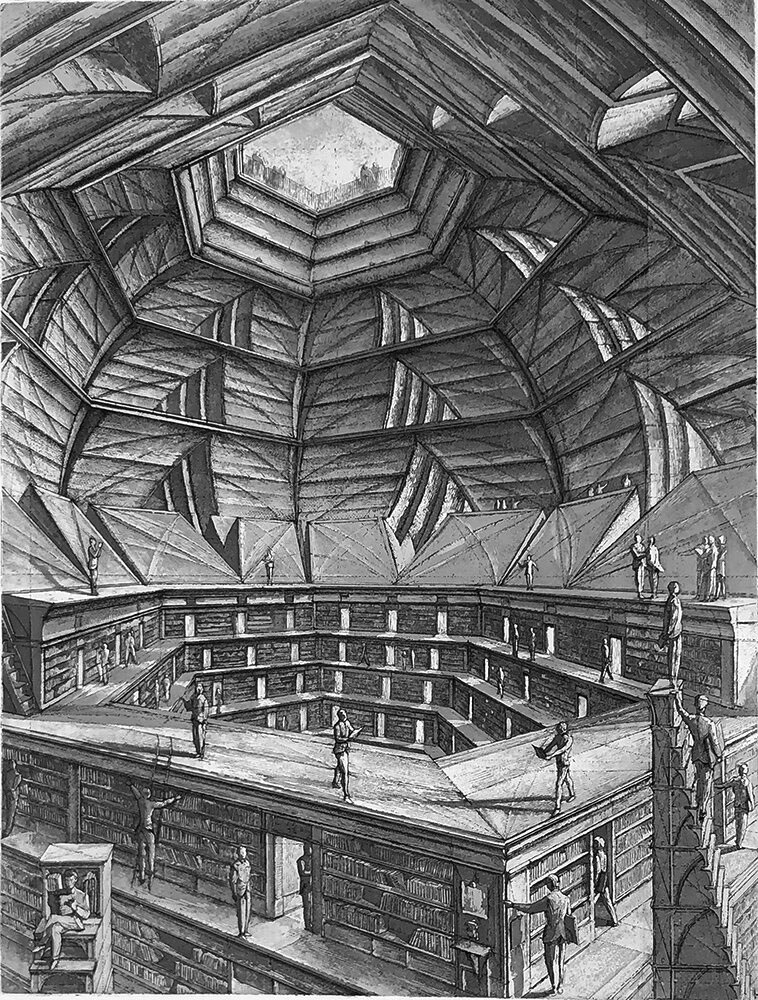
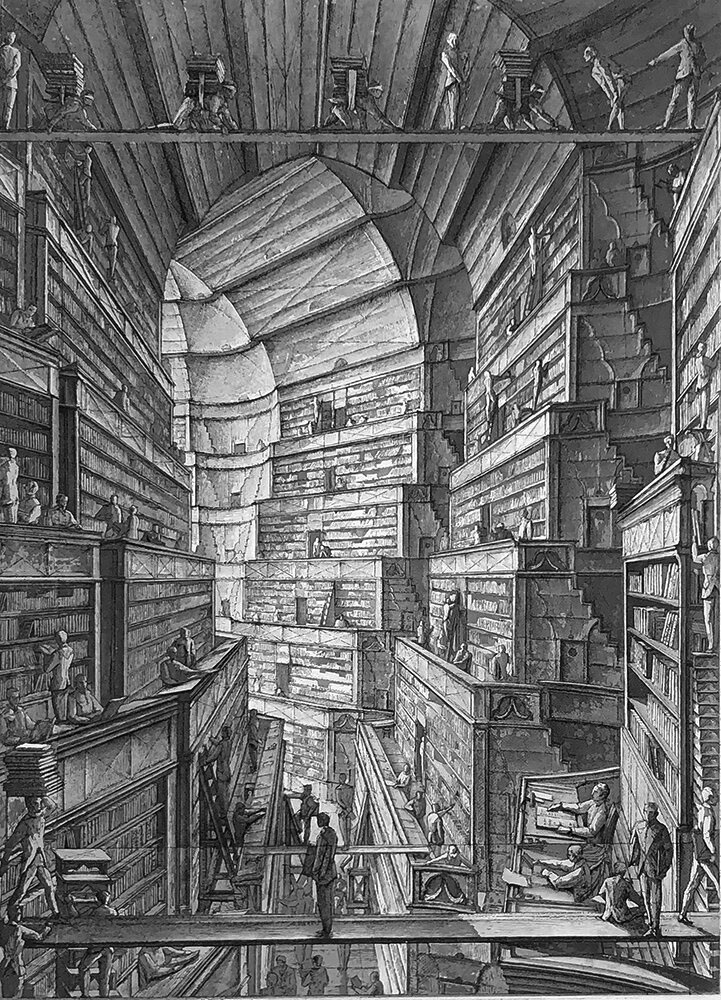
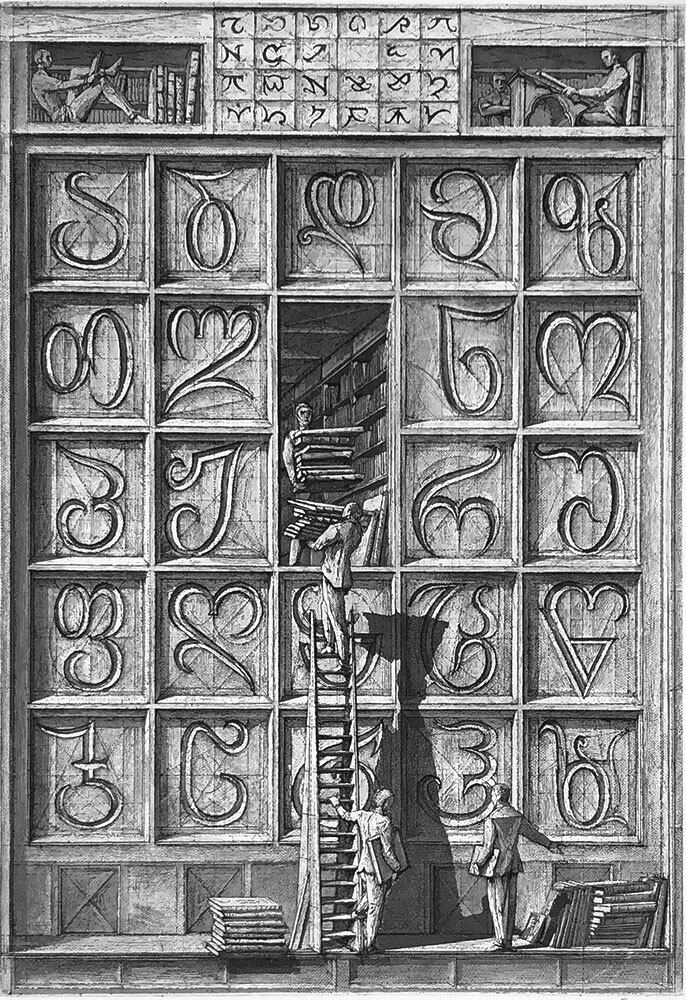
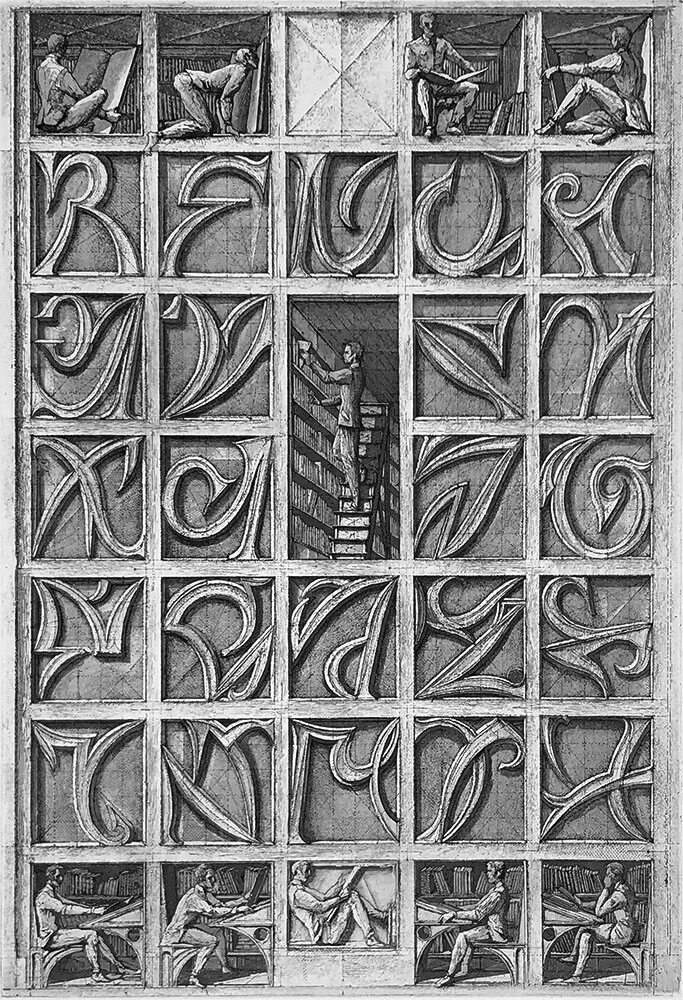
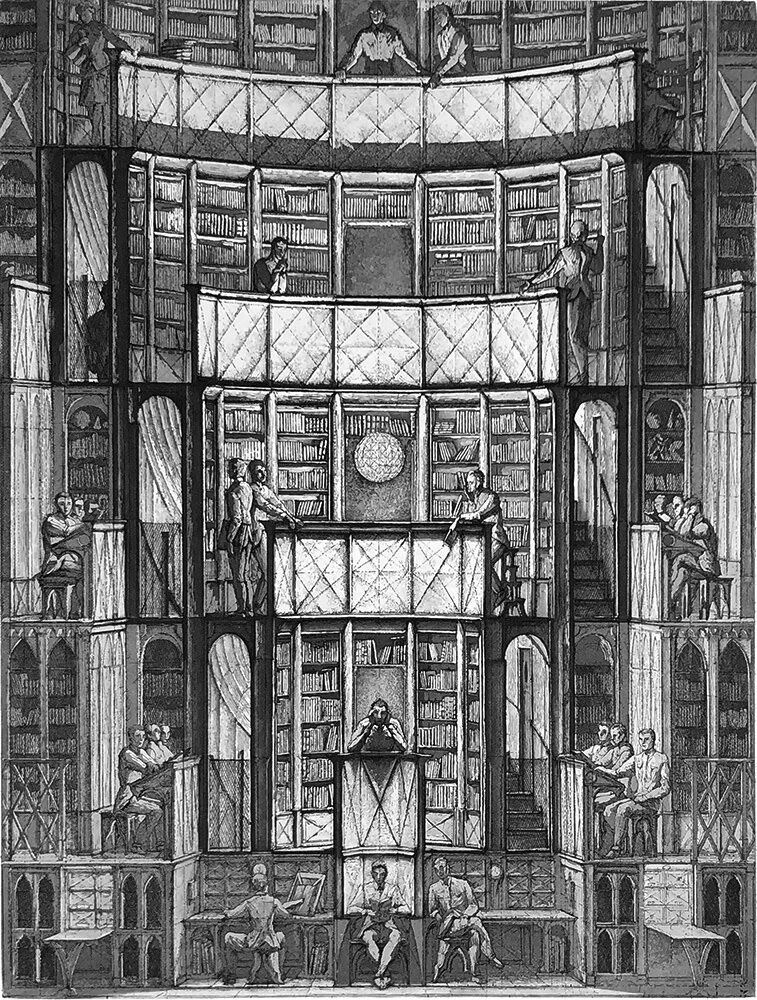
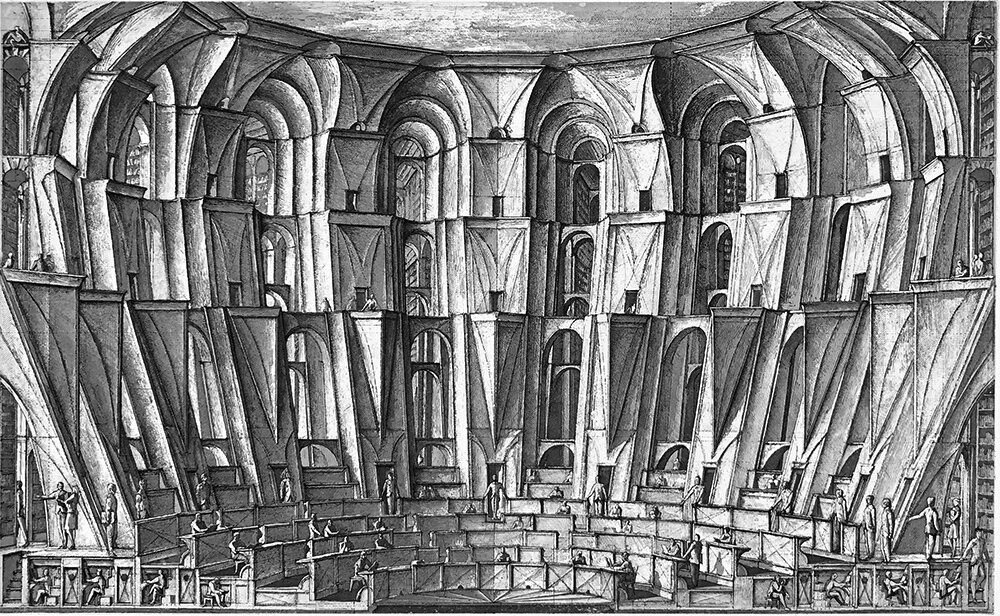
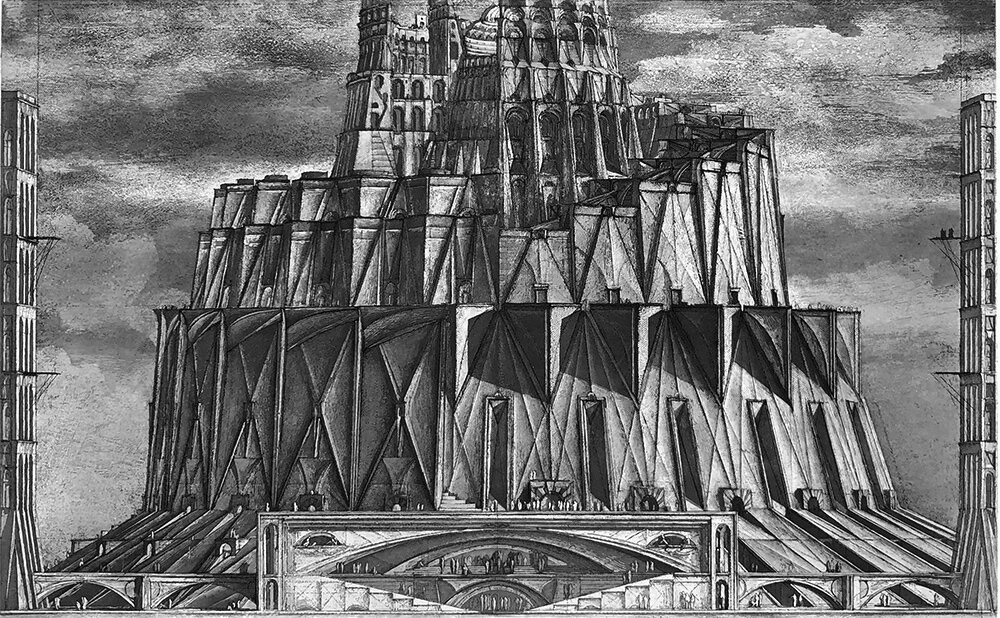
The print work of French artist Érik Desmazières has featured here on several occasions, and I’ve also had reason to mention more than once his aquatints and etchings which illustrate Jorge Luis Borges’ celebrated short story The Library of Babel (1941). The prints were produced in 1997, with a small book edition being published in 2000. Copies of the volume now sell for upwards of $100, and at a mere 36 pages this somewhat exceeds my acquisitiveness threshold; hence this post which gathers some of the better online reproductions, one or two of which have only come to light in the past couple of years.

library2.jpg

Borges’ description of the architecture of the Universe-size Library is sketchy so Desmazières opens out some of the spaces to give a Piranesian sense of space to what would otherwise be little more than views of the same small rooms and corridors, endlessly repeating. MC Escher could have made something of those infinite perspectives—the hexagonal chambers are the closest to the story descriptions—but the larger rooms convey without words an impression of colossal spaces filled with nothing but people and an infinitude of books. The volumes that Borges describes contain few illustrations but one of them at least would describe this very book. Another would describe this book with a minor variation in one of the plates; another would describe MC Escher’s depictions of the Library, and Piranesi’s, and Salvador Dalí’s, and yours, and mine, and on and on…

library3.jpg

library4.jpg

library5.jpg

library6.jpg

library7.jpg

library8.jpg

library9.jpg

library10.jpg

library11.jpg

library12.jpg

Elsewhere on { feuilleton }
The etching and engraving archive

Previously on { feuilleton }
Les lieux imaginaires d’Érik Desmazières
The art of Érik Desmazières

The labyrinth of Versailles

versailles01.jpg

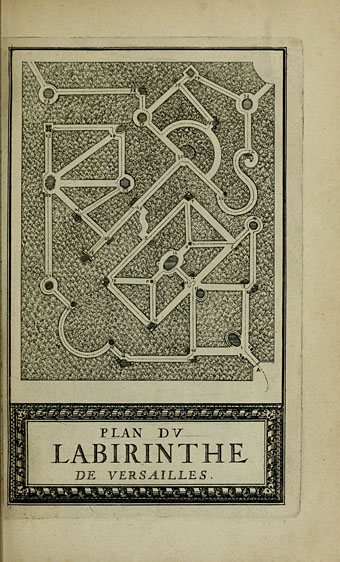
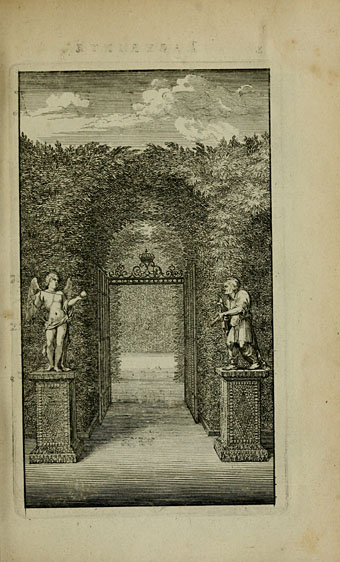
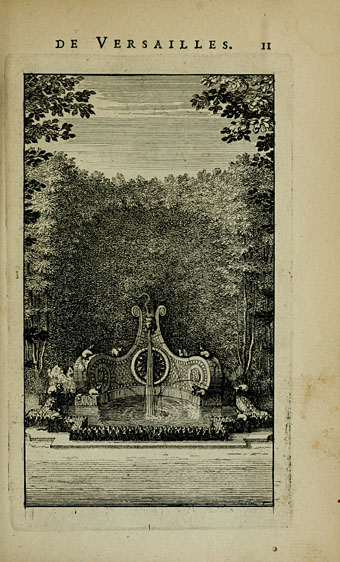
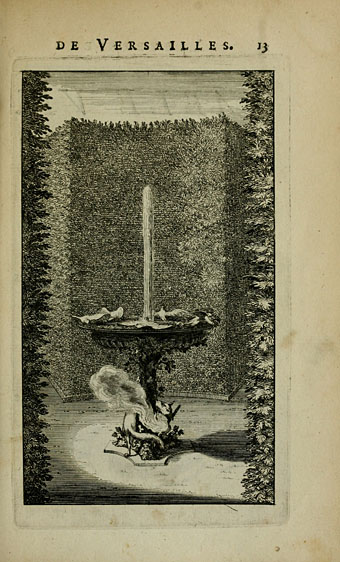
I ought to have mentioned this last week since a plan of the lost labyrinth of Versailles appears in the William Henry Matthews book. The labyrinth was completed for Louis XIV in 1677, and is unusual for being a series of paths without a central focus, and also a very ornamental affair containing thirty-nine fountains with accompanying statuary which depicted the animals from Aesop’s fables. The latter were a suggestion of Charles Perrault from whose Labyrinte de Versailles (1677) these illustrations are taken. The etchings are by Sébastian Le Clerc whose map shows the route that visitors would have taken in order to visit each fountain in turn. The book may be browsed here or downloaded here.

The labyrinth was removed in 1778 but Wikipedia has a page with more information including some colour prints of the fountains, and also an English list of the fables depicted.

versailles02.jpg

versailles03.jpg

versailles04.jpg

Continue reading “The labyrinth of Versailles”

Weekend links 144

thomas.jpg

Ruins 3 by Rachel Thomas and Dan Tobin Smith.

“Dan wanted to do something on a really large scale and was looking at a lot of Piranesi and started talking to me about ruins. I then started looking at modern interpretations of this idea, I was obsessed with the post modern architecture of SITE, Disney fantasy settings, Busby Berkeley, Sotsass ceramics, Art Deco motifs in general, Giorgio de Chirico’s paintings, Arabic temples and on and on…” Rachel Thomas talks to Daisy Woodward about Imaginary View, an exhibition currently showing at Somerset House, London.

• A brief description of The Yokel’s Preceptor (1855), a guide to Victorian London’s gay underworld by William Dugdale. When do we get to see a facsimile of this document? The slang is a treat.

• Mix of the week: Secret Thirteen Mix 054, a great selection by Biosphere of doomy ambience from the Post Punk/early Industrial era, 1979–1981.

fannyandstella.jpg

Stella (Ernest Boulton) with Fanny (Frederick Park) (c. 1860–1870).

While Stella and Fanny might be the most terrible show-offs, not to mention industrious sex workers, even they drew the line at coupling in public places. Over the course of the subsequent trial, and despite bribing witnesses, the prosecution failed to prove that sodomy had ever occurred, either between the two young men themselves, or within their circle of genteel “sisters”, or even in a dark corner behind the Haymarket with a passing guardsman. Eventually, and only after a second trial a year later, the young men were found not guilty and allowed to slip back into their lives of pro-am theatricals, touring together and separately in such limp pieces as A Comical Countess and A Morning Call.

Kathryn Hughes reviews Fanny and Stella: The Young Men Who Shocked Victorian England by Neil McKenna. Related: photographs of the pair.

The Twilight Language of Nigel Kneale, a book of essays and a cassette tape dedicated to the television dramatist.

Sheltered and Safe from Sorrow: “Victorian mourning rituals, tombstones, epitaphs, and other creepy things”.

Crate digging and the resurgence of vinyl. Related: Men & Vinyl, a Tumblr devoted to men and their discs.

• Designer Shirley Tucker talks about her cover for the first edition of The Bell Jar by Sylvia Plath.

• More Will Bradley at The Golden Age (formerly Golden Age Comic Book Stories).

The Mirror Reflecting (Part 2), a new track by The Haxan Cloak.

Psychedelic Press UK | Related: Catnip: Egress to Oblivion?

Paris in colour circa 1900.

Twilight (1983) by Pete Shelley | Twilight (2000) by Antony and the Johnsons | Twilight (2005) by Robin Guthrie & Harold Budd

Maze and labyrinth panoramas

labyrinth1.jpg

Parc del Laberint d’Horta, Barcelona by Valentin Arfire.

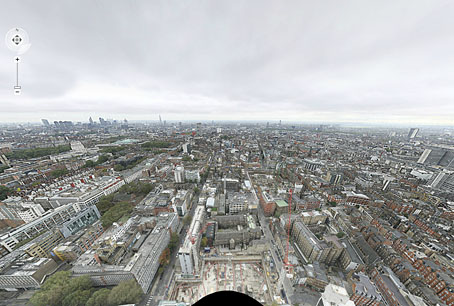
Continuing the maze and labyrinth theme, a selection of panoramas at 360Cities. Panoramic photography helps when viewing these constructions at a distance, especially when the camera is centrally positioned. The selection may be small but it shows how universal the urge is to build these things, with examples from Europe, the heart of Russia (where we learn that labyrinths are called “Babylons”) and China. Some of the pages have links to additional views. There’s a plan of the Parc del Laberint d’Horta hedge maze at Wikipedia.

labyrinth2.jpg

Granite Maze, Kirchenlamitz, Bavaria by Martin Hertel.

labyrinth3.jpg

Centre of the labyrinth (4 of 6), Castle Weldam, Netherlands by Jan Mulder.

labyrinth4.jpg

“Vavilon” (Babylon) labyrinth, Kandalaksha District, Murmansk by Andrei Kuznetcov.

labyrinth5.jpg

Labyrinth at the Uithof, the Hague by Marco den Herder.

labyrinth6.jpg

Beijing Old Summer Palace 4, Labyrinth in Yuanmingyuan by Yunzen Liu.

Elsewhere on { feuilleton }
The panoramas archive

Previously on { feuilleton }
Mazes and labyrinths
Labyrinths
Jeppe Hein’s mirror labyrinth

Mazes and labyrinths

maze01.jpg

This book, Mazes and Labyrinths: A General Account of their History and Developments (1922) by William Henry Matthews, would have been very useful a couple of years ago when I was working on the cover design for Mike Shevdon’s The Road to Bedlam and required a labyrinth diagram. The one I used, a plan of Julian’s Bower in Alkborough, Lincolnshire, can be found below. I’ve had a lifelong interest in mazes and labyrinths so this book is fascinating beyond any temporary work requirements. Matthews’ study of the form features many diagrams going back to the legendary Cretan labyrinth and the constructions of the Ancient Egyptians. Closer to home there are depictions of the designs which flourished during the great era of landscape gardening in the 18th century, and photographs of some of Britain’s remaining turf mazes. The book may be browsed here or downloaded here.

maze02.jpg

maze03.jpg

maze04.jpg

maze05.jpg

Continue reading “Mazes and labyrinths”