Harry Clarke and the Elixir of Life

clarke1.jpg

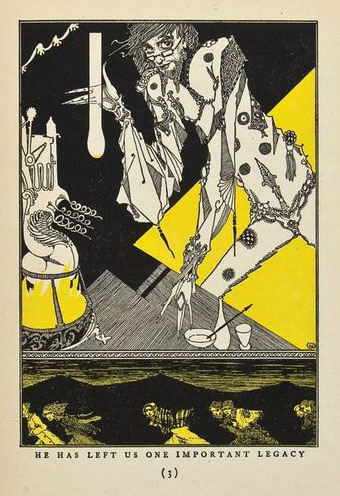
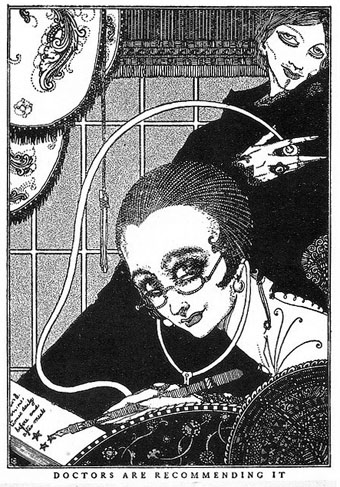
A little something for the season of strong drink. Harry Clarke’s books command high prices in their original editions yet two of the costliest items in the Clarke bibliography are a pair of promotional booklets the artist illustrated for Jameson & Son’s Irish Whiskey: A History of a Great House in 1924, and Elixir of Life a year later. Given the quality of Clarke’s work for these publications it’s a shame they remain out of print; I’m sure I’m not the only Clarkeophile who’d be happy to buy a facsimile edition.

clarke2.jpg

Elsewhere on { feuilleton }
The illustrators archive

Previously on { feuilleton }
Cardwell Higgins versus Harry Clarke
Modern book illustrators, 1914
Illustrating Poe #3: Harry Clarke
Strangest Genius: The Stained Glass of Harry Clarke
Harry Clarke’s stained glass
Harry Clarke’s The Year’s at the Spring
The art of Harry Clarke, 1889–1931

Richard Williams’ Christmas Carol

williams1.jpg

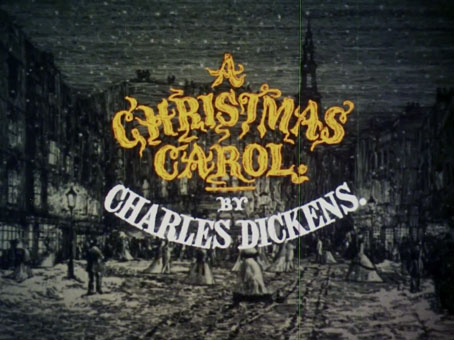
It’s easy to loathe the teeth-grinding sentimentality of Charles Dickens’ seasonal tale, as well as its subtext which isn’t so far removed from Emperor Ming’s instruction to his cowed populace in Flash Gordon: “All creatures shall make merry…under pain of death.” Yet as a ghost story I prefer A Christmas Carol to the sketchier The Signal-Man, and I’ve always enjoyed this memorable 1971 adaptation from the animation studio of the great Richard Williams.
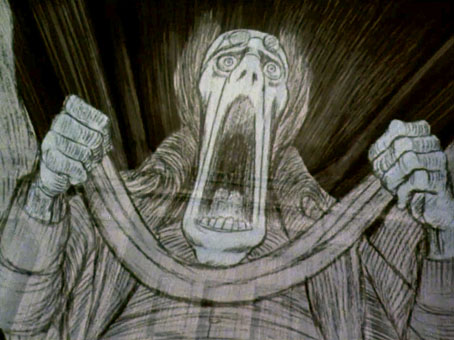
williams2.jpg

Marley’s ghost.

Williams is best known today for his role as animation director on Who Framed Roger Rabbit? but prior to this he’d distinguished himself as creator of the florid title sequence for What’s New, Pussycat? (1965), and the animated sections—done in the style of 19th-century engravings and political cartoons—for Tony Richardson’s The Charge of the Light Brigade (1968). Williams’ Christmas Carol owes a similar debt to Victorian graphics, not only to the original story illustrations by John Leech, but also to Gustave Doré’s views of Victorian London, scenes which had earlier influenced the production design for David Lean’s adaptation of Oliver Twist. Williams’ film crams Dickens’ story into 25 minutes but nonetheless manages to maintain the tone of the original to a degree which eludes many feature-length travesties, especially those in which the nightmare squalor of Victorian London is reduced to a shot or two of dressed-down extras. Dickens had first-hand experience of the squalor: Kellow Chesney’s The Victorian Underworld (1970) quotes at length from one of the journeys Dickens took (under police escort) through the notorious St Giles rookery, and his ghost story was intended as much as a warning to the complacency of middle-class Victorian readers as a Christmas celebration.
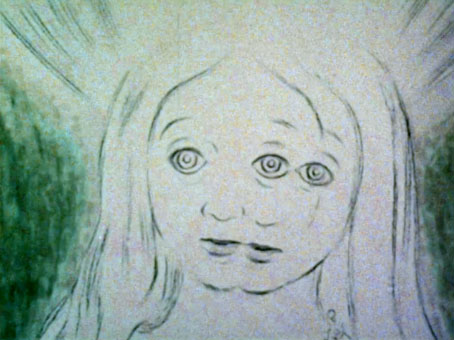
williams3.jpg

The Ghost of Christmas Past.

For me the crucial moment in any adaptation comes when the Ghost of Christmas Present shows Scrooge the figures of Ignorance and Want: in most film versions these tend to be a pair of well-fed child actors in rags and make-up; Williams shows us two grim spectres that owe more to Gerald Scarfe than Walt Disney. Williams is also truer to the ghosts themselves: Dickens describes Jacob Marley unfastening his jaw which falls open then remains that way while he proceeds to speak to his former friend; the Ghost of Christmas Past is the androgynous figure from the story with its ambiguous nature also shown by its shimmering indeterminate outline.
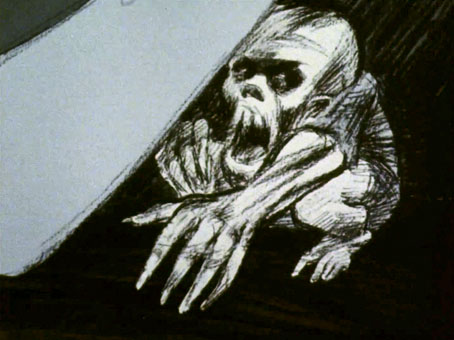
williams4.jpg

Ignorance.

Any animated drama relies on its voice actors, and Williams was fortunate to have Alistair Sim (as Scrooge) and Michael Hordern (as Marley) reprising their roles from the 1951 film version, while Michael Redgrave narrates the tale. The film used to be a seasonal fixture of British television, and may still be for all I know (I haven’t owned a TV for years). For the time being it’s on YouTube, of course, with a full-length version here that’s blighted by compression artefacts but is watchable enough. 2012 is the Dickens bicentenary so expect to hear a lot more about the author and his works in the coming year.

Update: The version linked to originally has been deleted. No matter, there’s a much better copy here (for now).

As usual I’ll be away for a few days so the { feuilleton } archive feature will be activated to summon posts from the past below this. Have a good one. And Gruß vom Krampus!

Previously on { feuilleton }
“Who is this who is coming?”
Gustave Doré’s Ancient Mariner

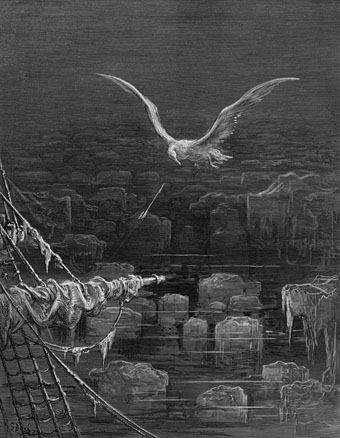
dore01.jpg

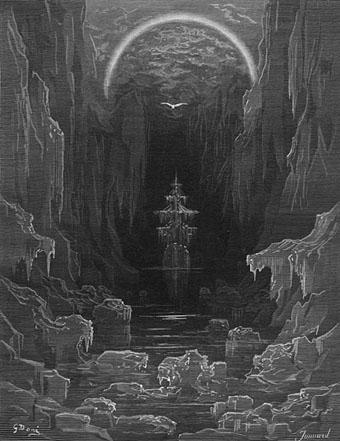
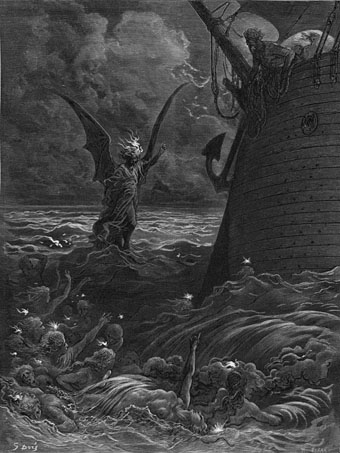
A final Coleridge post, also the oldest illustrated edition featured this week. Gustave Doré’s The Rime of the Ancient Mariner was first published in 1870, and the poet’s sombre, doom-laden tale was more suited to Doré’s Gothic proclivities than many of the lighter books he illustrated. Despite their age, these engravings have proved memorable enough to keep turning up whenever an illustration of the poem is required. The ship among the icebergs above is close enough to a scene in the third Pirates of the Caribbean film to have maybe been an influence, while the ice-bound section of the poem inspired one of Doré’s few paintings.

Art Passions has a complete set of these engravings together with many more of the artist’s works. And while we’re on the subject, two of Harry Clarke’s surviving Ancient Mariner drawings appeared in a post last year. A third drawing from the series can be seen here.

dore02.jpg

dore03.jpg

Continue reading “Gustave Doré’s Ancient Mariner”

Joseph Noel Paton’s Ancient Mariner

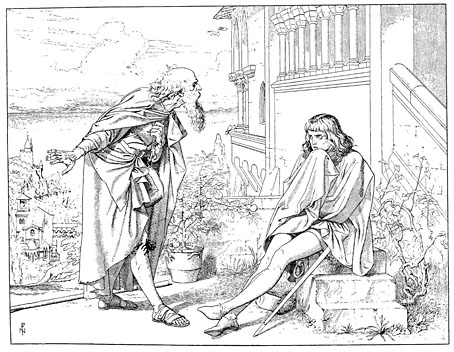
paton01.jpg

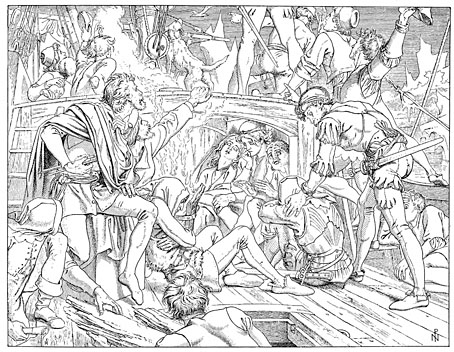
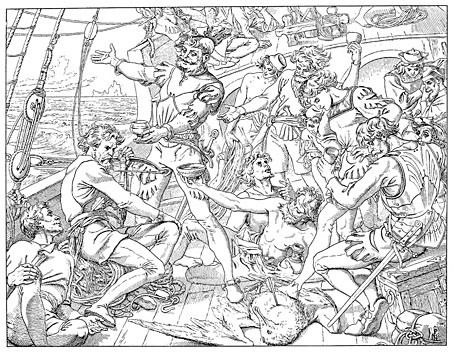
From Patten Wilson to Joseph Noel Paton (1821–1901), a Scottish artist whose illustrations for Coleridge’s poem I much prefer to his generic paintings. Other artists often skimp on the ship details but Paton’s crowded deck scenes are done with such accuracy they must have been based on a real vessel. The book was published in 1893, and the plates would appear to be engravings given the presence of another monogram besides that of the artist. The Internet Archive scans aren’t as bad as the Patten Wilson but Paton’s meticulous draughtsmanship is best seen in the near-complete set of images posted at Golden Age Comic Book Stories. And for anyone familiar with my comic strip adaptation of Lovecraft’s The Haunter of the Dark, the portrait of Enoch Bowen, founder of the Starry Wisdom cult, was based on Paton’s head of the Ancient Mariner in the scene where the sailors are fastening the albatross around the accursed man’s neck.

paton02.jpg

paton03.jpg

Continue reading “Joseph Noel Paton’s Ancient Mariner”

Patten Wilson’s illustrated Coleridge

wilson01.jpg

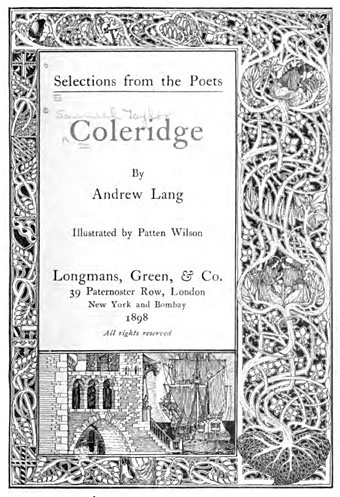
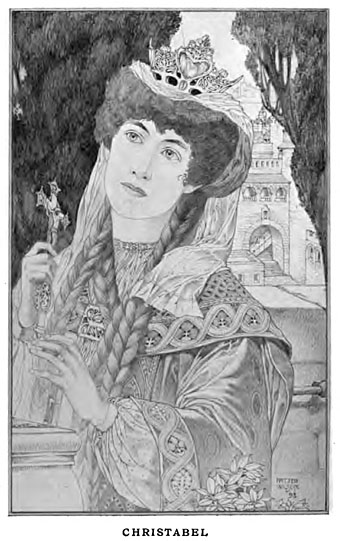
As is evident by the blurred date on the title page, this illustrated Coleridge by Patten Wilson (1868–1928) was published in 1898. Once again, some of these drawings have appeared here before via copies at Chris Mullen’s Visual Telling of Stories where the scans are a lot better quality than the dreadful job done by Google at the Internet Archive. The drawings look passable when reduced in size but the full-size images are so aggressively compressed that much of Wilson’s fine detail is lost. There’s still very little of Wilson’s beautiful work to be found online—and Coleridge’s poetry is freely available everywhere—so the only reason to look at this particular edition is for the illustrations.

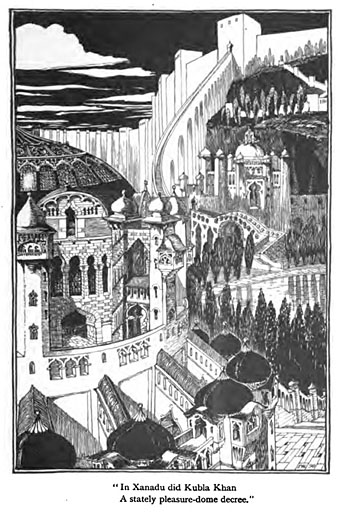
As with Gerald Metcalfe’s volume, The Rime of the Ancient Mariner dominates the collection. I love the way Wilson renders the opening scene by placing the Mariner and the wedding guests in the corner of the picture so he can prefigure the tale with the boats waiting in the harbour. And Kubla Khan’s Pleasure Dome is a lot more impressive than Metcalfe’s city in the clouds. Here’s hoping that a better copy turns up eventually.

wilson02.jpg

wilson03.jpg

Continue reading “Patten Wilson’s illustrated Coleridge”